In 2013, John McCain stood in Kyiv, openly telling CNN that the US delegation was there to "orchestrate" a regime change in Ukraine.
He even expressed his deep satisfaction that Victoria Nuland was right there beside him, helping to pull the strings on this joyful operation...
The past decade has really made me reassess the nature of WW1 & 2.
What has Russia actually done to increase hostility with the West? Well, they blew up Nordstream, right? Nope. That was a CIA/Ukraine operation blamed on Russia. But they installed Trump in 2016, right? Nope. That was a CIA/FBI operation to hand the WH to Hillary Clinton. But they invaded Ukraine, right? Well, yeah. After decades of NATO expansion and provocations like Maidan, they finally did something about it.
So, in short, Russia did basically nothing to the West. And yet the West is ramping up for direct war against Russia all across Europe.
Does the public support it? No. Not at all.
Just as the debt supercycle hits many quadrillions a major war seems to have been created out of thin air.
So you might want to reconsider your historical understandings of world wars and recognize that you're currently living thru the latest bullshit chapter.
The one sector governments left mostly alone delivered forty years of continuous price collapse and it destroyed the central planners' core argument in the process.
A transistor that cost $7.50 in 1961 costs less than a millionth of a cent today. Your 2026 smartphone carries more computing power than a 1990 Cray supercomputer that cost $30 million. Storage, bandwidth, processing speed: every metric deflated while quality exploded. This is what markets do when the state steps back.
Compare that to healthcare, education, and housing, three sectors drowning in subsidies, licensing regimes, and regulatory capture. Prices in all three outpaced inflation every decade since 1980. Government intervention reprices risk, blocks competition, and rewards incumbents for lobbying instead of innovating.
The Federal Reserve spent those same forty years printing money and insisting deflation was catastrophic. Falling prices drive demand, not panic. Intel, Apple, and AMD competed ferociously, drove costs down, and generated trillions in real wealth. Nobody waited to buy a computer because prices might fall next year.
Mises identified capital allocation as the economy's core problem: who decides where resources go? Entrepreneurs decided in tech, taking losses when wrong and profits when right. Bureaucrats decided in healthcare and education, socializing losses and mandating consumption.
You live with the consequences of that distinction every single day, every time you renew your health insurance and watch the premium climb while your phone bill drops.
🚨Study involving 1.7 million children has found that Myocarditis & Pericarditis only appeared in children who had received COVID mRNA vaccines.
Not a single unvaccinated child in the group suffered from these heart-related problems.
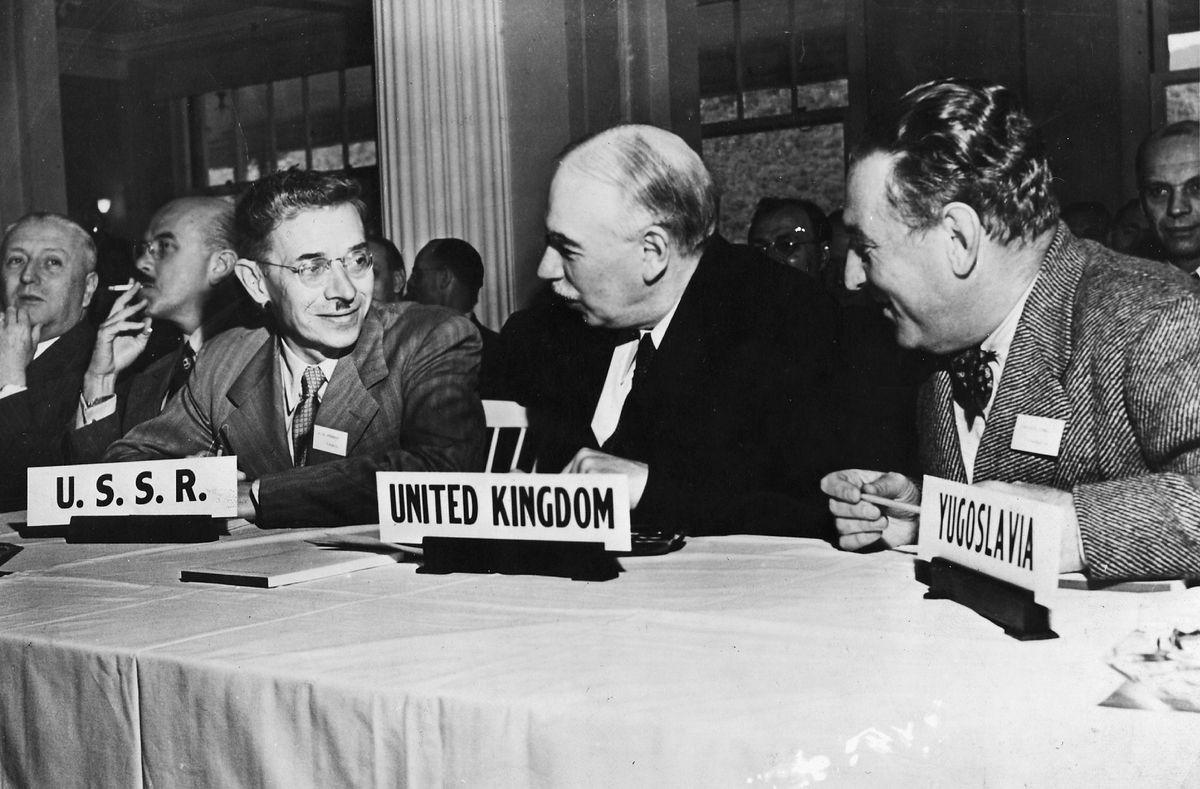
Bretton Woods was a con job sold to the world as monetary stability. In July 1944, 44 nations gathered at Mount Washington Hotel in New Hampshire and handed Washington the keys to the global monetary system, accepting U.S. dollars as the reserve currency on the promise that every dollar remained redeemable for gold at $35 per ounce.
The U.S. government never intended to honor that promise.
From 1944 onward, Washington printed dollars to finance the welfare state and Vietnam simultaneously. By 1971, foreign central banks held far more dollars than the U.S. Treasury held gold. France demanded actual gold first. Charles de Gaulle shipped actual dollars back to the Federal Reserve and demanded actual gold, draining roughly $3 billion in reserves through the 1960s.
Nixon closed the gold window on August 15, 1971, defaulting on the explicit Bretton Woods commitment. He dressed it up as patriotism.
The consequence hits you directly. Every dollar created without a corresponding gold claim transferred real purchasing power away from your savings toward federal spending. Your wages bought progressively less, not because productivity collapsed, but because Washington inflated its obligations away.
Bretton Woods succeeded perfectly as a mechanism for the U.S. government to extract a hidden tax from every nation and person that trusted the dollar, and the dollar-holding world paid that price for 27 years before Nixon finally admitted what sound money advocates had argued since 1944.
You are still paying that price today.
Hi @grok - If the U.S. government wrote every citizen over 18 a check instead of spending it on the below items, how much would each receive?
Wars in Iraq & Afghanistan.
War in Vietnam.
War in Ukraine.
War in Iran.
Foreign aid since 1960.
Associated interest on national debt.
Learn Austrian Economics in one X post:
1. Humans act. Every choice a person makes traces back to an incentive, a trade-off, a cost weighed against a benefit. Remove the incentive and the action stops. Distort the incentive and the action warps.
Tax income at 90% and watch producers stop producing. Subsidize failure and watch failure multiply. The behavior follows the reward structure, always.
2. Value exists only in the mind of the person choosing. A glass of water is worth nothing to a drowning man and everything to a man dying of thirst. No central authority can calculate this, because it changes with every individual and every circumstance.
Nothing has value in itself, only the degree to which humans choose to value it. Diamonds and even gold only carry value because humans decided they do.
3. Money does not come from a government decree. It emerged spontaneously when traders needed something durable, divisible, and widely accepted to escape the limitations of direct barter. Gold won that competition across centuries and across dozens of independent civilizations because the market, not a ministry, chose it.
Fiat currency is the state hijacking that evolved institution and replacing it with paper backed by nothing but a legal threat. Every central bank on earth operates on this model right now.
4. Wealth does not fall from the sky. A farmer who eats his entire harvest produces nothing next season. The farmer who saves seed, plants it, and specializes in what he grows best accumulates a surplus. That surplus is capital. Capital funds everything that comes after.
Consumption without prior production is just burning down the furniture for warmth. Every welfare state eventually reaches this point.
5. Strip private property rights and production collapses. A farmer will work his own land until midnight. That same farmer, working collective land, stops at noon. The Soviet Union ran this experiment across seventy years and killed tens of millions, proving the point.
When you cannot own the outcome, you do not produce the outcome.
6. Voluntary trade generates wealth from nothing but mutual preference. When you pay twelve dollars for a meal, you value the meal above twelve dollars; the restaurant values twelve dollars above the meal. Both parties walk away wealthier in real terms. No politician, no regulator, no bureaucrat added anything.
Protectionism destroys this. The 2018 US steel tariffs raised steel prices for American manufacturers, killed more jobs in steel-consuming industries than existed in steel production itself, and transferred wealth from productive firms to a protected few.
7. Ludwig von Mises identified inflation as a tax. Every dollar the Federal Reserve creates without corresponding production dilutes every dollar you already hold. The new money flows first to the government and its contractors, who spend it at current prices. By the time it reaches you, prices have already risen.
The US M2 money supply grew from roughly 15 trillion dollars in January 2020 to over 21 trillion by early 2022. Consumer prices followed. Your savings took the loss.
8. Prices carry information. A price spike tells producers to produce more and tells consumers to use less. It coordinates millions of strangers without a single central command. Interfere with that signal and the coordination breaks.
Rent control in New York City is the cleanest example. Cap rents below market and landlords stop maintaining buildings, stop building new ones, and convert units to other uses. The people rent control was supposed to help pay the price through collapsing supply.
9. Interest rates are the price of capital over time. When the Federal Reserve pushed rates to near zero between 2008 and 2022, it told every investor that capital was nearly free. Businesses built projects that only made sense at zero percent. When rates normalized, the projects failed. The 2022 collapse of the US tech sector and the crypto market were not random events. They were the correction of a decade of artificially cheap capital.
The business cycle is not a mystery of capitalism. Central banks manufacture it.
10. Bureaucrats face no profit and loss. A businessman who misallocates capital goes bankrupt. A bureaucrat who misallocates capital writes a report requesting more funding. The feedback loop that disciplines markets simply does not exist inside a government agency.
The US Department of Education has spent over a trillion dollars since 1980. Literacy rates have not improved. No one at the department has been bankrupted by this outcome.
11. Every producer inside a local market holds knowledge that no bureaucrat in a capital city can replicate. A wheat farmer in Kansas tracks soil moisture, futures prices, local equipment costs, his specific buyer relationships, and a hundred other variables simultaneously. That knowledge lives in the price he sets.
Friedrich Hayek called this tacit knowledge in 1945. The Soviet central planners ignored him and spent fifty years proving him correct, producing chronic shortages of goods that private markets coordinate effortlessly. No model, no algorithm, and no committee can compress what millions of independent actors know into a single plan.
12. Every government intervention produces effects you see and effects you don't. You see the road the state builds. You don't see the factory the tax dollars never funded, the job that never existed, the innovation that never happened because capital was extracted at gunpoint and redirected by bureaucrats with no skin in the game.
Take the 2009 Cash for Clunkers program. Congress destroyed 690,000 working cars, handed dealers a short-term spike, and you saw the sales numbers. The used car market was stripped of affordable inventory, pricing working-class buyers out for years afterward.
13. Prices, supply chains, and language itself coordinate millions of strangers without any central planner issuing a single command. That coordination is spontaneous order: complex, functional patterns that emerge from individuals pursuing their own goals under rules they did not collectively design. No committee holds the dispersed local knowledge required to replicate what voluntary exchange produces every second.
Watch how English evolved. No king designed its grammar. Millions of speakers across centuries adopted words and structures that worked, dropped ones that didn't, and produced a language richer than any bureaucrat could have engineered. Central planners who believe they can replicate that process with price controls or production quotas destroy the feedback mechanism that generates the order in the first place.
Thanks for reading this long post! What would you add to this list?
Behind this legendary 1969 duet lies an incredible backstage story! 🧵👇
After the first take, Stevie Wonder felt it wasn't perfect and asked to do it again. The director refused, saying: “No, that was fine. We got what we needed.”
Tom Jones immediately stepped in, looked at the director and said: “Excuse me. If Stevie wants to do it again, we're gonna do it again!” 🤯🔥
Pure respect between two titans. The result? Absolute music history! 🎙️👑 @TomJonesAndHisBand
#TomJones #StevieWonder #ThisIsTomJones #BehindTheScenes #60sMusic #MusicHistory
I keep hearing people complain that gasoline is over $4.00 a gallon.
And yes, I'd love to see it at $2.00 again. But before we declare gasoline the most outrageously expensive liquid on Earth, let's put things in perspective.
For $4.00, I get a GALLON of gasoline. I pour it into a 4,000-pound machine, turn a key, and that gallon will haul me, my wife, the groceries, the golf clubs and half the junk in my trunk almost 30 miles down the highway.
That's actually a pretty impressive day's work for $4.00.
Now let's compare.
A restaurant sells me a 5-ounce glass of wine for $9. That's about $230 a gallon. And how far does it transport me?
Usually from the dinner table to the men's room.
A fancy coffee shop can charge $6 for a 16-ounce latte. That's $48 a gallon. It doesn't transport me 30 miles. It transports me from "Leave me alone" to "Okay, now you may speak."
Bottled water at a convenience store might be $2.50 for 20 ounces. That's $16 a gallon, for something that occasionally falls out of the sky FOR FREE.
A 12-ounce energy drink at $3.50 works out to more than $37 a gallon. Apparently caffeine becomes a precious mineral once you put lightning bolts on the can.
Buy one of those little 2-ounce bottles of "energy shot" for $3. That's $192 a gallon. At that price, it shouldn't give me energy. It should mow my lawn.
Maple syrup at $8 for a 12-ounce bottle? About $85 a gallon. And its principal technological achievement is making pancakes sticky.
Vanilla extract at $6 for two ounces? That's $384 a gallon. For $384, I expect the vanilla bean to come to my house and bake the cookies.
Printer ink can cost thousands of dollars per gallon. And unlike gasoline, it sometimes refuses to come out because the printer has decided cyan is low.
Even that $9 glass of wine deserves another look. At roughly $230 a gallon, filling a typical 15-gallon gas tank with restaurant wine would cost about $3,450.
Of course, after drinking 15 gallons of wine, transportation would no longer be your biggest concern.
So yes, $4.00 gasoline is expensive.
But it's also a remarkable bargain when you think about what you're buying. You're purchasing enough concentrated energy to push several thousand pounds of steel, glass, groceries and humanity nearly 30 miles.
Meanwhile, we'll cheerfully pay $6 for coffee, $9 for wine and $3 for water, then stand at the gas pump staring at the numbers like we're watching the national debt clock.
Maybe gasoline doesn't need better pricing.
Maybe it just needs a fancier name.
"Handcrafted Premium Petroleum, locally pumped, small-batch refined, with subtle notes of octane and dinosaur."
Put it in a 12-ounce artisan bottle and charge $14.
We'll line up around the block.
Senator Ron Johnson dismantled the "3.2 million lives saved by COVID vaccines" claim.
"I'm not a medical researcher... I'm a lowly accountant who can do simple math."
The charts:
• 2019: 2.85M deaths (pre-pandemic baseline)
• 2021: 3.5M deaths (the year the vaccine rolled out)
• 2022: 3.3M deaths
"Where's the 3.2 million lives saved?"
For that Commonwealth Fund claim to be true, you'd have to assume we would have hit 5 million deaths per year in 2021 and 2022 without the shots. "There's no way."
He also breaks down VAERS:
• Pre-2021 average: ~280 deaths/year
• 2021: 21,000 deaths reported
• Current total: ~39,000
• 24% occurred within 1-2 days of injection
"Is that definitive proof? Maybe not. But wouldn't that concern you as a regulator?"
He's taking on the claims pushed by the likes of Fauci and Hotez.