This has now been published in its final form in Nature Communications 🌟
We have extensively revised it since the preprint version, so check it out if you are into adaptive pathogen evolution!
https://t.co/hF3rtw5WTk
#Klebsiella
Happy to share one of our #Klebsiella stories on how it adapts in humans. Super strong positive selection for combined changes in CPS, LPS, Fe scavenging (and more) in infection sites translates into diverse phenotypes e.g. lost acute virulence @KlebClub https://t.co/GppBZrbFkW
Showed some of the crazy evolved #biofilm mutants back in 2019 at #ASMicrobe and @Eurobiofilms19. Now we share a full story on how catheter-like surfaces rapidly diversify #Klebsiella and explain adaptations selected within-host. @KlebClub
Happy to share one of our #Klebsiella stories on how it adapts in humans. Super strong positive selection for combined changes in CPS, LPS, Fe scavenging (and more) in infection sites translates into diverse phenotypes e.g. lost acute virulence @KlebClub https://t.co/GppBZrbFkW
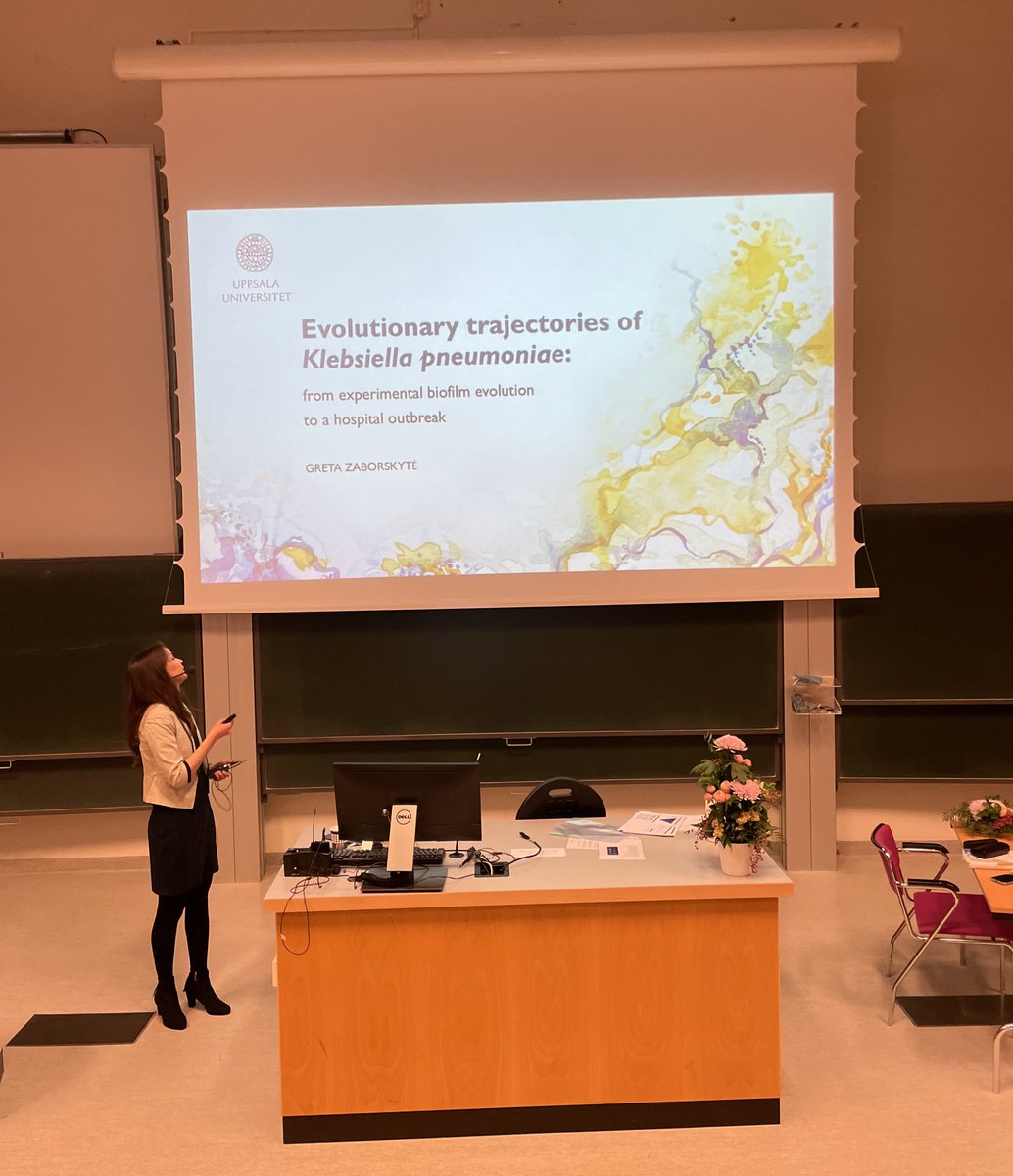
#LINO23 Alumna Greta Zaborskyte (@UU_University) studies how the bacterial pathogen K. pneumoniae evolves inside human hosts during colonisation and infection. Learn more about @gretazabo in her @Women_Research interview: https://t.co/6FY7NMVpkY
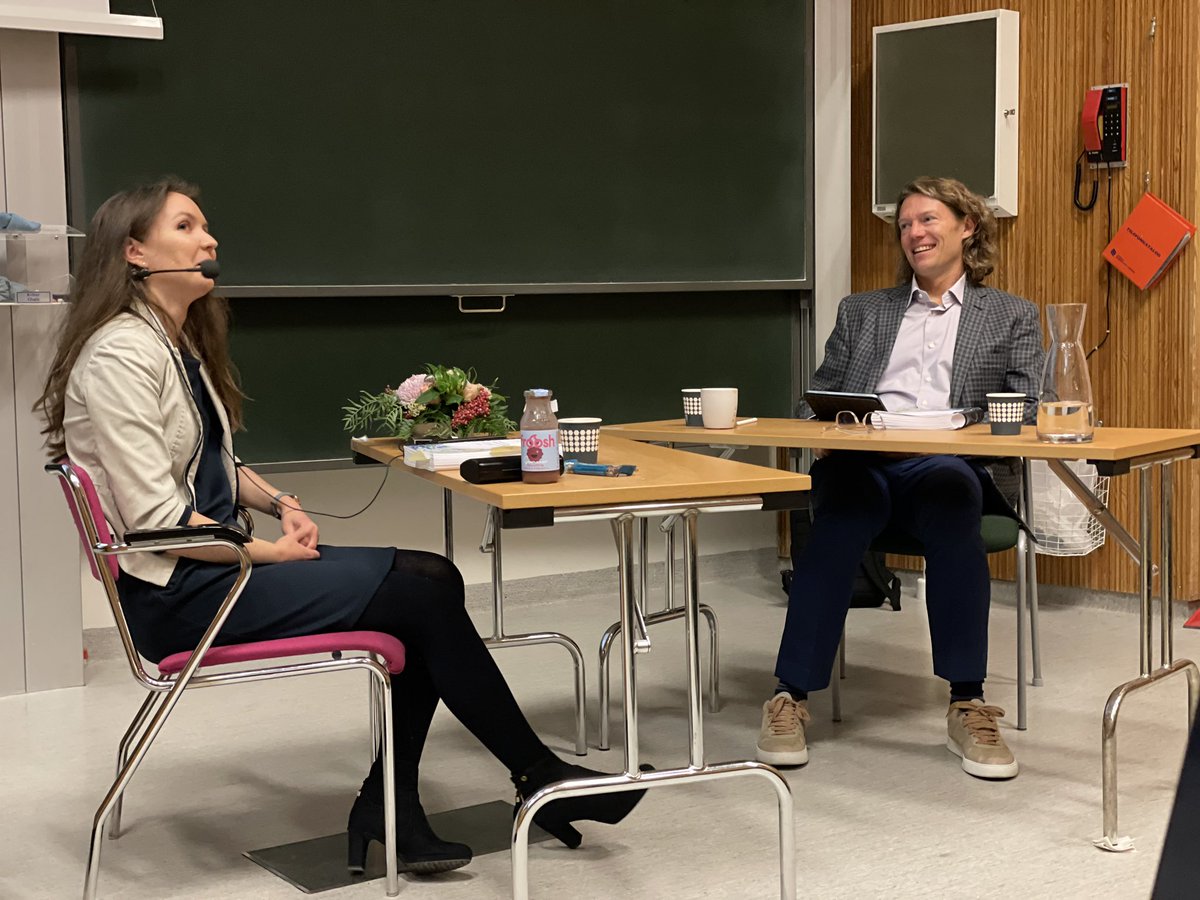
10 Questions with Greta Zaborskyte - @gretazabo from Lithuania is a postdoc at @UU_University, Sweden & #LINO23 participant. Enjoy @Ulrike_Boehm's interview with her & get inspired @lindaunobel#womeninscience 🥳👉 https://t.co/mkMUemJwaV
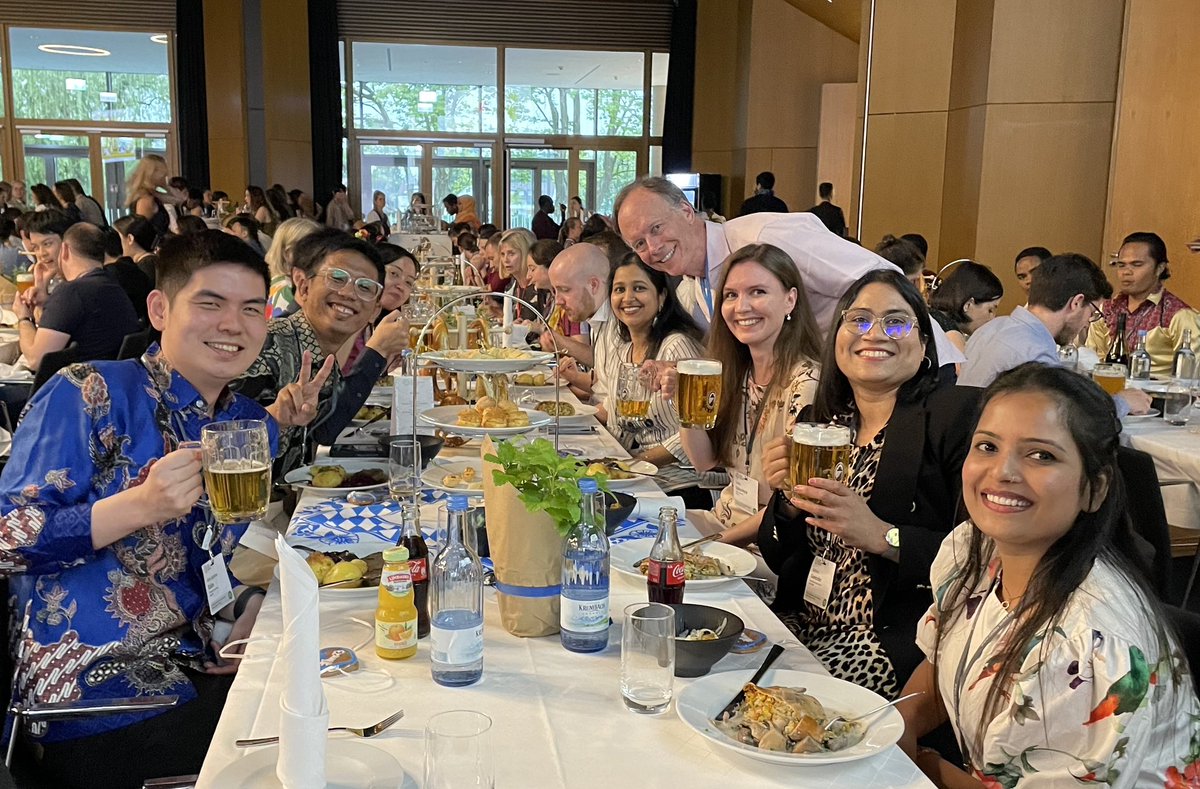
Only in #LINO23: Nobel laureates randomly photobombing pictures during Bavarian evening! So glad it was William G. Kaelin Jr. whose Open Exchange session today was fantastic 🌟@lindaunobel
My personal highlight of #LINO23 so far was really inspirational and fun lunch with a 2018 Nobel Laureate @francesarnold 🌟and we even got a little gift of “Wolfird” representing a non-natural world of proteins with new functions created by directed evolution! @lindaunobel
Beyond excited to learn that I have been selected by the @lindaunobel council to attend #LINO23 in June! A week with Nobel laureates, young researchers, and science! Thank you @ScienceAcad_swe for the nomination and @stiftelse for funding.
So, last week I became “not that kind of doctor”. I’m full of gratitude for such a positive feedback from my opponent @vscooper, committee members @keimel, @SellinLab, Ann-Beth Jonsson, and my supervisor Linus Sandegren 🥂summary -> https://t.co/zhplRlMGmM
#PhDone#Klebsiella
How about a possibility to choose your own material for #biofilm growth, to up- or down-scale your experiment, and handle each individual biofilm with ease? We’ve got you covered with our FlexiPeg: a low-cost 3D-printed (and re-usable!) device. #bacteria#Klebsiella#EColi
When you’re proud the big experiment is finished, but now you have no excuse not to write that manuscript.
This is brought to you by Klebsie, my cat.
#phdchat#AcademicChatter#phd#CatsOfTwitter#cats
This “crime scene” picture marks the end of my gianormous virulence screening with 3000+ injections of 111 #Klebsiella pneumoniae clonal outbreak isolates and endless late hours monitoring death. Turns out it was possible 👊🐛 #phdlife@_BioSystems#AcademicTwitter#microbiology
Now that’s a spirit: you’re discarded from experiment as a “non-perfect” larva, develop into a (super fit) moth while left on a shelf and escape into #microbiology lab. So I was chasing this rebel moth flying for life this morning 🙈
#phdlife#AcademicChatter@_BioSystems#phd
When you’re 14 hours into infection experiment, getting really hungry and stumble upon some mouth-watering descriptions of your infection model.. should I repurpose my experiment? 🤤