Proud to announce that I scored a 33 on the October 2026 ACT! My super score is now also a 33. Planning to take it one more time to improve my reading score. Goal is a 34 or higher!
#Uncommitted#ClassOf2028#StudentAthlete#ACT#ACTExam
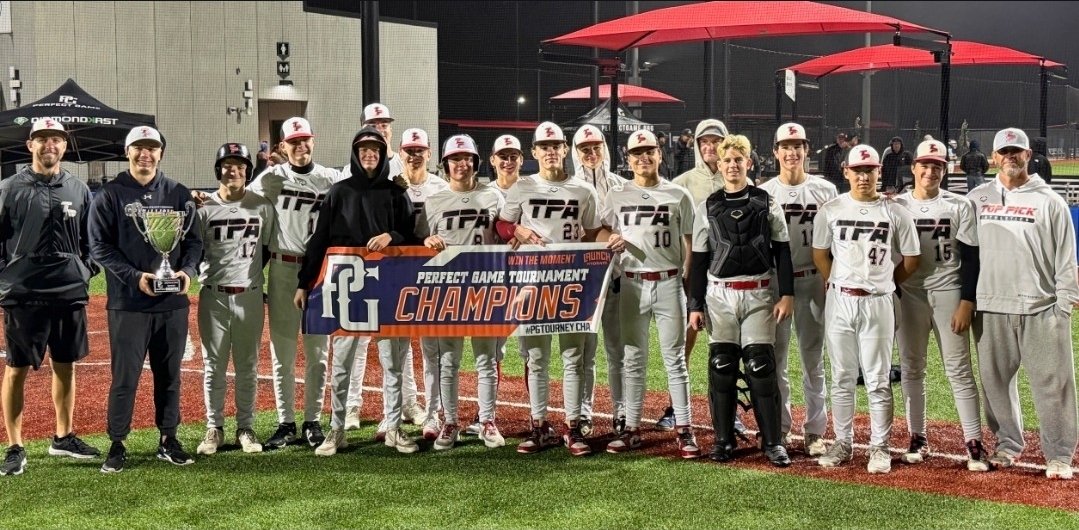
TPA 17u ended fall ball with a championship win at the PG Windy City Fall Classic, going 4-0. I had 2 singles, 4 walks, and a .545 OBP in 11 PA’s! Also played all 4 games at 3B. Excited for this upcoming high school season!
#Uncommitted#ClassOf2028#StudentAthlete
This weekend TPA 17u went 2-1 with a tough loss in bracket play at the PBR Grand Park Fall Championships. I had a single, ground rule 2B, and 2 walks. Ready to compete next weekend at PG in New Lenox!
@TopPickAthletic@baseballcadets@ChiPlayerWatch
The 2026 AP Precalculus Exam scores:
5: 29%; 4: 29%; 3: 24%; 2: 11%; 1: 7%
The 2026 AP Precalculus exam was taken by ~300,000 students, roughly 2% of the U.S. high school population.
AP Precalculus Multiple-Choice Questions (MCQ):
• Students generally scored higher on questions about exponential and logarithmic functions than other functions (polynomial, rational, trigonometric and polar).
• Students performed especially well on questions that required them to deploy their skill of supporting conclusions with a logical rationale or appropriate data. Students achieving AP 5s typically earned 100% of these points, and students achieving AP 4s, all but one. And students achieving AP 3s were also able to answer most of such questions correctly. This is exciting to see, as one of the focus areas in AP Precalculus is helping students develop the ability to communicate with precise language and provide rationales.
AP Precalculus Free-Response Questions (FRQ):
Each AP exam has multiple versions, for different time zones. I’ll focus the commentary below on the version taken by most students:
https://t.co/JXwXWjn0pq
The four FRQs reflected major strands of the course — functions, modeling with exponential and sinusoidal functions, and procedural and symbolic algebraic fluency — and required students to work with equations, graphs, tables, and real-world contexts alike.
Since AP scores are reported on a 5-point scale, the free-response questions deliberately include some very difficult points, designed to differentiate AP 5s from AP 4s, points of varying difficulty to differentiate AP 4s, 3s, and 2s, and more foundational points to separate AP 2s from AP 1s.
FRQ #1, Q1, the Function Concepts question, presented students with the graph of an increasing function and an analytic presentation of a logarithmic function. Students had to evaluate a function composition, find inputs satisfying each of the functions presented, express limiting behavior using formal limit notation, and identify function behavior from a graph. This was a somewhat challenging question, suited to differentiating performance across the AP scores of 2, 3, 4, and 5, as students receiving AP 1s typically earned no points on this FRQ.
Part C.i. (identifying a key feature of the function from the graph) and Part A.ii were both typically earned by all students earning AP 3s, differentiating them from students receiving AP 2s, who did not typically earn both of these points.
Part B.ii. (correctly expressing the behavior of a function using formal limit notation as x approaches a value) was the most challenging point to earn on this FRQ, generally only earned by students achieving AP 5s. But C.ii, (providing a rationale and reasoning for their answer) was the clearest borderline between AP 4s and AP 5s, as students achieving 5s consistently earned this point whereas students achieving 4s did not.
Part B.i. was the clearest differentiator between students earning AP 4s and students earning AP 3s, as students earning AP 4s were consistently able to answer this part correctly, whereas students earning AP 3s did not.
FRQ #2, Q2, the Modeling a Non-Periodic Context question, asked students to model the decreasing value of a a car. To do so, they needed to write a system of equations from real-world data and solve for unknown constants, compute an average rate of change, use it to estimate a value, and then determine a domain limitation for the function model. I’m impressed by the way this question mirrors the kinds of quantitative reasoning that students will be expected to use in college courses across math, business, science, and social science – it's a terrific, and quite challenging, question, servinging to identify students who should receive AP 3s, 4s, and 5s, and students receiving AP 1s and 2s were usually unable to engage with this level of rigor.
Parts A.i. and B.i. were the points that differentiated students earning AP 3s from students receiving AP 2s, who were usually unable to write these equations and find the average rate of change for the value of the car.
Parts A.ii and B.ii differentiated students earning AP 4s, who were much more likely to be able to find these values and estimate the favlue of the car using the average rate of change, than students earning AP 3s.
Parts B.iii (understanding the relationship between average rate of change, the secant line, and the function model) and C (explaining how to determine a domain limitation) were designed to identify the most advanced students, and were generally only earned by students achieving an AP 5, as both of these tasks required students to explain advanced mathematics accurately.
FRQ #3, Q3, the Modeling a Periodic Context question, asked students to determine the coordinates of five labeled points on the graph of the sinusoidal height function, then construct an explicit formula for the function by identifying the values of amplitude, period, phase shift, and vertical translation. Notably, this question was completed without a calculator, requiring students to work with the geometric and algebraic structure of sinusoidal functions from first principles.
Overall, students scored highest on this FRQ, which contained tasks at a variety of difficulty levels. Students receiving AP 2s could usually only perform one of the tasks within this FRQ correctly, students earning AP 3s could typically perform 2-3 of the tasks right, students earning AP 4s could typically perform 4-5 of the tasks accurately, and students earning AP 5s generally completed 100% of the tasks effectively.
FRQ #4, Q4, the Symbolic Manipulations question, was the most demanding of the four FRQs and did not allow a calculator. Students had to solve equations involving logarithmic and exponential functions, rewrite an exponential function in an equivalent form, rewrite a trigonometric expression using the double-angle identity for sine, and find all solutions to a trigonometric equation within a specified interval. The breadth of symbolic and procedural demands made this question, the hardest of the FRQs, an excellent measure of overall precalculus mastery among the top students, as these points were aimed at providing students receiving AP 5s multiple opportunities to distinguish themselves from AP 4s, as this question was generally beyond the abilities of students receiving AP 1s, 2s, and 3s.
Students achieving AP 4s consistently earned points A.ii. and B.i., differentiating themselves from students earning AP 3s, who could not typically perform these tasks, while all other points on this FRQ were earned much more consistently by students achieving AP 5s than by students who achieved AP 4s.
I'm grateful to the AP Precalculus Development Committee for crafting an exam with such substantial and wide-ranging mathematical demands. Within a single exam, they asked students to evaluate compositions of functions and express limiting behavior in formal notation, fit exponential models to real-world data, construct and interpret sinusoidal functions from geometric context, and execute multi-step symbolic manipulation across logarithmic, exponential, and trigonometric functions — all without a calculator on half the FRQ section.
Congratulations to the AP Precalculus students who rose to meet these challenges!
All subjects’ AP score distributions for 2026 will be posted here when available: https://t.co/OrkaQhPZYO
Thank you @ShowBallCamps for the evaluation of my performance at the June 16-17 Head Coach Academic Camp in Chicago! I threw 82 mph from both the infield and outfield, hit 87 EV off of front toss, and ran a 7.02 60 yd dash. Not done working yet!
@TopPickAthletic@baseballcadets
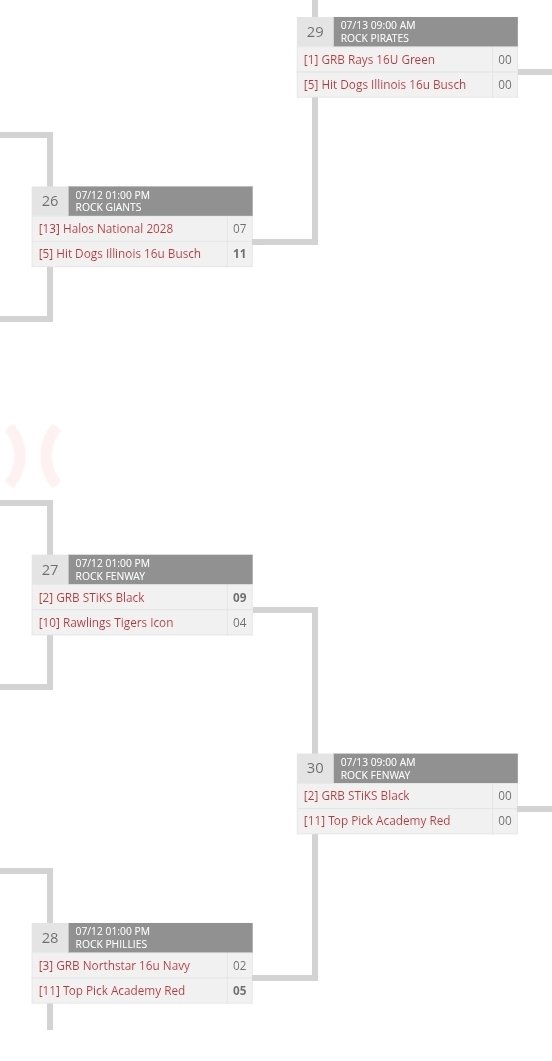
This weekend TPA Red 16u played up in a Primetime 17u wood bat tournament. We went 3-1 in pool play!
Weekend highlights: 3 IP of relief, 2 K’s and only 1 ER. I also singled up the middle to score the 1st run of the playoff game!
@TopPickAthletic@baseballcadets@UncommittedUTR