Massachusetts General Hospital, 60 people with MS.
Epstein–Barr virus activated CD4+ T cells that may help drive attacks on myelin.
Anti-CD20 therapy cut these cells 2.5-fold and lowered virus in saliva, tying viral activity to disease.
https://t.co/1ts08e89NX
ALERT: The entire DC area is now under a CODE PURPLE alert for very unhealthy air. This is some of the worst smoke pollution our area experienced on record.
Limit time outside and/or wear an N95 mask, if possible. This is esp true if you have asthma or respiratory issues. The smoke will be with us all today but should gradually improve tomorrow.
Details here: https://t.co/gXcy2CS90A
@DrDanMO@nytimes@kewatson@AnnMarieNavar@rblument1 Through AmgenNow direct-to-patient program, Repatha (evolocumab) is available for $239 per month ($2868 per year)
This is available to all eligible U.S. patients, including those who are uninsured, have high-deductible health plans, or prefer to pay with cash
The FDA approved a daily pill PCSK9i enlicitide, (Lipfendra)
List price will be $315 for a 30-day supply
https://t.co/mR1fBo6CAB
The F.D.A. Approves a New Pill to Slash Cholesterol Levels https://t.co/MSVGoDPLUd via @NYTimes@kewatson@AnnMarieNavar@rblument1
Aortic dissection, that’s a rough break. I’ve lost several colleagues to this, including two of my former professors. The Senator was 71, that’s about when this happens. I’m 68. The key is to take care of your cardiovascular health, control your hypertension, statin for cholesterol. My view: regular visits to your healthcare provider make the difference. It’s a pain, these days a hassle to schedule and reschedule, and takes away from all the things you want to do, but make the time, it’s worth the investment. Makes the difference between never meeting your grandchildren vs seeing them graduate university.
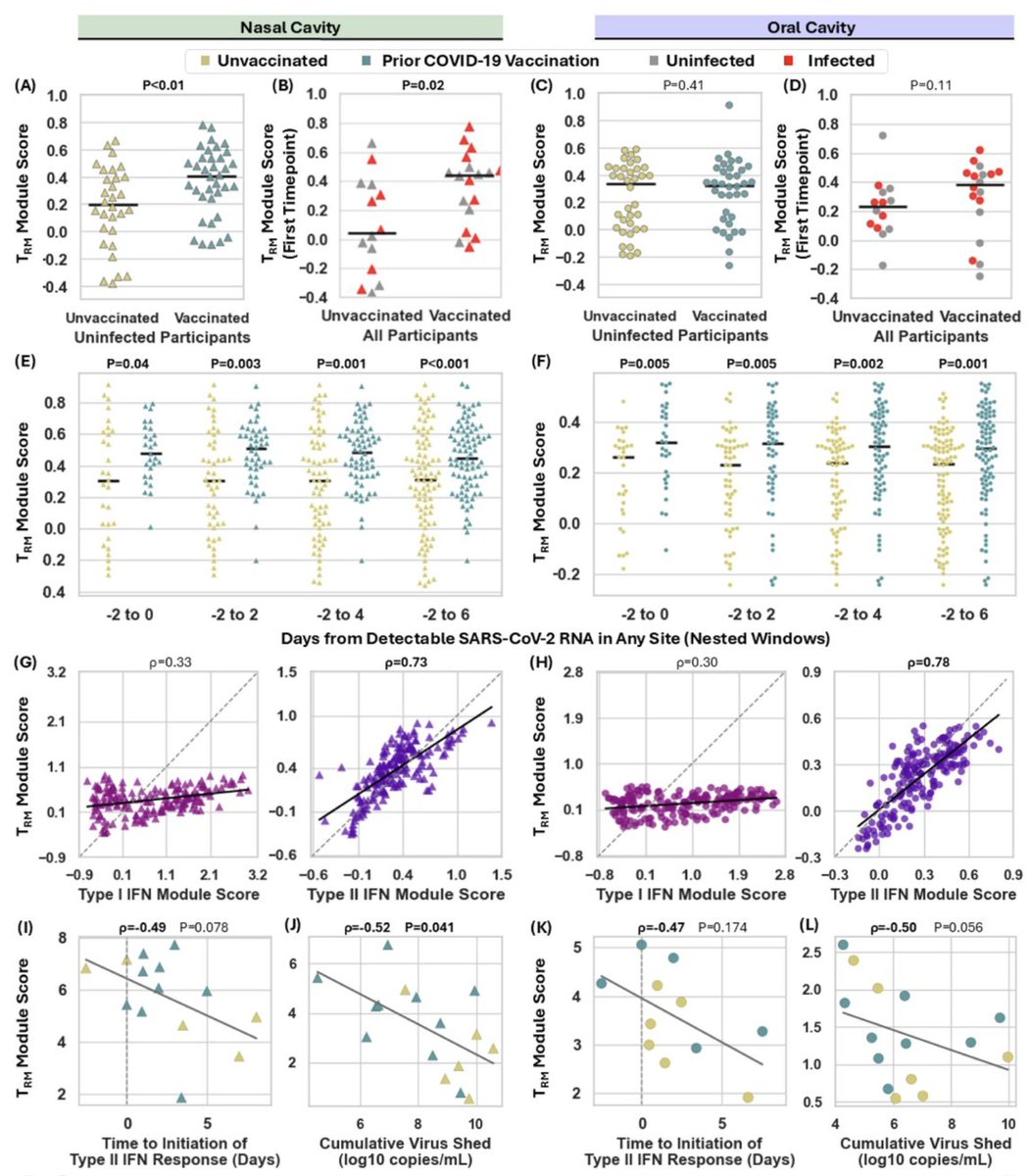
Very important paper here👇
This does a great job thoroughly explaining, and giving us new insights on, a concept that I’ve been talking about for a little while now.
As important as innate immunity may be, we’re learning that getting tissue-resident memory T cells that are primed against SARS2 into the oral and nasal mucosa is what is absolutely essential for controlling viral load, because that’s what triggers an earlier Type II interferon response.
And that’s why I’ve been brainstorming and talking about how can best achieve that, on at least some level, with our current vaccines: First, obviously, by making sure you’re receiving routine Nuvaxovid. But much more interestingly, by using an interferon-alpha nasal spray, or potentially applying neomycin ointment intranasally, along with the vaccine: https://t.co/ojQrdAQeWi
FYI, the /r/ContagionCuriosity subreddit now has a megathresd up on the ongoing cyclosporiasis outbreak, probably the best place to follow along. Which I would recommend doing, along with the basic precaution of avoiding raw produce that is frequently implicated (bagged salad, cilantro, basil, raspberries, and blackberries), at least until a source is identified.
https://t.co/JU7GbG8S1c
I have warned again and again the past year that everyone should be checking their blood pressure regularly.
Cumulative and often paucisymptomatic SARS-CoV-2 reinfections increase risk for so-called "surprise" cardiovascular events, like aortic dissection. #IYKYK
@DanDa56281 Thanks, Dan, for your question! Our data show that while nose may not be where the infection begins (oral cavity first), it is where viral load is highest. Vaccination that brings T cells to the nose is expected to have the biggest impact in blocking transmission👃🏼
I’ve been talking about this being an important component of prophylaxis for a while now, it’s great to see it confirmed like this.
There’s already a study showing that co-administration of an Interferon alpha nasal spray along with our current vaccines (well, they used AstraZeneca, my point being IM-based systemic vaccines as a broad category) can already induce a vaccine-specific TRM response.
IFN-α nasal sprays are readily available in many countries, which seems fairly straightforward. In the absence, though (like here in the US), I’ve come up with neomycin as a potential alternative⬇️
Obviously far from ideal…but just trying to forge a path as best we can with our current technology.
How does vaccination help beyond antibodies? Vaccinated individuals had higher tissue-resident memory T cell (TRM) signatures in the nasal mucosa and mounted Type II IFN responses earlier. This points to mucosal TRM as a key mechanism — and a target for next-gen vaccines. (5/)
New preprint by @alex_winnett@S_Tabachnikova et al.! We asked: which cellular immune signals control viral replication in the nose during the first days of SARS-CoV-2 infection — and how do they change with vaccination? With @ismagilovlab (1/)
https://t.co/HIpMpvahDc
Implication: if we want vaccines that limit transmission, not just disease, we may need to seed TRM in the nose. Current intramuscular vaccines do this to some extent, but poorly. Prime & Spike strategies do this very well. As always, very grateful to all who contributed 🙏🏼
Two particles can carry the same amount of cholesterol and do completely different damage to an artery. Your cholesterol panel measures the cholesterol. It misses what actually varies: what kind of particle is carrying it.
Every plaque-building particle, LDL, remnants, lipoprotein(a), carries exactly one apoB protein. One particle, one apoB. So an apoB test is a headcount of how many dangerous particles you have. Your standard panel doesn't count them, it weighs the cholesterol they're hauling. Usually those match. When they don't, the data is reasonably clear: risk tracks the particle count, not the cholesterol.
Not every particle is equally dangerous, either.
LDL is the baseline threat, and the most common. Remnants are worse per particle, they lodge in the artery wall more easily and carry more cholesterol each, which is how someone with normal LDL but high triglycerides ends up with more risk than their panel shows.
Lp(a) is the dangerous one. It's an LDL particle wearing a tail that mimics a clotting protein, so it drives both plaque and clots. Genetic studies show it actually causes disease rather than just tracking with it, roughly two to three times the risk of heart attack, peripheral artery disease, and aortic valve disease. It's almost entirely genetic, diet and exercise barely touch it, and about 1 in 5 people run high. One of the strongest inherited heart risks there is, and it's a single blood test almost nobody gets ordered.
This sharpens risk assessment, it doesn't replace blood pressure, smoking, and the rest. And spotting high Lp(a) isn't the same as fixing it, the drugs that target it are still in trials. For now it's information that sharpens prevention, not a number with a treatment attached.
The standard panel counts cholesterol and treats every particle as the same. They're not, and the two that matter most, remnants and Lp(a), are exactly the ones it can't see.
EU Academy of Neurology urges preparation for an "increase in the incidence of neurodegenerative diseases in the upcoming years" due to SARS2.
https://t.co/Iy6FiJMnSO