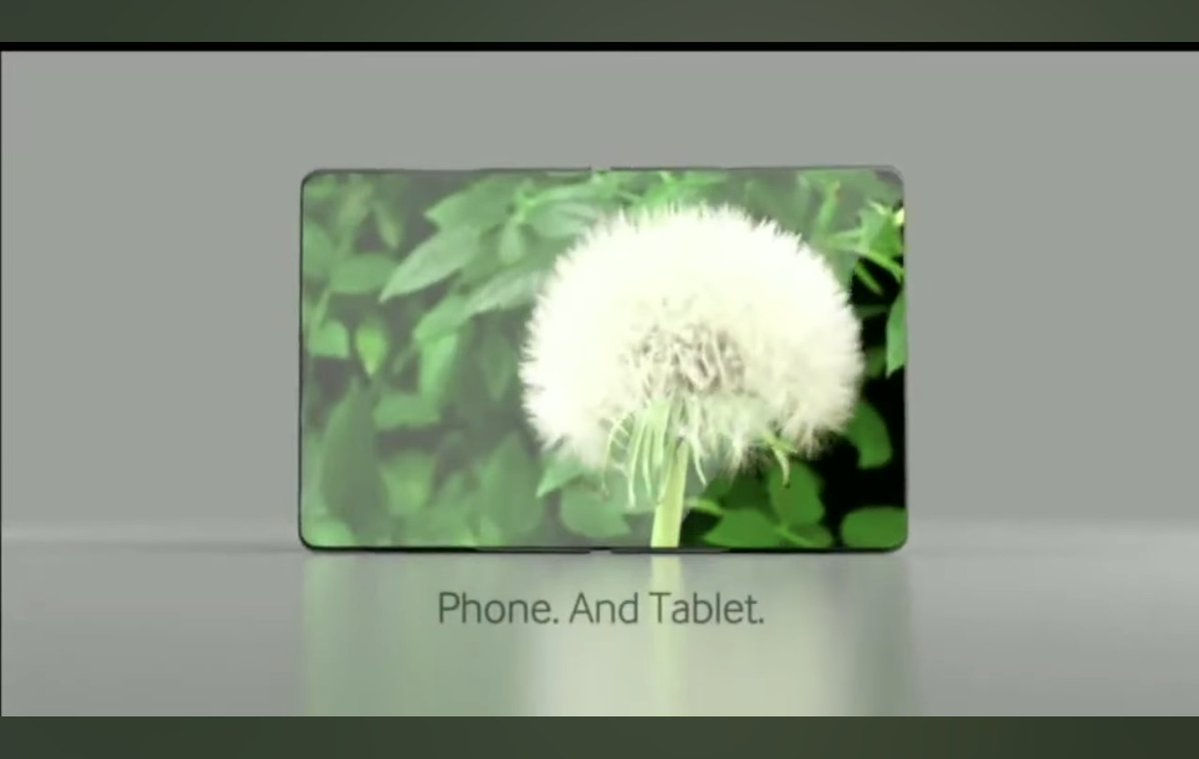
Samsung never copied the Apple Foldable form factor.
13 years ago in a commercial Samsung showed us the blueprint for the z fold 8.
Today it's come to fruition.
Samsung is the true pioneer in Foldable tech.
Another reason I supported Spain was the courage its people and leadership constantly show in speaking out against the worst genocide of our time.
#FreePalestine 🇵🇸
#VamosEspaña
Samsung Is Bringing Gaia and Exynos Together for a New Chip Comeback
Samsung Electronics is advancing a new chip strategy centered on two key products: its upcoming Gaia AI accelerator and its long-developed Exynos mobile processors. By combining their technologies, Samsung hopes to build an independent AI chip ecosystem covering PCs, smartphones, and tablets.
Gaia is an AI PC accelerator currently under development at Samsung. Built on a 4nm process, it is designed primarily for generative AI and other on-device AI workloads. At its core is Samsung’s independently developed NPU, paired with a memory-centric architecture that places computing resources closer to memory, reducing data-transfer latency and power consumption. Samsung already possesses extensive capabilities in DRAM, NAND, HBM, chip design, and semiconductor manufacturing, so Gaia’s biggest advantage may lie in its ability to integrate computing and memory more closely. Samsung has reportedly provided Gaia prototypes to major PC manufacturers, including Lenovo and HP, for performance validation.
However, Gaia’s significance may extend far beyond AI PCs. Samsung’s longer-term goal could be to gradually bring Gaia’s NPU architecture, memory integration, and AI acceleration technologies to Exynos processors. In recent years, Exynos has faced repeated criticism over power efficiency, overheating, and performance stability, leading some Galaxy flagship models to rely more heavily on Qualcomm Snapdragon chips. For a company that controls memory, displays, semiconductor manufacturing, and smartphones, continued dependence on external suppliers for such a critical component is clearly an uncomfortable position.
Gaia gives Exynos a potential new direction. Future Exynos processors may place far greater emphasis on NPUs and on-device AI, making local large language models, image generation, voice recognition, real-time translation, and AI agents central competitive features. Samsung could position Gaia as the AI engine for PCs, use Exynos across smartphones and tablets, supply high-speed memory through its semiconductor division, manufacture the chips through Samsung Foundry, and ultimately deploy the entire platform across Galaxy devices.
This strategy resembles Apple’s vertically integrated chip ecosystem. Apple controls its A-series and M-series chips, operating systems, and end devices, allowing it to achieve deep hardware-software optimization. Samsung also owns a broad portfolio of Galaxy smartphones, tablets, laptops, TVs, and home appliances, while maintaining capabilities in memory, chip design, and semiconductor manufacturing. If Gaia and Exynos can be successfully connected, Samsung could build an integrated platform that few other Android manufacturers could replicate.
AI capabilities alone, however, will not solve every problem. For Exynos to make a genuine comeback, Samsung must still improve CPU and GPU performance, energy efficiency, thermal control, connectivity, and long-term stability. Consumers will not overlook overheating, frame drops, or reduced battery life simply because the NPU is more powerful. Gaia can give Exynos a new direction, but it cannot independently erase all the problems accumulated over the years.
In the past, Exynos was primarily viewed as a mobile processor for Galaxy smartphones. In the future, it could become a central part of Samsung’s broader AI device ecosystem. Gaia would explore new AI acceleration architectures, Exynos would bring those capabilities to mobile devices, and Samsung’s memory and foundry businesses would provide the underlying support. Samsung’s real goal is no longer limited to building a faster smartphone chip. It wants Gaia and Exynos to become the brains of the entire Galaxy AI ecosystem.
Argentina players starting fights as soon as the whistle blows, attacking Spanish players.
Nobody deserves to lose this World Cup more than Argentina. The dirtiest, nastiest team in the tournament. Pathetic.
Class from Spain, the whole world has been behind you 🇪🇸🇪🇸🇪🇸