Are you looking for a Prop firm to trade Hyperliquid assets - Join Propr and get funded to trade. Use my link for a head start: https://t.co/Bt1dQfmYNt
I blew multiple funded accounts before things started to turn around.
The hardest part wasn't learning a strategy.
It was learning how to keep going when the results didn't match the effort.
Trading rewards the people who survive long enough to become consistent.
Greatest Traders of All Time
1 Arthur Cutten: Transformed a modest $1,000 stake into more than $90 million through disciplined speculation.
2 Richard Dennis: Grew $400 into $200 million within a decade, later proving that trading skill can be taught through the famous Turtle experiment.
3 Ken Griffin: Launched his trading career from a college dorm room and built a multibillion‑dollar empire by age 38.
4 Dan Zanger: Turned $10,775 into $42 million in under two years through aggressive momentum trading.
5 Michael Marcus: Expanded a $30,000 account into more than $80 million, becoming one of the most successful commodity traders of his era.
6 Tom Baldwin: Parlayed $25,000 into over $2 billion, dominating the bond futures market.
7 Ed Seykota: Achieved a legendary 250,000% return over 16 years, pioneering computerized trend‑following systems.
8 Nicolas Darvas: Grew $25,000 into $2.25 million in 18 months using his iconic “Box Theory.”
9 Michael Lauer: Delivered a fifty‑fold return to investors over seven years.
10 Mark Cook: Recorded back‑to‑back gains of 563% and 322%, earning recognition as a top market timer.
11 Jesse Livermore: Famously turned small stakes into massive fortunes multiple times, becoming one of history’s most studied traders.
12 Steve Lescarbeau: Averaged a 70% annual return over several years.
13 Stanley Kroll: Grew an $18,000 account into more than $1 million in roughly a year.
14 David Tepper: Earned over $2.5 billion personally in 2009 by capitalizing on distressed opportunities.
15 Paul Tudor Jones: Achieved consecutive triple‑digit annual returns and earned $750 million in 2006 alone.
16 Steve Cohen: Managed billions while averaging approximately 90% annual returns over a seven‑year stretch.
7 TRADING RULES YOU MUST MASTER.
These principles keep you disciplined — protect capital, avoid emotional trades, wait for clean setups, and stay consistent.
Discipline is what separates traders from gamblers.
You don't wake up and randomly decide to break your trading rules.
Something triggers it.
Maybe:
You want to prove you're right.
You want to recover a loss.
You fear missing a big move.
In the moment, it feels like you're making a smart decision.
But you're usually just reacting to an emotion.
And because the trigger is the same, the reaction is the same.
Which means the result is usually the same too.
The turning point in trading comes when you start noticing these patterns before you act on them.
You can't change a pattern you don't recognize. Awareness comes before improvement.
One thing almost all successful traders have in common is they're comfortable losing
They know that losing is a necessary part of being a trader. The best traders in the world still lose a good portion of their trades
They understand that if their strategy has a true edge, the key is to keep those losses manageable and continue letting the strategy work
One thing almost all unsuccessful traders have in common is they're uncomfortable losing
They never want to admit they were wrong. They hold losers hoping they will become winners. They get upset & feel like a failure whenever they sell for a loss
This leads them to holding losers & blowing up accounts
For years I treated every loss like a personal failure I had to toughen up and accept. It only made things worse.
Once I built a clear process (positive catalysts + improving financials + defined risk), I learned to move on quickly as I can, calculate opportunity cost, rebalance, and focus on the psychology behind it all.
Losses became just the cost of playing with an edge. You don’t fix it by forcing acceptance.
You fix it by building a repeatable system and getting better through real experience.
"small but it's just the beginning."
That's the entire idea.
Other firms bury your first payout behind a $1K minimum so this moment never happens.
You grind to "unlock" it and give it back instead.
$50 minimum here. prove it, get paid, run it back.
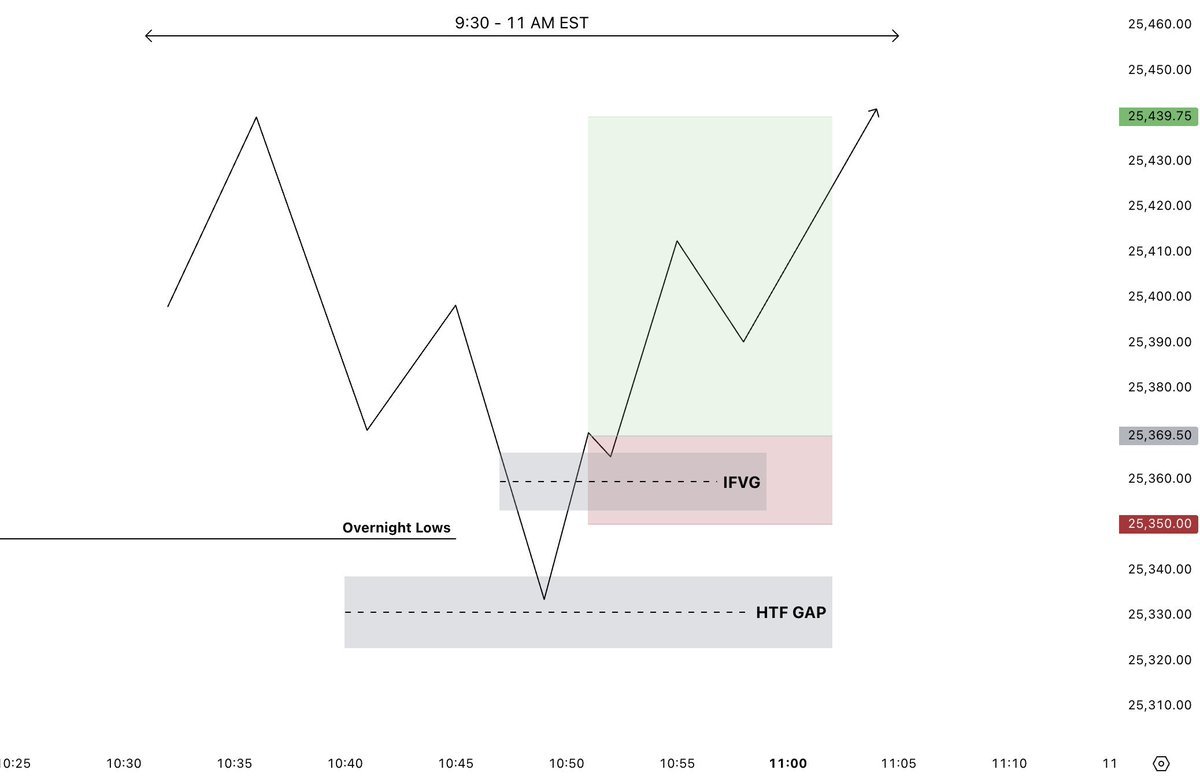
I've been paid over $250,000 in payouts using this simple trading strategy:
1) Daily Bias
2) Major Liquidity Sweep
3) IFVG Entry
4) Target Opposing Liquidity
This setup shows up every single day, all you need to do is stick to your rules 🧑🏫
Your funded prop account isn't a savings account.
It's a tap.
Turn it on. Collect. Turn it off. Repeat 🔁
The goal is to hit the payout threshold & withdraw.
Small, consistent payouts always trump
flexing a big SIM balance you'll eventually blow.
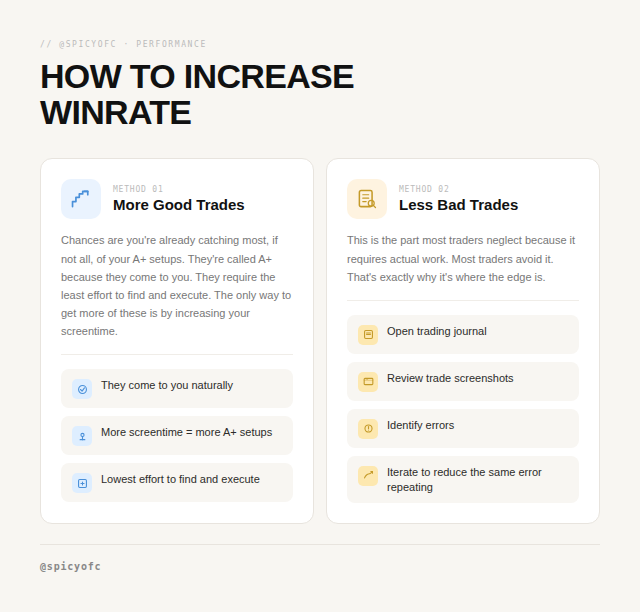
Increasing Winrate % as a Trader
Explained ↓
Take MORE good trades:
• this means just simply being online longer hours.
• A+ trades aren't hard to spot, that's why they're called A+ trades in the first place. High Opportunity + Obvious to see.
Take LESS bad trades:
• this means getting more strict with your entry/exit criteria
• the more strict you get, your trade frequency will go down (but this is fine since winrate % goes up)
• in order to take less bad trades you're going to need to put in the work to properly review your past trades (and extra research) to better understand the core variables which impact your winrate %.
If you do less bad (-EV) stuff but keep everything else the same, you will make more money.