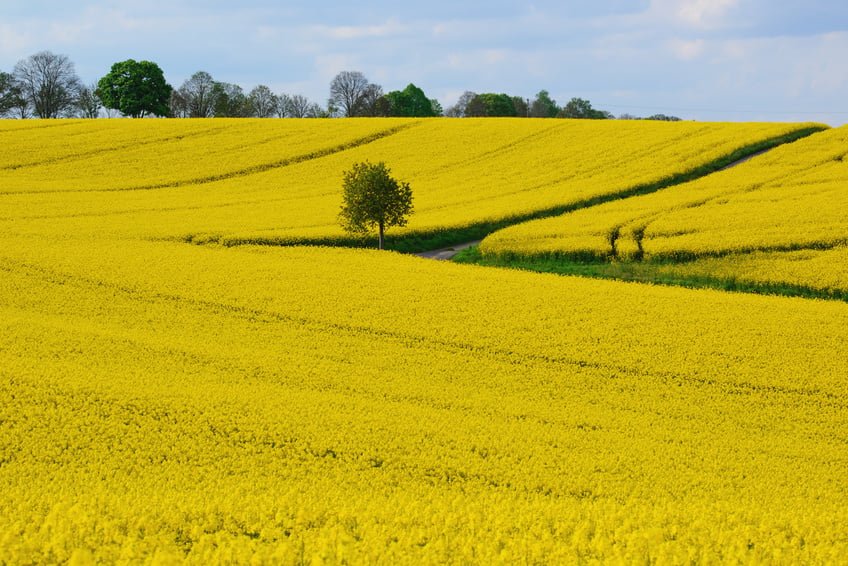
"I eat clean." She drizzles industrially refined rapeseed oil over her salad.
"I'm avoiding processed food." He unwraps a protein flapjack assembled by a team of food scientists in Slough.
"I cut out red meat for my heart." Her breakfast was a bowl of sugar-coated wholegrain cereal.
"I'm dairy-free now." He pours oat milk made of water, sunflower oil, and three stabilisers into his coffee.
"I'm watching my cholesterol." She butters her toast with a margarine spread containing fourteen ingredients designed to mimic butter.
"I'm gluten-free for my gut." He eats a £4 cookie made of rice flour, palm oil, and xanthan gum.
"I'm vegan for the animals." Her almond milk just killed half a hive of commercially trucked Californian bees.
"I prefer plant-based fats." He pours sunflower oil into a smoking pan and inhales the aldehydes.
"I had a healthy salad for lunch." Her spinach, almonds, and quinoa just delivered the daily oxalate quota in one bowl.
"I don't eat anything with a face." He bites into a Beyond Burger with 22 ingredients and a flavour profile assembled in a Californian laboratory.
"I'm being good today." Her breakfast was sweetened oats, a banana, and a glass of apple juice. Eighty grams of sugar before nine.
The labels are doing the talking. The food is doing something else entirely.
Raging farmer says he sprayed stinking slurry over 20 luxury cars illegally parked in his field because he's sick of urban day trippers with no respect for the countryside
https://t.co/zwc85b3yYQ
BREAKING: Scientists have discovered a food that meets every essential human nutrient requirement.
Complete protein with all nine essential amino acids in optimal ratios. Active vitamins A, D, E, and K2. Haem iron at 25% absorption. Zinc, B12, creatine, carnitine, CoQ10, choline, selenium, taurine.
No antinutrients. No lectins, oxalates, phytates, or saponins. No defensive plant chemistry to soak out, sprout, ferment, or boil into submission.
Requires no processing, no fortification, no chemical treatment, no marketing department. Apply heat. Eat.
No postprandial inflammation. No blood sugar spike. Exceptional satiety. The kind that means you skip lunch without noticing.
Available for 2.5 million years. Eaten by every traditional culture from the Inuit to the Maasai to the Welsh hill farmer.
It is red meat.
The scientists did not actually discover this. It was just there the entire time. On the hill. In every kitchen that ever fed a working population through a winter.
We were told to limit it. We did. The population got sicker. The guidelines stayed.
The cow has been waiting. The cow is still waiting.
A short history of the great British improvement.
They came for beef dripping. We got margarine, then seed oils, then a cardiac ward in every hospital.
They came for butter. They told your grandmother it would kill her husband. The replacement was a tub of palm oil emulsified with rapeseed and a yellow dye, and her husband died of a heart attack in 1989 anyway.
They came for full-fat milk. We got skimmed milk, a vitamin D deficiency epidemic in children, and a cereal aisle fortified to plug the gap.
They came for mutton, the meat that fed every shepherd, miner, and mill worker for six hundred years. We got a chicken breast injected with water and a turkey twizzler.
They came for the kipper. We got a Findus boil-in-the-bag, dyed orange, and a fish oil capsule sold at the chemist to make up for the omega-3 nobody is eating.
They came for wool. We got polyester fleece, and microplastics in human placentas. Every one tested. Sixty-two out of sixty-two.
They came for leather. We got synthetic shoes that delaminate in eighteen months, and a high street with no cobbler.
They came for the cotton nappy. We got the disposable, and a landfill that will outlast the child wearing it.
They came for the cast iron pan handed down three generations. We got Teflon, and a forever chemical now found in 98% of British rivers.
They came for the wooden bowl your grandmother kneaded dough in. We got Tupperware, then BPA, then "BPA-free" plastic containing compounds we have not yet bothered to measure.
Now they are coming for the cow herself. The replacement is a textured pea isolate, extruded in a factory in the American Midwest, packaged in plastic, and marketed as the ethical option by a company called Cargill, who happen to be the third-largest meat processor in the United States.
Every traditional material we have been told to give up was working perfectly, for free, for centuries. Every industrial replacement has been worse for the body, worse for the land, and considerably better for the shareholders of the company that sold it.
The pattern is not subtle, and the people running it are not embarrassed.
Your great-grandmother is no longer here to call it.
You are.
How butter is made.
Take cream from a cow.
Shake it.
Strain off the buttermilk.
Salt to taste.
Total processing steps: three.
How seed oil is made.
Take seeds. Heat them to 88°C to denature the proteins and break the cell walls.
Crush them between mechanical rollers under several tonnes of pressure.
Mix the resulting paste with hexane, a petroleum-derived solvent originally used to dissolve grease off engine blocks.
Let the hexane bath dissolve the remaining fat from the press cake.
Distill the hexane back out, mostly. Some stays in the oil. The food regulators have decided this is fine.
Now wash the dark, stinking, brown sludge with sodium hydroxide to neutralise the free fatty acids that taste rancid because the oil already is.
Filter through activated bleaching clay to remove the colour pigments that would otherwise reveal what colour cooking oil naturally is.
Steam it at 240°C under vacuum for an hour to strip out the smell. Without this step, no human would willingly put it near food.
Pour the resulting clear, odourless liquid into a plastic bottle.
But yes.
Definitely healthier than butter.
Trust the experts.
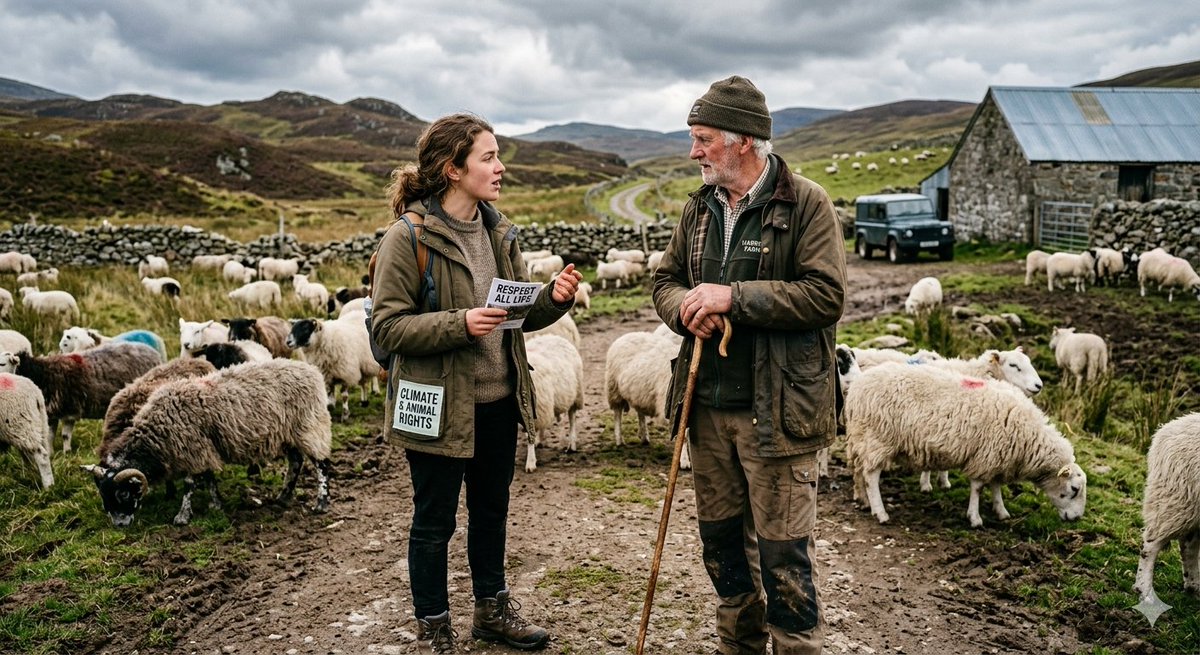
Activist: "You can graze sheep underneath solar panels. It's called agrivoltaics."
Farmer: "I've read the brochures."
Activist: "Best of both worlds."
Farmer: "The panels shade the sward. Productive species die back. What grows is what tolerates shade and compaction. Sheep won't finish on it."
Activist: "But the trials show it works."
Farmer: "The trials run three years and measure ewe presence. Not lamb growth rates. Not finishing weights. Not what the soil looks like in year fifteen."
Activist: "It's still better than nothing."
Farmer: "It's a 30% stocking rate, a steel frame I can't plough around, panel-cleaning chemicals running into the watercourse, and a 40-year lease I can't break."
Activist: "But you're getting energy AND lamb."
Farmer: "I'm getting a third of the lamb, a maintenance contract, and a field my grandson can't farm."
Activist: "You're being negative."
Farmer: "I'm watching a thousand-year-old way of feeding people get traded for twenty-five years of subsidised electricity. Negative would be the polite word."
Seed oils account for roughly 30% of global agricultural land use.
They take up about a third of the calories in the Western diet.
They provide approximately 0.01% of the world's vital micronutrients.
They deliver, in exchange, more oxidation, more inflammation, and more cytotoxic aldehydes than any human population has ever before been asked to metabolise.
Soybean, rapeseed and sunflower together occupy 191 million hectares of cropland to produce 121 million tonnes of oil. That is an area larger than the country of Mexico, growing seeds, to press out a substance that nobody ate before 1910.
The same hectare of land could grow 30 to 50 kilograms of actual vegetables, which contain actual vitamins, in place of one kilogram of refined oil that contains essentially nothing except energy and oxidative damage.
Forty football fields of native ecosystem are cleared every minute to make room for more of it.
And then people look you in the face and tell you that cattle farming is a terrible use of resources.
Cattle farming runs on grass that grows on land where nothing else can. It builds topsoil. It produces complete protein and the entire fat-soluble vitamin profile in one parcel.
The seed oil sector flattens forests to fill bottles with industrial lubricant.
Pick which one is the problem. Take your time.
Fun fact: rapeseed oil is sold as "vegetable oil" in the UK because the original name was bad for marketing.
During the Industrial Revolution, it lubricated steam engines. That was the job.
In the 1950s, the FDA classified it as unfit for human consumption. The erucic acid was toxic to the heart. Banned.
In the 1970s, Canadian scientists bred a low-acid variant, rebranded it "canola," and walked it onto the dinner plate.
Now it's drizzled on salads, baked into bread, and labelled "heart healthy" on the bottle.
Industrial lubricant. Renamed. Repositioned. Sold to the public as the responsible choice.
In addition to calories, it generously provides oxidative stress, inflammation, and a steady contribution to every chronic disease the country is currently drowning in.
They came for butter. We got margarine and seed oils, and a generation with heart disease their grandparents never saw.
They came for leather. We got plastic shoes that crack at 18 months and end up in landfill with the rest of the petrochemical wardrobe.
They came for wool. We got polyester fleece that sheds microplastics into every river and ocean, and into the lungs of every child wearing it.
Now they're coming for beef. The pitch is textured vegetable protein, grown in stainless steel tanks in Singapore, fortified with synthetic B12 because the original article had it built in.
The pattern is consistent. Every "improvement" is worse for the human eating, wearing, or wiping with it. And better for whoever owns the patent.
Traditional materials work. They've been refined over thousands of years by people who had to live with the results. Industrial substitutes are refined over a quarterly earnings call by people who don't.
The cow, the sheep, and the dairy herd were never the problem. They were the competition.
There is a region in southeastern Spain called Almería. If you pull it up on satellite imagery, you will assume the screen has glitched. A vast, blinding white scab where a landscape used to be.
It's not a glitch. It's 64,000 acres of plastic greenhouses. So much plastic sheeting that it is, genuinely, visible from space. The entire region has been wrapped in industrial farming film to grow tomatoes, peppers, cucumbers and lettuce for European supermarkets in January.
The plastic has created its own microclimate. The reflective surface is so vast it has measurably lowered local temperatures by bouncing sunlight back into the atmosphere. Scientists have a name for it. The Albedo effect of Almería. The only place on earth where human activity has cooled the local climate, and they did it by accident, while building the world's largest open-air plastic factory.
The plastic itself is single-use agricultural film. It sits in UV light for three to five years, degrades into microplastics, blows into the Mediterranean, and ends up in the ocean and the soil. Every year, 45,000 tonnes of plastic waste is generated just from replacing degraded greenhouse covering. Every year. Just the covering.
Inside, workers from Morocco and sub-Saharan Africa labour in 45°C heat for €30 a day. No contracts. No rights. Spraying crops with pesticides at concentrations that would be illegal on outdoor fields. Ventilation: minimal. Chemical exposure: constant. The aubergine looks lovely.
The groundwater underneath Almería is so contaminated with agricultural runoff that it has been declared unusable. The region now imports water from elsewhere in Spain while sitting on top of a poisoned aquifer it created. The land that was meant to feed Europe more efficiently has become a place that needs water flown in to keep the show running.
And this is what supplies your fresh vegetables in January. Grown in plastic factories. By exploited workers. Using groundwater they have already destroyed. Wrapped in more plastic. Shipped across Europe. Refrigerated the whole way. So a person in Manchester can have a tomato in February that tastes of nothing.
But sure. Cattle grazing on Scottish hills are the environmental problem.
Pull the satellite up. Have a look. Then tell me which system is the one that needs explaining.
Things produced, every year, by British grass and the animals that eat it.
Beef. Lamb. Mutton. Goat meat in small quantities and growing.
Milk. Cream. Butter. Yoghurt. Hard cheese, soft cheese, blue cheese, fresh cheese, washed-rind cheese, cheese named after villages with populations under four hundred.
Wool, raw and processed. Carpets, rugs, blankets, jumpers, hiking socks, the loft insulation in approximately nine thousand British houses that opted out of the polyester equivalent.
Leather. Sheepskins. The padding in the saddle of every pony club rider in the country, the cover of the chair you read in, the boots that have lasted you fifteen years, the gloves that the farrier wears.
Tallow. The fat that goes into traditional candles, soap, leather conditioning, lubricants, and a small but growing market for cooking fat among people who have read up on what their grandmother used.
Lanolin from the wool. In moisturisers, in lip balms, in the waterproofing for the stitched leather that seven generations of British walkers have worn up British hills.
Bone. For the bone china that this country invented, for stock, for broth, for fertiliser.
Manure. Returned to the soil. Feeding the next year's grass. Replacing the synthetic nitrogen that the rest of the agricultural world has become dependent on.
And underneath all of it: the grassland itself. Permanent pasture, holding more carbon per hectare than almost any other land use. Supporting more biodiversity than arable. Resisting flooding. Filtering water. Feeding the soil microbiome that, in turn, feeds everything else.
All of this from one input.
The input is rain.
There has never been a more elegant production system on this island.
There never will be.
Twenty years before Atkins, fifteen years before the Mediterranean diet, and forty years before anyone in the NHS would utter the phrase "low-carb without flinching", a Hampshire physician was treating obesity, asthma, migraine and gout with butter, bacon and steak. He sold two million books and was politely forgotten.
Richard Mackarness ran Britain's first clinical obesity and food allergy clinic at Basingstoke District Hospital from 1958 to 1983. He had read Banting. He had read Stefansson. He tried the low-carbohydrate approach on himself, lost weight without hunger, and decided it was time a British doctor put it into a book.
He called it Eat Fat and Grow Slim. The title was a deliberate provocation, in a country where rising American influence insisted that fat would kill you.
The protocol: meat, fish, eggs, cheese, butter and green vegetables freely. Carbohydrates under 60 grams a day. Eat fat to satiety. Do not restrict calories.
Across 25 years he kept meticulous records. Average weight loss 14-20 pounds in the first three months. Sustained weight loss at 12 months in approximately 60% of patients. At five years, approximately 40%, which is remarkably high for any dietary intervention.
Other outcomes: resolution of asthma in roughly one-third of affected patients, reduction in migraine in roughly half, and complete resolution of gout in nearly all who adhered to the protocol.
His 1976 second book, Not All in the Mind, documented hundreds of cases in which chronic symptoms resolved completely when specific food triggers were removed. The most common triggers: wheat, refined sugar, pasteurised dairy, industrial seed oils, caffeine.
His clinic was closed in 1983 when Basingstoke District Hospital was reorganised. His approach, which had treated thousands of patients successfully, was not institutionalised anywhere in the NHS.
He retired and emigrated to Australia. He died in 1996, aged 80. His books are out of print in Britain.
Current NHS obesity treatment costs: £6.5 billion a year.
Mackarness's clinic treated 3,500 patients for under £50,000 a year in 1960s pounds.
The cost-benefit analysis has not been run. The result would be too uncomfortable to publish.
He was right. He was British. He was ignored in Britain. Then exported to Australia, where he died in quiet retirement.
This is how Britain handles its medical heretics.
It has not improved.
You could shear a sheep in May.
It takes ten minutes. She is grateful. The fleece keeps you warm for forty years. When you're done, you bury it, and it becomes soil within three years.
Or, for ethical reasons, you could choose one of the alternatives.
Cotton. Requires 10,000 litres of water per jumper. The Aral Sea is now mostly dust because the Soviet Union diverted its rivers to grow it. But the jumper is "natural."
Polyester. Crude oil, extruded into thread. Sheds 700,000 microplastic fibres per wash. Lasts in landfill until approximately the year 2226. But "vegan."
Acrylic. Petrochemical, manufactured using a solvent the EU has classified as a reproductive hazard. Marketed as "cruelty-free." The cruelty is in the supply chain.
Bamboo. The plant is innocent. The fabric is bamboo viscose, dissolved in carbon disulphide in a Chinese chemical plant whose workers have elevated rates of psychosis. But it has a leaf on the label.
Hemp. Genuinely fine. Most of what is sold as hemp is a polyester blend, sold at four times the price.
Recycled polyester. Still sheds microplastics. Still ends up in landfill. Made from plastic bottles that could have been recycled into more bottles. The fashion industry has been quiet about this.
Vegan leather. Plastic. Reliably. Always.
Lab-grown fibres. Genetically modified bacteria fed on glucose syrup in a steel tank, in a factory powered by natural gas, packaged in plastic, shipped from California. Funded by venture capital. Not yet profitable.
Or you could shear the sheep in May. She'd appreciate it. The jumper would last forty years. The grass would grow back the same.
But of course, the sheep is the unethical option.
Chips fried in beef dripping were a different object to what passes for a chip today.
Walk into a Whitby chippy in 1978. The fryer has been on since 11am. The fat in it is beef dripping, held at 180 degrees by a man in a white apron who has been frying chips since he was fifteen. There are no seed oils in the building. The idea would not occur to anyone.
Thick-cut Maris Pipers, ninety seconds in the dripping. Dark gold at the edges, fluffy inside, crisp in a way that sets your teeth against them. Salt. Vinegar. Paper. Two bob.
You eat them walking home along the harbour wall. The chip tastes of the chip and also of something underneath the chip, something deeper, something you don't have a name for because you are nine and nobody names it, it is just what chips taste like.
That taste was beef dripping.
By 2002, 90% of British chippies had switched to rapeseed, palm, or sunflower oil, on the advice of public health officials citing research since quietly retracted. A stable saturated fat used for ten thousand years, swapped for an industrial oil invented in 1911, oxidised at fryer temperatures for twelve hours a day.
A seed-oil chip is lighter, flatter. The crust doesn't hold. The flavour stops at the potato. No deeper note. No roast beef on a Friday.
Ask a British person under thirty what chips are supposed to taste like and they will describe, with complete sincerity, the chip they have always eaten. A chip their great-grandfather would have considered a practical joke. They cannot miss it, because the reference point was removed from the national palate before they were born.
A handful of chippies still fry in dripping. The Magpie in Whitby. A few survivors in Yorkshire, Lancashire, the Black Country.
Go. Drive. Queue. Eat them standing up, out of the paper.
You will understand, in one bite, what was taken.
The cow is still in the field. The suet is still at the butcher. The fryer could be switched back tomorrow.
A whole country forgot what a chip was.
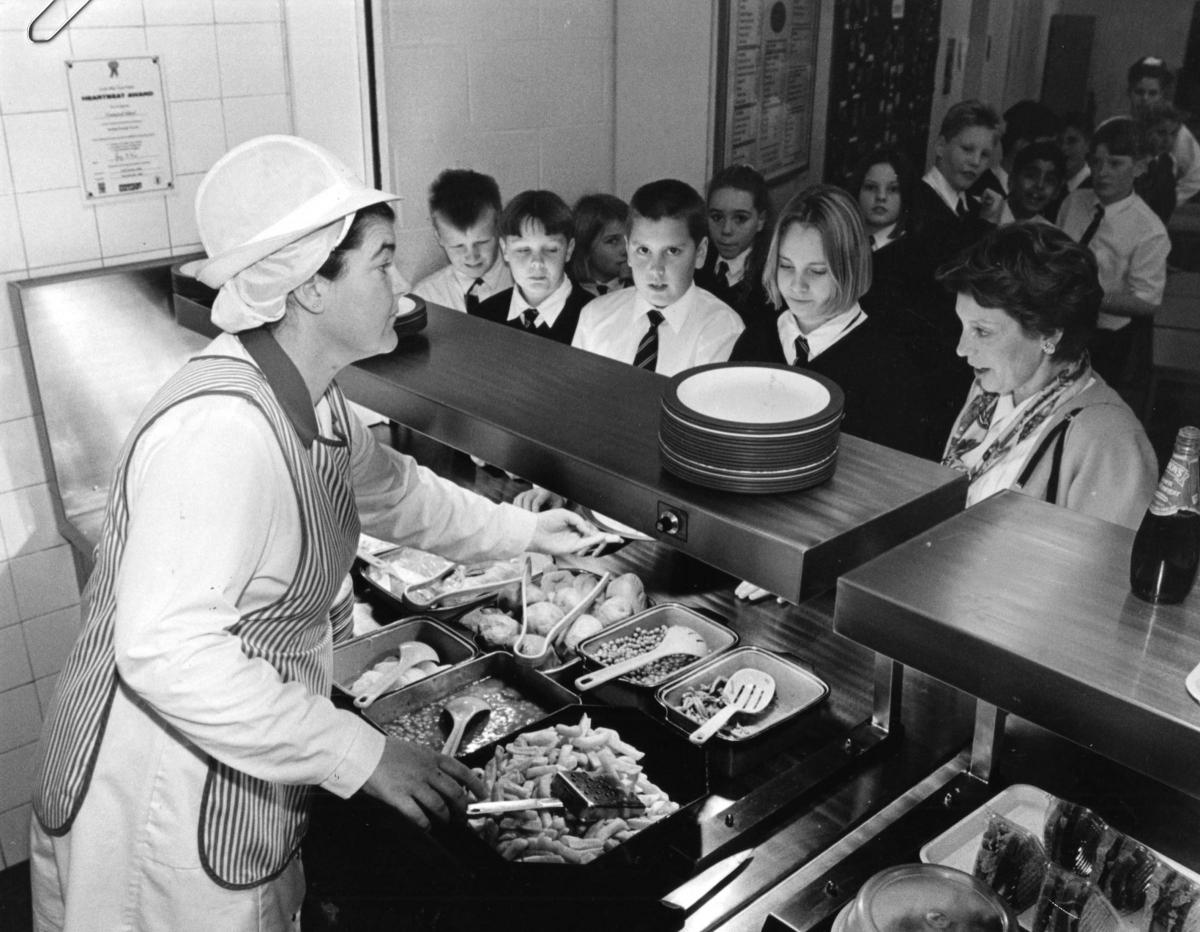
A British school dinner in 1975 was cooked on-site, from whole ingredients, by a dinner lady who knew, without consulting a nutritional database, what a growing child needed to eat.
The dinner was: roast beef, gravy from the drippings, boiled potatoes, cabbage, and sponge pudding with custard made from eggs and milk. Or shepherd's pie from real mince. Or liver and onions. Or fish on Friday, battered and fried in beef dripping.
In a single sitting: haem iron from the meat, calcium from the custard, B12 from the liver, vitamin A from the gravy fat, vitamin D from the eggs, zinc from the beef, omega-3 from the fish, collagen from the gravy, complete protein from every component, and roughly 800 calories dense enough to carry a child through an afternoon of running around a playground in January.
Then the system changed.
In the 1980s and 1990s, local authority catering was outsourced. On-site kitchens closed. Dinner ladies were made redundant. Central production kitchens began manufacturing meals reheated in convection ovens.
The roast beef became a turkey twizzler. The shepherd's pie became a pre-formed disc of processed potato and reconstituted meat product. The liver disappeared entirely. The fish was coated in breadcrumbs and fried in vegetable oil. The custard was made from powder, water, and yellow colouring. The sponge pudding was replaced by a yoghurt tube.
Jamie Oliver's 2005 campaign filmed children who could not identify a tomato. Kitchens where the only equipment was a deep fryer and a microwave. Menus that contained less nutritional value in a full week than the 1975 dinner contained in a single sitting.
The government pledged reform. But the on-site kitchen did not come back. The dinner lady did not come back. The roast beef and the liver and the custard made from eggs did not come back.
The 1975 dinner lady, who had no nutritional qualification and had never heard of a DIAAS score, was producing, at approximately 30p per serving, a meal that contained more bioavailable nutrition than anything the modern system produces at three times the cost.
She has been replaced by a supply chain.
The supply chain is more expensive.
The children are less well fed.
The dinner lady knew what she was doing.
Nobody asked her.
Sugar, listed by what the label is allowed to call it instead:
Glucose
Fructose
Sucrose
Dextrose
Maltose
Lactose
High-fructose corn syrup
Agave nectar
Coconut sugar
Date syrup
Maple syrup
Brown rice syrup
Barley malt extract
Oat syrup
Fruit juice concentrate
Evaporated cane juice
Treacle
Molasses
Corn syrup solids
Invert sugar
There are over sixty approved alternative names for sugar on UK and US food labels.
Every single one of them is sugar.
They were not given sixty different names because manufacturers wanted you to understand what you were eating.
Stop letting them do this to you.
In 1797, John Rollo, a British Army surgeon, had a diabetic patient passing sugar in his urine.
He put him on meat and fat. The sugar disappeared. The patient recovered. Rollo published it.
For the next hundred years, low-carbohydrate diets were the standard clinical treatment for diabetes. In the textbooks. In the hospitals. What doctors actually did.
In 1916, Frederick Allen opened a clinic at the Rockefeller Institute. No insulin existed yet. He kept diabetic patients alive on near-zero carbohydrate. Some survived long enough to receive insulin when it arrived in 1921.
The diet bought them years they otherwise wouldn't have had.
Then insulin arrived. And the diet became inconvenient.
If you could inject insulin to handle blood sugar, you didn't need to restrict carbohydrates. The drug had a manufacturer. The diet had neither.
In the 1950s, Elliott Joslin, the most influential diabetologist in America, began quietly softening the carbohydrate restriction that had defined diabetic care for 150 years.
In 1977, the McGovern guidelines told the entire American public to reduce fat and eat more carbohydrate. Diabetics were not exempted.
By the 1980s, the American Diabetes Association was recommending fifty to sixty percent of calories from carbohydrate for diabetic patients.
Fifty to sixty percent. For a condition defined by the inability to regulate blood sugar.
The prescriptions went up. The insulin doses went up. The complications went up. The pharmaceutical companies filed quarterly earnings that would make a small country uncomfortable.
In 2008, the ADA acknowledged that low-carbohydrate diets could be appropriate. As an option. In a footnote. After thirty years of recommending the opposite.
In 2019, Virta Health published a two-year trial. Low-carbohydrate diet. Type 2 diabetes reversed. Not managed. Reversed.
The same outcome Rollo documented in 1797.
In 2023, Diabetes UK quietly updated its guidance to acknowledge low-carbohydrate eating as valid.
Two hundred and twenty-six years after Rollo published the case report.
Extraordinary pace of progress.
You want to know the most efficient land use in Britain?
Not almonds. (You can't grow almonds here. The climate would make them feel personally attacked.)
Not avocados. (Laughable.)
Not quinoa. (We tried. It's fine. It's not fine.)
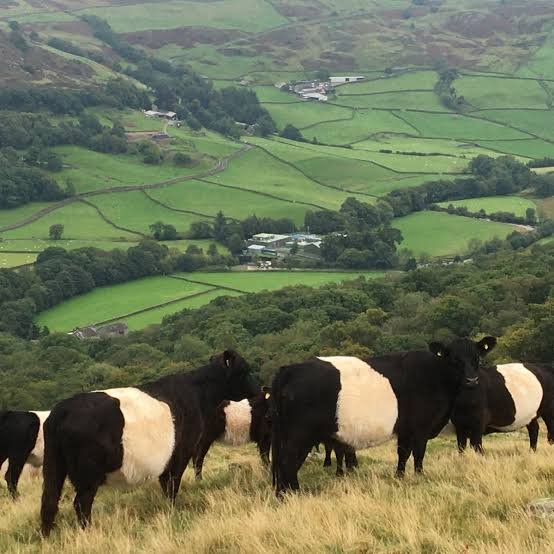
Grass. Which grows on the 65% of British agricultural land that cannot support arable crops. Which feeds ruminants. Which converts that grass into complete protein, saturated fat, and fat-soluble vitamins through a digestive system that has been running without modification for forty million years.
The cow is not a problem to be solved.
The cow is the solution that was already here.
Activist: "Animal agriculture is contaminating our land and water systems."
Farmer: "What specifically are you seeing?"
Activist: "Runoff. Pollution. The environmental impact of livestock."
Farmer: "Right. My fields get one application of lime every four years. That's it. What's going in the wheat field over the road?"
Activist: "That's different."
Farmer: "Twelve applications between planting and harvest. Fungicide, herbicide, desiccant. Goes on in September, still measurable in the flour."
Activist: "We need to move to plant-based systems."
Farmer: "There's cadmium in European arable topsoil from the phosphate fertiliser. Has been for decades. EU set a limit on it in bread because they had to."
Activist: "Meat is still worse."
Farmer: "The pasture behind you hasn't had a chemical application since my grandfather's time."
Activist: "..."
Farmer: "The cattle are eating grass. The grass is growing from rain and dung. No inputs. Nothing in the soil that shouldn't be there."
Activist: "But methane."
Farmer: "The methane's been cycling here for a thousand years. The soil's still here. The curlews are here. The topsoil on the arable farm two miles away is measurably shallower than it was in 1950."
Activist: "I'll have to look into that."
Farmer: "Aye. Have a look. Mind the gate on your way out."