A housing and land use think tank and policy advocacy focusing on growing San Diego in a sustainable way while preserving what makes it special. +infill -sprawl
The irony of this Colorado company's empathy for victims of wildfire while fighting to place a dangerous sprawl development in wildfire country in Harmony Grove, San Diego County. Even pushed for a waiver of secondary egress in a Very High Fire severity zone. #dontburnus
This fricken guy whose incompetence killed dozens and sickened hundreds of homeless people and wasted $100s of millions of taxpayer money on #101Ash now wants the keys to the county. #FaulcNo
The Union-Tribune wouldn’t trust @Kevin_Faulconer to run a lemonade stand 🍋 — let alone our County. With disasters like 101 Ash Street costing taxpayers $264 million 💸 and the Hepatitis A outbreak that killed dozens on his watch, we cannot let Faulconer screw up the County too.
This is exactly the type of project that CEQA was intended for… a massive, car-dependent sprawl development in a high fire risk area 2 hours from LA, in the middle of nowhere. No wonder you guys are against CEQA. You want to continue the bad practices of yesterday.
Sprawl development in the fire prone areas is profitable because the cheaper lands have low development potential (and are zoned as such) due to the fire risk. But when developers hire consultants to paint rosy pictures of fire safety, the county often takes them at their word.
Letting developers be responsible for assessing the safety of their own projects in high fire risk areas is like letting a fox assess the safety of a henhouse. County needs to control this crucial job and not leave it to those whose profits depend on it. https://t.co/mqEsEM2ZwL
The Building Industry, thwarted by court rulings by environmental groups @AGRobBonta’s office, try an end run with #AB2705 to invalidate community and environmental concerns about building high end developments in very high fire risk lands.
🧵1️⃣ This is a terrible bill by @quirk_silva and the @californiabia. This is doubling down on #sprawl in high fire risk areas where 20,000 homes have been destroyed in the past few years. Call your representatives to say “no to sprawl in high fire risk areas.” ⬇
And the @CityofSanDiego does next to nothing to help homeless people get out of the weather. Less than 20 shelter beds for thousands of people on the street.
Instead of working towards solutions, it appears the local political establishment would rather pick petty fights with activists on the ground. Embarrassing, but also a sign that corporate lobbyists hired by our elected officials are not really serving the public.
This is heartbreaking and enraging. Meanwhile, @RachelLaing at @ToddGloria’s office wastes time on petty attacks on homelessness activist @HomelessnessSD breaking all the rules of good PR. Local pols seem more focused in serving downtown interests than ending needless suffering.
3️⃣ Study: SD County generated a ton of sprawl using General Plan Amendments vs. other jurisdictions, but ZERO affordable housing units. This means, the Supervisors at the time, allowed developers to bypass land use rules but got nothing in return to help with affordability.
🧵1️⃣ San Diego County has a very bad record of approving #sprawl projects in Very High Fire Severity Zones, among the worst in the state. And, in the past 2 decades, SD has lost almost 4000 homes to #wildfire. 👇🏼 @NoraVargasSD @SupFletcher @lawsonremer
Governor @GavinNewsom refuses to sign bills that limit development in very high #wildfire areas ($3 million in donations from #sprawlindustrialcomplex). Courts are doing what he refuses to do. Thanks @CenterForBioDiv for looking out for the people of CA.
https://t.co/4kvNJJoFGo
2️⃣ Recent study by @BerkeleyLaw and @AirResources found that SD County was worst offender of those studied. 2/3 of units approved in Very High Fire Severity Zones and the most greenfield / agricultural conversions aka #sprawl. https://t.co/ubOukkdVo7
A classic analysis on how industry exploits the uncertainty inherent in scientific inquiry + ideological propaganda to undermine inconvenient facts. Tobacco, oil and gas and real estate industry use the exact same techniques.
https://t.co/X3xX7VhoTd
The answer is no. 1/4 million metric tons of CO2 per year… caused by driving and long commutes that sprawl projects create. Climate goals cannot be met with these types of projects: a mismatch between land use planning, housing needs and climate goals.
https://t.co/g6ftNk2oUJ
Ouch. @andy_keatts not pulling punches here. Climate Action Plans as a performative exercise is not going to fly in this day and age. Will the County’s CAP follow the same pattern? Not if we hold them accountable. Let’s get our shit together San Diego!
https://t.co/2NG4L9Uxn9
Have San Diego’s anti-displacement strategies worked? Does the City even have anti-displacement strategies or is the strategy 100% focused on supply, let the market sort it out?
https://t.co/EOvEJqGW4w
Policy needs to focus on delivering very low, low and moderate income housing. The “above moderate” housing seems to be doing ok, should continue, but the glaring need is in “very low” “low” and “moderate”. Statewide, we’ve produced only 11% of VL. 🧵 for stats on SD County👇🏼
New head of @California_HCD@GVelasquez72 pilloried on housing twitter for pointing out the obvious that CA has had fewer issues meeting its “above moderate income” (120%+ AMI) goals in the past 10 years while only delivering 11% of lower income needs. 👇🏼for San Diego figures 🔥.
Enviros 2, #Sprawl 0. Another setback for the sprawl industrial complex who are living in a state of denial. The paradigm is changing. Infill and livable cities rule. Sprawl is the dinosaur that is holding us back. Join us in the 21st century. @BIASanDiego https://t.co/Fpd5VbjLxd
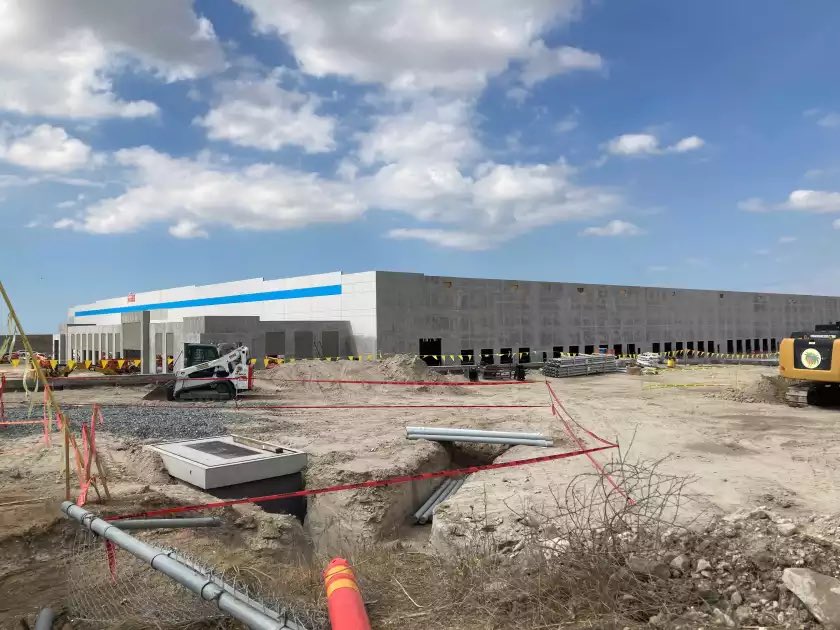
Warehouses in South Bay are approved, not by elected officials, but by the director of County Planning Services. “Residents could have filed an appeal about the project to the Planning Commission, but none were received.” Wonder how diligent the notification was (bilingual, etc.)
1️⃣ Do we all really need stuff delivered the very same day? Is it worth plunging underprivileged communities into more pollution, toxic emissions? Communities least likely to use their services are the ones who are most impacted. And less likely to attend hearings. @EHCSanDiego
Vehicular emissions, whether from commuters or warehouses, disproportionately impacts lower income communities and are also the largest source of emissions and GHGs in the state.
1️⃣ Good piece by @jemersmith. Ask folks in San Bernardino @CCAEJ how Amazon has destroyed their communities, esp. lower income communities of color surrounded by millions of diesel trucks and pollution that entails. @EHCSanDiego. Welcome to South Bay ⬇️
https://t.co/zAUeDrJHs0
State laws are manipulated by special interests at the local level to try to avoid the adhering to laws intended to limit climate change and lower localized pollution. They will keep trying.
Pro-sprawl lobbyists 0, Enviros 1. This is just the beginning. Sprawl developers and their lobbyists are doing everything they can to shape SB743 to favor car-centric fire-trap sprawl projects. They have great influence over both D’s and R’s on the Board. https://t.co/tTthSzWSOD