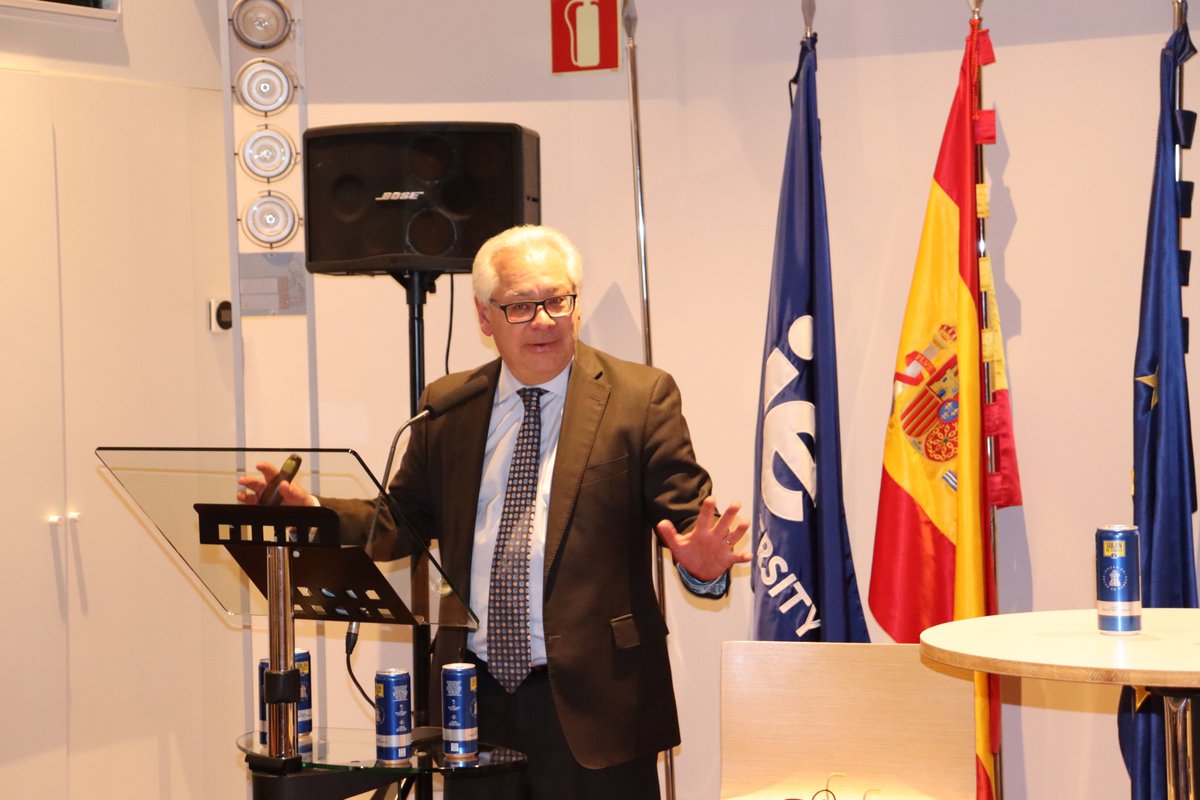
May in motion.🌍
From 🇧🇪 Belgium to 🇦🇹 Austria, 🇵🇱 Poland, and 🇺🇸 the US, the past few weeks have been filled with conversations on Tech, geopolitics, leadership, and the future of higherEd.
@IEuniversity@ie_nyc
Hace poco más de cuatro años nos propusimos desde @AgendaCAF convertirnos en el banco verde de la región, varios hitos han sido alcanzados, hoy me alegra ver este, emisión en Euros para financiamiento verde con una demanda histórica!https://t.co/28jK4dAFPI
Fragmentation means decline for Europe. Tks to @RevOccidente@and_rizzi@FVallespin for this intense exchange on the future of European Union 🇪🇺 between 🇺🇸 and 🇨🇳.
Yes. #StopEUbashing ;🇨🇭now closer to the EU🇪🇺. Iceland 🇮🇸holding a referendum next August on EU accession. Norway 🇳🇴 and UK 🇬🇧 with stronger ties. Bulgaria 🇧🇬 just entered the €🇪🇺. EU attractiveness is growing, not declining.
Good News. #Mercosur agreement is a crucial move for 🇪🇺EU. We act, we don’t only react. And in the right direction. Fair trade, openness and cooperation.
¡Excelente Noticia! En un mundo cada vez más polarizado este acuerdo abre grandes oportunidades tanto para Europa, como para Mercosur
https://t.co/91D28G00Ry
🔴🔥 | Acabo de denunciar a Antonio Maestre por un delito de odio contra el pueblo venezolano |
Esta mañana, he presentado una denuncia ante la Fiscalía Provincial de Madrid contra contra D. Antonio Maestre Hernández por un presunto delito de odio, tipificado en el artículo 510 del Código Penal, por el contenido de un artículo titulado “la gusanera fascista venezolana en España” publicado el 7 de enero en @laSextaTV.
Estos son los motivos que me han llevado a denunciarlo:
1️⃣ Porque el artículo no critica ideas concretas ni conductas individuales, sino que ataca de forma generalizada a un colectivo definido por su origen nacional —los venezolanos residentes en España— atribuyéndoles rasgos vejatorios y declarándolos como una amenaza política y social.
2️⃣ Porque emplea lenguaje degradante y deshumanizador (“parásitos”, “escoria desagradecida”, “caterva de fascistas”), proyectado sobre un grupo entero, algo que la jurisprudencia considera un elemento típico del discurso de odio.
3️⃣ Porque normaliza y legitima represalias colectivas, llegando a justificar deportaciones forzosas y afirmando literalmente que “no está tan mal que eso ocurra”.
4️⃣ Porque no se trata de una opinión aislada o marginal: el artículo está publicado en un medio de tirada nacional y firmado por un periodista con amplia proyección pública, lo que incrementa de forma decisiva el riesgo y el alcance del mensaje.
5️⃣ Porque la libertad de expresión no ampara la incitación al odio, la estigmatización ni la exclusión de colectivos protegidos, como ha reiterado el Tribunal Supremo, el Tribunal Constitucional y el TEDH.
Quiero trasladar mi apoyo a los venezolanos que viven en España y dejar claro que este tipo de discursos no representan a la inmensa mayoría de la sociedad española.
Adjunto comprobante del registro, así como el texto de la denuncia.
@sextaNoticias@AntonioMaestre Periodismo? Medio de Comunicación? Permite publicar a un ignorante xenófobo. Después se preguntarán porque el auge de la derecha, la respuesta es muy sencilla, aunque seguro no la entienden, por escoria como ustedes. Lo que siembren recogerán.
@AntonioMaestre Periodista? Socialista? Un ignorante xenófobo. Después te preguntarás porque el auge de la derecha, la respuesta es muy sencilla, aunque seguro no la entiendes, por escoria como tu. Lo que siembres recogerás.
Fixing the Venezuelan oil industry will take time, money, and—most importantly—institutional change
Francisco Monaldi
Director of the Latin American Energy Program, Rice University’s Baker Institute
In the short term, Venezuela’s oil industry will have a limited impact on global markets. The country currently accounts for less than one percent of world oil production. Over the medium and long term, however, a sustained recovery in Venezuelan output could make a meaningful difference. From a purely technical standpoint, Venezuela could produce four to five times its current level of roughly one million barrels per day. Achieving that outcome, however, would require more than a decade of consistent effort and investments exceeding $100 billion dollars.
Geology is not Venezuela’s problem. The country possesses vast reserves, faces relatively low geological risks, and enjoys moderate extraction costs. Under an appropriate contractual and tax regime, oil production would be profitable even at prices as low as $25–30 per barrel. The real obstacles to investment are not found below ground but above it. They are political, regulatory, and institutional in nature.
Over the past quarter century of chavismo in power, the Venezuelan state has repeatedly reneged on its agreements with foreign investors. Resource nationalism has restricted the role that international oil companies can play, undermining confidence and discouraging long-term commitments. The national oil company, PDVSA, is now effectively bankrupt and lacks the operational and financial capacity to lead a recovery on its own. Any significant increase in production would therefore have to be driven largely by foreign firms.
For that to happen, several conditions must align. Venezuela would need stable and constructive relations with the United States and Europe, along with the permanent removal of oil sanctions. Investors would also need to perceive a minimum degree of political stability and, critically, a durable consensus among the country’s political leadership in favor of reopening the oil sector to foreign participation. Finally, a credible and competitive legal framework would need to be approved by a legitimate legislature and enforced by a legitimate executive.
Some argue that sanctions relief alone could unleash a rapid influx of investment. In reality, sanctions relief is necessary but far from sufficient. Without firm legal protections, policy continuity, and political legitimacy, large-scale investments with long development horizons will not materialize.
In the absence of genuine institutional change, Venezuela may still attract limited “low-hanging fruit” investments—projects with high short-term returns and fast cost recovery. While these could generate modest gains, they would do little to rebuild the industry or restore the country’s production capacity over the long run. Major projects requiring substantial capital and long maturities will remain out of reach.
The central problem facing Venezuela’s oil sector is therefore not technical or geological. It is political and institutional. These realities are often obscured by wishful thinking or by actors seeking quick profits. A meaningful recovery is possible, but only if it is grounded in durable political change, credible institutions, and a long-term commitment to restoring investor confidence.
Excellent column by the great Venezuelan economist Ricardo Hausmann on the fleeting hours of happiness when Maduro was deposed, on the Trump delusion and on how prosperity relies on rights which can only be secured in a democracy. Fantastic.
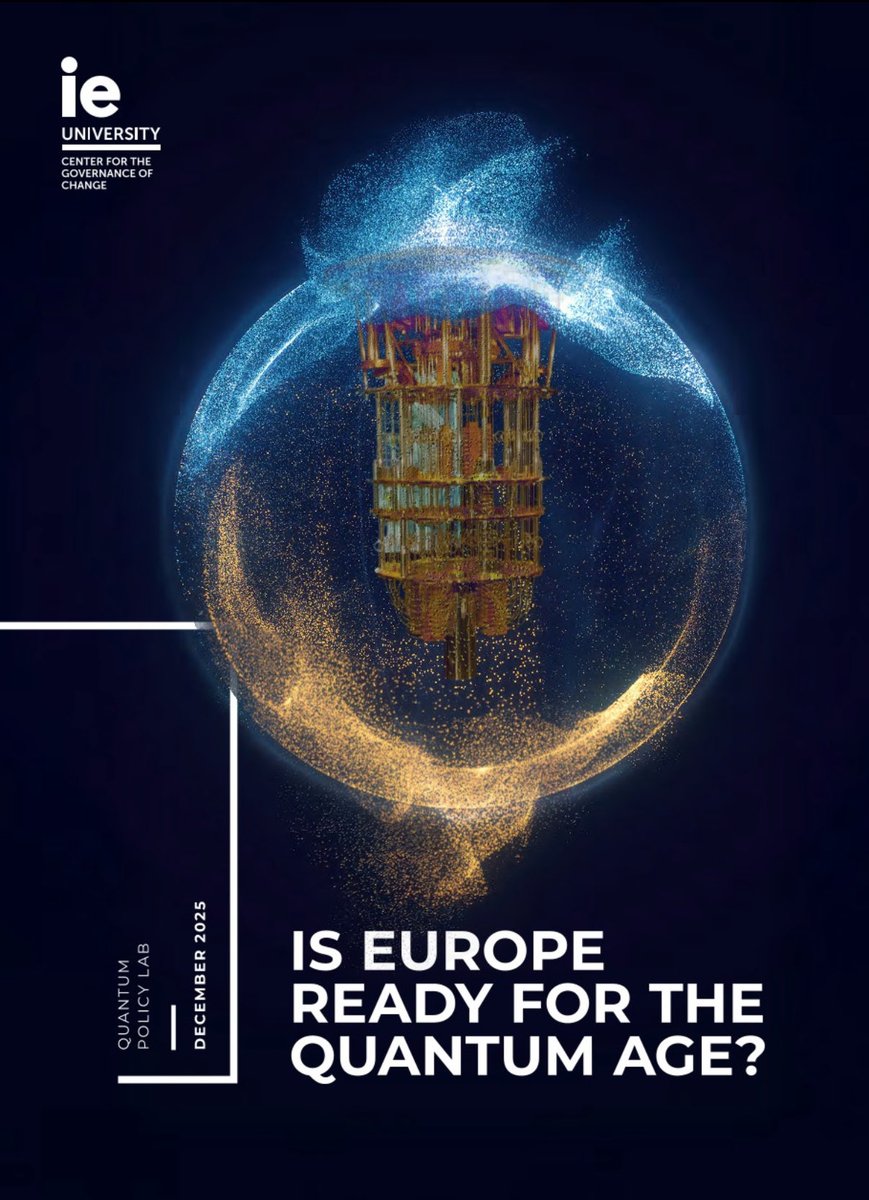
Is Europe ready for the #QuantumAge? 🇪🇺
Our new @ieGovernance Quantum Policy Lab report is clear: Europe is scientifically ready but strategically incomplete.
The challenge isn’t research. It’s turning excellence into sovereign capability.
https://t.co/QGqRDKcCdu
@IEuniversity
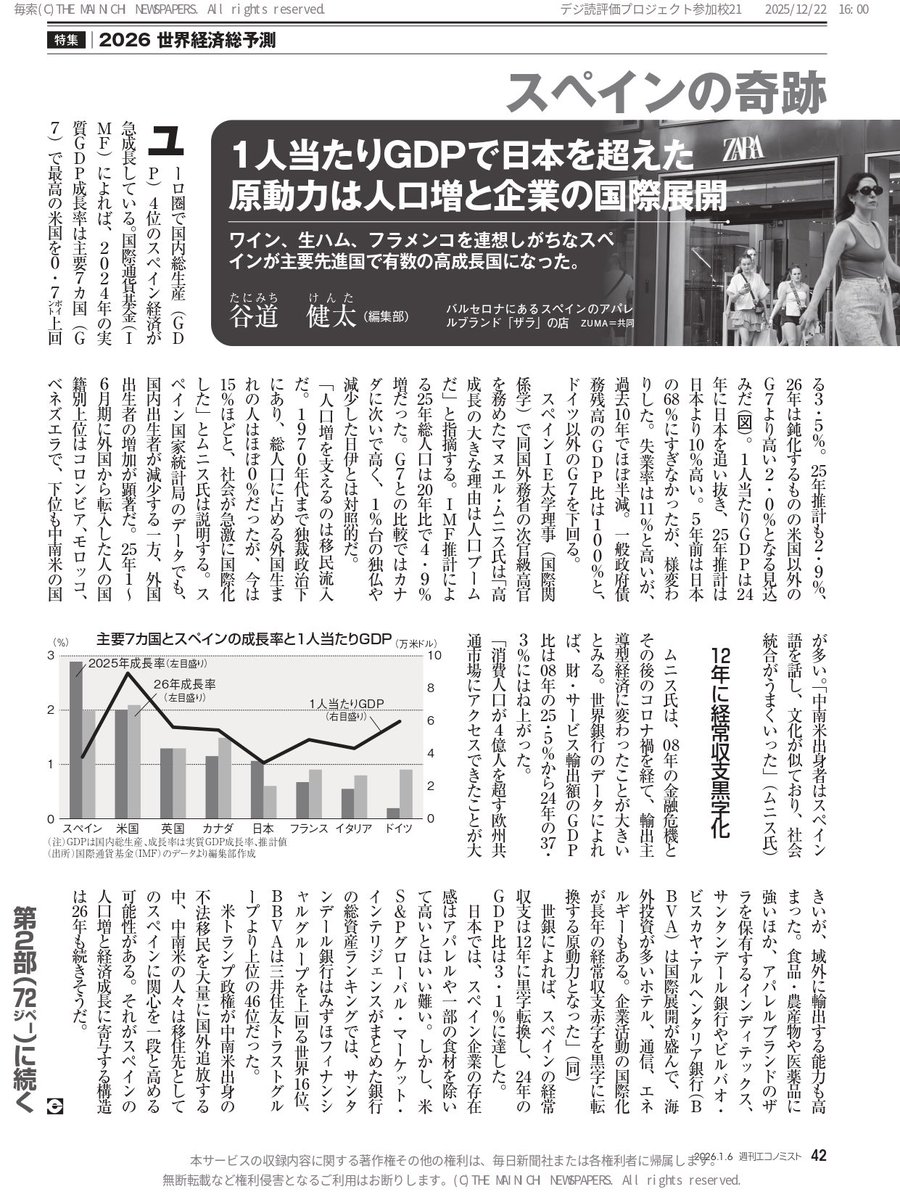
Sharing my interview with @EconomistWeekly 🇯🇵 on Spain’s economic momentum 🇪🇸 and a fragmenting global order.
Demographic dynamism, internationalized firms and deeper Europe–Japan cooperation matter more than ever. 🌍
https://t.co/xF83l2kms2
@IEuniversity
Europe’s global influence depends on knowledge. 🌍💡🇪🇺
We must reinvest in universities to compete, innovate, and shape the world.
My latest piece for Social Europe 👇
🔗 https://t.co/QeL8VqOkmk
Ayer presentamos, junto a @IEuniversity y @CFAinstitute, nuestro informe “El Ecosistema de Startups y Capital de Riesgo en América Latina y el Caribe”, una radiografía esencial del futuro emprendedor de la región. 🚀🌎
El acto contó con la participación de:
✨ @IlkeToygur, PhD (Global Policy Center, IE University)
✨ Manuel López Donaire (@LCDelaviuda | CEAPI)
✨ Luis Buceta (CFA Society Spain)
✨ @grrios (Observatorio ALC – IE University | CEAPI)
🗣 “La respuesta a los cambios geopolíticos es Más Iberoamérica.” — Manuel López Donaire
🗣 “La resiliencia de las startups augura una época dorada de innovación.” — Germán Ríos Méndez
🗣 “Transmitir conocimiento es clave en este momento UE–ALC.” — İlke Toygür, PhD
Además, celebramos la mesa redonda Startups en Latinoamérica: protagonistas, con:
🔹 Antíoco Cuesta Moralí (@improove)
🔹 Estefanía Abello Plata (@MUTA)
🔹 Martín Umarán (@Globant)
🔹 Omar Said López Tronco (@cluppseguro)
Moderada por @fibarburu (CFA Society Uruguay).
Una jornada para impulsar la innovación, la inversión y el talento latinoamericano. 💡✨
El 5 de noviembre participaré en la presentación de la revista Pódium, titulada Educar para crecer: inversión en educación y su impacto en la competitividad de las economías iberoamericanas, organizado por @EspacioOEI en @casademexicoesp
Más info: https://t.co/IrbIEjRzyz
@iespeg