We are pleased to announce the release of the fourth edition of the Institute,s Quarterly Research Newsletter.
This edition showcases the Institute's latest research milestones, scientific discoveries, strategic partnerships, and capacity-building initiatives that continue to advance wildlife conservation and management in Kenya.
It reflects our unwavering commitment to generating knowledge, fostering innovation, and promoting evidence-based conservation to support the sustainable management of wildlife and biodiversity.
To read the full newsletter, use the link below or visit our website, https://t.co/q3TlAg8bcV, and access it from the downloads section.
The Institute in collaboration with Tsavo Trust and the Tsavo Simba Project is undertaking an extensive large carnivore survey across Southern Tsavo East National Park aimed at uncovering the true status of some of Kenya's most iconic predators.
The three-month survey seeks to generate up-to-date information on the abundance, distribution and movement patterns of large carnivores, providing critical scientific evidence to guide long-term conservation planning and management within the greater Tsavo landscape.
Before heading into the field, survey teams underwent an intensive two-day technical training on survey design, carnivore identification, standardized data collection procedures and quality assurance protocols to ensure accurate and reliable data.
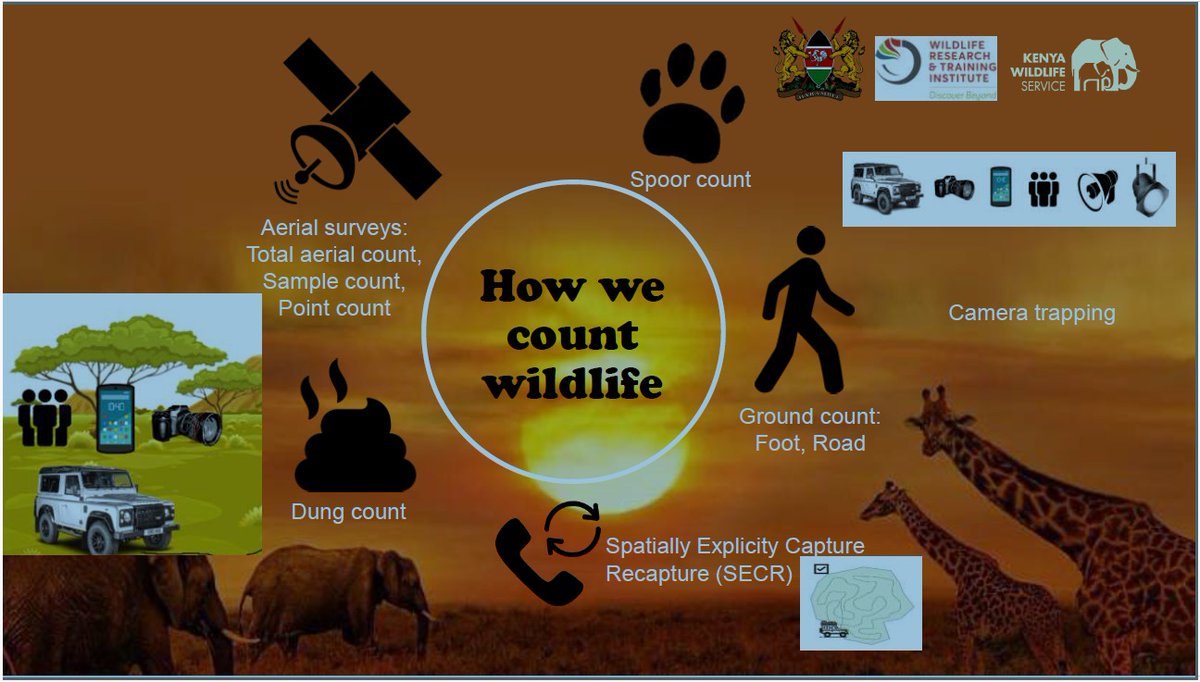
At the heart of the survey is the Spatially Explicit Capture-Recapture (SECR) method, a globally recognised scientific approach that estimates wildlife populations by analysing where individual animals are detected, how often they are encountered and the level of survey effort applied.
By accounting for animals that may be present but not observed during every survey occasion, SECR provides one of the most robust estimates of carnivore population density.
To identify individual animals, researchers rely on unique natural markings such as coat patterns, rosettes, whisker spots, scars, ear notches and mane characteristics. Repeated sightings of the same individuals help scientists build encounter histories that form the basis of population analysis.
While the survey places a special focus on lions, it will also gather vital data on leopards, cheetahs, African wild dogs, spotted hyenas, striped hyenas and other medium-sized carnivores found within the ecosystem.
Field teams are currently documenting survey effort, distances covered, time spent in the field, GPS locations of sightings, species composition, photographic evidence for individual identification and repeat encounters of previously recorded animals.
The findings from the survey are expected to significantly enhance understanding of carnivore populations in Tsavo, one of Africa's most important conservation landscapes and a global stronghold for large mammals.
The Institute appreciates the dedication of the field teams and the invaluable financial, technical and logistical support from Tsavo Trust and the Lion Recovery Fund.
This partnership continues to strengthen science-based conservation and long-term monitoring of Kenya's iconic carnivores.
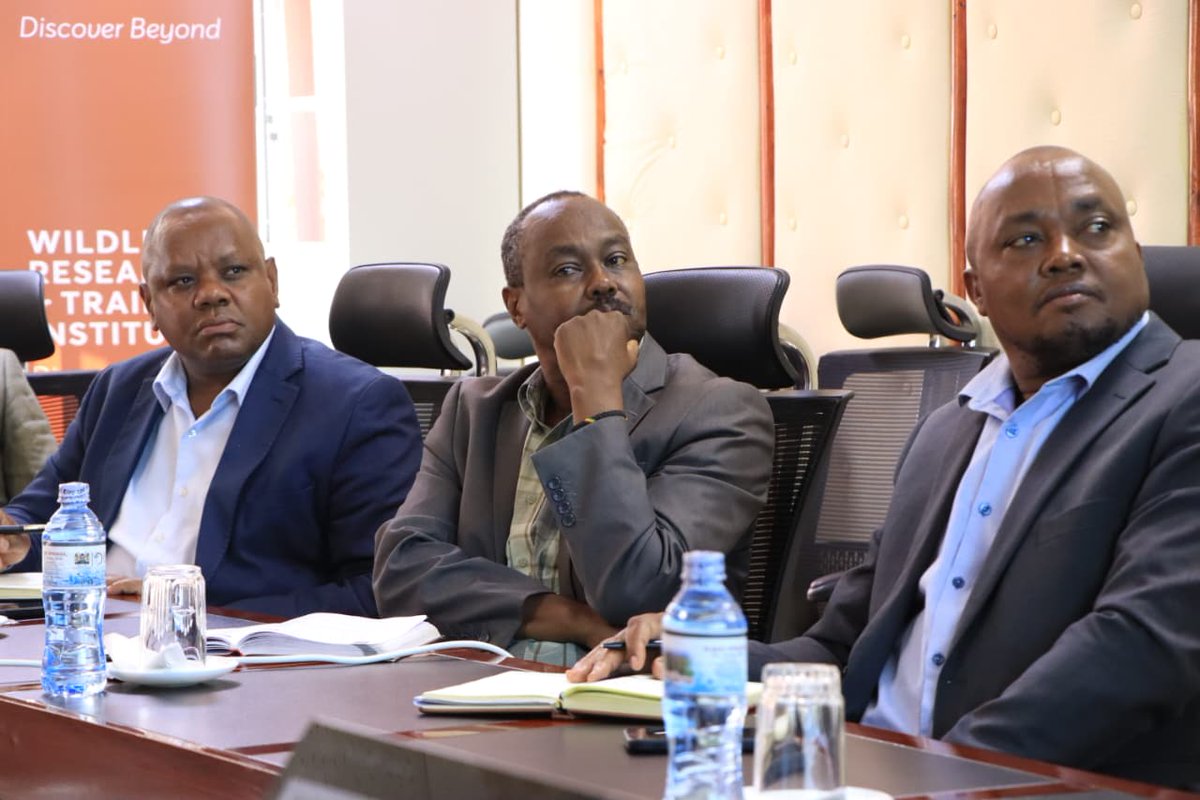
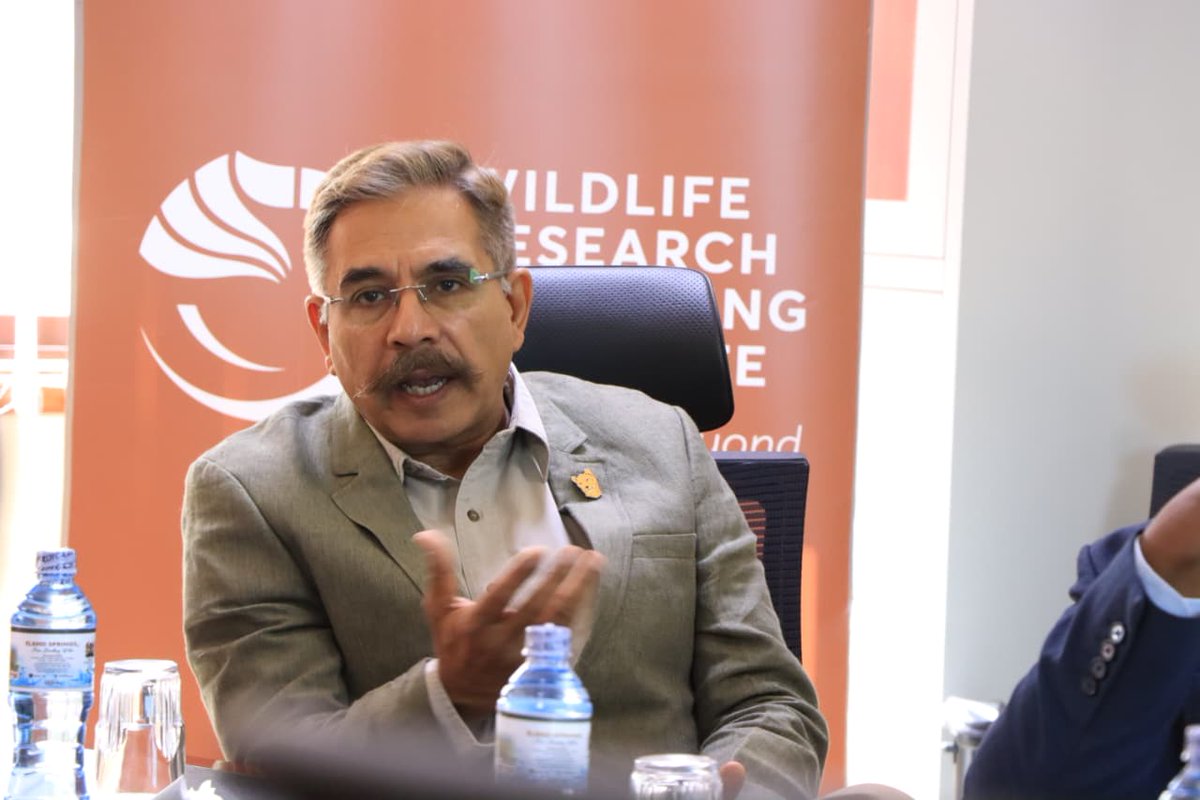
Renowned wildlife scientists Prof. Y.V. Jhala, the former Dean of the Wildlife Institute of India and currently an INSA Senior Scientist at the National Centre for Biological Sciences (NCBS), Bengaluru and Prof. Dr. Stotra Chakrabarti, a lecturer at the University of Minnesota and lead of the Tsavo Simba Project, today, paid a courtesy call to the Director, Dr. Patrick Omondi.
The discussions aimed at strengthening scientific collaboration and advancing wildlife conservation research in the country.
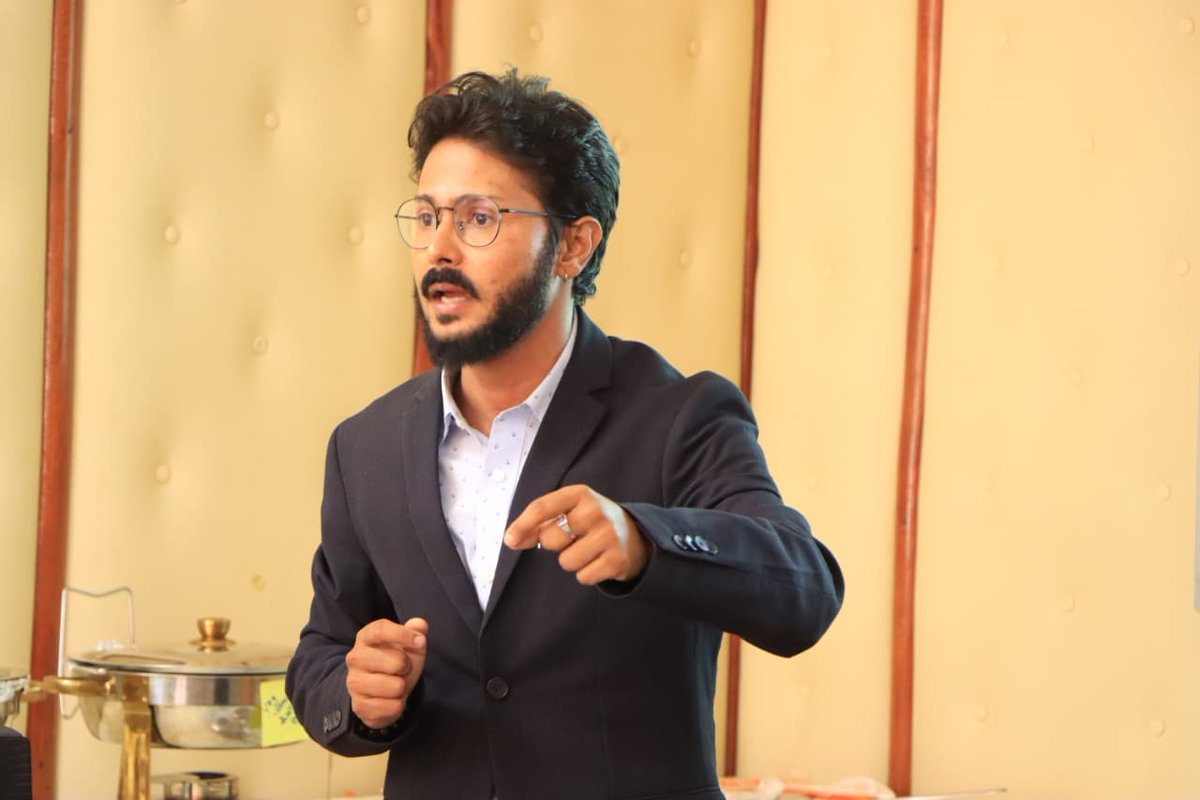
During the meeting, Prof. Jhala delivered a presentation highlighting decades of groundbreaking work in wildlife science, with a focus on large carnivore ecology, wildlife population monitoring and long-term ecological research.
Drawing from his extensive experience studying tigers, Asiatic lions, wolves, hyenas, snow leopards and cheetahs, he underscored the critical role of science in guiding effective wildlife management and conservation decisions.
The meeting also featured a progress update by Prof. Chakrabarti on the Tsavo Simba Project, the Institute's flagship lion research initiative, which recently marked one year since its launch.
The project has generated valuable scientific data on lion behaviour, movement and ecology within the Tsavo ecosystem, providing critical evidence to support conservation planning and long-term management of the species.
Speaking during the meeting, Dr. Omondi commended Prof. Jhala's outstanding contribution to global wildlife research and conservation.
He also applauded the Tsavo Simba Project team for the significant milestones achieved over the past year, noting that the research continues to deepen scientific understanding of lion ecology in one of Africa's most important wildlife landscapes.
Dr. Omondi further expressed the Institute's commitment to strengthening partnerships with leading scientists and research institutions, exploring future collaboration with Prof. Jhala in wildlife research, scientific exchange and capacity building.
Also present were the Head of the Southern Savannah Landscape, Dr. Fredrick Lala; Head of Research and Innovation Dr Francis Gakuya, Head of Research Permitting and Compliance, Dr. Vincent Obanda; Principal Research Scientists, Dr Joseph Mukeka and Bernard Ngoru.
The Institute has been conducting the second consecutive survey on the spatial and temporal distribution and population dynamics of lions and other carnivores in the southern section of Tsavo East National Park and Shirango Conservancy.
This initiative, which commenced in January this year, is being undertaken in line with the Institute’s mandate to understand the population dynamics of wildlife across the country.
The survey is being conducted by researchers from the Institute with support of @TsavoTrust . It employs the Spatially Explicit Capture Recapture (SECR) methodology, a technique that was also used in previous surveys within the Tsavo ecosystem.
The overarching aim of the survey is to enhance understanding of the distribution and population trends of lions (Panthera leo) and other carnivores within the Tsavo landscape.
The Tsavo Conservation Area, one of the largest protected areas in Kenya, provides a unique and expansive habitat for lions. Notably, the Aruba pride—the largest known pride in Tsavo—comprises 6 adult females, 1 adult male, and 13 sub-adult males and females.
Tsavo lions are known for their distinctive characteristics. Male lions in this region typically have little to no mane and are physically larger than the average lion. These lions are highly territorial, often engaging in overlapping ranges and territorial disputes.
Safaricom Annual Internship is open.
Safaricom is inviting bold, driven students and recent graduates to join its structured internship program and gain hands-on experience in a fast-paced, innovation-driven environment.
��� Internship Departments
• Human Resources (HR)
• Legal
• Finance
• Supply Chain
• Marketing
• Audit
• PR & Communications
• Enterprise Risk
• Cyber Security
• Technology
🗓 Program Options
• 3-Month Industrial Attachment – For ongoing students
• 6-Month Internship – For recent graduates (within 12 months)
• Pupillage – For Kenya School of Law students
📍 Location: Nairobi, Kenya
🎓 Open to undergraduate students (3rd–5th year) and recent graduates
A strong opportunity to work on real projects, build professional networks, and launch your career with Kenya’s leading tech company.
In a great milestone that reflects the growing impact of the Institute in advancing scientific research, Dr. Priscillar Mutungi, a leading biological scientist at the Institute has been selected as a Postdoctoral Fellow at the International Centre for Genetic Engineering and Biotechnology (ICGEB) in Cape Town.
She joins the fellowship under the prestigious ICGEB Bio-Inoculants for Food Security in Africa (B-INOC) Programme, which supports advanced research training and enhances global scientific mobility, especially between the Global South and North.
Dr. Mutungi brings to the fellowship her extensive expertise in microbial bioprospecting for sustainable agriculture and industrial biotechnology.
Her research under the fellowship, now based within the Plant Systems Biology Group under the mentorship of Dr. Lara Donaldson, focuses on developing bio-stimulants from endophytic bacteria to support crop resilience, nutrient uptake, and stress tolerance.
These innovations align with global priorities such as climate-smart agriculture and the Kunming-Montreal Global Biodiversity Framework.
Her work is emblematic of the Institute's strategic commitment to research and innovation, a key pillar of the Strategic Plan (2023-2027).
The plan prioritizes cutting-edge scientific development, innovations, partnerships, and the creation of homegrown solutions to environmental and socio-economic challenges.
Dr. Mutungi's fellowship not only enhances individual scientific capacity but also contributes to the Institute’s broader goal of supporting national and continental priorities in biodiversity conservation, climate adaptation, and food security.
The B-INOC Africa project, supported by the Italian Ministry of Foreign Affairs and International Cooperation (MAECI), seeks to promote innovation, technology transfer, and entrepreneurship through microbial inoculants for resilient agriculture.
It is a powerful platform for the Institute’s researchers to plug into global research networks and bring back transformative solutions for local implementation.
Speaking on the opportunity, Dr. Mutungi said:
“I am very grateful to have been awarded the ICGEB B-INOC Fellowship to enhance my skills. ICGEB is a great organization that fosters creativity, innovation, and collaboration. I look forward to building a long-term partnership that bridges global expertise with local application.”
Her achievement marks another step forward in positioning the Institute as a center of excellence in wildlife and environmental research, and a key contributor to sustainable development in Africa.
In a bid to understand elephant populations’ numbers and distribution in the country’s forested ecosystems, the Institute has embarked on the Mau Forest Complex and Shimba Hills elephant survey, which will apply the total line-transect dung count.
This approach estimates elephant population size by counting dung piles, while factoring in additional two key parameters: the defecation rate of the elephants and the rate at which the dung decays.
To ensure accuracy, the Institute’s scientists are currently training assessors drawn from Kenya Wildlife Service, Kenya Forest Service, Mara Elephant Project and County Government of Narok to support the exercise.
The assessors will measure dung decay rates in the Mau Forest Complex and Shimba Hills in a bid to obtain an optimal sample size that yields a precise estimate of decay rates across these forests.
This assessment focuses on determining site- and season-specific dung decay rates—one of three crucial parameters required to model the population status of forest-dwelling elephants.
Dung decay rate is particularly sensitive—slight variations can significantly affect population estimates. The decay rate varies considerably depending on factors such as rainfall, sunlight exposure, and biological activity.
Given its strong influence on the final estimates, this parameter must be measured with utmost care. Data collected from the survey will inform key conservation efforts and decision making in the country.
The exercise has been supported by WWF-Kenya.
#count2conserve
Passion for nature, conservation, and wildlife can lead to a rewarding and impactful career and our Diploma in Wildlife Management is your ideal gateway.
This program is tailor-made for individuals who are ready to protect the planet, preserve biodiversity, and shape the future of conservation.
What sets this course apart? At the Institute, we offer hands-on, field-based learning experiences in real-time conservation areas, reserves, and national parks. Our curriculum is crafted by experts and tailored to meet the evolving needs of the wildlife sector both locally and globally.
Students benefit from direct mentorship by industry professionals, exposure to ongoing research projects, and access to modern laboratories and training facilities.
Unlike generic programs, our diploma provides a practical, skills-oriented approach – from wildlife monitoring and census techniques to habitat management and conflict mitigation strategies – equipping graduates with the tools to thrive in government agencies, NGOs, research institutions, and eco-tourism enterprises.
Take advantage of our ongoing May–June intake. To access the application form, visit our website (https://t.co/Q25pL24oXT).
For any questions, call us on 0700 000 321 or drop us an email at [email protected]
📹𝐀 𝐆𝐋𝐈𝐌𝐏𝐒𝐄 𝐨𝐟 𝐭𝐡𝐞 𝐡𝐨𝐦𝐞𝐜𝐨𝐦𝐢𝐧𝐠! 𝐓𝐡𝐞 𝐌𝐨𝐮𝐧𝐭𝐚𝐢𝐧 𝐁𝐨𝐧𝐠𝐨𝐬 𝐚𝐫𝐞 𝐡𝐨𝐦𝐞—𝐚𝐧𝐝 𝐬𝐞𝐭𝐭𝐥𝐢𝐧𝐠 𝐢𝐧 𝐰𝐞𝐥𝐥!
In alignment with the KWS Corporate Strategic Plan 2024-2028, the homecoming of 17 Mountain Bongos from Florida, USA marks a major milestone in our commitment to biodiversity conservation, community engagement, and partnerships.
As we gear up to celebrate #WorldWildlifeDay, this initiative showcases how wildlife conservation fuels economic growth and sustainable tourism, securing a thriving future for both nature and people.
#WWD2025 #SaveTheMountainBongo #ThrivingWildlifeForever #TunzaMaliYako #ForWildlifeAndPeople
The wait is over! Starting tomorrow, our team of researchers comprising of Rear and Front-Seat Observers (RSO & FSO) and pilots will take to the skies for the highly anticipated Tsavo ecosystem aerial total census.
This vital exercise will provide crucial data on elephant populations, other wildlife species, and habitat conditions across Tsavo, and surrounding areas.
With every flight, we get closer to understanding the health of this iconic ecosystem, guiding conservation efforts to protect our wildlife for generations to come.
Stay tuned for live updates, stunning aerial footage, and behind-the-scenes insights!
#Count2Conserve
NATIONAL WILDLIFE CENSUS (2024-2025) UPDATES: Ahead of the Tsavo ecosystem aerial total wildlife census, which officially kicks off tomorrow, the Institute today held a briefing session for the coordinators, flight teams, ground teams, and the support teams.
The session, held at Taita Hills Safari Resort and Spa, which will serve as the Data Centre, focused on census protocols to ensure accuracy and consistency in data collection for the vital exercise that will inform the status of wildlife population in the ecosystem.
The teams were taken through the flight safety procedures for the flight teams; species identification and counting techniques; data recording and verification processes to enhance reliability and communication protocols between ground and aerial teams.
The Institute’s Director, Dr. Patrick Omondi, emphasized the importance of the aerial census in shaping conservation strategies for the Tsavo ecosystem, which recorded a total of 14,964 elephants according to the 2021 census.
“Tsavo Ecosystem is a key wildlife hotspot for the country with the largest contiguous protected wildlife area including Tsavo East and West, Chyulu National Parks and South Kitui National Reserve. The census is crucial for tracking changes in wildlife populations over time, identifying species that are thriving and those under threats especially after the ecological shocks," he said, adding, "It enables conservationists to focus resources and interventions on endangered species. Furthermore, the census provides insights into areas requiring habitat restoration, protection, or sustainable management, and helps map critical wildlife corridors.”
He added that the exercise has embraced the One-Government approach, a strategy that has fostered collaboration among various state agencies, conservancies, partners to ensure that the exercise is a success.
He thanked the Government that has financially supported the exercise through the Tourism Promotion Fund. Other partners include; Ministry of Tourism and Wildlife, State Department for Wildlife, Kenya Wildlife Service, Save the Elephants, WWF-Kenya, Giraffe Conservation Foundation, Tsavo Trust, Sheldrick Wildlife Trust, Taita Taveta Wildlife Conservancies, Department of Resource Survey and Remote Sensing, Taita Research Centre.
Dr. Omondi commended the dedication of the technical and support teams, urging them to uphold the highest standards in data collection.
"The success of this census depends on our commitment to accuracy, safety, and teamwork. The information gathered will be instrumental in guiding conservation strategies for one of Kenya’s most significant wildlife landscapes," he stated.
Present in the meeting were representatives from the State Department for Wildlife, Kenya Wildlife Service, Save the Elephant, Tsavo Trust, Taita Taveta Wildlife Conservancies, Taita Research Centre, Wyss Academy For Nature, Directorate of Resource Surveys and Remote Sensing and Deputy County Commissioner Taita Taveta among other partners.
Stay tuned for more updates!
#Count2Conserve
BE AT PEACE, PAOLO
One of Amboseli's great elephants, died at 46. He inspired conservation efforts in Amboseli, securing habitats for future generations. We must protect his kind and their open spaces.
Learn more: https://t.co/hW4gsKiz1k
During the National Wildlife Census, the Institute employs different methods to collect data on population estimates for wildlife.
For the upcoming Tsavo Ecosystem Census that kicks off on February 15, the teams will use total aerial counts, which will involve the use of fixed-wing aircraft and helicopters for a complete survey.
Tsavo is home to 38% of the country’s known elephant population, alongside other key species like giraffes, buffaloes, and big cats.
The results from the Tsavo ecosystem will guide conservation strategies, ensuring the long-term sustainability of the rich biodiversity.
#Count2Conserve
The Institute held a stakeholders’ wildlife data consolidation meeting for the Savannah Arid and Semi-Arid Ecosystem (SASAE) at its' Tsavo Research Center Headquarters in Tsavo East National Park.
The SASAE has seven (7) sub-centres at Ruma National Park, Maasai Mara National Reserve, Meru National Park, Tsavo West National Park, Nairobi National Park, Amboseli National Park, and Marsabit National Park.
The hybrid meeting was attended by partners including Kenya Wildlife Service, Taita Taveta Wildlife Conservancies Association, Lion Guardians, Tsavo Trust, Taita Research Station, Wildlife Works, Kenya National Bureau of Statistics, Save the Elephants and the Zoological Society of London.
The partners agreed to work together in enhancing data and information sharing and access for evidence-based decision-making, policy formulation and scientific research.
We are pleased to announce that Day 1 of the Second Phase of the National Wildlife Census (2024-2025) that commenced with the Laikipia-Isiolo-Samburu-Meru- Marsabit landscape was a success.
The team covered approximately 4,000 square kilometers.
A team of observers, data analysts, and data crew worked seamlessly to ensure the accuracy and reliability of the collected data.
Stay tuned for more updates.
#Count2conserve