GSA Publications offer dynamic, high-impact geoscience to an int'l audience & provide personalized, friendly service for authors, editors, reviewers & readers.
How hot did Pennsylvanian rocks in New Mexico get? Clumped isotopes in brachiopod shells and calcite cements reveal burial temperatures and tectonic influences, including Rio Grande Rift geothermal heating of ≥135 °C.
Read in #GSABulletin: https://t.co/F7wZLAbNXE
#Geology #Geochemistry
Image: Figure 4 from the paper.
How does depositional architecture shape fracture networks in carbonate rocks? A new #GSABulletin study of the Permian Bell Canyon Formation in West Texas links facies and bed thickness to fracture patterns, with implications for subsurface reservoirs. https://t.co/c7yi3Lzr5y #Geology #Carbonates #Fractures #FractureStratigraphy #OreDiggers #PermianBasin #Permian #Unconventionals #DeepWater
Image: Figure 18 from the paper.
Sea-level poses a dramatic threat to coastal habitats, as demonstrated in a new study by @BialikOr, @Glang284, @MakovskyYizhaq, @GadolOmri & @WaldmannNicolas. They reveal an extensive glacial-time reef developed at the edge of the Nile deltaic system and was buried by sediments as sea-level rose.
https://t.co/veM5SJqQSo
#GSABulletin #SedimentaryGeology #Carbonates #Siliciclastics #Paleoceanography #Quaternary #Holocene #MarineGeology #QuaternaryGeology #Stratigraphy
Image: Figure 6 from the paper.
New from GSA Pubs! Memoir 226 explores the Laramie anorthosite complex and Sherman batholith in Wyoming, synthesizing 40+ years of research into their magmatic evolution.
Discover more: https://t.co/SqnKBEnj2o #GSAPubs
What makes the Red River system’s water salty? This #GSABulletin study uses isotopic tracers to track dissolved solids from Permian evaporites through the Wichita River Watershed, revealing key controls on water quality. https://t.co/uv4Pm3CH8J #Geology#Geochemistry
Image: Figure 1 from the paper.
How did changing salinity reshape Late Devonian seas? A new #GSABulletin study reveals how basin hydrography and salinity-driven stratification fueled the expansion of euxinia in the Illinois Basin. https://t.co/z2xOfRtsQ1 #Geology#EarthHistory
Image : Figure 12 from the paper.
GSA is seeking associate editors and editorial board members across its journals. Want to shape the future of geoscience publishing?
Enhance your career and volunteer for an editorial role today: https://t.co/qaimPRrhit
#SciencePublishing#Geoscience#Geology#GSABulletin #Geosphere #GSAPubs
The November/December issue of #GSABulletin is here! Read the latest in #geoscience research online at https://t.co/MmZbC60i6L.
#GSAPubs#Geology#EarthScience#Research
Cover: Eocene lacustrine and lake-margin strata of the Claron Formation at Bryce Canyon, Utah, USA. Photo by Alex Tye.
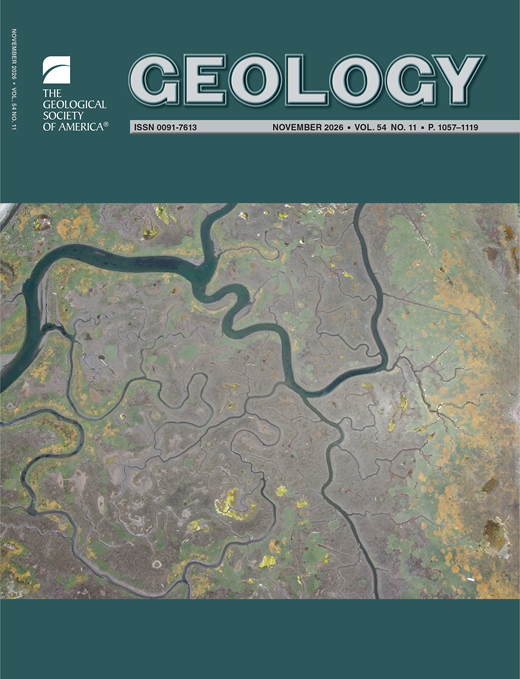
The November #Geology is now online. Topics include magnesium isotopes, methane isotopes, the response of erosion to large earthquakes, and organic walled microfossils. Read it now at https://t.co/eNH6PYxYoh.
Cover: Aerial view of tidal channels meandering through the Carpinteria Salt Marsh Reserve in Southern California. Photo by Jiarui Liu.
GSA is seeking associate editors and editorial board members across its journals. Want to shape the future of geoscience publishing?
Enhance your career and volunteer for an editorial role today: https://t.co/qaimPRrP81
#SciencePublishing#Geoscience#Geology#GSABulletin #Geosphere #GSAPubs
Heterogeneous fault architectures commonly result from prolonged tectonic histories. The Carboneras Fault (SE Spain) provides an exceptional example of such a mature and heterogeneous fault.
Read more in #GSABulletin: https://t.co/5Immmh58vx
#Geology#EarthScience#Tectonics #StructuralGeology
Image: Figure 13 from the paper.
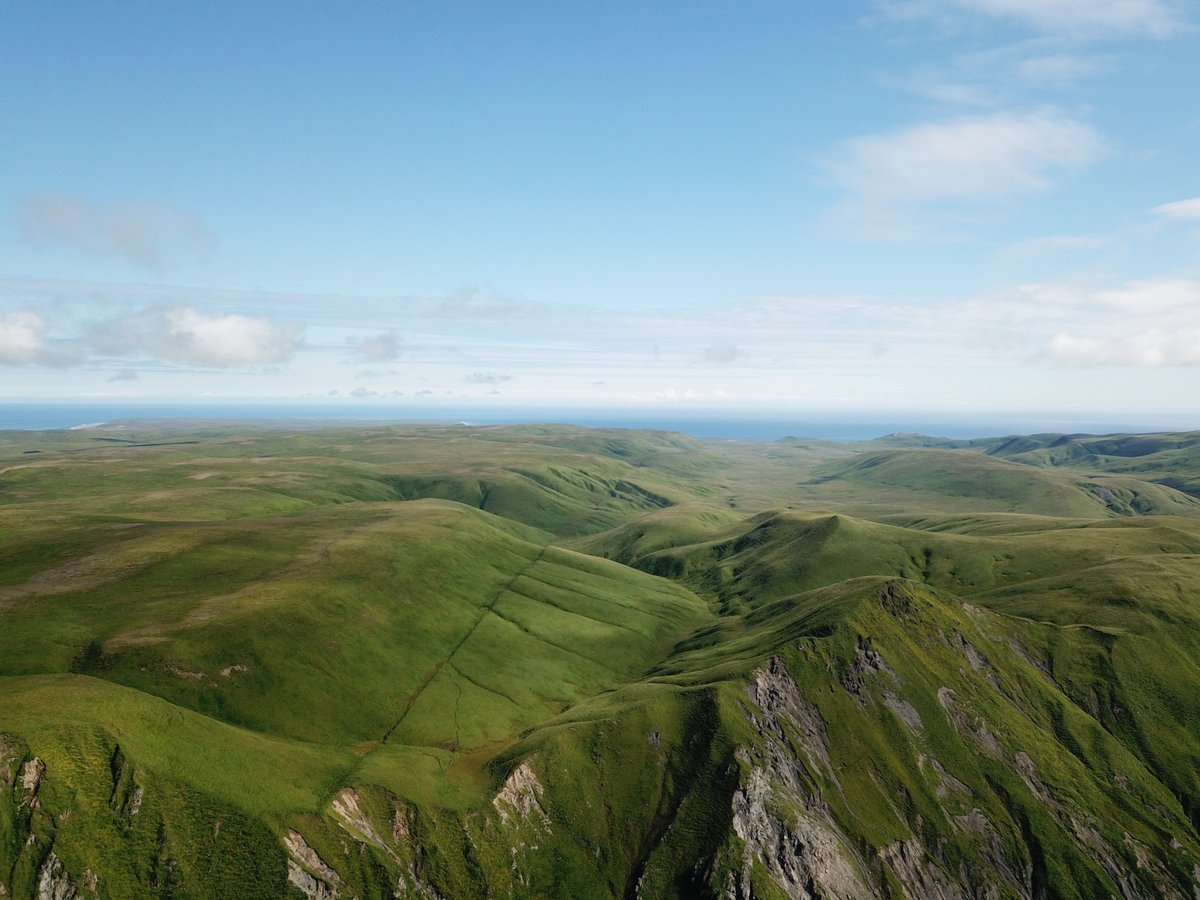
New research by @SuoyaFan and published #OpenAccess in #Geology documents active upper-plate normal faulting on Chirikof Island in the Alaska subduction zone. The study reveals a recent shift from long-term shortening to extension in a forearc segment between segments characterized by long-term thrusting and normal faulting. https://t.co/q6QukSGhiR Image: Drone view of Chirikof Island, Alaska, showing the linear scarp of the active Chirikof Fault, an upper-plate normal fault in the Alaska subduction zone. Photo by Suoya Fan. #Alaska #SubductionZones #ActiveTectonics
New research unveils how multiorder fault network architecture controls gold precipitation mechanisms in the giant Jiaojia gold deposit, Jiaodong Peninsula, China—the world’s 3rd-largest gold province. https://t.co/bgu88NzwAR
#GSABulletin#EconomicGeology#OreGenesis #OreDeposits #MineralExploration
Image: Figure 14 from the paper.
New findings reported by Birger Rasmussen and colleagues in #Geology show that filaments in 2.46 billion-year-old vesicular basalts are fossilized microbes. This revelation extends the antiquity of basalt-hosted, cavity-dwelling life by at least 50 million years and highlights that submarine lavas were viable habitats for early life on Earth. Given the abundance of submarine lavas in early Precambrian greenstone belts, the authors speculate that this ancient habitat has a fossil record stretching back into the Archean. Likewise, the presence of voluminous basaltic lavas and liquid water on early Mars makes ancient basalts that have undergone fluid-rock interactions a potential target in the search for morphological signs of ancient life on Mars. https://t.co/GHphDMywrj #EarlyLife #Mars #GSAPubs Image: Fig. 4 from the paper.
New in #GSABulletin: Low-temperature thermochronology reveals a dynamic history of the Frontenac Arch, including Paleozoic burial, Mesozoic exhumation, and fault reactivation during Pangea breakup.
https://t.co/UiUrFw6VGN
#Geology#Tectonics#Thermochronology
Image: Fig. 6
A new #OpenAccess study by Xuefei Chen and colleagues in #Geology shows that the surface ocean has warmed out of the Little Ice Age. The water at 1345 m has not. A living cold-water coral from the South China Sea (Li/Mg + U-Th) shows intermediate water beneath the Indo-Pacific Warm Pool still in a Little Ice Age cold state — the ocean interior is still far from equilibrium with the surface. https://t.co/KyTKMEvPQa
#paleoclimate #paleoceanography #coldwatercorals #SouthChinaSea Image: Photographed by Kaiwen Ta from the human-occupied vehicle Shenhai Yongshi (Deep Sea Warrior).
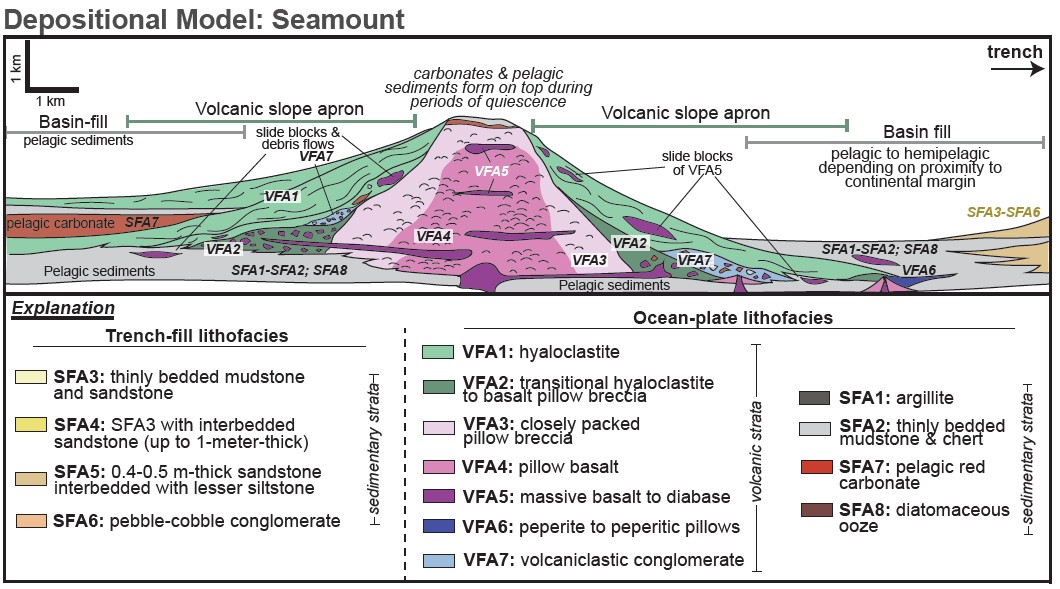
How did seamount collision shape the early Olympic subduction complex? New #GSABulletin research uses sedimentology + detrital zircon geochronology to propose a new model for the Blue Mountain Unit and the Ancestral Cascades forearc system.
https://t.co/kYJA451SNS
#Geology #Tectonics
Image: Figure 11 from the paper.