Excited to share our research on active, long-lived upper-plate splay faulting in the Alaska subduction zone. New thermochronologic data reveal the exhumation history in the forearc region and persistent inboard deformation along the Kodiak Shelf Fault. https://t.co/JiNskPqKju
New research in #Geosphere presents the first systematic investigation of paleoearthquake timing along the Western Nepal fault system, a major fault zone that cuts obliquely across the high Himalaya in Nepal.
Our study shows that all trenched faults ruptured during the Holocene, suggesting the potential for complex multifault ruptures and highlighting additional seismic hazards within the upper plate of the Himalayan megathrust, with possible linkages to megathrust earthquakes.
Read the full article: https://t.co/yasy9WLNf2
#Paleoseismology #Earthquakes #Tectonics #Himalaya #SeismicHazards #ActiveFaults
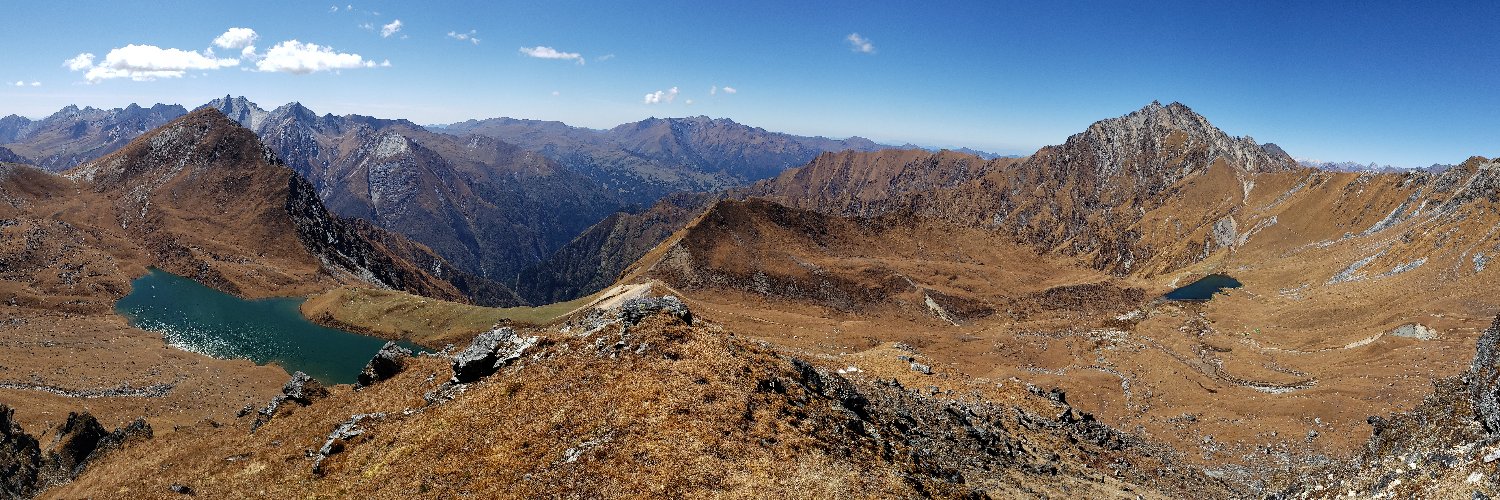
Photo by Gagan Raj Rai on Wikimedia Commons.
#EarthquakeReport#TsunamiReport for #OTD in 1964 M9.2 #Earthquake and #Tsunami in southeast #Alaska
led to the understanding of convergent plate margins, subduction zones, as evidenced by field work by George Plafker and others
report:
https://t.co/REXOuIC0NT
Excited to share our research on active, long-lived upper-plate splay faulting in the Alaska subduction zone. New thermochronologic data reveal the exhumation history in the forearc region and persistent inboard deformation along the Kodiak Shelf Fault. https://t.co/JiNskPqKju
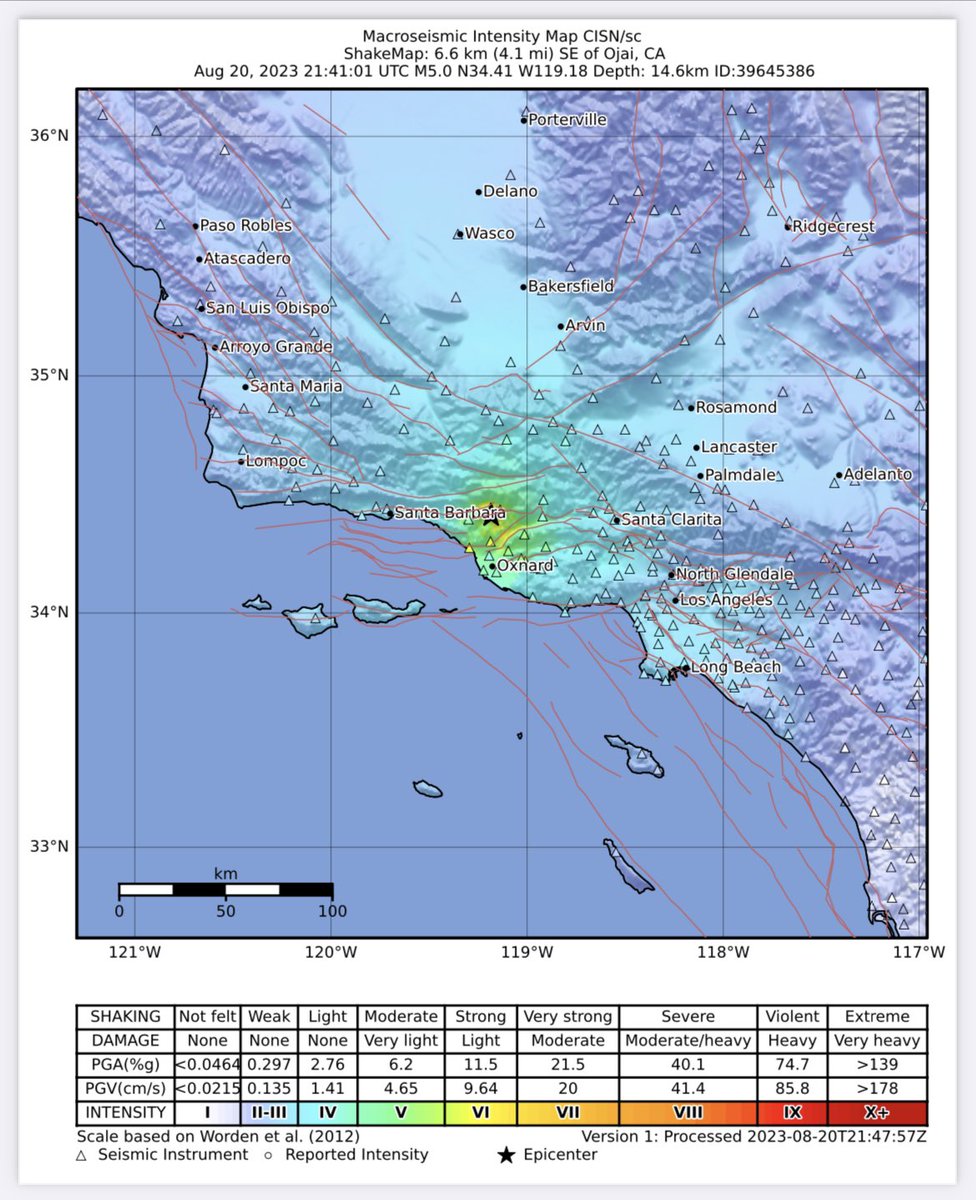
Good afternoon Southern CA. Did you feel the magnitude 5.1
earthquake about 4 miles southeast of Ojai at 2:41 pm. #ShakeAlert system was activated. See: https://t.co/2JRvHxmuYN @Cal_OES@CalConservation@CAGeoSurvey
We published a paper on formation of the Namcha Barwa Syntaxis in Tibet. Erosion-driven diapirism can cause positive feedback between erosion and rock uplift.
https://t.co/SOv3KLw7m9 (also available via ResearchGate)
📢Tectonic Modelling Tuesday #38 - New numerical modelling work by @xuesong_ding & co. (from @UCLAEPSS & @FCEFyN_UNC) on subsidence and uplift mechanism in southern Patagonia during slab window formation!😃
More details in their 2023 @AGU_GCubed paper: https://t.co/Z4gcqiTegk
The National Institutes of Health’s “China initiative” has upended hundreds of lives and destroyed scores of academic careers. #LongReads https://t.co/4UA7ODA1RE
If you're not an Earth scientist, you probably don't understand what this paper is about, starting with the title.
That is normal - and it isn't bad! - scientific results have to be communicated with technical language within the scientific community.
1/
One might think smooth faults are more likely to host supershear earthquakes than rough faults, yet our recent study shows the opposite trend. The key is to understand the initial stress & strength conditions over earthquake cycles.
Please check it here: https://t.co/F986NwfLzA
What is the most sensible way to compare distributions like detrital mineral ages and grainsizes?
Pieter Vermeesch and I think we have an answer... read our 🚨💥new preprint 💥🚨 to find out!
👇👇👇👇
https://t.co/URyA84ymu7
🧵1/6
Check out our new article in EOS reviewing over a decade of coastal paleoseismology work along the Alaska-Aleutian subduction zone and how it informs tsunami hazard assessments in the Pacific region 🌊🧵
https://t.co/7NxOXyONXC
I am happy to see our recently published work, part of my PhD dissertation, being selected as a research spotlight by the EOS. A big thanks to Dr. @Sarah_Derouin for writing this report!
Understanding the nature of the megathrust in the western Nepal Himalayas is crucial when determining the seismic hazards in the region.
New research from @SuoyaFan, @dave_whipp @Seismofin & researchers at @UHEAS, @UBCeoas, @KUGeology, & @txgeosciences
https://t.co/WZPPpULj8u
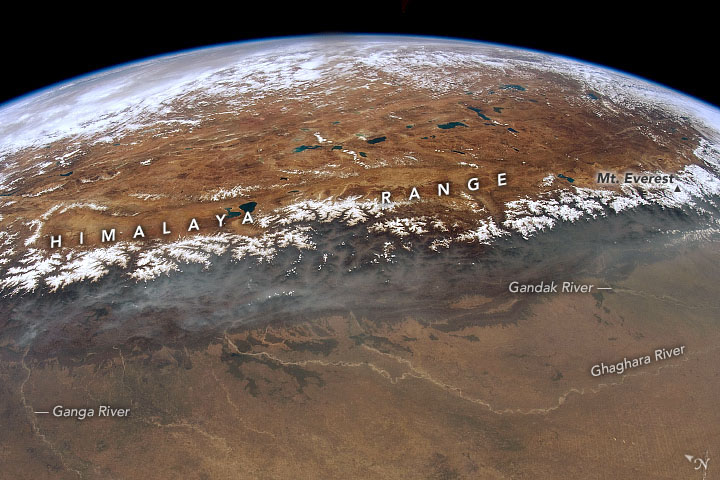
Many thanks to Michael Murphy (advisor), David Whipp @dave_whipp (c), Joel Saylor (c), Peter Copeland (c), Andrew Hoxey, Michael Taylor (c), and Daniel Stockli for their contribution and mentorship (c-committee). Picture: View of the embayment/study area from space (source: NASA)
[Open Access Paper] How does deep 3D megathrust geometry affect wedge growth, landscape and drainage systems? What is the mechanism of maintaining a plateau along a rapid-erosion edge? Check the example from a topo/tectonic embayment in the Nepal Himalaya. https://t.co/CZRHIHMfNL
A better understanding of the 3D megathrust geometry is important for seismic hazard assessment. The embayment segment is within a seismic gap in large earthquake records. Studies on the 2015 Gorkha earthquake to the east show critical fault-geometry control of earthquake rupture