“If you’ve ever asked AI to do something and then drummed your fingers waiting for it to respond, you’ve run up against slow inference. To pick up the pace, Cerebras developed its own inference platform from the semiconductor wafer up.”
Cerebras is proud to be named in @FastCompany 's 2026 Next Big Things in Tech list.
What can a minivan teach you about chip design?
A lot it turns out.
In car design, like in chip design, tradeoffs are everything.
If you want the perfect vehicle for taking kids to soccer practice don’t build a truck.
And if you want to move lumber and sacks of concrete a mini-van is not for you.
You can’t be good at everything so the lesson is that tradeoffs are key.
The same holds true in processor design.
The CPU was good at many things, but not at Graphics.
The Graphics Processing Unit was good at many things including some AI, but simply can’t do fast inference.
Like with cars, there isn’t a silver bullet architecture.
There are just tradeoffs to be made.
What makes you good at one thing, likely makes you weak at something else.
In fact, one of the first things world class computer architects do, when confronting a new design, is decide what they aren’t going to be good at.
This clears the design space, allowing them to focus on those things that they aim to be exceptional at.
At Cerebras we don’t do graphics.
You can’t use us to run a website.
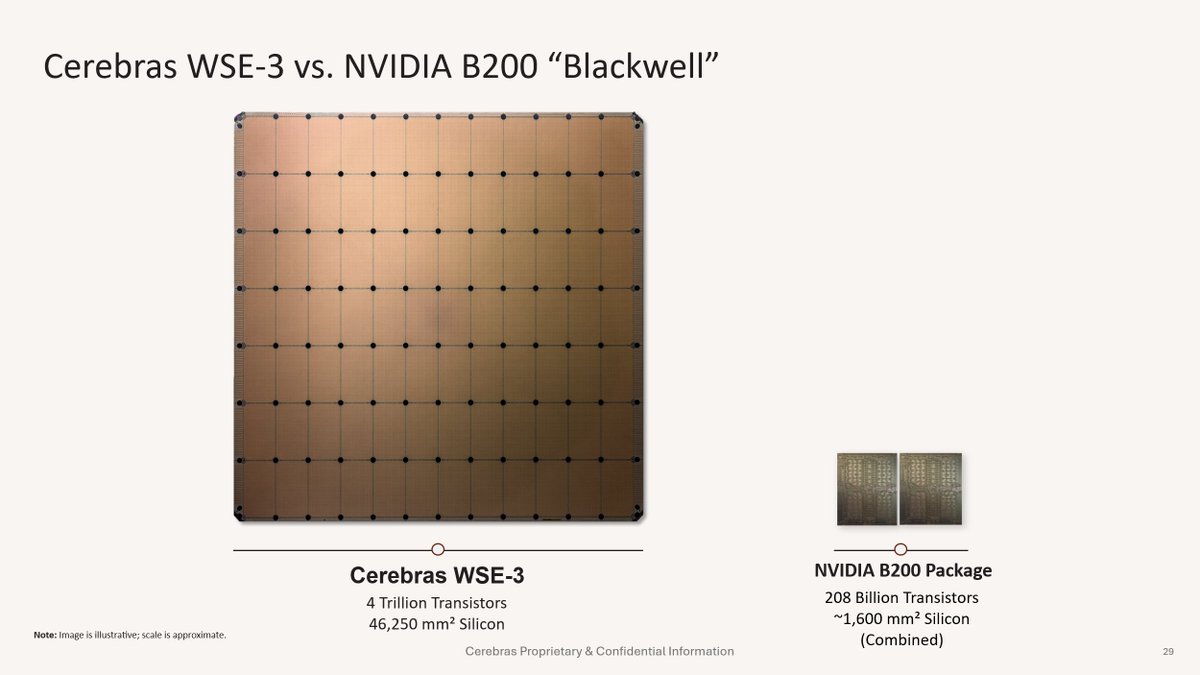
We built the largest chip in the world to do one thing. Be fast at AI.
And today, we are the fastest in the world bar none.
Just one month after announcing our partnership with @OpenAI, we’re launching our first model together: OpenAI Codex-Spark, powered by @cerebras.
Codex-Spark is built for real-time software development.
In coding, responsiveness is the product.
It is not a nice to have.
Codex-Spark is optimized for targeted code edits, logic revisions, and frontend iteration. It gives developers near-instant feedback so they can stay in flow.
Powered by the Cerebras Wafer-Scale Engine, it runs at over 1,000 tokens/s. That speed fundamentally changes the experience.
We did not build this to win a benchmark.
We built it so developers could move faster.
I’m proud of how quickly the OpenAI and Cerebras teams have brought this to life.
This is what fast execution looks like - deep engineering collaboration, rapid iteration, and shipping real products developers can use today.
We are just getting started.
When inference is fast, entirely new markets open up.
We plan to lead that shift with our partners at OpenAI.
Overwhelmed by the wonderful response to our new vehicles: R2, R3 and R3X.
In less than 24 hours, we’ve taken more than 68,000 R2 reservations. We are thrilled to see this vehicle resonate so strongly with our community!
The R1T earned the highest satisfaction ranking of any vehicle in the 2023 J.D. Power U.S. Electric Vehicle Experience Ownership Study. The study was based on factors including, range, cost of ownership and charging ease. Reserve your R1T: https://t.co/zUir6jYXDA
We are putting 1% of Rivian’s equity into Forever, providing it with the financial platform to focus on high impact climate initiatives with an emphasis on preserving and restoring wildlands, waterways and oceans. Read more at https://t.co/MEzvQ4LYVy.
Say hello to the team that will make owning a Rivian something truly unique. Every Rivian owner will be paired with a personal, dedicated Rivian Guide — your single point of contact for all things Rivian. Head over to our blog to learn more. https://t.co/oniiQEBnaY
Last weekend, we grabbed our cameras and chased a few engineers around the desert as they put the R1T through its paces. Rock crawling. Off-roading. On-track. (Test vehicle shown in camouflage — we didn’t change our headlights! Testing on a closed course and in designated areas.)
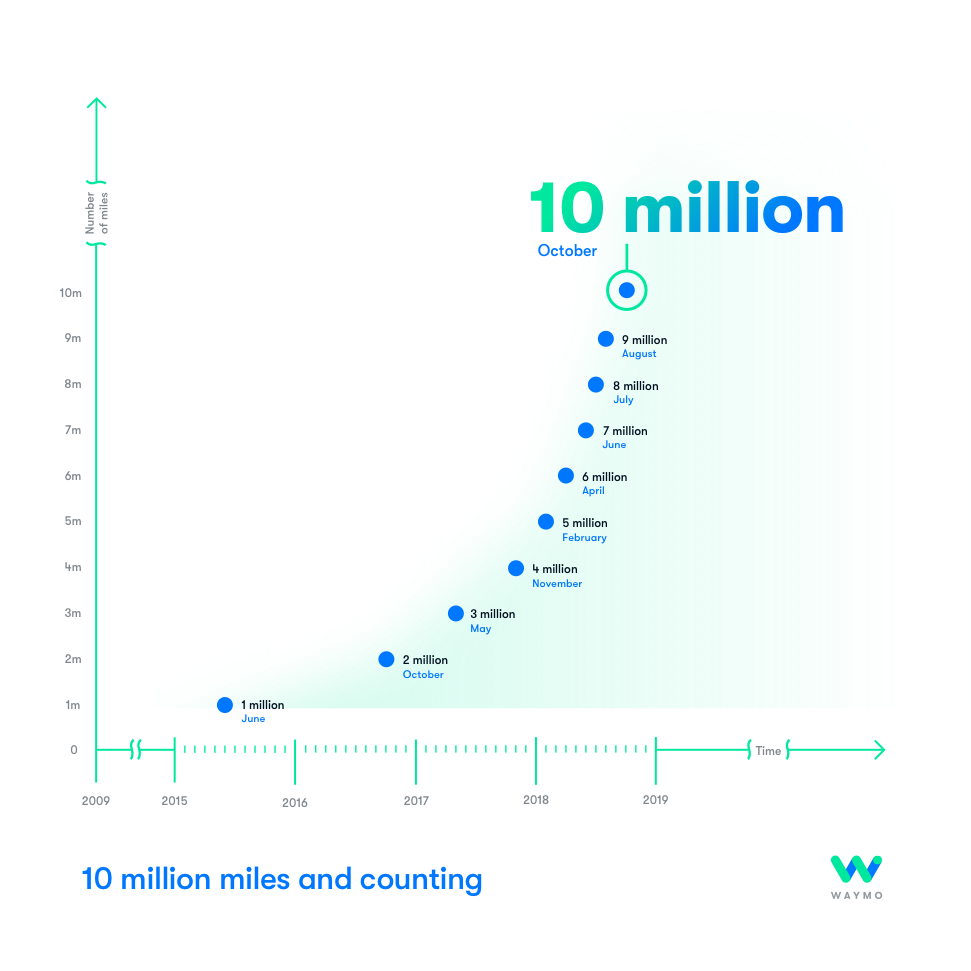
Our cars have been on the move! Waymo has now self-driven over 8 million miles on public roads across 25 U.S. cities, and over 5 billion miles in simulation. We’re building the world’s most experienced driver and preparing to launch our fully self-driving service.