I’m toying with the idea of starting a vibecode project.
The idea is there, but how do I actually begin?
I did some hobby programming a few years ago, but I’ve been out of it for quite a while now.
Where’s the best place to start?
And if I should really start would you like me to document the project here?
Die Deutschen sparen nicht aus Prinzip, sondern aus Not. Konsumverzicht ist kein Lifestyle mehr, sondern Zwang, meldet der Focus!
Die Armut ist da! Immer mehr! Ein Ausdruck dessen!
#Konsumflaute#Deutschland#Wirtschaft#Inflation
Mythos Sparwut: Der schwache Konsum ist kein Zeichen freiwilliger Zurückhaltung, sondern Ausdruck fehlender finanzieller Spielräume. Nach drei Jahren Rezession, schrumpfender Industrie und ausbleibender Trendwende wirkt Unsicherheit wie eine Konsumbremse und lähmt Investitionen sowie Ausgaben im Alltag.
Kein Geld statt Zurückhaltung: Laut Enzo Weber vom Institut für Arbeitsmarkt- und Berufsforschung haben viele Haushalte kaum Reserven. Sebastian Dullien vom Institut für Makroökonomie und Konjunkturforschung betont, dass Inflation Rücklagen entwertet und Lohnerhöhungen längst nicht alle erreichen.
Wer fehlenden Konsum kritisiert, verkennt, dass Millionen schlicht nichts mehr ausgeben können.
Vielen Dank für den wichtigen Hinweis!
Quelle: Focus Online
https://t.co/EC0CPl2GFF
Why buying a house in Austria in 2026 remains a significant financial hurdle for many prospective buyers? The market conditions present a complex challenge.
The key factors contributing to it are:
1. Significant Down Payment Requirements:
Current lending regulations (KIM-V) require buyers to provide a minimum down payment of at least 20% of the property's value. When factoring in additional purchasing costs—such as real estate transfer tax, notary fees, and real estate agent commissions (totaling approximately 10–15%)—buyers often need to secure 30% or more of the total price in cash.
2. Supply and Demand Dynamics:
New home construction has slowed considerably. Forecasts suggest low levels of new completions in 2026, leading to a shortage of available properties in high-demand areas. This limited supply helps maintain elevated property prices even as demand moderates.
3. Higher Financing Costs:
Mortgage interest rates are substantially higher than they were a few years ago. While they have stabilized, they remain a barrier. The increased cost of borrowing translates into higher monthly payments, making debt servicing a challenge for average household incomes.
4. Ancillary Purchasing Costs:
Austria has some of the highest transaction costs in Europe. The mandatory fees add a substantial amount to the overall purchase price. While a temporary federal fee exemption on land registry entry and lien registration is available until July 1, 2026, core costs like the 3.5% real estate transfer tax persist.
5. Regional Price Disparity:
Property values in major economic hubs like Vienna, Salzburg, and Innsbruck have grown faster than local wages. This gap makes the market particularly difficult for first-time buyers who work in these urban centers but cannot afford local home prices.
These factors combined create a challenging environment for individuals and families attempting to enter the Austrian housing market in 2026.
#Austria #Immobilien #Wohnen #Vienna #RealEstate #HousingMarket
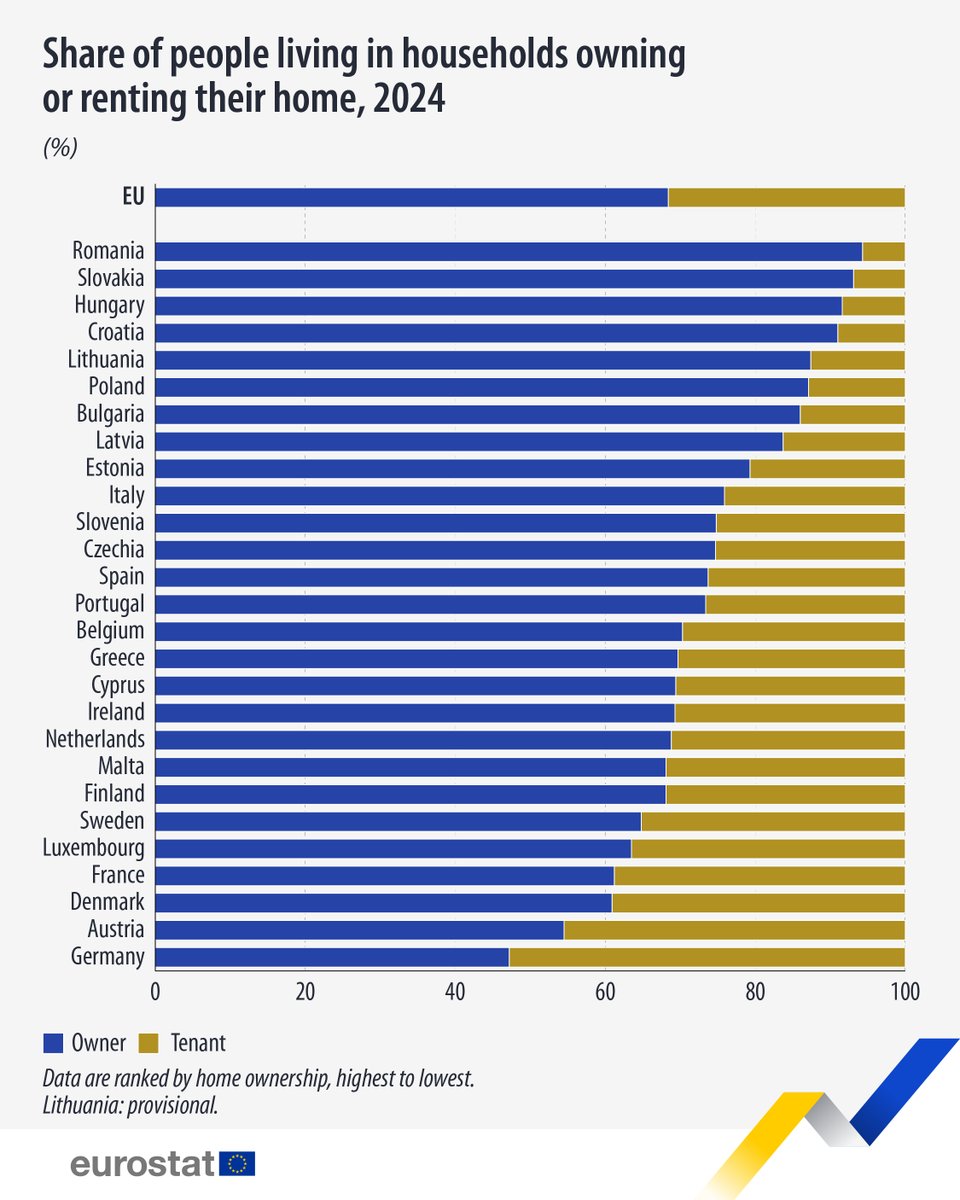
In 2024, 68% of the population living in EU households owned their home, while the remaining 32% lived in rented housing. 🏡🔑
Highest shares of ownership observed in:
🇷🇴Romania (94%)
🇸🇰Slovakia (93%)
Lowest in:
🇩🇪Germany (47%)
🇦🇹Austria (55%)
👉https://t.co/eMonHqcVge