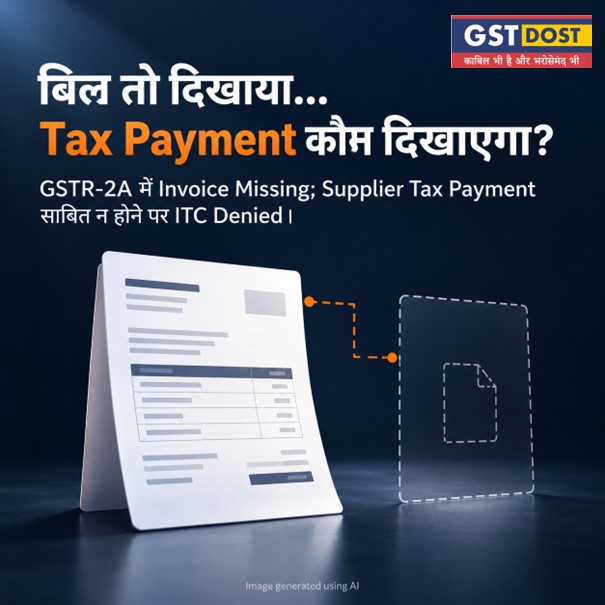
बिल तो दिखाया… Tax Payment कौन दिखाएगा?
GSTR-2A में Invoice Missing; Supplier Tax Payment साबित न होने पर ITC Denied।
● ● ●
⭐ आज की बात
नमस्ते दोस्त!
Business ने सामान या service खरीदी, GST वाला invoice लिया और ITC claim कर लिया।
बाद में पता चला कि supplier ने वही invoice GSTR-2A में दिखाया ही नहीं।
अब सवाल है—क्या सिर्फ invoice के सहारे ITC बच जाएगा?
GSTAT Cuttack के सामने FY 2020-21 का ऐसा ही विवाद था। जवाब में एक बात निर्णायक बनी—supplier ने Government को tax दिया, इसका भरोसेमंद प्रमाण कहाँ है?
● ● ●
⭐ ₹1.02 लाख का सवाल कैसे उठा?
M/s Mother Power House Limited ने 𝗚𝗦𝗧𝗥-𝟯𝗕 में करीब ₹27.07 लाख ITC लिया।
GSTR-2A से mismatch मिलने पर Department ने ASMT-10 भेजा और फिर Section 73 की कार्रवाई हुई।
पहले Appeal में updated GSTR-2A और reconciliation देखकर काफी credit स्वीकार हुआ, लेकिन लगभग ₹1.02 लाख disputed रह गया।
● ● ●
⭐ Invoice होने के बावजूद विवाद क्यों रहा?
Taxpayer की दलील थी कि invoices मौजूद हैं। Supplier ने शायद return या DRC-03 से tax चुका दिया हो।
केवल GSTR-2A में invoice न दिखने से non-payment साबित नहीं होता, और buyer supplier की filing control नहीं कर सकता।
Department ने कहा कि supplier tax payment साबित करना 𝗜𝗧𝗖 claim करने वाले की जिम्मेदारी है।
Tribunal के सामने भी disputed invoices पर actual tax payment का credible proof पेश नहीं हुआ।
● ● ●
⭐ GSTAT ने किस बात पर ज़ोर दिया?
🔍 Tribunal ने माना कि GSTR-2A में invoice missing होना अपने-आप tax non-payment का conclusive proof नहीं है।
लेकिन FY 2020-21 की statutory matching/reversal scheme में supplier की non-disclosure के consequences हैं।
यहाँ taxpayer के reconciliation में invoices upload न होने की बात स्वीकार थी।
कई मौकों के बावजूद tax payment का प्रमाण नहीं दिया गया। इसलिए disputed ITC के लिए एक और मौका देने से Tribunal ने इनकार किया।
● ● ●
⭐ इस Judgment का Crux Point
📌 सिर्फ invoice होना और supplier को GST देना, supplier द्वारा Government को tax payment का proof होने के बराबर नहीं माना गया।
यही evidence gap ₹1.02 लाख की surviving 𝗜𝗧𝗖 demand पर भारी पड़ा।
● ● ●
⭐ Judgment में किन Legal References का इस्तेमाल हुआ?
📂 𝗦𝗲𝗰𝘁𝗶𝗼𝗻 𝟭𝟲(𝟮)(𝗰): Supplier द्वारा tax Government को paid होना ITC की शर्त है। 𝗦𝗲𝗰𝘁𝗶𝗼𝗻 𝟭𝟱𝟱: Eligibility साबित करने का burden claimant पर है।
📂 पुराने 𝗦𝗲𝗰𝘁𝗶𝗼𝗻𝘀 𝟰𝟭–𝟰𝟮 के तहत provisional credit final right नहीं था; mismatch पर reversal और बाद में supplier disclosure होने पर reclaim की व्यवस्था थी।
Tribunal ने FY 2020-21 के लिए इसी scheme को देखा।
📂 𝗥𝘂𝗹𝗲 𝟯𝟲(𝟰) provisional ITC की limit से जुड़ा था। उस limit के आधार पर लगाया गया अलग interest मूल SCN में प्रस्तावित नहीं था, इसलिए उसे हटाया गया।
लेकिन 𝗦𝗲𝗰𝘁𝗶𝗼𝗻 𝟰𝟮(𝟴) का interest अनिवार्य माना गया और invoice-wise computation जरूरी बताई गई।
● ● ●
⭐ आखिर GSTAT ने क्या आदेश दिया?
✅ लगभग ₹1.02 लाख की surviving tax demand बरकरार।
✅ Rule 36(4) के आधार पर लगाया गया अलग interest हटाया।
✅ बाकी interest की सही गणना के लिए मामला Adjudicating Officer को वापस भेजा—हर missing invoice, संबंधित tax और relevant dates जाँची जाएँगी।
⚠️ पूरा interest माफ नहीं हुआ और पूरी demand भी रद्द नहीं हुई। Remand केवल interest computation के लिए था।
● ● ●
⭐ चलते चलते
Business और accounts team के लिए सीख: GSTR-2A और GSTR-3B में mismatch दिखते ही invoice-wise reconciliation, supplier follow-up और उपलब्ध tax-compliance evidence सुरक्षित रखें।
केवल “हमने supplier को GST दे दिया” कहने से हर विवाद खत्म नहीं होता।
● ● ●
𝗖𝗮𝘀𝗲 𝗥𝗲𝗳𝗲𝗿𝗲𝗻𝗰𝗲:
❗𝗖𝗮𝘀𝗲: Manoranjan Dash Vs Commissionerate of CT GST, Commissioner, Odisha & Ors.
❗𝗖𝗼𝘂𝗿𝘁: GSTAT, Cuttack
❗𝗖𝗶𝘁𝗮𝘁𝗶𝗼𝗻: 2026-VIL-195-GSTAT-CTT
❗𝗖𝗮𝘀𝗲 𝗡𝗼.: APL/10/CTT/2026
❗𝗗𝗮𝘁𝗲: 08.10.2026
● ● ●
अधिक जानने के लिए संपर्क करे :
𝗖𝗮𝗹𝗹: 90 8888 2000
𝗘𝗺𝗮𝗶𝗹: [email protected]
● ● ●
#GstDost #VikashDhanania #GST #InputTaxCredit #GSTAT
Stock मिला… Confiscation का खेल नहीं चला!
Unaccounted Stock पर Section 130 का Action गलत। GSTAT ने 5 Appeals खारिज कीं।
● ● ●
⭐ आज की बात
नमस्ते दोस्त!
सोचिए, आपका कारोबार चल रहा है। एक दिन GST की टीम Inspection के लिए पहुँचती है।
गोदाम में माल रखा है। Officer Stock Register खोलता है और सामने रखे माल से मिलान करता है।
तभी एक गड़बड़ी सामने आती है।
गोदाम में माल ज़्यादा है, लेकिन Books में उसका पूरा हिसाब नहीं!
अब सवाल उठता है—क्या सिर्फ इसी वजह से Department माल Confiscate करने की कार्रवाई कर सकता है?
GSTAT Agra के सामने आए पाँच मामलों में इसी सवाल ने पूरे विवाद का रुख बदल दिया।
● ● ●
⭐ Stock मिला… फिर मामला कहाँ बिगड़ा?
उत्तर प्रदेश में State Tax की Special Investigation Branch ने Tobacco कारोबारियों के यहाँ Inspection किया।
Department के अनुसार बड़ी मात्रा में Tobacco और उससे जुड़े Products Books में दर्ज नहीं थे।
एक मामले में ₹7,15,080 की Penalty और ₹1,78,332 का Confiscation Fine लगाया गया।
बाकी मामलों में भी भारी Penalty और Fine लगाए गए।
कारोबारियों ने इन Orders को First Appellate Authority में चुनौती दी।
वहाँ उन्हें राहत मिल गई। Orders रद्द कर दिए गए।
लेकिन कहानी यहीं खत्म नहीं हुई।
Department ने उन फैसलों के खिलाफ GSTAT Agra में पाँच Appeals दाखिल कर दीं।
● ● ●
⭐ GSTAT के सामने कहानी ने लिया नया मोड़!
Department की कार्रवाई का आधार था—Stock मिला है, लेकिन Books में उसका हिसाब नहीं है।
GSTAT ने इस बात से अलग एक महत्वपूर्ण कानूनी सवाल देखा।
🔍 मान लिया कि Stock का हिसाब नहीं है, लेकिन क्या उसके लिए सीधे Section 130 के तहत Confiscation की कार्रवाई करना कानूनन सही है?
यहीं Department की कार्रवाई की कानूनी बुनियाद कमजोर पड़ गई।
● ● ●
⭐ इस Judgment का Crux Point
GSTAT ने स्पष्ट किया कि Unaccounted Stock पर कार्रवाई करने का अधिकार और कार्रवाई करने की सही कानूनी प्रक्रिया, दोनों अलग बातें हैं।
📌 Stock का हिसाब नहीं मिला तो Tax Liability की जाँच हो सकती है।
लेकिन केवल Business Premises में Unaccounted Stock मिलने के आधार पर सीधे Section 130 का Confiscation Route नहीं अपनाया जा सकता।
इन मामलों में कानून Section 73/74 का रास्ता बताता है।
● ● ●
⭐ Judgment में किन Legal References का इस्तेमाल हुआ?
📂 Section 35(1) कहता है कि Registered Person को अपने कारोबार का सही हिसाब रखना होगा।
📂 Section 35(6) बताता है कि Goods का हिसाब नहीं मिलने पर Officer Tax Determine कर सकता है, जैसे उनकी Supply हुई हो। लेकिन इसके लिए Section 73 या 74 की प्रक्रिया लागू होगी।
📚 GSTAT ने Allahabad High Court के Dinesh Kumar Pradeep Kumar, Shri Om Steels और V.K. Electricals के फैसलों पर भी भरोसा किया।
इन फैसलों का सिद्धांत था—Survey में Excess Stock मिलने पर Section 73/74 की जगह सीधे Section 130 का इस्तेमाल करना सही नहीं है।
● ● ●
⭐ आखिर GSTAT ने क्या फैसला दिया?
GSTAT ने First Appellate Authority के फैसलों को सही माना।
✅ Section 130 के तहत लगाए गए संबंधित Tax, Penalty और Confiscation Fine के Orders रद्द ही रहे।
✅ Department की सभी पाँच Appeals खारिज हो गईं।
लेकिन यहाँ एक महत्वपूर्ण बात समझिए।
⚠️ GSTAT ने यह नहीं कहा कि Unaccounted Stock पर GST कभी नहीं लगेगा।
Tribunal ने सिर्फ यह तय किया कि इन मामलों में अपनाया गया Confiscation Route गलत था। वास्तविक Tax Liability का फैसला इस Order में नहीं हुआ।
● ● ●
⭐ चलते चलते
GST में केवल यह देखना जरूरी नहीं कि गलती हुई है या नहीं।
यह भी जरूरी है कि उस गलती पर कार्रवाई कानून के सही Section और Procedure के अनुसार हो।
Business Owners के लिए सीख—Stock और Books का हिसाब हमेशा मिलाकर रखें।
और GST Professionals के लिए सवाल—जब Section 35(6) खुद Section 73/74 का रास्ता बताता है, तो क्या Department सीधे Section 130 से कार्रवाई कर सकता है?
यही इस Judgment की सबसे महत्वपूर्ण सीख है।
● ● ●
𝗖𝗮𝘀𝗲 𝗥𝗲𝗳𝗲𝗿𝗲𝗻𝗰𝗲:
❗𝗖𝗮𝘀𝗲: Shailendra Kumar Singh v. Janki International & Connected Appeals
❗𝗖𝗼𝘂𝗿𝘁: GSTAT, Agra
❗𝗖𝗶𝘁𝗮𝘁𝗶𝗼𝗻: 2026-VIL-194-GSTAT-AGR
❗𝗖𝗮𝘀𝗲 𝗡𝗼.: APL/140/AGR/2026 & Connected Appeals
❗𝗗𝗮𝘁𝗲: 08.10.2026
● ● ●
अधिक जानने के लिए संपर्क करे :
𝗖𝗮𝗹𝗹: 90 8888 2000
𝗘𝗺𝗮𝗶𝗹: [email protected]
● ● ●
#GstDost #VikashDhanania #GSTAT #GSTLitigation #GSTCompliance
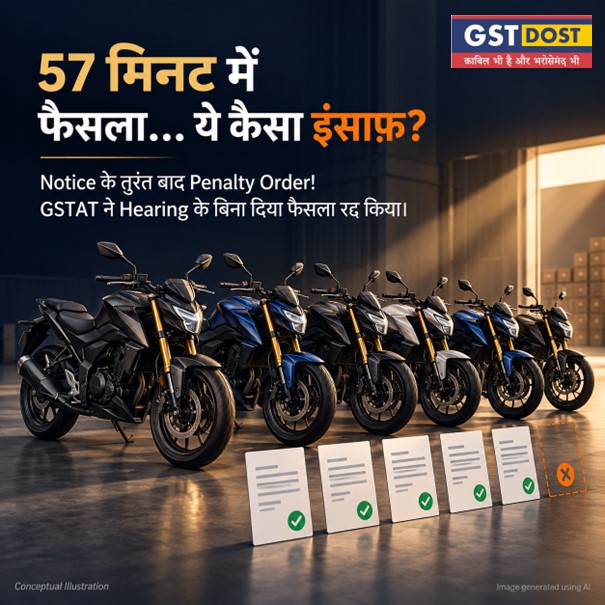
57 मिनट में फैसला… ये कैसा इंसाफ़?
Notice के तुरंत बाद Penalty Order! GSTAT ने Hearing के बिना दिया फैसला रद्द किया।
● ● ●
⭐ आज की बात
नमस्ते दोस्त!
सोचिए, माल की पहचान और बिक्री का रिकॉर्ड मौजूद हो, लेकिन रास्ते में एक जरूरी document न मिले। क्या Notice देकर जवाब का मौका दिए बिना तुरंत Penalty Order निकाला जा सकता है?
Saraswati Motors के मामले में यही सवाल उठा। GSTAT Prayagraj ने November 2021 के लेन-देन में 𝗦𝗲𝗰𝘁𝗶𝗼𝗻 𝟭𝟮𝟵 का Order रद्द किया।
● ● ●
⭐ 6 Bikes, Valid Invoice… पर E-Way Bill नहीं
23 November 2021 को Saraswati Motors की 6 Hero motorcycles, ₹4,05,138 की consignment, Prakash Motors को भेजी जा रही थीं। Driver के पास 𝗘-𝗜𝗻𝘃𝗼𝗶𝗰𝗲 था—IRN, QR Code और हर bike का engine/chassis number भी। लेकिन 𝗘-𝗪𝗮𝘆 𝗕𝗶𝗹𝗹 नहीं था।
Department ने ₹88,624 tax और ₹88,624 penalty की demand की। Goods छुड़ाने के लिए dealer ने कुल ₹1,77,248 under protest जमा किए।
● ● ●
⭐ Notice मिला, जवाब का मौका कहाँ?
25 November को दोपहर 2:47 बजे Show Cause Notice जारी हुआ। Hearing/appearance की तारीख 30 November दी गई, लेकिन उसी दिन Notice के सिर्फ 57 मिनट बाद Final Order पास कर दिया गया।
Dealer की दलील थी कि computer operator COVID-19 isolation में था और transaction genuine था। Department ने कहा कि e-way bill बाद में भी generate नहीं हुआ, इसलिए lapse को हल्का नहीं माना जा सकता।
● ● ●
⭐ Tribunal ने कौन-से Records देखे?
🔍 GSTAT ने पाया कि physical verification में goods की quantity, description या destination का mismatch नहीं था। E-invoice में सभी motorcycles traceable थीं; sale 𝗚𝗦𝗧𝗥-𝟭 और 𝗚𝗦𝗧𝗥-𝟯𝗕 में reported थी और संबंधित output tax discharge हो चुका था। Tax छिपाने का evidence नहीं मिला।
दूसरी ओर, Notice देकर 57 मिनट में Order पास करने से उचित Hearing का अवसर ही नहीं मिला।
● ● ●
⭐ इस Judgment का Crux Point
एक नहीं, दो बुनियादी बातें निर्णायक रहीं: November 2021 में लागू पुराने कानून के तहत tax evasion का intent जरूरी था, जो यहाँ साबित नहीं हुआ; और adverse Order से पहले meaningful Hearing देना जरूरी था, जो नहीं दी गई।
● ● ●
⭐ Judgment में किन Legal References का इस्तेमाल हुआ?
📂 उस समय का 𝗦𝗲𝗰𝘁𝗶𝗼𝗻 𝟭𝟮𝟵(𝟲), 𝗦𝗲𝗰𝘁𝗶𝗼𝗻 𝟭𝟯𝟬 से जुड़ा था, जिसमें intent to evade tax महत्वपूर्ण था। 01.01.2022 से यह linkage हट गया। इसलिए Tribunal ने बाद वाला strict-liability framework पुराने transaction पर लागू नहीं किया।
📂 𝗦𝗲𝗰𝘁𝗶𝗼𝗻 𝟳𝟱(𝟰) के तहत adverse decision से पहले Hearing का अवसर जरूरी था। Notice के तुरंत बाद Order इसे पूरा नहीं करता।
📚 Allahabad High Court के Falguni Steels और Shyam Sel and Power decisions ने पुराने Section 129 की interpretation को support किया। Revenue का Guljag Industries precedent अलग sales-tax statute और अलग facts पर था, इसलिए Tribunal ने उसे distinguish किया।
● ● ●
⭐ आखिर GSTAT ने क्या आदेश दिया?
✅ Original Order और First Appeal Order, दोनों set aside हुए। Tribunal ने ₹1,77,248 deposited under protest का refund, applicable interest सहित, देने का entitlement माना। उसी consignment पर tax दोबारा लेना भी गलत पाया।
⚠️ लेकिन यह November 2021 का मामला था, आज के amended Section 129 पर blanket ruling नहीं। Department को missing e-way bill के लिए उचित कानून, जैसे Section 122/125, के तहत अलग procedural penalty proceedings की liberty दी गई।
● ● ●
⭐ चलते चलते
💡 Goods dispatch से पहले e-way bill जाँचें। Dispute हो तो invoice, vehicle/serial identification, return records और Notice–Order की exact timing सुरक्षित रखें। Documentation lapse और tax evasion का आरोप एक जैसी बातें नहीं हैं—पर हर case में लागू कानून और evidence तय करेंगे कि राहत मिलेगी या नहीं।
● ● ●
𝗖𝗮𝘀𝗲 𝗥𝗲𝗳𝗲𝗿𝗲𝗻𝗰𝗲:
❗𝗖𝗮𝘀𝗲: Saraswati Motors Vs Mohammad Yahiya Ansari, Add. Comm. Grade 2 Appeal, Prayagraj
❗𝗖𝗼𝘂𝗿𝘁: GSTAT, Prayagraj
❗𝗖𝗶𝘁𝗮𝘁𝗶𝗼𝗻: 2026-VIL-193-GSTAT-PYG
❗𝗖𝗮𝘀𝗲 𝗡𝗼.: APL/6/ALB/2026
❗𝗗𝗮𝘁𝗲: 09.10.2026
● ● ●
अधिक जानने के लिए संपर्क करे :
𝗖𝗮𝗹𝗹: 90 8888 2000
𝗘𝗺𝗮𝗶𝗹: [email protected]
● ● ●
#GstDost #VikashDhanania #EWayBill #GSTAT #NaturalJustice
Appeal का Shortcut… सीधा Knockout!
Section 107 की Appeal pending; Section 112 में direct entry नहीं।
● ● ●
⭐ आज की बात
नमस्ते दोस्त!
GST Demand के खिलाफ Appeal कर दी हो, फिर भी मामला आगे नहीं बढ़ रहा—तो क्या सीधे GSTAT जा सकते हैं?
Dev Enterprises के मामले में यही सवाल सामने आया। ₹5,06,942 की Demand के खिलाफ First Appeal pending थी, लेकिन taxpayer ने उसी original order को GSTAT में भी challenge कर दिया। Tribunal ने उस filing को सुनने योग्य नहीं माना।
● ● ●
⭐ ₹5.06 लाख की Demand से विवाद कैसे बढ़ा?
State Tax Officer ने FY 2017-18 की अवधि के लिए Section 73(9) में order पास किया: ₹2,42,266 tax, ₹2,40,449 interest और ₹24,227 penalty।
Taxpayer ने 1 मई 2025 को 𝗙𝗼𝗿𝗺 𝗚𝗦𝗧 𝗔𝗣𝗟-𝟬𝟭 में First Appeal दाखिल की और record में ₹24,228 का pre-deposit था। लेकिन First Appeal का फैसला आने से पहले original order के खिलाफ 𝗔𝗣𝗟-𝟬𝟱 से GSTAT पहुँचा।
● ● ●
⭐ Taxpayer ने कौन-सी राहत माँगी?
Registry ने सवाल उठाया कि First Appeal pending रहते हुए original adjudication order को Tribunal में कैसे challenge किया जा सकता है। कुछ documents और respondent की description से जुड़े defects भी थे।
Taxpayer ने written clarification में pending First Appeal स्वीकार की और उसके निपटारे तक recovery से protection माँगी। सुनवाई के दिन दोनों पक्ष उपस्थित नहीं थे; Bench ने उपलब्ध record पर maintainability तय की।
● ● ●
⭐ GSTAT ने किस बात पर फैसला किया?
🔍 Tribunal ने tax calculation की सही-गलत जाँच नहीं की। उसका सवाल था: क्या उसके सामने ऐसा order है जिसके खिलाफ कानून GSTAT Appeal की अनुमति देता है?
Original order Assistant Commissioner ने adjudicating authority के रूप में पास किया था। First Appeal file करने या pending होने से वह अपने-आप Appellate Authority का order नहीं बन जाता।
● ● ●
⭐ इस Judgment का Crux Point
गलत stage असली रुकावट थी।
GSTAT में 𝗦𝗲𝗰𝘁𝗶𝗼𝗻 𝟭𝟭𝟮 की Appeal के लिए 𝗦𝗲𝗰𝘁𝗶𝗼𝗻 𝟭𝟬𝟳 या 𝟭𝟬𝟴 के तहत order होना जरूरी है। यहाँ ऐसा order था ही नहीं। इसलिए respondent का नाम सुधारना, documents upload करना या deposit proof देना इस jurisdictional defect को दूर नहीं कर सकता था।
● ● ●
⭐ Judgment में किन Legal References का इस्तेमाल हुआ?
📂 𝗦𝗲𝗰𝘁𝗶𝗼𝗻 𝟭𝟬𝟳(𝟭) original adjudication order के खिलाफ First Appeal का रास्ता देता है। 𝗦𝗲𝗰𝘁𝗶𝗼𝗻 𝟭𝟭𝟮(𝟭) GSTAT Appeal को Section 107/108 के orders तक सीमित करता है। इसी फर्क ने filing का नतीजा तय किया।
📂 𝗥𝘂𝗹𝗲 𝟮𝟰(𝟰), GSTAT (Procedure) Rules, 2025 scrutiny defects Bench के सामने रखने की प्रक्रिया देता है; इससे Tribunal का jurisdiction नहीं बढ़ता।
📚 𝗚𝗮𝗻𝗴𝗮 𝗕𝗮𝗶 𝘃. 𝗩𝗶𝗷𝗮𝘆 𝗞𝘂𝗺𝗮𝗿: Appeal का अधिकार कानून से मिलता है। 𝗞𝗶𝗿𝗮𝗻 𝗦𝗶𝗻𝗴𝗵 𝘃. 𝗖𝗵𝗮𝗺𝗮𝗻 𝗣𝗮𝘀𝘄𝗮𝗻: jurisdiction की कमी consent से ठीक नहीं होती। Tribunal ने इन principles को लागू किया।
● ● ●
⭐ आखिर GSTAT का आदेश क्या रहा?
❌ Direct GSTAT filing 𝗻𝗼𝘁 𝗺𝗮𝗶𝗻𝘁𝗮𝗶𝗻𝗮𝗯𝗹𝗲 मानकर regular Appeal के रूप में registration मना कर दिया गया।
⚠️ यह ₹5,06,942 की Demand को सही ठहराने वाला फैसला नहीं था। Demand के merits, pending First Appeal और recovery की legality तय नहीं हुई। GSTAT ने recovery stay भी नहीं दिया। Section 107(7) की protection लागू होती है या नहीं, यह competent authority के लिए छोड़ा गया।
Taxpayer अपनी pending First Appeal आगे बढ़ा सकता है; बाद में appealable order आने पर statutory conditions के अनुसार GSTAT का रास्ता उपलब्ध हो सकता है।
● ● ●
⭐ चलते चलते
💡 GST litigation में सिर्फ Appeal file करना नहीं, सही order के खिलाफ सही forum में file करना जरूरी है।
GSTAT जाने से पहले जाँचें: क्या आपके पास Section 107/108 का order है, या केवल original demand order?
● ● ●
𝗖𝗮𝘀𝗲 𝗥𝗲𝗳𝗲𝗿𝗲𝗻𝗰𝗲:
❗𝗖𝗮𝘀𝗲: Dev Enterprises v. Assistant Commissioner of State Tax, Assistant Commissioner, Dhamtari
❗𝗖𝗼𝘂𝗿𝘁: GSTAT, Raipur
❗𝗖𝗶𝘁𝗮𝘁𝗶𝗼𝗻: 2026-VIL-192-GSTAT-RPR
❗𝗖𝗮𝘀𝗲 𝗡𝗼.: Filing No. 2026122101000036
❗𝗗𝗮𝘁𝗲: 09.10.2026
● ● ●
अधिक जानने के लिए संपर्क करे :
𝗖𝗮𝗹𝗹: 90 8888 2000
𝗘𝗺𝗮𝗶𝗹: [email protected]
● ● ●
#GstDost #VikashDhanania #GSTAT #GSTAppeal #GSTLitigation
Payment किया है… गलती कबूल नहीं!
Goods छुड़ाने के लिए ₹19.06 लाख जमा करना आरोप स्वीकार करना नहीं: GSTAT
● ● ●
⭐ आज की बात
नमस्ते दोस्त!
सोचिए, माल और गाड़ी रोक दी गई। कारोबार आगे बढ़ाने के लिए रकम जमा करके उन्हें छुड़ाया। क्या इसका मतलब है कि आपने GST के सारे आरोप स्वीकार कर लिए?
Shree Wires के मामले में यही सवाल उठा। लेकिन कहानी में एक और अहम बात थी—Department ने Reply के लिए 7 दिन दिए और उसी दिन Confiscation Order भी पास कर दिया।
● ● ●
⭐ माल क्यों रोका गया?
Shree Wires का 30.28 MT माल, जिसकी कीमत ₹14.01 लाख थी, Amreli के पास रोका गया। Driver के पास Chhattisgarh से Rajkot तक का supplier invoice और e-way bill था, लेकिन Shree Wires से Motabhai Steel को आगे की supply के लिए उसका अपना invoice और e-way bill मौजूद नहीं था।
Interception के करीब 67 मिनट बाद ये documents generate हुए। फिर goods और vehicle detain किए गए।
Department ने penalty और confiscation के बदले fine मिलाकर ₹19,06,672 तय किए। Goods और vehicle छुड़ाने के लिए taxpayer ने यह रकम जमा कर दी।
● ● ●
⭐ Payment को लेकर विवाद क्या था?
Department का कहना था कि payment करके taxpayer ने allegations स्वीकार कर लिए।
Taxpayer ने कहा कि payment माल और गाड़ी छुड़ाने के लिए की गई थी। उसने confiscation की प्रक्रिया और tax evasion के intent पर भी सवाल उठाए।
पहली Appeal खारिज हुई। फिर मामला GSTAT Rajkot पहुँचा।
● ● ●
⭐ GSTAT ने Order में क्या देखा?
📌 25 April 2025 को 𝗠𝗢𝗩-𝟭𝟬 Notice जारी हुआ। उसमें Reply के लिए 7 दिन दिए गए, लेकिन उसी दिन दोपहर 12:30 बजे उपस्थित होने को भी कहा गया।
उसी 25 April को 𝗠𝗢𝗩-𝟭𝟭 Confiscation Order पास हो गया। उसमें लिखा था कि कोई objection दाखिल नहीं हुआ।
🔍 GSTAT ने देखा कि जब Reply देने का समय 2 May तक था, तो 25 April को ही जवाब न मिलने की बात taxpayer के खिलाफ नहीं मानी जा सकती।
Tribunal ने माना कि ऐसा मौका वास्तविक hearing नहीं था।
● ● ●
⭐ इस Judgment का Crux Point
✅ Goods और vehicle छुड़ाने के लिए ₹19.06 लाख जमा करना आरोपों की स्वीकृति या Reply और Hearing के अधिकार को छोड़ना नहीं है।
और जब Notice खुद 7 दिन देता है, तो उस अवधि के समाप्त होने से पहले final confiscation order नहीं दिया जा सकता। यही 𝗡𝗮𝘁𝘂𝗿𝗮𝗹 𝗝𝘂𝘀𝘁𝗶𝗰𝗲 का निर्णायक पहलू था।
● ● ●
⭐ Judgment में किन Legal References का इस्तेमाल हुआ?
📂 𝗦𝗲𝗰𝘁𝗶𝗼𝗻 𝟭𝟯𝟬(𝟰) और 𝗦𝗲𝗰𝘁𝗶𝗼𝗻 𝟭𝟮𝟲(𝟯): Confiscation या penalty से पहले सुनवाई का वास्तविक और उचित अवसर जरूरी है। Tribunal ने इसी आधार पर same-day order को गलत माना।
📂 𝗦𝗲𝗰𝘁𝗶𝗼𝗻 𝟭𝟮𝟵(𝟯): Taxpayer ने यह भी सवाल उठाया कि detention के बाद 𝗠𝗢𝗩-𝟬𝟳 और 𝗠𝗢𝗩-𝟬𝟵 की प्रक्रिया छोड़कर सीधे Section 130 में जाना सही था या नहीं। GSTAT ने इस मुद्दे पर अंतिम फैसला नहीं दिया।
● ● ●
⭐ आखिर GSTAT का फैसला क्या रहा?
GSTAT ने 𝗠𝗢𝗩-𝟭𝟭 Confiscation Order, संबंधित 𝗗𝗥𝗖-𝟬𝟳 और पहली Appeal का Order set aside कर दिया।
मामला fresh adjudication के लिए वापस भेजा गया। Taxpayer को written Reply, supporting documents और Personal Hearing का पर्याप्त मौका मिलेगा।
⚠️ यह merits पर final जीत या ₹19.06 लाख का refund order नहीं है। Tax evasion का intent और बाकी विवाद अभी खुले हैं।
● ● ●
⭐ चलते चलते
💡 GST Notice मिले तो Notice मिलने की तारीख, Reply की आखिरी तारीख और Order की तारीख जरूर मिलाएँ।
और यदि माल छुड़ाने के लिए payment की है, तो payment से जुड़े records तथा Appeal के documents सुरक्षित रखें। Payment और आरोप स्वीकार करना हमेशा एक ही बात नहीं है।
● ● ●
𝗖𝗮𝘀𝗲 𝗥𝗲𝗳𝗲𝗿𝗲𝗻𝗰𝗲:
❗𝗖𝗮𝘀𝗲: M/s Shree Wires (Prop. Mitul Kiritbhai Gadhia) v. Deputy Commissioner of State Tax (Appeal) & Another
❗𝗖𝗼𝘂𝗿𝘁: Goods and Services Tax Appellate Tribunal, Rajkot
❗𝗖𝗶𝘁𝗮𝘁𝗶𝗼𝗻: 2026-VIL-191-GSTAT-RJK
❗𝗖𝗮𝘀𝗲 𝗡𝗼.: APL/13/RJK/2026
❗𝗗𝗮𝘁𝗲: 05.10.2026
● ● ●
अधिक जानने के लिए संपर्क करे :
𝗖𝗮𝗹𝗹: 90 8888 2000
𝗘𝗺𝗮𝗶𝗹: [email protected]
● ● ●
#GstDost #VikashDhanania #GSTLaw #NaturalJustice #GSTAT
कहानी में ₹14.77 करोड़ की Demand बड़ी थी, लेकिन High Court के सामने एक छोटा-सा सवाल निर्णायक बन गया।
₹1.50 करोड़ पहले से जमा थे, तो उस पर विचार किए बिना और सुनवाई का मौका दिए बिना Appeal Reject क्यों हुई?
कभी-कभी फैसला रकम पर नहीं, प्रक्रिया की निष्पक्षता पर टिकता है।
No Notice… No Hearing… फिर कैसी Rejection?
Pre-Deposit पर बिना Hearing Appeal Reject। Bombay HC ने Fresh Hearing का आदेश दिया।
● ● ●
⭐ आज की बात
नमस्ते दोस्त!
ज़रा सोचिए…
GST Department की Investigation हुई। Businessman ने ₹1.50 करोड़ जमा कर दिए।
फिर ₹14.77 करोड़ की GST Demand आ गई।
Businessman ने उस Demand को Challenge करने के लिए Appeal की।
लेकिन कहानी में एक अजीब मोड़ आया!
जिस Appeal में अपनी बात रखनी थी, वही Appeal Pre-Deposit की कमी बताकर Reject कर दी गई।
न कोई Defect Memo…
न कोई Notice…
और न ही Hearing का मौका!
सवाल सिर्फ पैसों का नहीं था।
सवाल था—जब ₹1.50 करोड़ पहले से जमा हैं, तो बिना उनकी बात सुने Appeal का दरवाज़ा कैसे बंद किया जा सकता है?
यही सवाल Bombay High Court तक पहुँचा।
● ● ●
⭐ ₹1.50 करोड़ जमा थे… फिर कमी कहाँ थी?
मामला Bhagyoday Agro Industies का था, जो cotton trading के business में थी।
Department ने agriculturists से cotton की खरीद पर RCM के तहत GST नहीं चुकाने का मामला उठाया।
Adjudicating Authority ने लगभग ₹14.77 करोड़ की Demand Confirm कर दी।
लेकिन एक बात महत्वपूर्ण थी।
Investigation के दौरान जमा ₹1.50 करोड़ उस Demand के खिलाफ पहले ही Adjust किए जा चुके थे।
Taxpayer ने Appeal में कहा कि यह रकम statutory Pre-Deposit की जरूरत से भी ज्यादा थी।
फिर भी Commissioner (Appeals) ने Appeal Reject कर दी।
● ● ●
⭐ अब मामला High Court पहुँचा…
Taxpayer की दलील थी—
जब पैसा पहले से जमा था, तो उस पर विचार क्यों नहीं किया गया?
और अगर Pre-Deposit में कोई कमी थी, तो उसे बताकर जवाब देने का मौका क्यों नहीं मिला?
दूसरी तरफ Revenue ने Appeal Rejection को सही बताया।
अब High Court के सामने असली सवाल था—
क्या किसी Taxpayer की Appeal को Pre-Deposit Shortfall बताकर सीधे खत्म किया जा सकता है, बिना उसे अपनी बात रखने का मौका दिए?
● ● ●
⭐ High Court ने क्या देखा?
🔍 Court ने Record देखा और पाया कि Appeal Reject करने से पहले न Defect Memo दिया गया, न Notice और न ही Hearing का मौका।
इतना ही नहीं!
₹1.50 करोड़ पहले से जमा थे, जो required statutory Pre-Deposit से अधिक थे।
लेकिन Appellate Authority ने इस महत्वपूर्ण तथ्य पर विचार ही नहीं किया।
Court ने साफ किया कि अगर Pre-Deposit में Shortfall बताकर Appeal Reject करनी है, तो पहले Taxpayer को उस कमी पर अपना पक्ष रखने का अवसर मिलना चाहिए।
यहीं से मामले की दिशा बदल गई।
● ● ●
⭐ इस Judgment का Crux Point
Appeal में कमी बताना एक बात है।
लेकिन उस कमी को समझाने या दूर करने का मौका दिए बिना Appeal Reject करना दूसरी बात।
और जब Taxpayer पहले से जमा ₹1.50 करोड़ का मुद्दा उठा रहा हो, तो उसे बिना विचार किए नजरअंदाज नहीं किया जा सकता।
यही इस Judgment की सबसे महत्वपूर्ण बात है।
● ● ●
⭐ Judgment में किन Legal References का इस्तेमाल हुआ?
📂 𝗦𝗲𝗰𝘁𝗶𝗼𝗻 𝟲𝟳, 𝗖𝗚𝗦𝗧 𝗔𝗰𝘁
इसी प्रावधान के तहत Investigation में Search हुई थी। हालांकि Search की legality पर Court ने फैसला नहीं किया।
📂 𝗡𝗮𝘁𝘂𝗿𝗮𝗹 𝗝𝘂𝘀𝘁𝗶𝗰𝗲
मामले का निर्णायक आधार यही था—Adverse Order से पहले Taxpayer को अपनी बात रखने का उचित अवसर मिलना चाहिए।
Taxpayer ने 11 July 2024 के Circular का भी सहारा लिया था। Judgment में उसका number नहीं बताया गया।
किसी पुराने Judgment का नाम Cite नहीं किया गया।
● ● ●
⭐ फिर Bombay High Court ने क्या फैसला दिया?
✅ Commissioner (Appeals) का Rejection Order Set Aside कर दिया।
✅ Pre-Deposit के मुद्दे पर Fresh Hearing देने का निर्देश दिया।
✅ Court Order पेश होने के 12 सप्ताह के भीतर proceedings decide करने को कहा।
✅ Authorized Representative को 21 October 2026, सुबह 11 बजे उपस्थित होने का निर्देश दिया।
लेकिन यहाँ कहानी का एक और जरूरी हिस्सा समझिए।
⚠️ ₹14.77 करोड़ की GST Demand रद्द नहीं हुई।
Court ने यह तय नहीं किया कि RCM की Demand सही है या गलत।
Merits पर दोनों पक्षों की दलीलें अभी खुली हैं।
यानी Appeal को दोबारा सुने जाने का रास्ता मिला है, Tax Dispute में अंतिम जीत नहीं।
● ● ●
⭐ चलते चलते
इस मामले से Businessmen और GST Professionals को एक काम की सीख मिलती है।
Investigation में जमा पैसा सिर्फ पुराना Payment Record समझकर भूल मत जाइए।
उसके Challan, Adjustment Details और Appeal में दिए गए References संभालकर रखिए।
क्योंकि कभी-कभी Appeal की पूरी बहस इसी बात पर आ टिकती है कि पहले से जमा पैसे पर विचार किया गया या नहीं।
कानूनी लड़ाई में अपनी बात रखने का मौका मिलना भी महत्वपूर्ण है। लेकिन मौका मिलने और मामला जीतने में फर्क होता है।
● ● ●
𝗖𝗮𝘀𝗲 𝗥𝗲𝗳𝗲𝗿𝗲𝗻𝗰𝗲:
❗𝗖𝗮𝘀𝗲: BHAGYODAY AGRO INDUSTIES Vs COMMISSIONER (APPEALS) CGST & CENTRAL EXCISE AND ORS.
❗𝗖𝗼𝘂𝗿𝘁: High Court of Judicature at Bombay
❗𝗖𝗶𝘁𝗮𝘁𝗶𝗼𝗻: 2026-VIL-1174-BOM
❗𝗖𝗮𝘀𝗲 𝗡𝗼.: Writ Petition No. 9256 of 2026
❗𝗗𝗮𝘁𝗲: 12.10.2026
● ● ●
अधिक जानने के लिए संपर्क करे :
𝗖𝗮𝗹𝗹: 90 8888 2000
𝗘𝗺𝗮𝗶𝗹: [email protected]
● ● ●
#GstDost #VikashDhanania #GSTAppeal #NaturalJustice #PreDeposit
एक जरूरी बात: Pre-Deposit जमा होना और GST Portal पर सही Demand ID से उसका adjustment दिखना अलग बातें हैं।
GSTAT Appeal से पहले DRC-03, APL-04 और DRC-03A की स्थिति जाँचें। एक ही रकम दो Appeals में नहीं गिनी जा सकती।
पैसा जमा है… फिर क्यों देना है?
GSTAT ने माना—पुराना Pre-Deposit पर्याप्त, Fresh Payment जरूरी नहीं!
● ● ●
⭐ आज की बात
नमस्ते दोस्त!
मान लीजिए GST Appeal के लिए आपने पहले ही पैसा जमा कर दिया। बाद में disputed tax घट गया, मगर Tribunal में Appeal करते समय फिर नया Deposit माँगा जाए—तो क्या वही रकम दोबारा देनी होगी?
LTM Limited के मामले में 𝗚𝗦𝗧𝗔𝗧 Chennai के सामने यही सवाल आया।
● ● ●
⭐ ₹32.94 लाख जमा, फिर अड़चन कहाँ?
Company पर पहले ₹3,29,47,353 का tax demand confirm हुआ था। First Appeal के लिए उसने 𝗦𝗲𝗰𝘁𝗶𝗼𝗻 𝟭𝟬𝟳 के तहत ₹32,94,735 जमा किए।
First Appellate Authority ने ₹2,75,56,933 का हिस्सा remand किया और ₹53,90,420 का demand uphold किया। Tribunal में मौजूदा Appeal सिर्फ इसी ₹53,90,420 पर थी।
Registry ने 𝗦𝗲𝗰𝘁𝗶𝗼𝗻 𝟭𝟭𝟮 के Pre-Deposit का defect उठाया। Department का कहना था कि Tribunal stage के लिए ₹5,39,042 अलग से जमा करने होंगे। Company की दलील थी कि पहले से जमा रकम ही काफी है।
● ● ●
⭐ Tribunal ने क्या जाँचा?
🔍 असली हिसाब अब ₹3.29 करोड़ की original demand पर नहीं, बल्कि Tribunal में disputed ₹53,90,420 पर होना था।
📌 First Appeal का 10%: ₹5,39,042
📌 Tribunal Appeal का अतिरिक्त 10%: ₹5,39,042
✅ कुल जरूरी Pre-Deposit: ₹10,78,084
जब ₹32,94,735 पहले ही जमा थे, तो क्या सिर्फ नए challan के लिए और पैसा जमा करवाना उचित था?
● ● ●
⭐ इस Judgment का Crux Point
Tribunal ने माना कि दोनों stages की requirement जोड़कर देखनी है। 𝗦𝗲𝗰𝘁𝗶𝗼𝗻 𝟭𝟭𝟮 में “in addition to” का अर्थ अतिरिक्त 10% की cumulative requirement है, जरूरी नहीं कि उसके लिए नया challan ही बने।
Pre-Deposit अलग tax नहीं, disputed tax का ही हिस्सा है। उसी demand के against पर्याप्त रकम Government के पास हो, तो उसे गिनने की गुंजाइश है—लेकिन एक ही रकम दो appeals में double-count नहीं हो सकती।
● ● ●
⭐ Judgment में किन Legal References का इस्तेमाल हुआ?
📂 𝗦𝗲𝗰𝘁𝗶𝗼𝗻 𝟭𝟬𝟳(𝟲) और 𝗦𝗲𝗰𝘁𝗶𝗼𝗻 𝟭𝟭𝟮(𝟴): First Appeal के 10% और GSTAT के further 10% को Tribunal ने surviving disputed tax पर cumulative रूप में पढ़ा।
📂 CBIC Circular No. 224/18/2024-GST: पहले किए गए DRC-03 payment को निर्धारित प्रक्रिया से Pre-Deposit में adjust करने की व्यवस्था Tribunal की reasoning के समर्थन में थी।
📚 𝗔𝘀𝗵𝗶𝗿𝘄𝗮𝗱 𝗙𝗼𝗼𝗱 𝗜𝗻𝗱𝘂𝘀𝘁𝗿𝗶𝗲𝘀 (Jharkhand HC), 𝗠𝗮𝗻𝗼𝗿𝗮𝗻𝗷𝗮𝗻 𝗗𝗮𝘀𝗵 (GSTAT Cuttack) और 𝗠𝗠𝗧𝗖-𝗣𝗔𝗠𝗣 𝗜𝗻𝗱𝗶𝗮 (Madras HC): पहले जमा रकम को ध्यान में रखकर केवल वास्तविक shortfall, यदि हो, देखने की approach का समर्थन करते थे।
● ● ●
⭐ राहत मिली, लेकिन किस हद तक?
✅ GSTAT ने कहा—इस Appeal का 𝗣𝗿𝗲-𝗗𝗲𝗽𝗼𝘀𝗶𝘁 पूरा है; fresh payment जरूरी नहीं और Registry का defect cured है।
₹10,78,084 को संबंधित demand से map करने, Company को DRC-03A file करने और First Appellate Authority को एक महीने में APL-04 generate करने के निर्देश दिए गए। Undertaking भी देनी है कि relevant deposit दूसरी demand में use नहीं होगा। Compliance के बाद Registry Appeal admit करेगी।
⚠️ यह ₹53,90,420 की GST demand रद्द करने का फैसला नहीं है। ITC विवाद के merits पर अभी निर्णय नहीं हुआ।
● ● ●
⭐ चलते चलते
GSTAT Appeal से पहले सिर्फ नया challan बनाने की जल्दी न करें। पहले surviving disputed tax, पुराना DRC-03 payment और उसका demand-wise adjustment मिलाएँ। Deposit किसी दूसरी proceeding में इस्तेमाल हुआ है या नहीं, यह भी जाँचें।
● ● ●
𝗖𝗮𝘀𝗲 𝗥𝗲𝗳𝗲𝗿𝗲𝗻𝗰𝗲:
❗𝗖𝗮𝘀𝗲: LTM Limited v. The Commissioner of GST & Central Excise, Chennai South Commissionerate
❗𝗖𝗼𝘂𝗿𝘁: Goods and Services Tax Appellate Tribunal, Chennai Bench
❗𝗖𝗶𝘁𝗮𝘁𝗶𝗼𝗻: 2026-VIL-187-GSTAT-CHE
❗𝗖𝗮𝘀𝗲 𝗡𝗼.: Filing No. 2626059101000236
❗𝗗𝗮𝘁𝗲: 06.10.2026
● ● ●
अधिक जानने के लिए संपर्क करे :
𝗖𝗮𝗹𝗹: 90 8888 2000
𝗘𝗺𝗮𝗶𝗹: [email protected]
● ● ●
#GstDost #VikashDhanania #GSTAT #GSTAppeal #PreDeposit
एक जरूरी सवाल: क्या GST Order में सिर्फ किसी व्यक्ति का बयान दर्ज है, या उसी बयान के आधार पर आपके खिलाफ conclusion निकाला गया है?
Cross-Examination की जरूरत समझने के लिए यह फर्क बेहद महत्वपूर्ण है।
बयान पर भरोसा… सवालों से परहेज़ क्यों?
Third-Party Statements पर GST Order रद्द, Cross-Examination के बाद Fresh Assessment!
● ● ●
⭐ आज की बात
नमस्ते दोस्त!
मान लीजिए आपके 𝗜𝗧𝗖 पर सवाल उठे और उसकी एक बड़ी वजह दो दूसरे लोगों के बयान हों। आप उन लोगों से सवाल पूछना चाहें, लेकिन मौका न मिले। क्या ऐसे बयानों के आधार पर GST Order बनाया जा सकता है?
Madras High Court के सामने यही विवाद आया।
● ● ●
⭐ ITC विवाद में दो बयान क्यों अहम बने?
Shri Sheik Dawood और उनसे जुड़ी दो firms के मामले में 01.08.2022 को 𝗦𝗵𝗼𝘄 𝗖𝗮𝘂𝘀𝗲 𝗡𝗼𝘁𝗶𝗰𝗲𝘀 जारी हुए। ITC deny करने के कई grounds थे। एक ground था Joseph Selvaraj और Joseph Selvaraj Alexander के statements, जिनमें संबंधित transactions को fictitious और ITC claim को bogus बताया गया था।
Taxpayers ने 27.12.2022 के Reply में आरोप लगाया कि बयान दबाव और धमकी में दिए गए थे। उन्होंने 𝗖𝗿𝗼𝘀𝘀-𝗘𝘅𝗮𝗺𝗶𝗻𝗮𝘁𝗶𝗼𝗻 मांगी और Personal Hearing में भी मांग दोहराई।
● ● ●
⭐ बयान इस्तेमाल हुए, सवाल पूछने का मौका नहीं
Assessing Officer ने request ठुकराई। उनकी दलील थी कि cross-examination हर मामले में absolute right नहीं है। उन्होंने यह भी कहा कि दोनों व्यक्ति Magistrate के सामने अपने बयान वापस ले सकते थे, लेकिन उन्होंने ऐसा नहीं किया।
इसके बाद 28.03.2023 के 𝗢𝗿𝗱𝗲𝗿-𝗶𝗻-𝗢𝗿𝗶𝗴𝗶𝗻𝗮𝗹 में उन्हीं statements का विस्तार से इस्तेमाल करके SCN के proposals confirm कर दिए गए।
● ● ●
⭐ High Court ने क्या देखा?
🔍 Court ने माना कि statement भरोसेमंद है या नहीं, यह Assessing Authority तय कर सकती है। लेकिन जब officer उसी statement को credible मानकर taxpayer के खिलाफ इस्तेमाल करे, तो taxpayer को उसे सवालों के जरिए चुनौती देने का उचित मौका भी मिलना चाहिए।
यहाँ adverse conclusions सीधे उन statements पर आधारित थे। इसलिए cross-examination का अवसर जरूरी था।
● ● ●
⭐ इस Judgment का Crux Point
📌 𝗖𝗿𝗼𝘀𝘀-𝗘𝘅𝗮𝗺𝗶𝗻𝗮𝘁𝗶𝗼𝗻 हर GST case में automatic right नहीं है। लेकिन जब किसी तीसरे व्यक्ति के बयान पर सीधा भरोसा करके taxpayer के खिलाफ फैसला लिया जाए, तो उस बयान को परखने का fair opportunity देना जरूरी है।
● ● ●
⭐ Judgment में किन Legal References का इस्तेमाल हुआ?
📂 मूल assessment 𝗖𝗚𝗦𝗧 𝗔𝗰𝘁, 𝟮𝟬𝟭𝟳 के तहत था। विवाद का निर्णायक मुद्दा किसी specific GST section की व्याख्या नहीं, बल्कि relied-upon statements की cross-examination का अवसर था।
📚 Appellants ने Andaman Timber Industries, Vijayaraj Surana, K. Srinivasulu और M.P. Ganesan के फैसलों का हवाला दिया। Judgment में इनकी अलग-अलग विस्तृत ratio नहीं दी गई; Court ने अपना निष्कर्ष इस मामले में statements पर सीधे reliance के आधार पर दिया।
● ● ●
⭐ आखिर आदेश क्या हुआ?
✅ Madras High Court ने 03.06.2026 का Single Judge order और 28.03.2023 का assessment order set aside किया। दोनों व्यक्तियों की cross-examination का reasonable opportunity देकर फिर assessment करने को कहा—order की copy मिलने से 𝗲𝗶𝗴𝗵𝘁 𝘄𝗲𝗲𝗸𝘀 के भीतर।
⚠️ सहयोग न मिलने पर Authority कानून के अनुसार आगे बढ़ सकती है। Court ने ITC को genuine घोषित नहीं किया और merits पर dispute का अंतिम फैसला नहीं दिया।
● ● ●
⭐ चलते चलते
💡 अगर आपके खिलाफ third-party statement इस्तेमाल हो रहा है, तो Reply और Personal Hearing के record में साफ बताइए कि किस statement को challenge करना है और cross-examination क्यों चाहिए।
बयान evidence हो सकता है—लेकिन उस पर निर्भर फैसला देते समय fair opportunity भी अहम है।
● ● ●
𝗖𝗮𝘀𝗲 𝗥𝗲𝗳𝗲𝗿𝗲𝗻𝗰𝗲:
❗𝗖𝗮𝘀𝗲: Shri Sheik Dawood / MNS Enterprises / Noordeen Enterprises vs. The Additional Commissioner of GST and Central Excise
❗𝗖𝗼𝘂𝗿𝘁: High Court of Judicature at Madras
❗𝗖𝗶𝘁𝗮𝘁𝗶𝗼𝗻: 2026:MHC:3952
❗𝗖𝗮𝘀𝗲 𝗡𝗼.: W.A. Nos. 2615, 2617 and 2616 of 2026
❗𝗗𝗮𝘁𝗲: 07-09-2026
● ● ●
अधिक जानने के लिए संपर्क करे :
𝗖𝗮𝗹𝗹: 90 8888 2000
𝗘𝗺𝗮𝗶𝗹: [email protected]
● ● ●
#GstDost #VikashDhanania #GST #CrossExamination #ITC
कहानी में सबसे बड़ा सवाल यह नहीं था कि नया Bill बना या नहीं।
सवाल था—जब Truck चला था, तब उसके अंदर कौन-सा माल था और Documents में क्या लिखा था?
GST Compliance की असली परीक्षा Dispatch के समय होती है, Checking के बाद नहीं।
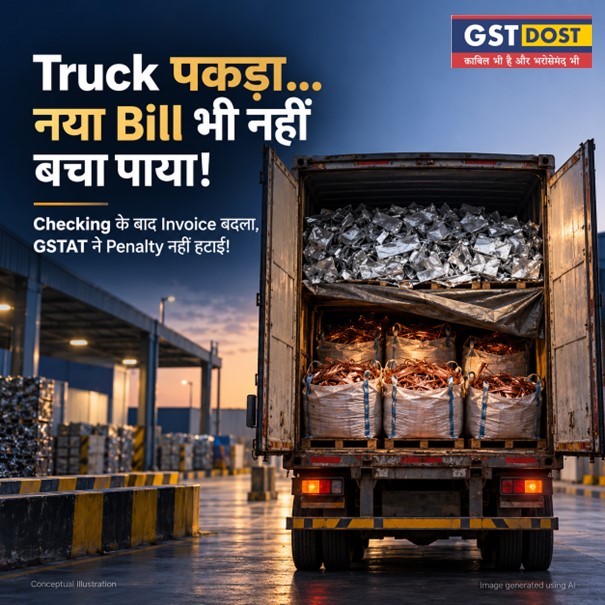
Truck पकड़ा… नया Bill भी नहीं बचा पाया!
Checking के बाद Invoice बदला, GSTAT ने Penalty नहीं हटाई!
● ● ●
⭐ आज की बात
नमस्ते दोस्त!
सोचिए, एक Truck माल लेकर जा रहा है।
Invoice बना हुआ है। E-way Bill भी है। Documents के मुताबिक Truck में Aluminium Scrap है।
लेकिन रास्ते में GST Officers ने Truck रोका।
Checking हुई… और मामला बदल गया!
कागज़ों में Aluminium Scrap था, मगर Truck के अंदर बड़ी मात्रा में Copper Scrap निकल आया।
अब सवाल था—
क्या यह सिर्फ Labour की गलती थी, या गलत Documents के सहारे महँगा माल भेजा जा रहा था?
यही मामला 𝗚𝗦𝗧𝗔𝗧 Varanasi पहुँचा।
● ● ●
⭐ Truck खुला… तो असल कहानी सामने आई!
05.11.2023 को GST Officers ने V.K. Brothers का Truck रोका।
Documents में लिखा था:
📌 1,225 kg Aluminium Scrap, कीमत ₹1,61,700।
लेकिन Checking में मिला:
980 kg Copper Scrap, अलग-अलग bags में रखा हुआ, जिसके ऊपर लगभग 280 kg loose Aluminium Scrap था।
यानी Invoice में जिस माल का नाम था, Truck में उससे अलग और ज्यादा कीमती माल भी मौजूद था।
यहीं से विवाद शुरू हुआ।
● ● ●
⭐ व्यापारी ने कहा—Labour से गलती हो गई!
V.K. Brothers की दलील थी कि Labourers ने confusion में Copper Scrap load कर दिया।
व्यापारी ने Checking के बाद उसी दिन नया Invoice और E-way Bill बना दिया।
उसका कहना था कि Tax बचाने की कोई नीयत नहीं थी।
लेकिन Department ने इस सफाई को स्वीकार नहीं किया।
उसने एक दूसरे similar मामले का भी हवाला दिया, जिसमें documents बाद में बनाए गए थे।
पहले अधिकारी ने कुल ₹2,25,692 का Tax और Penalty लगाया। पहली Appeal भी खारिज हो गई।
अब फैसला GSTAT को करना था।
● ● ●
⭐ GSTAT ने पूछा—अगर गलती थी, तो माल इस तरह क्यों रखा था?
🔍 Tribunal ने सिर्फ नए Invoice को नहीं देखा।
उसने यह भी देखा कि Copper Scrap bags में था और उसके ऊपर Aluminium Scrap रखा गया था।
Copper और Aluminium अलग-अलग पहचाने जा सकते थे।
यह कोई मामूली spelling mistake या HSN Code की उलझन नहीं थी।
Tribunal ने दूसरे similar मामले में बताए गए conduct को भी ध्यान में रखा।
इन तथ्यों के आधार पर उसने Labour की गलती वाली दलील स्वीकार नहीं की और Tax बचाने की नीयत पाई।
● ● ●
⭐ इस Judgment का Crux Point
सबसे अहम बात यह थी—
Truck पहले पकड़ा गया। नया Invoice और E-way Bill बाद में बना।
GSTAT ने माना कि Checking के बाद नए Documents बनाकर पहले की गैर-कानूनी transportation को अपने-आप legal नहीं बनाया जा सकता।
खासकर तब, जब actual goods और Documents में इतना बड़ा अंतर हो।
● ● ●
⭐ Judgment में किन Legal References का इस्तेमाल हुआ?
📂 𝗦𝗲𝗰𝘁𝗶𝗼𝗻 𝟭𝟮𝟵 के तहत Tax और Penalty लगाई गई थी। 𝗦𝗲𝗰𝘁𝗶𝗼𝗻 𝟭𝟬𝟳 की पहली Appeal खारिज होने के बाद मामला GSTAT पहुँचा।
📚 𝗔.𝗡. 𝗘𝗻𝘁𝗲𝗿𝗽𝗿𝗶𝘀𝗲𝘀, 𝗧𝗶𝗿𝘂𝗽𝗮𝘁𝗶 𝗔𝗴𝗿𝗼 𝗖𝗼𝗺𝗺𝗼𝗱𝗶𝘁𝗶𝗲𝘀 और 𝗥𝗶𝗺𝗷𝗵𝗶𝗺 𝗜𝘀𝗽𝗮𝘁 से व्यापारी ने राहत माँगी।
लेकिन Tribunal ने कहा कि वे मामूली errors या classification disputes के मामले थे। यहाँ मामला अलग goods का था।
📚 𝗦𝗵𝗿𝗶𝗺𝗮𝗹𝗶 𝗜𝗻𝗱𝘂𝘀𝘁𝗿𝗶𝗲𝘀 और 𝗕𝗿𝗶𝗴𝗵𝘁 𝗥𝗼𝗮𝗱 𝗟𝗼𝗴𝗶𝘀𝘁𝗶𝗰𝘀 के फैसलों ने गलत goods description और transport documents पर कार्रवाई के पक्ष को मजबूत किया।
𝗝𝗵𝗮𝗻𝘀𝗶 𝗘𝗻𝘁𝗲𝗿𝗽𝗿𝗶𝘀𝗲𝘀 के फैसले से भी स्पष्ट किया गया कि Checking के बाद बनाए Documents अपने-आप पहले की कमी दूर नहीं करते।
● ● ●
⭐ आखिर में क्या फैसला हुआ?
GSTAT ने व्यापारी की Appeal खारिज कर दी।
₹2,25,692 के Tax और Penalty वाला आदेश बरकरार रहा।
⚠️ ध्यान रहे, इसका मतलब यह नहीं कि हर छोटी Invoice या E-way Bill गलती पर Penalty लगेगी।
इस मामले में अलग और ज्यादा कीमती माल, उसे रखने का तरीका, Checking के बाद बने Documents और similar conduct महत्वपूर्ण थे।
● ● ●
⭐ चलते चलते
💡 Business में सिर्फ Bill सही होना काफी नहीं है।
Truck में जो माल जा रहा है, वही माल Invoice और E-way Bill में भी होना चाहिए।
इसलिए Dispatch से पहले तीन बातें जरूर मिलाएँ:
1️⃣ Goods की Description
2️⃣ Quantity और Value
3️⃣ Actual Loading और Documents
क्योंकि Checking के बाद Bill सुधारने से पहले की हर गलती नहीं सुधरती।
❓ आपके हिसाब से Goods Dispatch करने से पहले Final Loading Verification की जिम्मेदारी किसकी होनी चाहिए—Accounts Team की या Dispatch Team की?
● ● ●
𝗖𝗮𝘀𝗲 𝗥𝗲𝗳𝗲𝗿𝗲𝗻𝗰𝗲:
❗𝗖𝗮𝘀𝗲: M/s V.K. Brothers v. Sharad Kumar Shukla, Additional Commissioner Grade-II (Appeals), State Tax & Ors.
❗𝗖𝗼𝘂𝗿𝘁: GST Appellate Tribunal, State Bench Varanasi
❗𝗖𝗮𝘀𝗲 𝗡𝗼.: APL/16/VRN/2026
❗𝗗𝗮𝘁𝗲: 29.09.2026
● ● ●
अधिक जानने के लिए संपर्क करे :
𝗖𝗮𝗹𝗹: 90 8888 2000
𝗘𝗺𝗮𝗶𝗹: [email protected]
● ● ●
#GstDost #VikashDhanania #GSTAT #EwayBill #GSTPenalty
कहानी का दिलचस्प पहलू यह था कि ₹3.14 लाख का पूरा ITC वापस नहीं मिला।
राहत केवल ₹76,750.20 की थी।
फिर भी उसी राहत पर GSTAT तक विवाद पहुँचा।
यही सीख है—GST Appeal में केवल बड़ी Demand नहीं, हर disputed invoice और उससे जुड़े Evidence की अहमियत होती है।
शक से नहीं… सबूत से होगा फैसला!
Bogus Transaction का Evidence नहीं, ₹76,750 ITC Relief बरकरार!
● ● ●
⭐ आज की बात
नमस्ते दोस्त!
आपने किसी supplier से माल खरीदा, invoice लिया और ITC claim किया।
उस समय supplier का GST registration भी था।
लेकिन कुछ समय बाद पता चले कि उसी supplier का GSTIN पुरानी तारीख से Cancel कर दिया गया है।
अब सवाल यह है कि क्या supplier का GSTIN पीछे की तारीख से Cancel होने पर आपकी खरीदारी भी अपने-आप Bogus मान ली जाएगी?
कुछ ऐसा ही विवाद पहुँचा GSTAT, Lucknow के सामने।
और इस मामले में फैसला केवल Cancellation की तारीख देखकर नहीं हुआ।
● ● ●
⭐ कहानी में मोड़ कहाँ आया?
मामला FY 2019-20 का था।
M/s Edge Techunified Private Limited से हुई purchases पर ITC लिया गया था।
बाद में supplier का GST registration 01.07.2017 से 𝗥𝗲𝘁𝗿𝗼𝘀𝗽𝗲𝗰𝘁𝗶𝘃𝗲𝗹𝘆 𝗖𝗮𝗻𝗰𝗲𝗹𝗹𝗲𝗱 पाया गया।
इसके बाद Section 73 की proceedings में ₹3,14,326 का ITC disallow हुआ। साथ में applicable interest और penalty भी लगाई गई।
मामला First Appellate Authority तक पहुँचा।
वहाँ दो invoices और GST Portal पर 24.07.2020 को दिखाई गई subsequent amendment की जाँच हुई।
नतीजा?
पूरी demand नहीं हटी, लेकिन ₹76,750.20 का limited ITC relief मिला।
अब Department ने इसी छोटी-सी राहत को GSTAT में चुनौती दी।
● ● ●
⭐ Department और Taxpayer की दलीलें
Department का कहना था कि जब supplier का GSTIN 01.07.2017 से Cancel है, तो ऐसे invoices पर ITC कैसे मिल सकता है?
उसने Section 16(2) की conditions, tax payment के proof और GSTR-2A/2B तथा GSTR-9 की discrepancies पर सवाल उठाए।
दूसरी तरफ Taxpayer का पक्ष था कि केवल Retrospective Cancellation से कोई transaction fake साबित नहीं हो जाता।
First Appeal में नए ITC की मंजूरी नहीं दी गई थी, बल्कि GST records में amendment देखकर reversal की रकम कम की गई थी।
अब दोनों पक्षों की दलीलें सामने थीं।
लेकिन असली सवाल कुछ और था।
● ● ●
⭐ GSTAT ने किस सवाल पर फैसला किया?
🔍 Tribunal ने देखा कि Department ने ₹76,750.20 के relief से जुड़ी कौन-सी specific transaction को Bogus साबित किया है।
क्या कोई ऐसा evidence था जिससे पता चले कि supplies वास्तव में मिली ही नहीं थीं?
क्या First Appellate Authority ने GST records की amendment को गलत समझा था?
क्या GSTR-9 और GSTR-2A का difference इस particular relief को गलत साबित करता था?
Tribunal के सामने Department इनमें से कोई specific factual या legal error establish नहीं कर पाया।
यहीं से मामले की दिशा साफ हो गई।
● ● ●
⭐ इस Judgment का Crux Point
📌 Supplier का GSTIN पीछे की तारीख से Cancel होना एक बात है।
लेकिन उसी आधार पर किसी particular ITC relief को गलत साबित करना दूसरी बात।
Tribunal ने माना कि इस मामले में specific transactions को fictitious, sham या supplies प्राप्त नहीं होने वाला साबित करने के लिए पर्याप्त evidence नहीं दिया गया था।
इसलिए केवल Retrospective Cancellation और return discrepancies के आधार पर limited relief हटाने की दलील सफल नहीं हुई।
● ● ●
⭐ Judgment में किन Legal References का इस्तेमाल हुआ?
📂 𝗦𝗲𝗰𝘁𝗶𝗼𝗻 𝟳𝟯 के तहत मूल proceedings शुरू हुई थीं।
📂 Department ने 𝗦𝗲𝗰𝘁𝗶𝗼𝗻 𝟭𝟲(𝟮), विशेषकर 16(2)(c), 𝗥𝘂𝗹𝗲 𝟯𝟲(𝟭) और 𝗦𝗲𝗰𝘁𝗶𝗼𝗻 𝟭𝟱𝟱 का सहारा लिया।
इन provisions के संदर्भ में Tribunal ने स्पष्ट किया कि ITC की statutory conditions को particular transactions के facts और evidence के आधार पर जाँचना जरूरी है।
📂 𝗦𝗲𝗰𝘁𝗶𝗼𝗻 𝟳𝟱(𝟳) भी चर्चा में आया क्योंकि Taxpayer ने कहा कि GSTR-9 संबंधी ground मूल proceedings का हिस्सा नहीं था।
Tribunal ने इस objection को relevant माना और पाया कि उस discrepancy से भी specific relief में कोई गलती साबित नहीं हुई।
इस order में किसी पुराने judgment को नाम से लागू नहीं किया गया।
● ● ●
⭐ फिर GSTAT का फैसला क्या रहा?
✅ Department की Appeal 𝗗𝗶𝘀𝗺𝗶𝘀𝘀𝗲𝗱।
First Appellate Authority द्वारा दिया गया ₹76,750.20 का ITC Relief बरकरार रहा।
लेकिन एक बात समझना जरूरी है।
⚠️ Tribunal ने पूरे ₹3,14,326 का ITC allow नहीं किया।
न ही यह कहा कि Cancelled GSTIN वाले supplier की हर purchase पर ITC मिलना ही चाहिए।
यह फैसला उन्हीं specific transactions, GST records और सामने आए evidence पर आधारित था।
● ● ●
⭐ चलते चलते
GST disputes में केवल यह देखना काफी नहीं कि Portal पर supplier का status क्या दिखाई दे रहा है।
असली जाँच यह भी है कि disputed invoice किस transaction से जुड़ा है और उसके समर्थन या विरोध में क्या records मौजूद हैं।
इसलिए purchase invoices, supplies मिलने के evidence और GST amendments का invoice-wise reconciliation संभालकर रखना महत्वपूर्ण है।
क्योंकि इस मामले ने एक बात साफ की—
शक और सबूत में फर्क होता है।
और किसी particular ITC dispute का फैसला करते समय यह फर्क महत्वपूर्ण बन सकता है।
● ● ●
𝗖𝗮𝘀𝗲 𝗥𝗲𝗳𝗲𝗿𝗲𝗻𝗰𝗲:
❗𝗖𝗮𝘀𝗲: Satyendra Singh Versus L AND T TECHNOLOGY SERVICES LIMITED, NON EXECUTIVE CHAIRMAN
❗𝗖𝗼𝘂𝗿𝘁: GSTAT, Court I, Lucknow
❗𝗖𝗮𝘀𝗲 𝗡𝗼.: APL/71/LCK/2026
❗𝗗𝗮𝘁𝗲: 28/09/2026
● ● ●
अधिक जानने के लिए संपर्क करे :
𝗖𝗮𝗹𝗹: 90 8888 2000
𝗘𝗺𝗮𝗶𝗹: [email protected]
● ● ●
#GstDost #VikashDhanania #GST #InputTaxCredit #GSTAT
GST Demand के मामले में केवल total amount देखना काफी नहीं। Notice, detailed Order और DRC-07 में पहले से जमा Tax का treatment भी देखिए। क्या आपकी GST reconciliation में ये तीनों records match करते हैं?
Notice से बाहर… Order बेकार!
SCN से आगे बढ़ा GST Order, 50% Deposit पर Remand!
● ● ●
⭐ आज की बात
नमस्ते दोस्त!
किसी business के खिलाफ GST Demand हो और वह business बंद भी हो चुका हो, तो क्या उसका GST registration cancel करने का आवेदन सिर्फ बकाया Tax की वजह से रोका जा सकता है?
M/s. Safelane Agencies के मामले में यह सवाल तब उठा, जब एक तरफ GST assessment में Notice और Order का अंतर सामने आया, और दूसरी तरफ business बंद होने के बावजूद cancellation application reject हो गई।
● ● ●
⭐ Notice में क्या था, Order में क्या निकला?
29.05.2024 के 𝗦𝗵𝗼𝘄 𝗖𝗮𝘂𝘀𝗲 𝗡𝗼𝘁𝗶𝗰𝗲 में ₹1,35,676 की tax proposal थी। Petitioner की दलील थी कि बाद का detailed Order इस Notice के दायरे से आगे चला गया।
एक और अहम फर्क था: ₹47,57,105 का IGST belated 𝗚𝗦𝗧𝗥-𝟯𝗕 से जमा हुआ था। Detailed Order ने इसे confirmed demand में adjust माना, लेकिन 𝗗𝗥𝗖-𝟬𝟳 में इसका असर नहीं दिखाया गया और पूरी demand confirm कर दी गई।
इसी बीच business discontinue होने पर 27.09.2025 को दिया गया registration cancellation application भी outstanding demand के आधार पर reject कर दिया गया।
● ● ●
⭐ Court ने कहाँ गलती पाई?
🔍 Madras High Court ने Notice, detailed Order और DRC-07 की तुलना की। Court ने पाया कि दोनों orders Notice के scope से बाहर थे और DRC-07 ने पहले से किए गए IGST payment को account में नहीं लिया।
Registration के मुद्दे पर Court ने अलग सवाल देखा: क्या पुराना बकाया, बंद business का GST cancellation रोकने की अपने आप में वजह बन सकता है?
● ● ●
⭐ इस Judgment का Crux Point
📌 इस मामले में दो बातें अलग रखना जरूरी है—𝗦𝗖𝗡 से आगे जाकर assessment नहीं किया जा सकता; और GST registration cancel होने पर भी पुराने tax dues की recovery का रास्ता बंद नहीं होता।
इसलिए outstanding demand का होना, अपने आप में cancellation application reject करने का उचित आधार नहीं था।
● ● ●
⭐ Judgment में किन Legal References का इस्तेमाल हुआ?
📂 𝗔𝗿𝘁𝗶𝗰𝗹𝗲 𝟮𝟮𝟲: दोनों disputed orders को Writ Petitions के जरिए challenge किया गया।
📂 𝗦𝗲𝗰𝘁𝗶𝗼𝗻 𝟮𝟵(𝟭)(𝗮): Business discontinue होना GST registration cancellation मांगने का एक आधार है।
📂 𝗦𝗲𝗰𝘁𝗶𝗼𝗻 𝟮𝟵(𝟯): Registration cancel होने के बाद भी outstanding amounts की recovery के लिए proceedings हो सकती हैं। इसी वजह से Court ने cancellation rejection को टिकाऊ नहीं माना।
Assessment वाला फैसला Notice और final orders के वास्तविक अंतर पर आधारित था। Judgment में कोई earlier case-law cite नहीं किया गया।
● ● ●
⭐ आखिर Court ने क्या आदेश दिया?
✅ Assessment Order set aside कर मामला fresh consideration के लिए वापस भेजा—लेकिन petitioner को ₹1,35,676 की tax demand का 𝟱𝟬% जमा करना होगा। Department fresh SCN जारी करके कानून के अनुसार दोबारा फैसला करेगा। इस condition के पूरा होने पर संबंधित bank attachment हटेगी।
✅ Registration cancellation application reject करने वाला order भी set aside हुआ। Department को application पर फिर से विचार करने को कहा गया।
⚠️ Court ने न तो पूरी tax liability हमेशा के लिए खत्म की, न सीधे GST registration cancel किया। दोनों Writ Petitions इन directions के साथ dispose हुईं।
● ● ●
⭐ चलते चलते
💡 Accounts और GST teams के लिए तीन सीधे checks:
1️⃣ SCN और final Order का scope मिलाइए।
2️⃣ Paid GST को detailed Order और DRC-07 से reconcile कीजिए।
3️⃣ Business बंद हो तो cancellation request और पुराने dues की recovery को अलग मुद्दे समझिए।
● ● ●
𝗖𝗮𝘀𝗲 𝗥𝗲𝗳𝗲𝗿𝗲𝗻𝗰𝗲:
❗𝗖𝗮𝘀𝗲: M/s. Safelane Agencies v. Superintendent of GST & C.Ex. & Others
❗𝗖𝗼𝘂𝗿𝘁: High Court of Judicature at Madras
❗𝗖𝗮𝘀𝗲 𝗡𝗼.: W.P. Nos. 23824 & 23848 of 2026
❗𝗗𝗮𝘁𝗲: 17.09.2026
● ● ●
अधिक जानने के लिए संपर्क करे :
𝗖𝗮𝗹𝗹: 90 8888 2000
𝗘𝗺𝗮𝗶𝗹: [email protected]
● ● ●
#GstDost #VikashDhanania #GST #GSTNotice #MadrasHighCourt
एक अहम सवाल: E-Way Bill expire होने पर क्या आपके पास गलती की वजह साबित करने वाले records हैं? इस मामले में सिर्फ explanation नहीं, goods का documents से match होना भी महत्वपूर्ण था।
गलती PIN Code की… सज़ा ₹9.40 लाख की!
E-Way Bill Expired, लेकिन GSTAT ने Section 129 Penalty हटाई.
● ● ●
⭐ आज की बात
नमस्ते दोस्त!
सोचिए, माल के साथ E-Way Bill और Delivery Challan दोनों हों, फिर भी रास्ते में ₹9.40 लाख की penalty लग जाए। वजह? एक गलत PIN Code से दूरी कम दर्ज हुई और E-Way Bill मंज़िल से पहले expire हो गया।
T Stanes and Company Limited के मामले में 𝗚𝗦𝗧𝗔𝗧 ने इसी विवाद पर फैसला दिया।
● ● ●
⭐ 215 KM का रास्ता, Bill में 100 KM!
Company insecticides को purchase return के लिए Hubli से Ballari भेज रही थी। 18 मार्च 2024 को truck रोका गया। E-Way Bill की validity पिछले दिन, 17 मार्च को रात 11:59 बजे खत्म हो चुकी थी।
Company के अनुसार consignor का सही PIN Code 580025 था, लेकिन गलती से 583102 दर्ज हुआ। नतीजा—actual 215 KM की जगह system में 100 KM distance आया और validity कम हो गई।
Officer ने expired bill को valid E-Way Bill के बिना transport माना। 𝗦𝗲𝗰𝘁𝗶𝗼𝗻 𝟭𝟮𝟵 के तहत ₹9,40,880 penalty लगी। Goods छुड़ाने के लिए Company ने रकम चुकाई; पहली Appeal भी खारिज हुई।
● ● ●
⭐ दोनों पक्षों की दलील
Company ने कहा कि यह केवल typing mistake थी, tax चोरी की नीयत नहीं थी और goods के documents में दूसरी कोई गड़बड़ी नहीं मिली।
Department का पक्ष था कि E-Way Bill expire होना नियमों का उल्लंघन है, इसलिए penalty सही थी।
● ● ●
⭐ Tribunal ने किस बात पर गौर किया?
🔍 Truck के साथ E-Way Bill और Delivery Challan मौजूद थे। Physical verification में goods की quantity और description दस्तावेज़ों से match हुई।
Tribunal ने देखा कि गलती ने validity बढ़ाई नहीं, बल्कि distance कम दिखाकर validity घटा दी। Appellate Authority ने tax evasion की intention का आरोप भी नहीं लगाया था।
● ● ●
⭐ इस Judgment का Crux Point
सवाल सिर्फ यह नहीं था कि bill expire हुआ या नहीं। असली सवाल था—क्या इन परिस्थितियों में एक clerical mistake पर भारी 𝗦𝗲𝗰𝘁𝗶𝗼𝗻 𝟭𝟮𝟵 penalty उचित थी?
Tribunal ने कहा कि taxpayer की explanation और tax evasion की intention का अभाव देखना जरूरी है। हर procedural lapse को substantive violation की तरह नहीं देखना चाहिए।
● ● ●
⭐ Judgment में किन Legal References का इस्तेमाल हुआ?
📂 𝗥𝘂𝗹𝗲 𝟭𝟯𝟴 के तहत E-Way Bill validity का प्रश्न था। 𝗦𝗲𝗰𝘁𝗶𝗼𝗻 𝟭𝟮𝟵 पर Tribunal ने माना कि provision का उद्देश्य tax evasion रोकना है; इसलिए intention का पहलू relevant है।
📂 𝗖𝗕𝗜𝗖 𝗖𝗶𝗿𝗰𝘂𝗹𝗮𝗿 𝟲𝟰/𝟯𝟴/𝟮𝟬𝟭𝟴-𝗚𝗦𝗧 में कुछ minor errors पर Section 129 न लगाने के निर्देश दिए गए हैं। Tribunal ने 𝗦𝗲𝗰𝘁𝗶𝗼𝗻 𝟭𝟲𝟴 के तहत इस Circular को अधिकारियों पर binding माना।
📚 Karnataka High Court के 𝗕𝗩𝗠 𝗧𝗿𝗮𝗻𝘀 𝗦𝗼𝗹𝘂𝘁𝗶𝗼𝗻𝘀 मामले के आधार पर Tribunal ने MP High Court के 𝗚𝗮𝘁𝗶 𝗞𝗶𝗻𝗲𝘁𝘀𝘂 निर्णय को अलग माना। 𝗖𝗮𝘁𝗲𝗿𝗽𝗶𝗹𝗹𝗮𝗿 𝗜𝗻𝗱𝗶𝗮 और 𝗣𝗼𝗱𝗮𝗿𝗮𝗻 𝗙𝗼𝗼𝗱𝘀 के सिद्धांतों से भी procedural और substantive violations में अंतर को समर्थन मिला।
● ● ●
⭐ आखिर फैसला क्या हुआ?
✅ GSTAT ने ₹9,40,880 की Section 129 penalty कायम रखने वाला appellate order set aside किया और Appeal allow कर दी। मामला remand नहीं हुआ।
⚠️ यह हर expired E-Way Bill पर penalty हटने का सार्वभौमिक नियम नहीं है। राहत इस मामले की clerical error, matching goods/documents और evasion intent न होने जैसी परिस्थितियों पर आधारित थी। Tribunal ने अलग से refund या interest देने का आदेश नहीं दिया।
● ● ●
⭐ चलते चलते
💡 Dispatch से पहले PIN Code, auto-populated distance और E-Way Bill validity जरूर जाँचें। गलती हो जाए तो original documents, route details और goods verification के evidence संभालकर रखें।
● ● ●
𝗖𝗮𝘀𝗲 𝗥𝗲𝗳𝗲𝗿𝗲𝗻𝗰𝗲:
❗𝗖𝗮𝘀𝗲: T Stanes and Company Limited v. Sulakshana S N, JCCT (Appeals), Mangaluru & Ors.
❗𝗖𝗼𝘂𝗿𝘁: GST Appellate Tribunal, Division Bench Court II
❗𝗖𝗮𝘀𝗲 𝗡𝗼.: APL/12/BUR/2026
❗𝗗𝗮𝘁𝗲: 29.09.2026
● ● ●
अधिक जानने के लिए संपर्क करे :
𝗖𝗮𝗹𝗹: 90 8888 2000
𝗘𝗺𝗮𝗶𝗹: [email protected]
● ● ●
#GstDost #VikashDhanania #EWayBill #GSTJudgment #Section129
कहानी का सबसे दिलचस्प पहलू ₹1.85 Crore की Demand नहीं, बल्कि उसकी Timing थी।
GST Department ने Claim CIRP में lodge नहीं किया था।
अब सोचिए, अगर कोई पुराना GST Notice आए, तो क्या सबसे पहले उसकी Amount देखनी चाहिए या Resolution Plan की तारीख?
IBC में छूटा GST Claim… अब नहीं चलेगा!
IBC Plan Approved. ₹1.85 Crore Demand Quashed.
● ● ●
⭐ आज की बात
नमस्ते दोस्त!
ज़रा सोचिए…
एक कंपनी मुश्किल दौर से गुज़री। मामला Insolvency तक पहुँचा।
फिर एक Resolution Plan बना। NCLT ने उसे approve कर दिया और कंपनी नए Management के साथ आगे बढ़ने लगी।
लेकिन कहानी यहीं खत्म नहीं हुई!
करीब दो साल बाद पुराने GST का मामला फिर सामने आ गया।
Department ने लगभग ₹1.85 Crore की Demand खड़ी कर दी।
अब सवाल था…
जिस पुराने GST Claim को Insolvency Process में उठाया ही नहीं गया, क्या उसे बाद में Notice भेजकर दोबारा ज़िंदा किया जा सकता है?
यही मामला पहुँचा Calcutta High Court।
● ● ●
⭐ कहानी में असली मोड़ कहाँ आया?
मामला SREI Equipment Finance Limited का था।
Department का आरोप था कि कंपनी ने FY 2021-22 में imported goods पर ₹1.68 Crore का excess IGST ITC लिया था।
इसके साथ ₹16.87 Lakh की Penalty और Interest भी लगाया गया।
लेकिन इस Demand के पीछे एक महत्वपूर्ण तारीख छिपी थी।
कंपनी का CIRP 8 October 2021 को शुरू हुआ था।
11 August 2023 को NCLT ने Resolution Plan approve कर दिया।
और सबसे महत्वपूर्ण बात?
GST Department ने इन पुराने dues का Claim CIRP में lodge ही नहीं किया था।
फिर भी September 2025 में SCN आया और December 2025 में Demand confirm कर दी गई।
● ● ●
⭐ कंपनी और Department की दलील क्या थी?
कंपनी ने कहा कि Resolution Plan approve होने के बाद पुराने, unclaimed GST dues खत्म हो चुके थे।
Department की दलील थोड़ी अलग थी।
उसके अनुसार Tax Liability तय करना और उसकी Recovery करना दो अलग बातें हैं।
भले Recovery नहीं हो सके, लेकिन Tax Demand determine की जा सकती है।
अब Court को इसी अंतर पर फैसला करना था।
● ● ●
⭐ Court ने कौन-सी बात पकड़ ली?
🔍 Calcutta High Court ने सबसे पहले देखा कि GST Claim किस period का था।
FY 2021-22 की पूरी अवधि Resolution Plan approve होने से पहले की थी।
और उस Claim को Insolvency Process में पेश भी नहीं किया गया था।
इसलिए Court ने माना कि वह Claim 11 August 2023 को ही extinguish हो गया था।
फिर Court के सामने एक सीधा सवाल आया।
जब Claim ही कानूनन खत्म हो चुका है, तो उसके आधार पर नई GST Proceeding कैसे शुरू हो सकती है?
● ● ●
⭐ इस Judgment का Crux Point
यह मामला सिर्फ GST Recovery रोकने का नहीं था।
Court ने स्पष्ट किया कि जब कोई पुराना Claim approved Resolution Plan के बाद extinguish हो चुका हो, तो उस Claim पर नई Adjudication भी नहीं की जा सकती।
यानी Department का यह तर्क स्वीकार नहीं हुआ कि Recovery भले रुके, लेकिन Demand तय करने की Proceeding चल सकती है।
● ● ●
⭐ Judgment में किन Legal References का इस्तेमाल हुआ?
📂 IBC Section 31(1) के अनुसार approved Resolution Plan Government Authorities पर भी binding होता है।
Section 238 IBC को conflicting कानून पर overriding effect देता है।
📚 Supreme Court के Ghanashyam Mishra और Essar Steel judgments से Court ने यह principle लागू किया कि successful Resolution Applicant को पुराने, अनसुलझे Claims के नए बोझ के बिना business आगे बढ़ाने का अवसर मिलना चाहिए।
📚 Department ने Sundaresh Bhatt judgment का सहारा लिया। लेकिन Court ने बताया कि वह Moratorium और Liquidation से जुड़ी अलग स्थिति थी।
📂 Court ने CBIC Circular 134/04/2020-GST और Instruction 1083/02/2022-CX8 का भी उल्लेख किया, जो Insolvency Claims के treatment को recognize करते हैं।
● ● ●
⭐ आखिर इस कहानी का नतीजा क्या निकला?
✅ Calcutta High Court ने 26 September 2025 का GST SCN और 29 December 2025 का Demand Order quash कर दिया।
DRC-01, DRC-07 और उनसे जुड़ी Proceedings भी set aside कर दी गईं।
July–August 2021 के delayed GSTR-3B filing से संबंधित अलग Section 50 Interest Notice भी quash हुआ।
लेकिन एक बात समझना जरूरी है।
⚠️ Court ने यह तय नहीं किया कि विवादित ITC वास्तव में सही था या गलत।
और बाद की किसी अलग Tax Liability, यदि हो, उस पर भी कोई फैसला नहीं दिया।
● ● ●
⭐ चलते चलते
इस फैसले से Business Owners और GST Professionals के लिए एक महत्वपूर्ण सीख निकलती है।
अगर किसी कंपनी का Resolution Plan approve हो चुका है और उसके बाद पुराने GST Period का Notice आता है, तो केवल Demand Amount मत देखिए।
तीन सवाल जरूर पूछिए:
1️⃣ Tax किस period का है?
2️⃣ Resolution Plan कब approve हुआ?
3️⃣ क्या Department ने CIRP में उस Claim को lodge किया था?
क्योंकि कभी-कभी GST Notice का जवाब केवल GST Records में नहीं, बल्कि कंपनी के Insolvency Records में छिपा होता है।
● ● ●
Case Reference:
❗Case: SREI Equipment Finance Limited Vs. Union of India & Ors.
❗Court: High Court at Calcutta
❗Case No.: WPA No. 6268 of 2026
❗Date: 01.10.2026
● ● ●
अधिक जानने के लिए संपर्क करे :
Call: 90 8888 2000
Email: [email protected]
● ● ●
#GstDost #VikashDhanania #GST #IBC