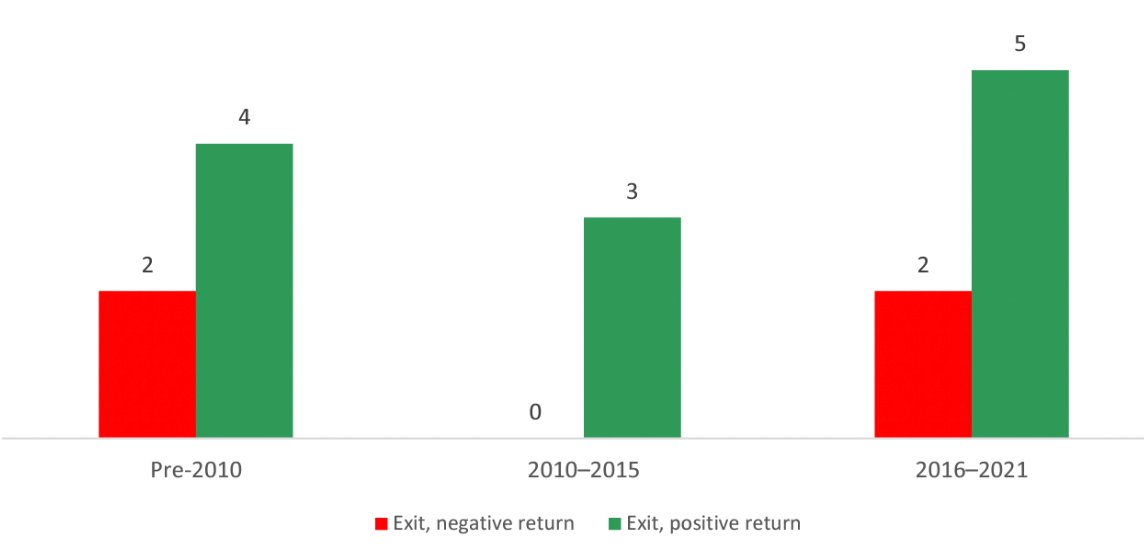
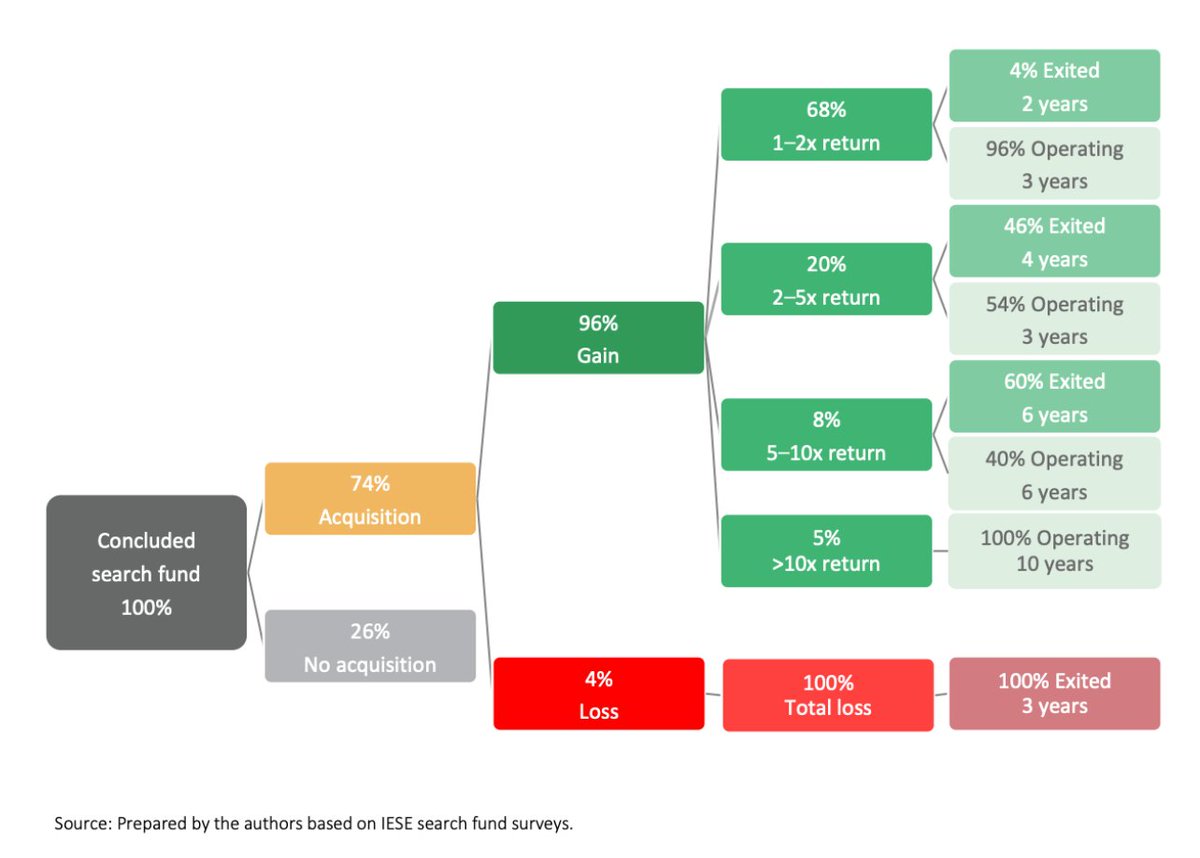
Of the 16 search fund acquired company exits that occurred between pre-2010 and 2021, 12 resulted in positive returns. Do you see this ratio of positive returns on exits holding true moving forward into the future?
(Source: IESE Search Fund 2022 Selected Observations)
There has been a shift in the geographical distribution of international searchers, with 52% of searchers coming from U.S. business schools, but this percentage has decreased over the years, and now 80% of searchers in Europe graduated from European business schools.
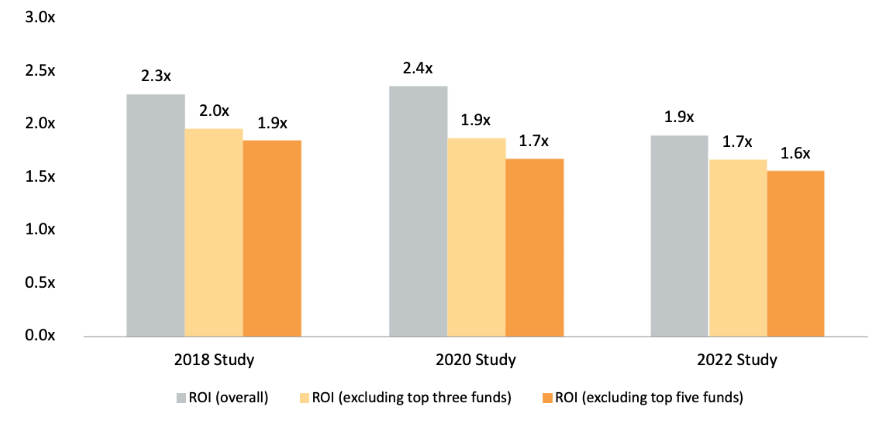
The ROI figures for international search funds have decreased compared to previous studies, with an ROI of 1.9x in 2022. What do you think is the underlying reason behind this?
(Source: IESE Search Fund 2022 Selected Observations)
According to Business News Daily, alternative funding sources are becoming more common for small businesses and may be an important option as interest rates rise. What sources do you think will be considered in a rising interest rate economy?
https://t.co/CFPoGbbInB
The following map shows where the most search fund activity has been in recent years, with Mexico and Spain experiencing the most activity from Pre-2012 through 2021. What else stands out to you from this map?
(Source: IESE Search Fund 2022 Selected Observations)
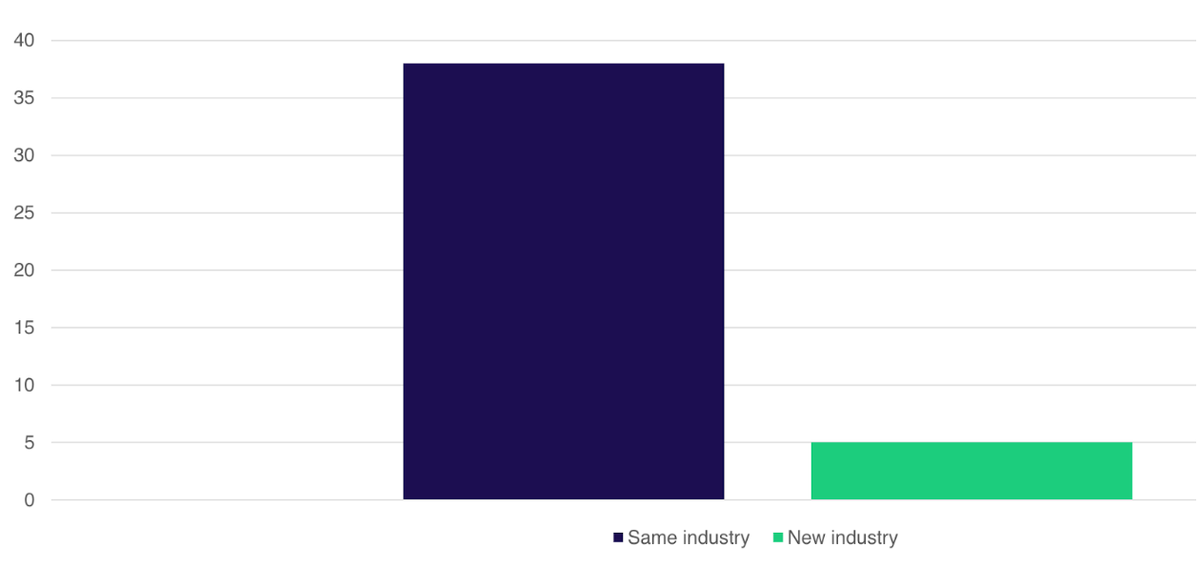
Most self-funded searchers who are pursuing strategic acquisitions said their add-ons were within the same industry as their initial acquisition. Are you looking to add-on additional companies as part of your strategy?
(Source: Live Oak Bank Self-Funded Searcher Study)
With 85% of international search fund acquisition targets being in technology, a deeper dive into the subcategories of tech are necessary. Which subcategories surprised you the most? How do you think this will look in 5 years?
(Source: IESE Search Fund 2022 Selected Observations)
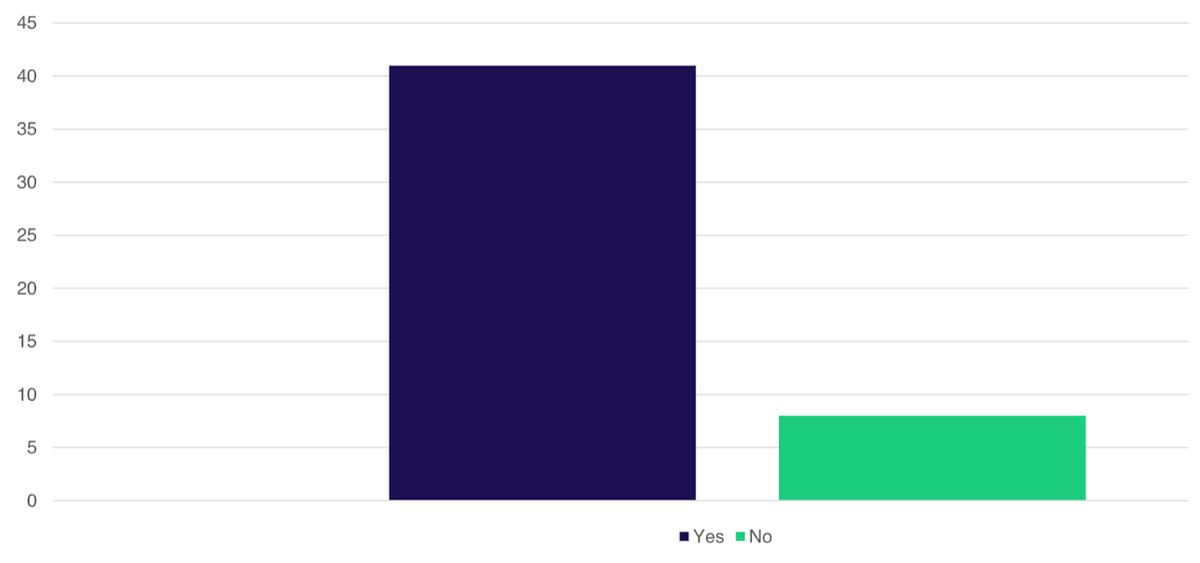
When asked, a majority of the studied self-funded searchers were considering a strategic acquisition strategy. Have you given thought to acquiring another business?
(Source: Live Oak Bank Self-Funded Searcher Study)
One of the most important characteristics of a leader is their ability to self-manage effectively. What tricks have you employed to hold yourself accountable in your business?
https://t.co/tlpKLsg1Et
The following graph shows what percentage of international search funds are targeting specific industries. Do you see this trend continuing moving forward? Why or why not?
(Source: IESE Search Fund 2022 Selected Observations)
There will seemingly always be some kind of challenge when taking over a new company. What obstacles did you overlook when you first bought your company?
(Source: Live Oak Bank Self-Funded Searcher Study)
The investment in AI technology has been accelerated by large tech companies such as Google, Microsoft, and Amazon. In what ways do you think investments in AI could potentially strengthen your SMB business model in years to come?
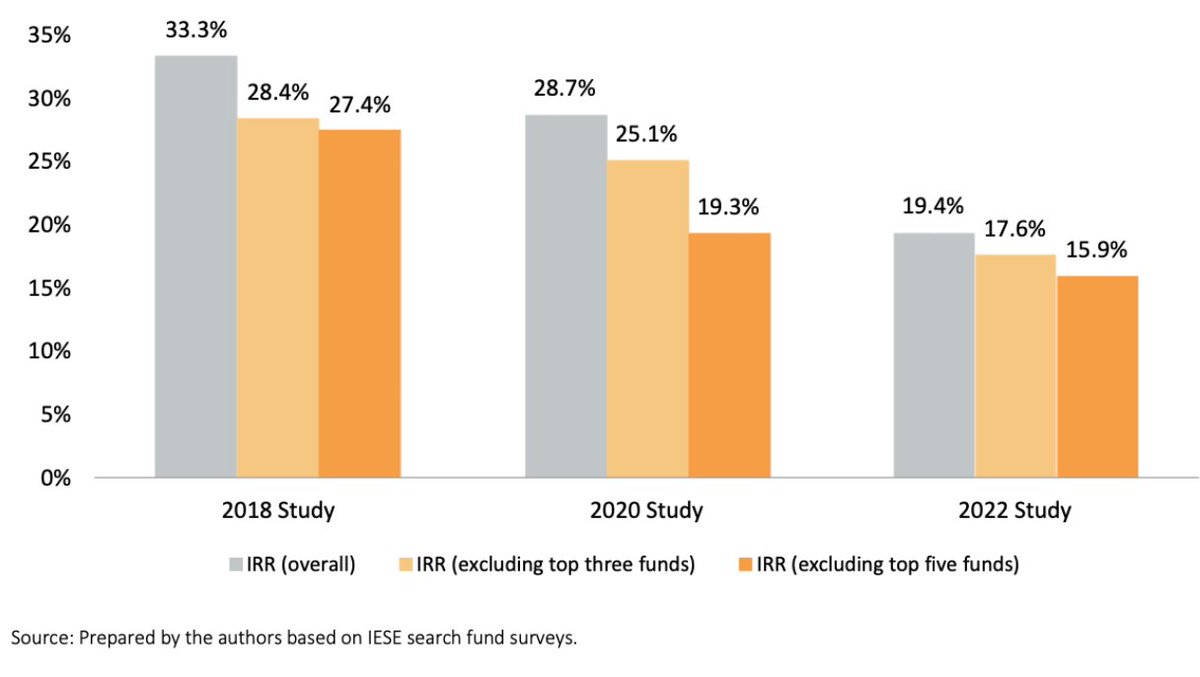
The picture below shows international search funds’ average internal rate of returns (IRR) compared to prior year returns. What do you think is causing IRR to decline? Do you expect this trend to continue?
(Source: IESE Search Fund 2022 Selected Observations)
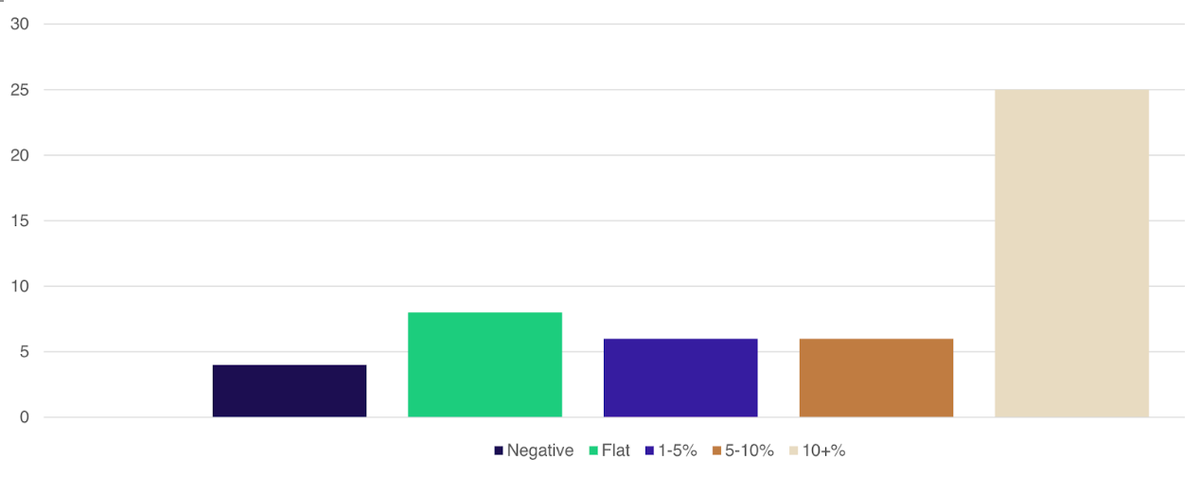
Self-funded searchers have typically had positive constant annual growth rates after taking over their acquisition company. How is your acquisition performing? Do you believe that your growth will be sustainable in future years?
(Source: Live Oak Bank Self-Funded Searcher Study)
The following image shows the percentage of acquisitions by where the searcher raised their fund. Was your acquisition in the same state or region, or did you find an acquisition company elsewhere?
(Source: Stanford Search Selected Observations)
The following graphic represents international operators’ previous background history prior to raising their own fund. Do you think technology sectors make up a large majority of today’s search acquisitions?
(Source: IESE Search Fund 2022 Selected Observations)
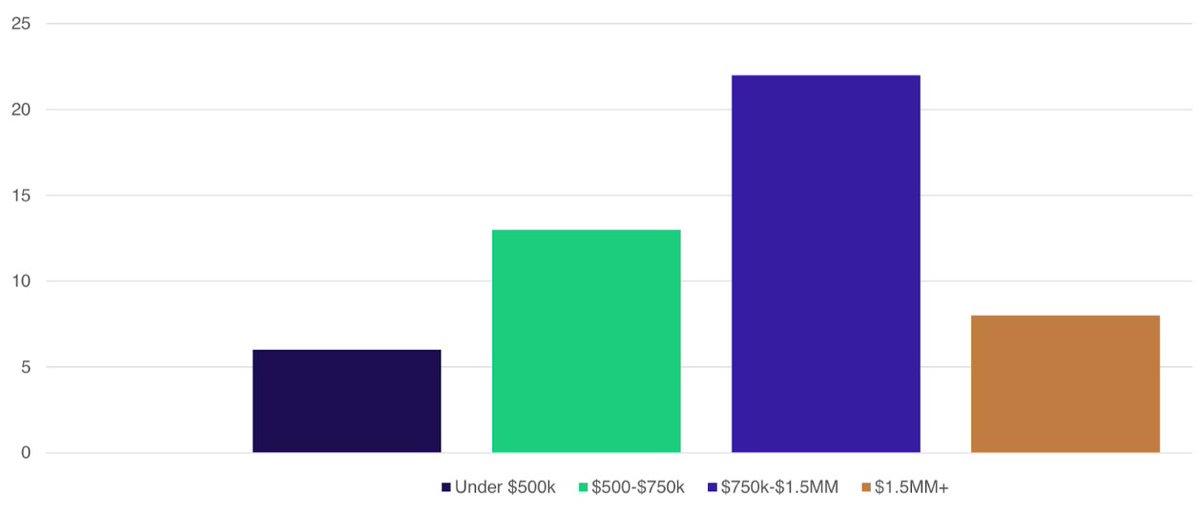
Typically, self-funded searchers purchase companies that have EBITDAs ranging from $750,000 to $1.5 million. If you’re a self-funded searcher, what EBITDA ranges are you working with when evaluating potential deals?
(Source: Live Oak Bank Self-Funded Searcher Study)
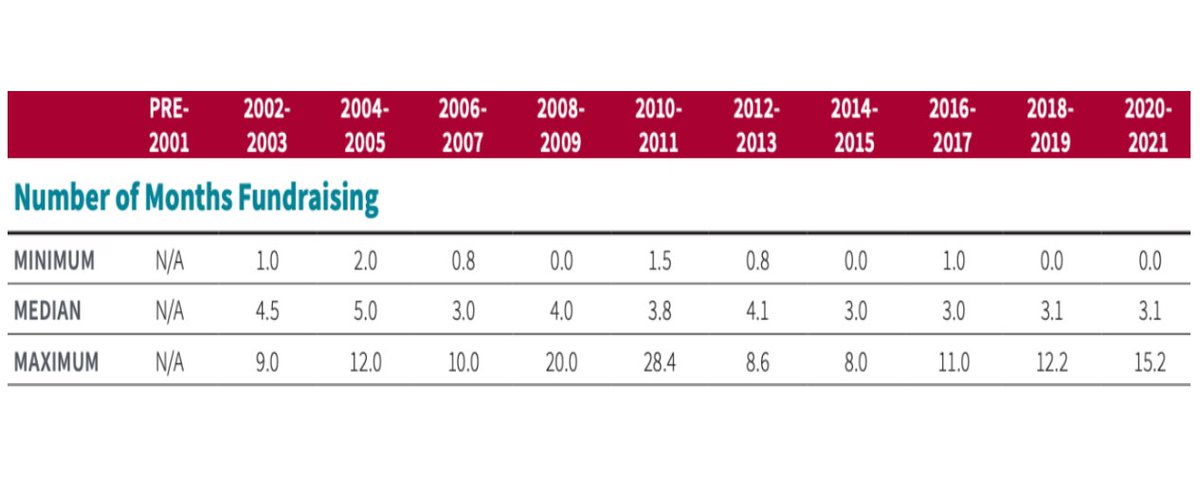
The median number of months searchers took to raise initial capital for years 2020–2021 was 3.1. How long did it take you to raise your initial capital and how did it compare to each year’s median average dating back to 2002?
(Source: Stanford Search Selected Observations)
The following graphic reflects the percentage of international search funds by their respective stages. How do you expect these returns to look in 5 years?
(Source: IESE Search Fund 2022 Selected Observations)
It often takes weeks for two parties to discuss the valuation of a company between the buyer and seller. How long did it take for you and your seller to agree on a valuation?
(Source: Live Oak Bank Self-Funded Searcher Study)