1998 WSOP Main Event.
Scotty Nguyen and Kevin McBride are heads-up for the world title.
Scotty holds J♦9♣.
McBride has Q♣10♥.
Board: 8♣ 9♦ 9♥ 8♥ 8♠
Scotty has a full house, nines full of eights. He moves all-in, takes a drag from his cigarette, sips his beer and says:
“You call, it’s gonna be all over, baby.”
McBride calls and Scotty wins $1M
1982 WSOP Main Event. Jack “Treetop” Straus thinks he’s busted. He stands up to leave after losing what he believes is his last chip.
The dealer looks under a napkin… and finds one single $500 chip. Straus sits back down.
From that one lonely chip he starts spinning it up — doubling, then doubling again. Hours later he’s still alive. Days later he’s at the final table.
In the end he takes down the whole thing for $520,000 and the bracelet.
That moment gave poker one of its most famous sayings:
“All you need is a chip and a chair.”
1982 WSOP Main Event. Jack “Treetop” Straus thinks he’s busted. He stands up to leave after losing what he believes is his last chip.
The dealer looks under a napkin… and finds one single $500 chip. Straus sits back down.
From that one lonely chip he starts spinning it up — doubling, then doubling again. Hours later he’s still alive. Days later he’s at the final table.
In the end he takes down the whole thing for $520,000 and the bracelet.
That moment gave poker one of its most famous sayings:
“All you need is a chip and a chair.”
They tried to enter a monkey into the WSOP Main Event
2006. Peak of the poker boom. 8,773 players in the biggest Main Event ever.
A company called PokerShare trained a chimpanzee named Mikey in the basics: sitting at a table, moving chips, going all-in.
They seriously tried to buy him into the $10,000 World Championship.
Players freaked out. Nobody wanted to get eliminated by a monkey on national TV.
WSOP officials had to dig through the rulebook and officially declare: only humans are allowed to play.
Mikey never sat down. But for one brief, glorious moment, the World Series of Poker almost had a chimp in the field.
They tried to enter a monkey into the WSOP Main Event
2006. Peak of the poker boom. 8,773 players in the biggest Main Event ever.
A company called PokerShare trained a chimpanzee named Mikey in the basics: sitting at a table, moving chips, going all-in.
They seriously tried to buy him into the $10,000 World Championship.
Players freaked out. Nobody wanted to get eliminated by a monkey on national TV.
WSOP officials had to dig through the rulebook and officially declare: only humans are allowed to play.
Mikey never sat down. But for one brief, glorious moment, the World Series of Poker almost had a chimp in the field.
Chris Moneymaker’s 2003 World Series of Poker Main Event win.
In 2003, Moneymaker was a 27-year-old accountant from Tennessee working a regular job and playing online poker as a hobby. He entered a cheap online poker tournament and won a seat into the $10,000 WSOP Main Event in Las Vegas.
As a complete amateur with little live tournament experience, he faced a field full of seasoned professionals. Against the odds, he navigated the massive field and reached heads-up against the experienced Sammy Farha.
One of the pivotal moments was a bold all-in bluff with king-high that Farha folded to, later called by commentators the “bluff of the century.” Moneymaker went on to win the tournament and the $2.5 million first prize.
His victory (often called the “Moneymaker Effect”) showed everyday players that an ordinary person with grit, smart play, and a bit of luck could triumph on the biggest stage. It sparked a massive boom in online and live poker as millions were inspired to try their hand.
Poker players famous for ignoring strict GTO and instead playing the player, trusting reads and intuition.
1. Phil Hellmuth
The ultimate anti-GTO icon.
He openly says he doesn’t play GTO and claims his style beats it. Hellmuth relies on what he calls “white magic”, pure reads, table presence, and putting people on exact hands. He limps, plays tight in weird spots, and makes decisions based on looking someone in the eyes. Still winning bracelets decades later while solvers scream.
2. Daniel Negreanu
Master of live reads and soul-reading opponents.
Negreanu is legendary for putting people on exact hands mid-hand, using body language, timing, table talk, and psychology. He’s one of the best ever at “playing the man” rather than just ranges. Classic Kid Poker feel over pure math.
3. Phil Ivey
Often called the most natural talent the game has ever seen.
Ivey’s game is pure intuition and presence. He makes huge folds and calls that look impossible on paper because he “just knows.” Many of his most famous hands are pure feel plays that solvers would never recommend — yet they work against real humans.
4. Doyle Brunson
The original old-school feel player.
Doyle played long before GTO existed. His whole philosophy was reading people, exploiting tendencies, and trusting experience and instinct. Super System is basically a feel-and-aggression manifesto. He played the player, not the cards.
5. Stu Ungar
Possibly the purest natural feel genius of all time.
Ungar had almost zero formal study and relied completely on raw talent, reading opponents, and pure instinct. His ability to put people on hands and sense weakness was considered supernatural. A true “play by feel or die” player.
Gto ranking
1. Isaac Haxton
Frequently called one of the purest GTO practitioners (“GTO Dream Machine”). Deep solver work, excellent range construction under pressure, multiway expertise, and GTO Lab coach. Strong reputation for applying equilibrium strategies at the highest levels.
2. Linus Loeliger (LLinusLLove)
Online cash specialist whose technical game is often described as among the closest to theoretical perfection. Regularly analyzed against solvers with high praise for accuracy and balance in nosebleed games.
3. Michael Addamo
Heavy solver user with a GTO-driven (if hyper-aggressive) baseline. Hand reviews often show him staying closer to equilibrium than many assume, with calculated deviations.
4. Nick Petrangelo
Deep GTO knowledge, aggressive but theory-rooted style. Co-founder/coach at GTO Lab; known for strong application in high-roller and super high-roller fields.
5. Benjamin Tollerene (Bttech86) Longtime analytical, GTO-influenced online high-stakes specialist. Respected for technical precision and balanced play in the toughest online games.
6. Justin Bonomo
Early and consistent high-level theoretical player. Strong solver understanding and results against elite fields in both cash and tournaments.
7. Daniel Dvoress
GTO Lab co-founder with elite technical MTT skills. Known for rigorous study and strong equilibrium-based decision-making, especially in ICM spots.
8. Stephen Chidwick
Extremely solid, high-level theoretical player. Consistent performance in the toughest high-roller fields reflects deep understanding of balanced strategies.
9. Alex Foxen
Modern, consistent, solver-informed style. Strong reputation for disciplined, hard-to-exploit play across high-stakes tournaments.
10. Ben Heath (or close alternatives like Brock Wilson / Justin Saliba from PeakGTO challenges) Strong technical reputation and involvement in advanced GTO study/training. Represents the next tier of highly accurate, solver-focused pros.
Chris Moneymaker’s 2003 World Series of Poker Main Event win.
In 2003, Moneymaker was a 27-year-old accountant from Tennessee working a regular job and playing online poker as a hobby. He entered a cheap online poker tournament and won a seat into the $10,000 WSOP Main Event in Las Vegas.
As a complete amateur with little live tournament experience, he faced a field full of seasoned professionals. Against the odds, he navigated the massive field and reached heads-up against the experienced Sammy Farha.
One of the pivotal moments was a bold all-in bluff with king-high that Farha folded to, later called by commentators the “bluff of the century.” Moneymaker went on to win the tournament and the $2.5 million first prize.
His victory (often called the “Moneymaker Effect”) showed everyday players that an ordinary person with grit, smart play, and a bit of luck could triumph on the biggest stage. It sparked a massive boom in online and live poker as millions were inspired to try their hand.
Poker story:
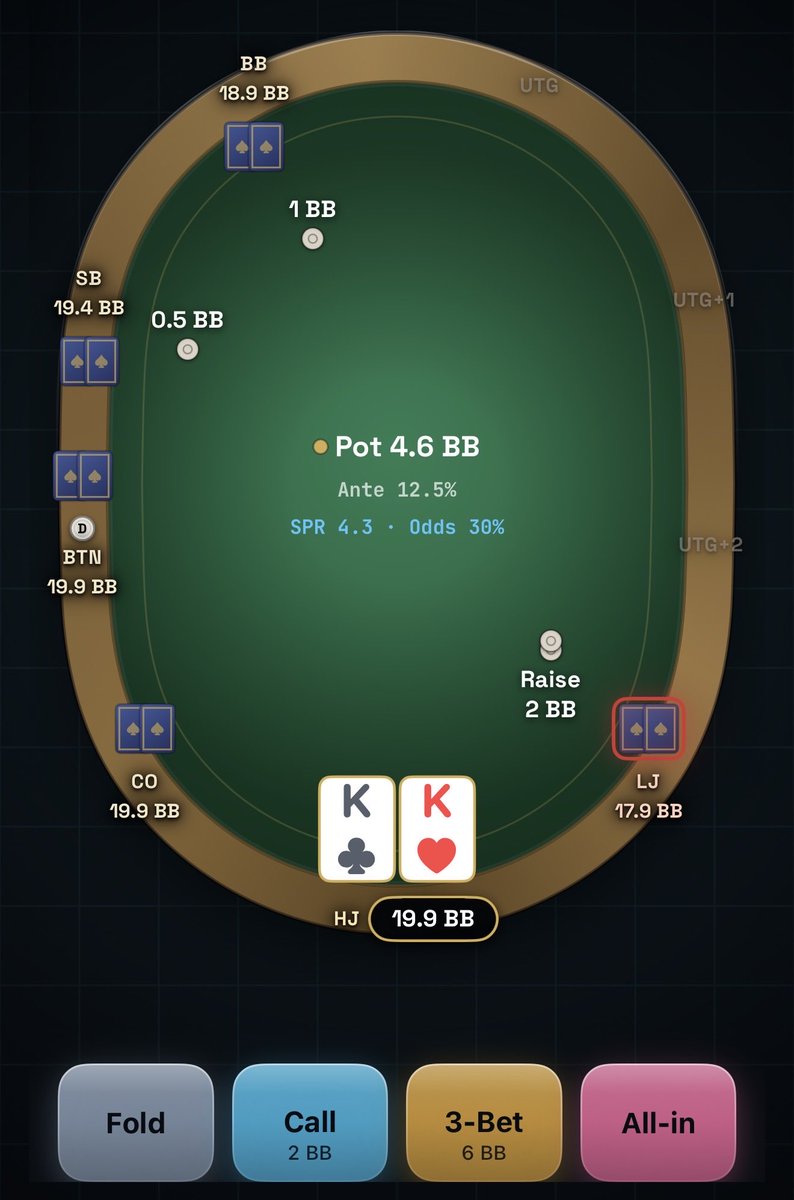
A guy is deep in a tournament, gets dealt pocket kings, and somehow ends up all-in against a worse hand… and loses. He tilts so hard that he gets into a massive argument with another player, things escalate, and security ends up calling the cops. He gets arrested and taken to jail.
He uses his one phone call not to call a lawyer or his family…
He calls the poker room.
His friends go bail him out the next morning. He’s quiet in the car the whole way. After about 15 minutes of silence he just stares out the window and mutters:
“I should have folded those Kings.”
Poker story:
A guy is deep in a tournament, gets dealt pocket kings, and somehow ends up all-in against a worse hand… and loses. He tilts so hard that he gets into a massive argument with another player, things escalate, and security ends up calling the cops. He gets arrested and taken to jail.
He uses his one phone call not to call a lawyer or his family…
He calls the poker room.
His friends go bail him out the next morning. He’s quiet in the car the whole way. After about 15 minutes of silence he just stares out the window and mutters:
“I should have folded those Kings.”
Gto ranking
1. Isaac Haxton
Frequently called one of the purest GTO practitioners (“GTO Dream Machine”). Deep solver work, excellent range construction under pressure, multiway expertise, and GTO Lab coach. Strong reputation for applying equilibrium strategies at the highest levels.
2. Linus Loeliger (LLinusLLove)
Online cash specialist whose technical game is often described as among the closest to theoretical perfection. Regularly analyzed against solvers with high praise for accuracy and balance in nosebleed games.
3. Michael Addamo
Heavy solver user with a GTO-driven (if hyper-aggressive) baseline. Hand reviews often show him staying closer to equilibrium than many assume, with calculated deviations.
4. Nick Petrangelo
Deep GTO knowledge, aggressive but theory-rooted style. Co-founder/coach at GTO Lab; known for strong application in high-roller and super high-roller fields.
5. Benjamin Tollerene (Bttech86) Longtime analytical, GTO-influenced online high-stakes specialist. Respected for technical precision and balanced play in the toughest online games.
6. Justin Bonomo
Early and consistent high-level theoretical player. Strong solver understanding and results against elite fields in both cash and tournaments.
7. Daniel Dvoress
GTO Lab co-founder with elite technical MTT skills. Known for rigorous study and strong equilibrium-based decision-making, especially in ICM spots.
8. Stephen Chidwick
Extremely solid, high-level theoretical player. Consistent performance in the toughest high-roller fields reflects deep understanding of balanced strategies.
9. Alex Foxen
Modern, consistent, solver-informed style. Strong reputation for disciplined, hard-to-exploit play across high-stakes tournaments.
10. Ben Heath (or close alternatives like Brock Wilson / Justin Saliba from PeakGTO challenges) Strong technical reputation and involvement in advanced GTO study/training. Represents the next tier of highly accurate, solver-focused pros.