Solving the world's greatest separations challenges through innovative research and design 👩🔬🧑💻 home to engineers & scientists from Georgia Tech ChBE
Check out our new website - https://t.co/TBLNtWZuax!✨Along with center news and lots of research, you will find a "separations" page where you can learn more about six separations that have huge impacts on our daily lives. Thanks @impactmedialab for turning our science into art!
Excited to share our latest Nature Chemical Engineering publication! 🎉 Led by @Sarswat_Akriti (Lively & Sholl groups, @GTChBE, currently a postdoctoral researcher in @Princeton Hatzell group), this work establishes product concentration benchmarks for tandem electrochemical CO2-to-ethylene conversion. By integrating reaction engineering, separations, and techno-economic analysis, we identify the product concentrations needed to make electrochemical C2H4 production commercially viable, providing practical design targets for next-generation CO2 conversion systems.
👉Read more: https://t.co/qzIYtUXoTe
#CO2Electrolysis #CarbonUtilization #ChemicalEngineering
🎉The latest Nature publication, led by Jihoon Choi and Hyukjoon Seo (KAIST) with collaborators at @GTChBE, demonstrates a membrane-based crude oil pre-fractionation strategy that could transform oil refining. Remarkably, the porous PAN support spontaneously forms a molecular sieve during operation, enabling room-temperature separation before distillation. This approach could reduce refinery energy use by 31.6%, CO2 emissions by 37.6%, and operating costs by 36%, marking a major step toward more sustainable chemical separations.
Read more: https://t.co/flkG6SnruQ
Paper: https://t.co/iDgXi65oLC
#GeorgiaTech #MembraneScience #Membranes #ChemicalEngineering #Sustainability
Crude oil refining hasn't changed much in a century. Researchers at Georgia Tech and KAIST have published a paper in Nature that suggests a simple membrane material could significantly cut the energy and carbon footprint of petroleum refining. https://t.co/xsWgSszjpW
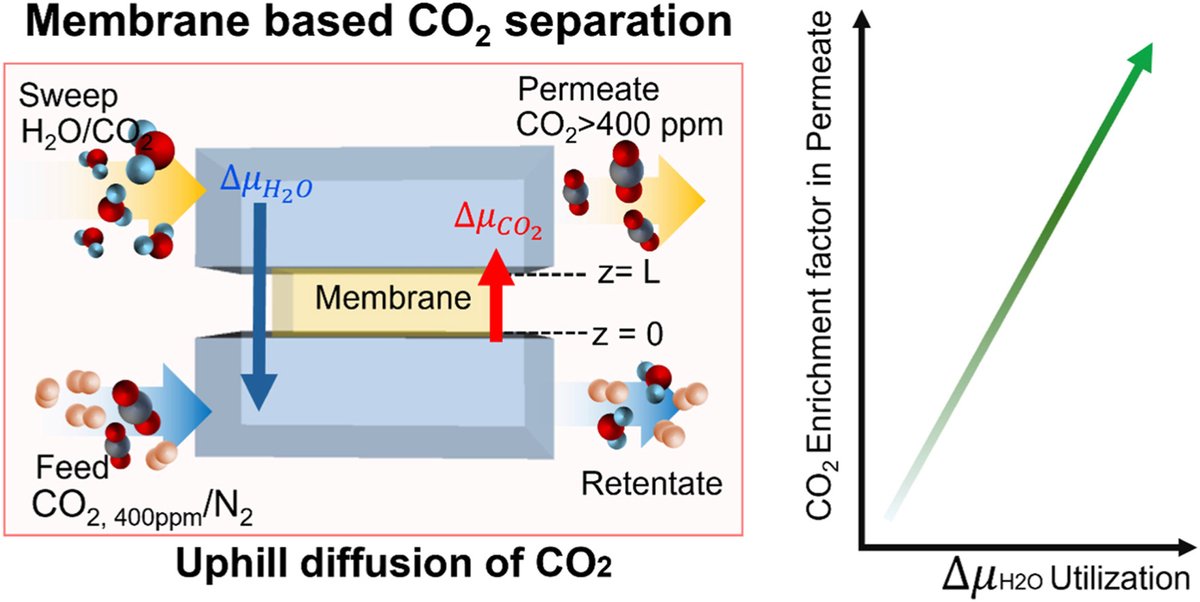
This counterintuitive mechanism opens new pathways for more efficient separation and capture processes. A key insight for DAC and other membrane-based applications! Read more: https://t.co/4yahsXzr4o #DirectAirCapture#Membranes#SeparationScience
🎉 Worth highlighting: In our latest Journal of Membrane Science publication, led by @inyoung5511 and @Haoyu_Chen_ (@GTChBE, Lively Lab), we reveal that CO2 can diffuse uphill across membranes when driven by the chemical potential difference of H2O.
Excited to highlight a recent Curr. Opin. Chem. Eng. review led by @HannahE_Holmes, Jinsu Kim, and Matthew Realff! 🎉They outline how process systems engineering can unlock scalable adsorption-based DAC by linking sorbent selection, heat/water integration, and system viability.
This methanol-coupled transport boosts guaiacol/glucose selectivity 14× and reduces membrane area needs in OARO cascades by ~3.8×. A new route for energy-efficient solute concentration!
👉 https://t.co/NLxJZsoKYg
#Membrane#Biooil#OSRO#Separation
Excited to highlight our latest work!🎉 In our latest J. Membr. Sci. publication led by Woo Jin Jang (Lively group, @GTChBE), we report uphill transport of phenolics in bio-oil mixtures via "sorpvection", where methanol flux drives guaiacol enrichment across DUCKY-9 membranes.
🎉 Congratulations to Dr. Ryan Lively on being named a national finalist for the 2025 Blavatnik Awards for Young Scientists! 👏
An incredible recognition of his leadership in sustainable separations and carbon capture research — one that continues to inspire the next generation of ChBE researchers.
Read more 👉 https://t.co/nTkd731c8n
Excited to share that our recent J. Membr. Sci. paper led by Young Joo Lee (Lively group, @GTChBE) has been selected as an Editor’s Choice Article for the July 2025 issue!🎉👏
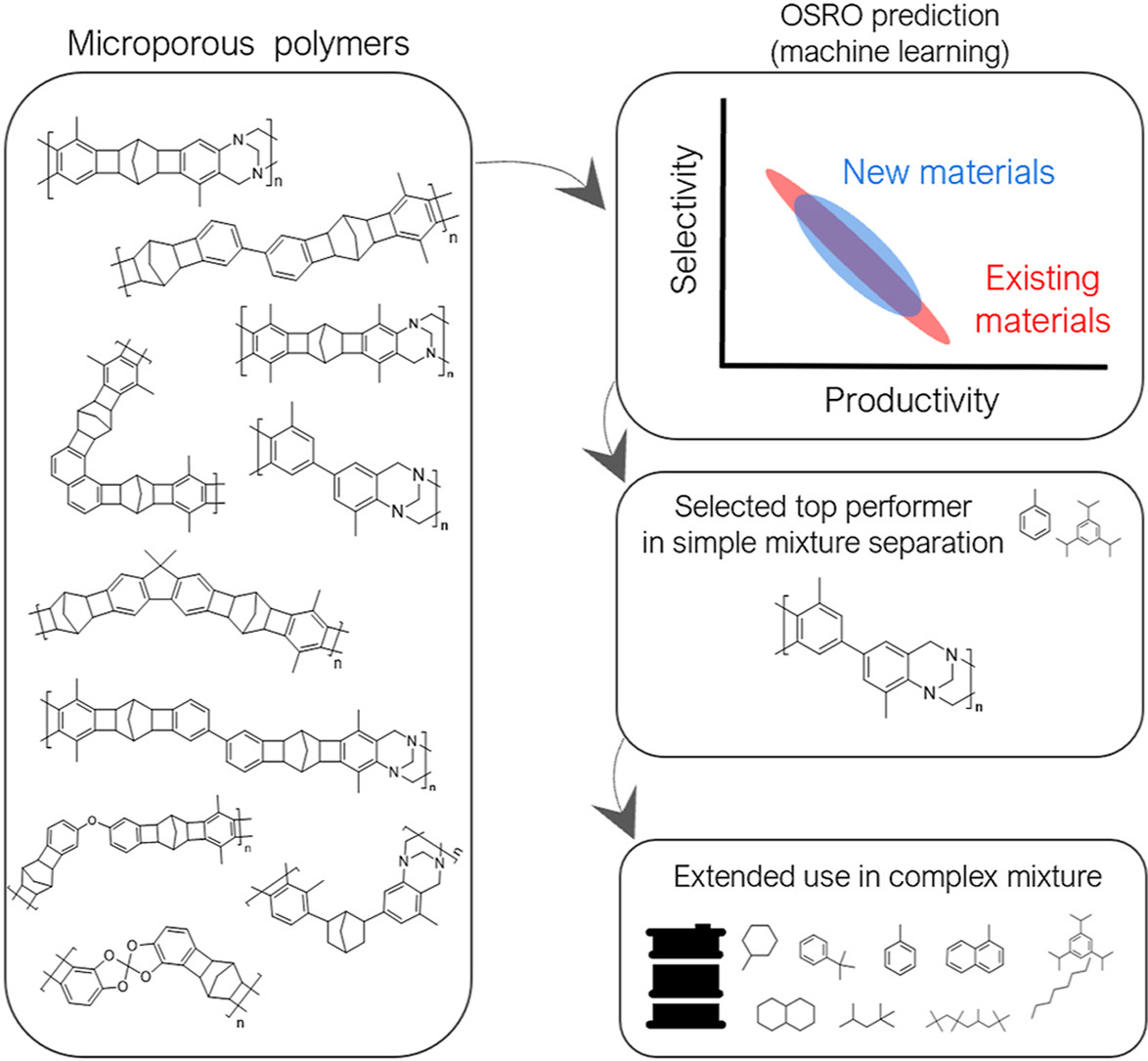
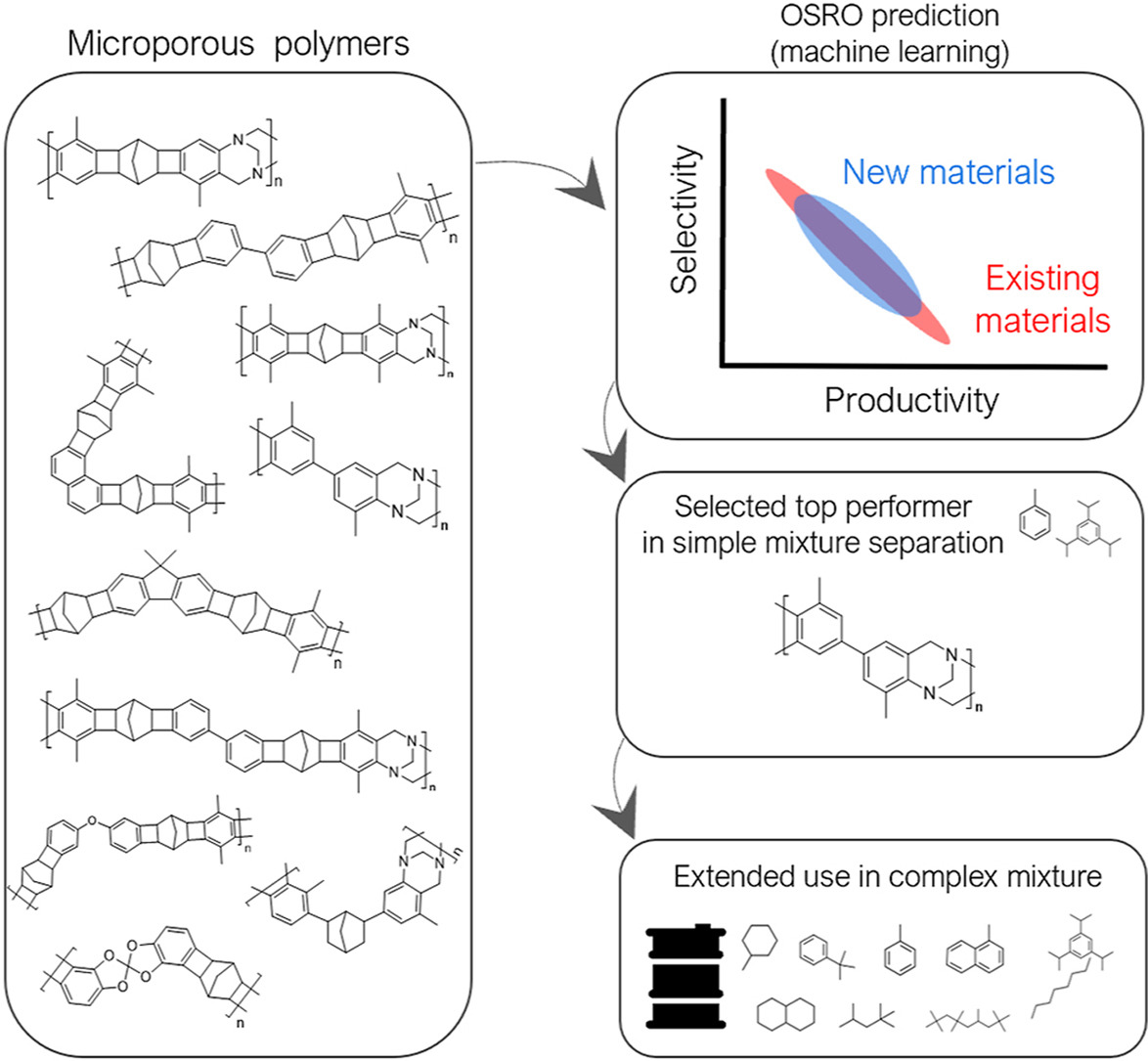
This work combines machine learning with transport modeling to guide the selection of high-performing microporous polymers for OSRO. Grateful to the editors and reviewers for recognizing its impact!
👉https://t.co/EGYlcFg9Pw
#MembraneScience #MachineLearning #OSRO #EditorsChoice #Sustainability
Another good news to share! 🎉 In our latest J. Membr. Sci. publication led by Young Joo Lee (Lively group, @GTChBE), we combine machine learning with transport modeling to screen microporous polymers for organic solvent reverse osmosis. Prediction-assisted selection enabled identification of a high-performing TB-based ladder polymer (POLYMER-4), showing strong separation of aromatic hydrocarbons! A promising direction for data-driven membrane design.
👉https://t.co/EGYlcFg9Pw
#MembraneScience #MachineLearning #PolymerMembranes #Sustainability
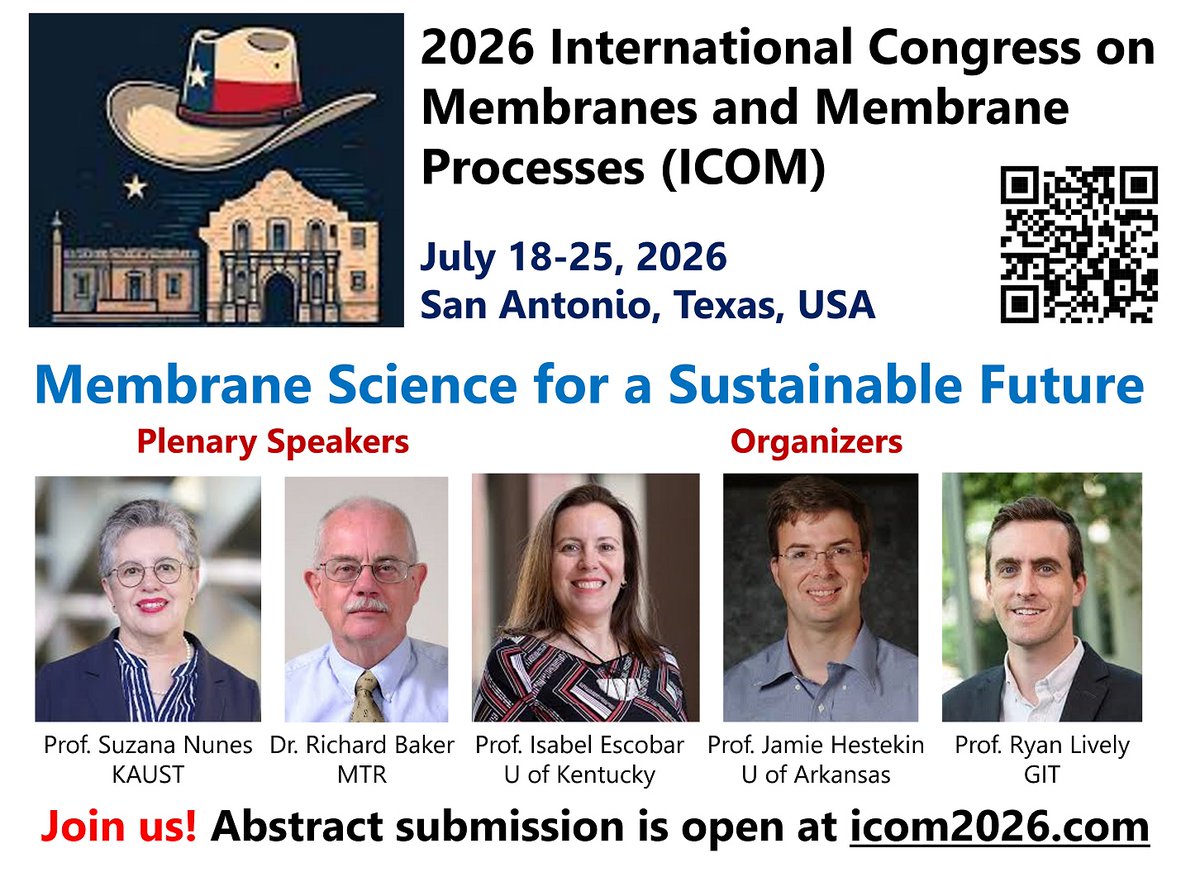
Join us for 2026 International Congress on Membranes and Membrane Processes (ICOM2026) on July 28-25, 2026, in San Antonio, TX, USA, featuring exciting plenary speakers – Suzana Nunes at @KAUST_News and Richard Baker at MTR. Organizers: Isabel Escobar @IC_Escobar, Jamie Hestekin & Ryan Lively
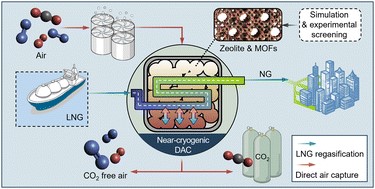
🎉Excited to share that in our latest Energy Environ. Sci. paper led by Seo-Yul Kim (Lively group, @GTChBE), we propose a new concept: near-cryogenic direct air capture (DAC) using physisorbents like Zeolite 13X and CALF-20, thermally coupled with LNG regasification. This approach cuts DAC energy demand to as low as 1.7-3.3 GJ/tCO₂ and slashes the levelized cost of capture by ~60%, opening a scalable, low-cost path for gigaton-scale carbon removal. Read more👉
https://t.co/zidAP4FnzA
#CarbonRemoval #DirectAirCapture #Sustainability #ClimateTech