A finales del 2002 mi padre me dijo: "No les dejo dinero. Les dejo bienes y les enseñé a trabajar con el ejemplo, valores y propósito de servir." Hoy entiendo: el dinero evita esfuerzo, el trabajo forja carácter. No heredamos una cuenta. Heredamos una filosofía de trabajo.
Elon Musk thinks the entire education system is built on a broken assumption.
That every student should learn the same thing. At the same speed. In the same order. At the same time.
Musk: “Everyone goes through from like 5th grade to 6th grade to 7th grade like it’s an assembly line. But people are not objects on an assembly line.”
The model was designed for a factory economy. Standardized inputs. Predictable outputs.
That economy is gone. The assembly line is gone.
But the education system still runs on its logic.
A student who masters algebra in two weeks sits through eight more weeks because the calendar says so. A student who struggles gets dragged forward because the schedule doesn’t wait.
Neither is being served. Both are being processed.
Musk: “Allow people to progress at the fastest pace that they can or are interested in, in each subject.”
AI doesn’t teach a classroom. It teaches a student.
One at a time. Every time.
It skips what a student already knows. It finds where they’re stuck and approaches it from a different angle.
It adjusts in real time. Not at the end of a semester when the damage is already done.
A student obsessed with basketball learns fractions through shooting percentages. A student who builds in Minecraft learns geometry through architecture.
The subject doesn’t change. The entry point does.
No teacher with thirty students can do this. Not because they lack skill.
Because the math doesn’t work.
AI doesn’t have that constraint.
Musk: “You do not need to tell your kid to play video games. They will play video games on autopilot all day. So if you can make it interactive and engaging, then you can make education far more compelling.”
The brain isn’t broken. The format is.
Kids learn complex systems and strategic thinking for hours voluntarily. Then walk into a classroom and can’t focus for twenty minutes.
That’s not a discipline problem. That’s a design problem.
Musk: “A university education is often unnecessary. You probably learn the vast majority of what you’re going to learn there in the first two years. And most of it is from your classmates.”
Four years. Six figures of debt.
And the real value comes from the people sitting next to you. Not the institution charging you.
The degree doesn’t certify knowledge. It certifies endurance.
Musk: “If the goal is to start a company, I would say no point in finishing college.”
The system was built to train employees. If you’re not trying to be one, it has nothing left to offer you.
Every lecture. Every textbook. Every curriculum. Now available instantly. Personalized to any learner. Adapted to any pace.
The question isn’t whether the old model survives.
It’s how long we keep forcing students through it while the replacement already exists.
Nike spent ten years trying to break the 2-hour marathon. They named a project after it. They built special shoes. They paid the greatest marathoner alive to chase it. Yesterday, a Kenyan runner finally did it in 1:59:30, wearing Adidas.
Sabastian Sawe used to be a pacemaker. A pacemaker is the kind of runner you hire to set the speed for the first few miles of a race and then drop out before the finish. In January 2022, Sawe got booked to do exactly that at a half-marathon in Spain. He'd never raced more than three miles in his life. He stayed in for the full 13 and won the whole thing. Adidas signed him not long after. Four years later, he became the first human ever to run an official marathon under 2 hours.
Nike, meanwhile, started this whole project in 2016 with a public goal called "Breaking2." They paid for the shoes, the pacemakers, the science labs, and Eliud Kipchoge himself. Kipchoge ran 1:59:40 in Vienna in 2019, but the event was a closed-course exhibition with rotating pacemakers and a pace car projecting a green laser line onto the road. The sport's governing body never recognized it as a real race. It didn't count.
Then Nike's running business cratered. Digital sales fell 26% in one quarter. Their share of footwear sold at Dick's Sporting Goods went from 39% to 32% in five months. On Running grew from $330 million to $1.8 billion between 2020 and 2025. Hoka nearly quadrupled. Roger Federer left Nike for On. Nike's board fired the CEO in October 2024.
Adidas spent the same period building a better shoe. The new Adizero Adios Pro Evo 3 took three years to develop. It weighs 97 grams, about 3.4 ounces, lighter than a deck of cards. A Wall Street Journal-cited study found that wearing a shoe 3.5 ounces lighter saves a runner around 57 seconds across a marathon. Sawe beat the third-place finisher by 58 seconds.
Adidas also did something Nike never did for Kipchoge. They wrote a $50,000 check to the official anti-doping body for track and field, asking it to test Sawe more aggressively than any other runner alive. He got tested 25 times in the two months before last year's Berlin Marathon, and Adidas signed up to fund this for the length of his contract. The logic: the moment Sawe ran a marathon this fast, the world was going to ask if he cheated, especially after his countrywoman Ruth Chepngetich got a 3-year doping ban in 2025. Adidas got out ahead of it.
The shoe retails at $500 and is barely available. Adidas's Adizero shoes won half of all major marathon races in 2024. Yesterday in London, four of the top five finishers wore the same Adidas shoe. Yomif Kejelcha crossed the line 11 seconds after Sawe and also broke 2 hours. The top three runners all beat the previous world record.
Nike's only response was an Instagram post. Three sentences long: "The clock has been reset. There is no finish line." That was their entire public reaction to losing a 10-year moonshot to their biggest rival.
Entrenar piernas te da un corazón joven. Entrenar glúteos te dan una espalda sana. Caminar te da una mente fuerte. Todo eso significa un envejecimiento más lento. El mejor seguro de vida no se contrata. Se entrena.
No sé en la balanza final cómo estuvo la gestión de Boric como presidente, pero su entrega del poder ha dejado una buena impresión.
Un tipo decente, sin acusaciones de corrupción ni anhelos de perennizarse en el poder, que se va conduciendo su auto con su familia.
Buen tipo.
Ridiculous. Whoop is approved by the International Tennis Federation for in-match wear and poses no safety risk. Let the athletes measure their bodies. Data is not steroids!
No malgastemos tiempo y energías persiguiendo lo que es mera apariencia. Aprendamos de Juan el Bautista a mantener alerta el espíritu, amando las cosas sencillas y las palabras sinceras, viviendo con sobriedad y profundidad de mente y de corazón. #EvangelioDeHoy (Jn 1,29-34)
La beatificación interpela al mundo empresarial:
¿qué tipo de líderes estamos formando?, ¿para qué existe realmente la empresa?
Tal vez el legado más disruptivo hoy sea este: hacer negocios también puede ser un camino de fe y humanidad.
🧵 Hoy, mientras escuchaba la homilía, conocí la historia de un hombre que dedicó su vida al negocio, pero con una lógica distinta: la del servicio.
Es la historia de Enrique Shaw, el primer empresario en la historia en ser beatificado por el Vaticano.
El milagro atribuido a su intercesión es la curación inexplicable de un niño de 5 años, que en 2015 sufrió una gravísima lesión en el cráneo tras la patada de un caballo.
Su familia, vinculada a la ACDE, pidió oraciones confiadas a Enrique Shaw.
En casi 28 años en el sector automotriz he visto cómo el negocio ha cambiado profundamente.
Hoy, los nuevos liderazgos son clave para adaptarse y seguir siendo competitivos. https://t.co/zSjHebo4jq
✨ HERE WE GO ✨
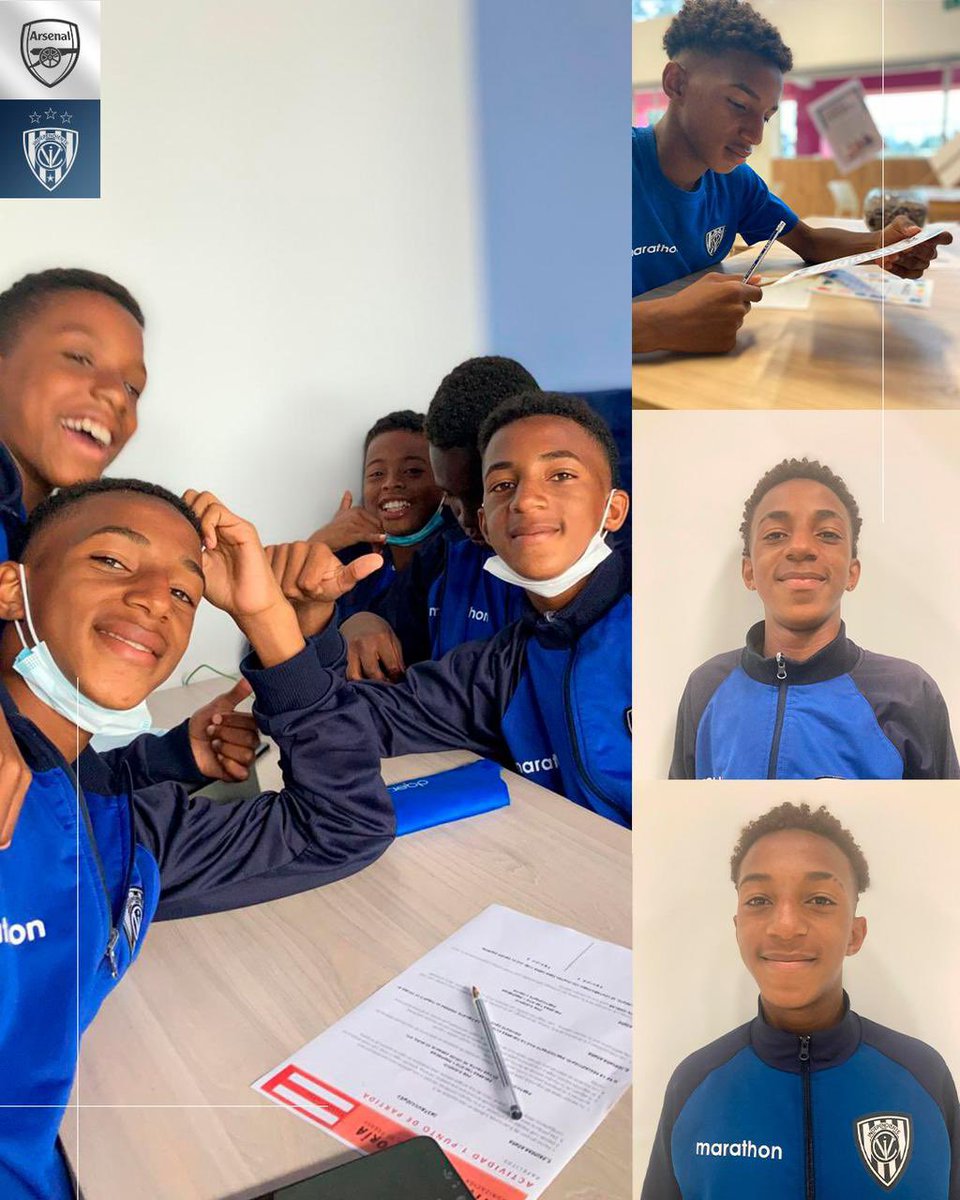
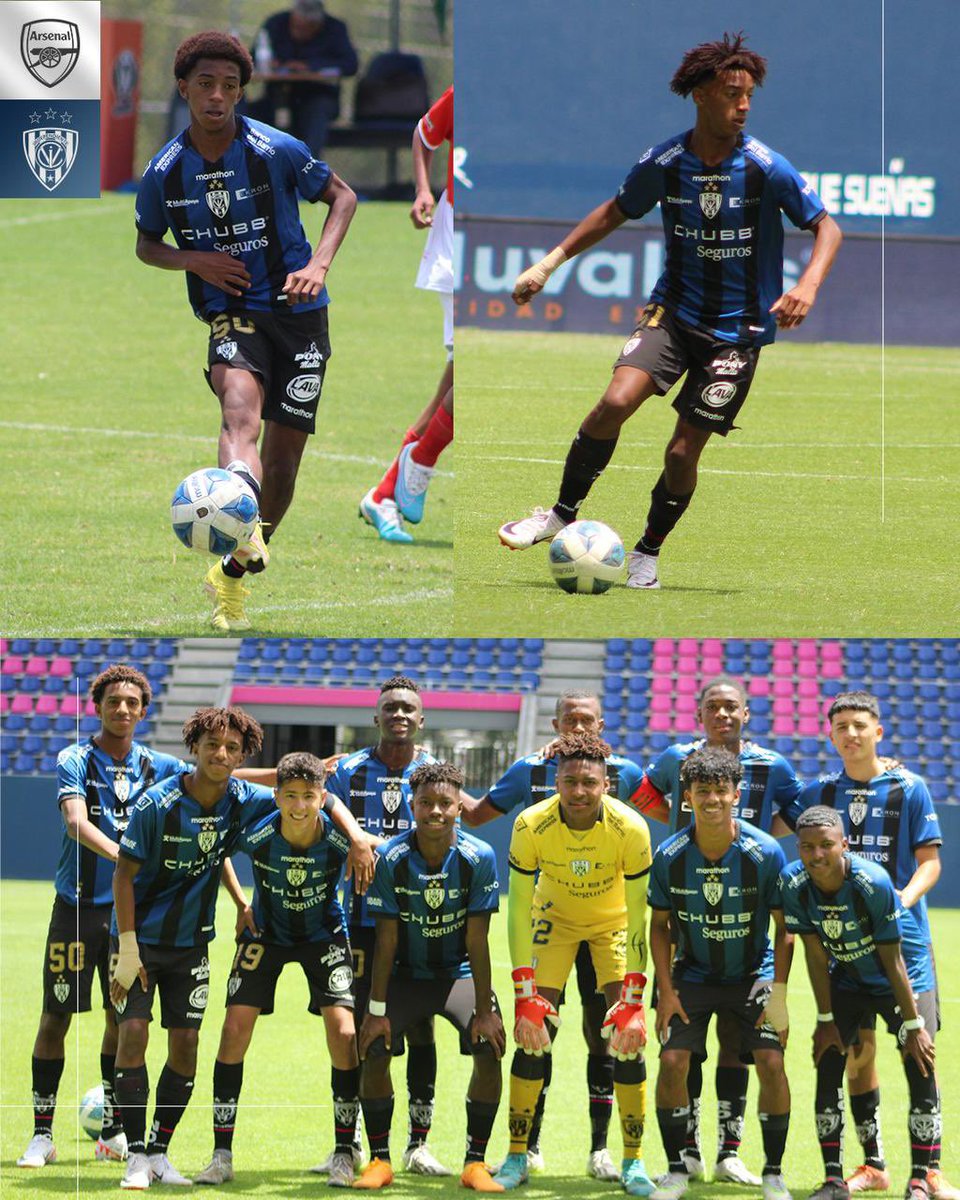
Desde el Valle de los Sueños, anunciamos con orgullo la transferencia del registro de los gemelos Holger y Edwin Quintero al @Arsenal a partir de agosto 2027.
Formados en el proceso integral de #IDV, los hermanos han crecido bajo una metodología que prioriza valores, educación y desarrollo humano, además del alto rendimiento.
Los chicos seguirán su formación en casa, avanzando paso a paso, hasta convertirse en jugadores del club londinense cuando cumplan 18 años.
En #IDV seguimos construyendo futuro: formamos personas, transformamos sueños y proyectamos talento al mundo.