Ucrania debe ser neutral y convertirse en el vínculo entre la Unión Europea, Rusia y el resto de países europeos, incluida Turquía.
Es posible construir entre todos un futuro en común libre de guerras.
Seis diseños para la US Navy.
La competencia internacional por la nueva fragata estadounidense.
Magnífico articulo de Jorge Estévez-Bujez @JorgeBujez en DYS donde habla sobre los seis diseños que puede interesar a la Navy.
@lainus86@carjema82 A los políticos les importa un pimiento las capacidades o la defensa nacional, o han importado en contextos muy específicos.Pero los políticos si saben que Airbus da empleo, de ese que llaman de calidad, “España apuesta por el I+D”, etc. V0X es la única incógnita, si eso.
@lainus86@carjema82 Por eso homemos llegado a ver partidas para el sustituto de C.15 y AV-8 que de L noche a la mañana se han convertido en más programas Halcón. Factor Airbus.
@carjema82@lainus86 Gana la derecha y no pedirán F-35A porque Airbus no les dejará, y B si acaso a regañadientes. Coincido con lo del sustituto del EF, si es que Alemania no termina olvidándose del tema gracias al F-35 y no se espera a importar un 6th gen americano.
No matter how much 'hybrid navy' and uncrewed is the logical future for the Royal Navy, my heart still pines for the days of Dreadnoughts with stirring names.
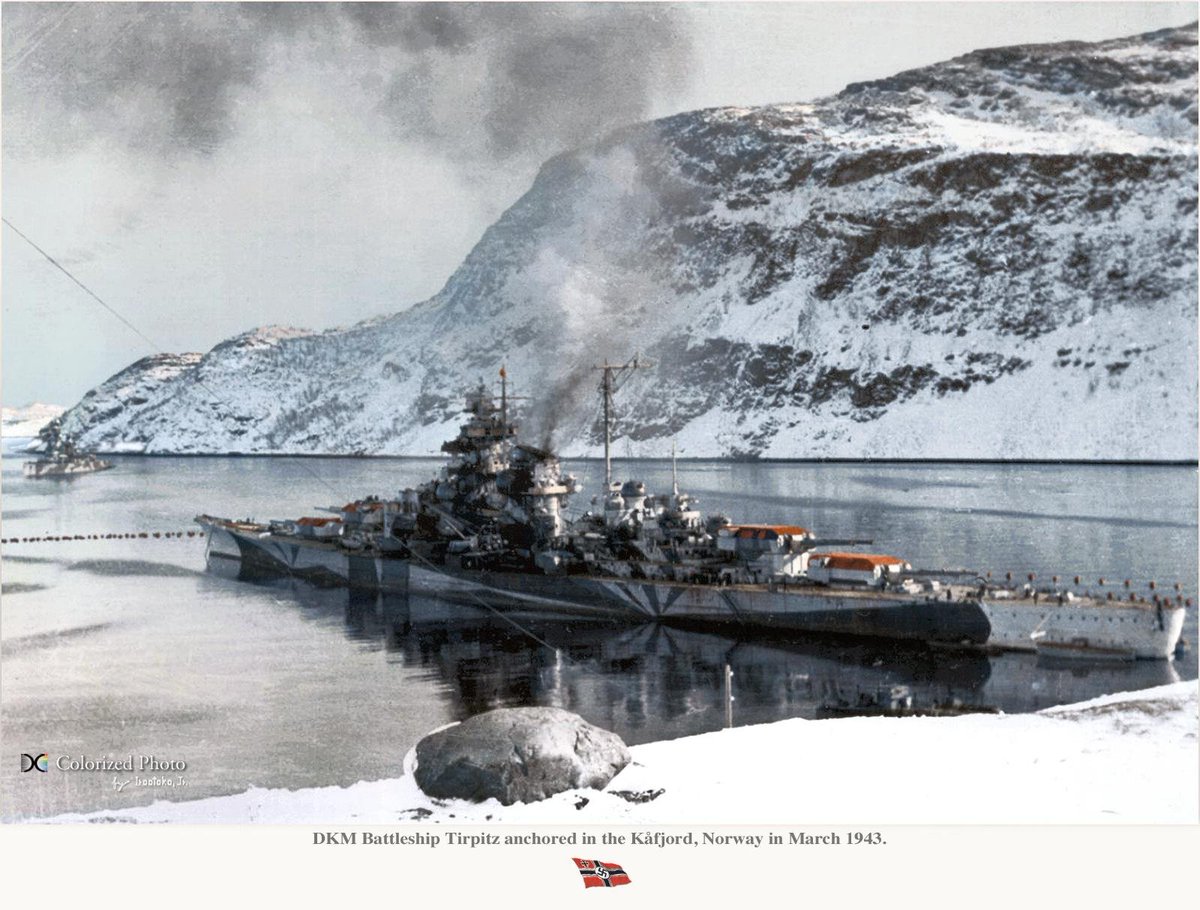
November 12, 1944. On a clear morning over a Norwegian fjord, British Lancaster bombers put their six-ton Tallboy bombs onto the greatest warship Germany ever built, and the Tirpitz, the battleship that had menaced the Arctic for years, rolls over and sinks in minutes, taking around a thousand of her crew with her. The long hunt I told you about is finally over. The Lonely Queen of the North is dead.
I described this hunt on the 29th of October, when the bombers tried and were foiled by cloud. The Tirpitz, sister of the Bismarck, had spent nearly her whole career lurking in the Norwegian fjords, a "fleet in being," achieving almost nothing with her mighty guns yet tying down huge British naval forces simply by existing, by the threat that she might sortie against the Arctic convoys. The British had attacked her again and again, with midget submarines, carrier planes, and bombers, damaging her repeatedly but never killing her. By now the specialists of 617 Squadron, the Dambusters, and 9 Squadron, armed with the Tallboy, the twelve-thousand-pound earthquake bomb that was one of the few weapons that could destroy her, had been given the final job.
On the 12th, in Operation Catechism, the Lancasters flew the enormous distance to Tromsø, where the Tirpitz now lay, moved to a more southerly anchorage that put her within range of bombers based in Britain and Scotland. This time the weather gave them what they needed: clear skies over the target. The German fighters that should have been protecting her, through a failure of coordination, did not arrive in time. And the Tirpitz lay exposed.
The bombers came in and dropped their Tallboys, and this time they found their mark. Direct hits tore into the great battleship, enormous bombs smashing through her armor and detonating with devastating force. She was ripped open, began to flood, and caught fire, and then one of her magazines exploded. Within minutes, the Tirpitz heeled over and capsized, rolling upside down in the fjord. Many of her crew were trapped inside the hull as she turned over, and around a thousand German sailors died, many of them sealed in the overturned ship. Rescuers cut into the exposed hull and pulled some survivors out through holes torched in the steel, but most were lost.
The threat was finished. The ship that had haunted the Arctic, that had forced the British to keep battleships and carriers idle in home waters year after year just in case she came out, was gone, destroyed at last after dozens of attempts over years.
And her death was one more verse of the story I have returned to again and again. The Tirpitz, the heaviest battleship Europe ever built, a monument to the age of the big gun, spent her life hiding and was killed from the air, by bombers, having barely fired her great guns at an enemy ship. Like the Musashi in the Pacific, sunk by carrier planes, like the battleships at Taranto and Pearl Harbor, the Tirpitz proved that the aircraft had dethroned the battleship. The mightiest ships afloat had become targets, hunted and killed by planes. The whole arc of naval warfare in the war bent this way, and the capsizing of the Tirpitz in the fjord on the 12th, under the Tallboys, was one of its final and most emphatic demonstrations. The queen was dead, killed from the sky.
@Panzerargentus Una de las grandes limitaciones del Harrier, que en el AV-8B+ llegó a ser un avión de combate muy digno, era precisamente que no podía correr más que un avión de línea normal y corriente. Una fuerza aérea no podía aceptarlos así.
@Cacermeiro@FORONAVAL (Otro caso son los Deutschland que los alemanes no calificaron como crucero pesado jugando con la limitación por Versalles de 10,000 t y artillería de 11 pulgadas, y otro, modestamente, nuestro diseño 138 de la SECN para el crucero protegido del plan de 1939)
@Cacermeiro@FORONAVAL El Hood era realmente el primer acorazado rápido de la historia, siendo clasificado como battlecruiser. Los Alaska son otra cosa, como hacía donde se hubiera expandido el crucero pesado sin restricciones.
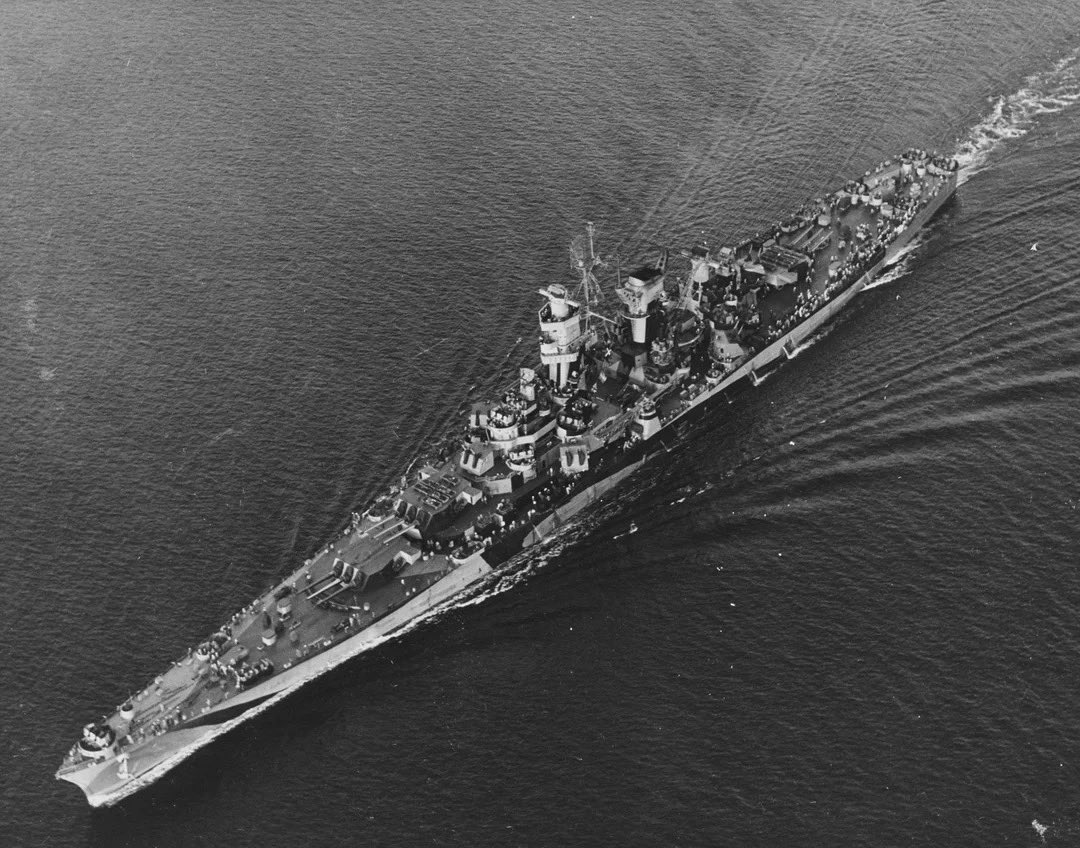
El crucero de batalla (oficialmente “cruceros grandes”) de la clase Alaska USS Guam (CB-2) durante sus pruebas de aceptación en aguas de Trinidad, en el Caribe, el 13 de noviembre de 1944.
Su concepción empezó en la década de los 30 como respuesta a los Deustchland alemanes y más tarde a los acorazados rápidos de la class Scharnhost y a los rumoreados cruceros pesados B-65. La construcción comenzó en 1941 y, de los 6 buques planeados, solo dos entraron en servicio a mediados de 1944, siendo dados de baja en 1947