BREAKING: We're hiring for GR ANGEL
New Media x Investment.
Two spots. Storyteller x growth hacker.
The next generation of great companies deserves a new generation of storytellers.
We're looking for two people who want to help build it.
At GR ANGEL, we want to back exceptional founders and help the world discover what they're building. Our aim: bring millions of views to our portfolio founders every week.
Your opportunity: turn ambitious ideas into stories that travel. Help a company become known before it becomes obvious. Build audiences around founders taking on problems that matter.
This is where startups, investing and internet culture meet.
Find the angle nobody else sees. Write something people send to their friends. Make the video they watch twice. Experiment, study what spreads and turn attention into growth.
Video. Writing. Design. Distribution. Bring taste, ambition and the obsession to make something remarkable.
Two one-year, remote internships, working directly with us. We're choosing people we hope will build with us long after that year ends.
Email [email protected] with your CV and why you're a top 1% fit for this.
Show us, don't tell us.
GC AI grew from $1M to $40M ARR in 19 months.
In the past year, revenue grew 3.8x while its customer count roughly doubled.
The number of customers paying over $100K a year went from 3 to more than 50.
The story is about expansion, not just acquisition.
Full breakdown:
https://t.co/GmoNBm8gcw
BREAKING: Nvidia stock surges about 30% after the board brings Jensen back as CEO.
The stock added around $900 billion in market value today.
Would you bet against him now?
BREAKING: Marlowe just raised a $277M seed at a $1.15B valuation, led by Accel.
A unicorn out of the gate. Founded in May, about 30 people.
Dan Lewis (Convoy co-founder, ex-Microsoft CVP) and Kutta Srinivasan (ex-Microsoft company-wide technical lead for AI infrastructure) are building inference data centers on non-Nvidia chips, starting with AMD and Etched.
• First site, on Etched chips, goes live in December for a large AI coding company
• Second, larger AMD Helios site on track for Q2 2027
• Target: 2-3x more tokens per watt and per dollar than conventional GPU clouds
• Backers include Bessemer, Altimeter, Atreides and Valor, plus Henry Kravis and Dara Khosrowshahi
"We were always oversold, effectively sold out," Lewis said of inference demand at Microsoft.
Is multi-chip inference the way out of the compute crunch?
📸 GeekWire
Y Combinator's Request for Startups lists "AI-native agencies" as its own category.
Sequoia argued the same thing: the next $1T company might be a services company, not software.
The core idea: stop selling tools, start doing the work. SaaS sells seat licenses. AI-native agencies sell completed outcomes and capture the full value of the deliverable.
The first categories are the ones with structured, repeatable workflows: marketing, accounting, legal research, customer support. High labor cost plus high process standardization is where agents perform best.
An agency that bolts AI onto old workflows is cost-cutting. An AI-native agency is built from zero around the model, with different unit economics and a different org chart.
Full breakdown here: The AI Agency Playbook
https://t.co/Anh42JBPDB
Which service category falls to AI-native agencies first?
BREAKING: SpaceX is making billions of dollars a month renting AI compute to its biggest rivals.
Anthropic's contract: about $3.1B per month.
Google's: about $800M per month.
SpaceX's AI infrastructure unit, SpaceXSI, now brings in more than half of the company's revenue, per The New York Times.
Next: $74B in new data centers.
The rocket company became one of the biggest landlords of the AI race, and two of Elon Musk's top AI competitors are now among its most valuable customers.
Would you rent your compute to your rivals at these numbers?
📸 Debbie Rowe / Royal Society
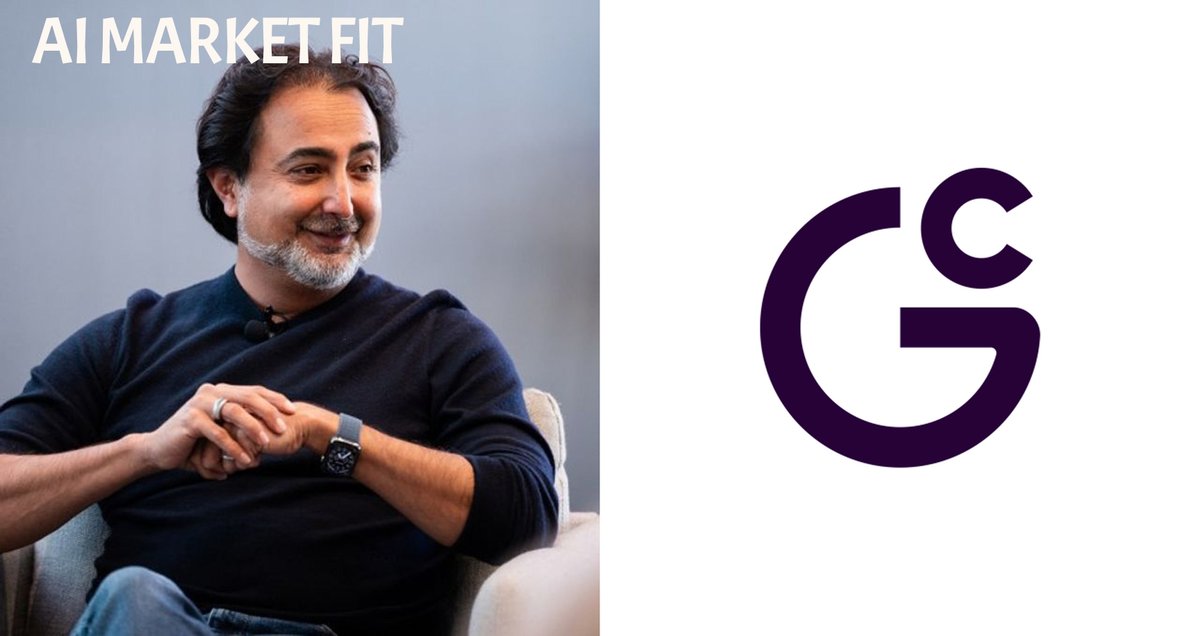
General Catalyst rebuilt its whole firm around one idea: in AI, value concentrates fast.
Hemant Taneja's response:
1. Own a hospital system and use it as a living lab
2. Build new capital vehicles beyond classic venture
3. Back surgical and clinical AI
4. Optimize for one metric above all
Taneja is open that indexing might have beaten them in some years. The firm changed anyway.
The full breakdown of the new capital vehicles and the living lab strategy:
https://t.co/apJvm4cl8e
Where the AI opportunities are, every week in AI Market Fit: https://t.co/N3QwyFjJNx
Would you bet on concentration or on indexing in AI?
Travis Kalanick on the hardest part of building company number 5: staying fired up.
The better you get at building companies, the harder it is to feel the urge to start again.
He knows every failure mode before it arrives. He's lived the decade-long grind, the personal cost and the odds, not as abstract risk but as muscle memory.
First-time founders move fast because they can't fully see what's coming. The knowledge gaps aren't weaknesses, they're propellant. Serial founders see the mountain clearly, and clarity is useful everywhere except the starting line.
It explains why so many experienced operators become investors instead of building again. It's not a lack of ideas. Knowing too much collapses the distance between "day one" and "year seven."
Young founders are told their inexperience is a problem to overcome. Kalanick's framing says the opposite: naivety is load-bearing.
Full breakdown in Product Market Fit, Travis Kalanick's Fundraising Playbook: https://t.co/LshDE6qvOi
Would you rather start with full knowledge of what's coming, or none?
Scale AI's Alexandr Wang has one piece of career advice: find the steepest exponential curve and go all in on it.
He founded Scale at 19. By his mid-20s, it was valued at $7.3B.
Not the most stable curve. Not the most understood curve. The steepest one.
Most people optimize for certainty, which means they arrive after the compounding already happened. Wang picked AI data infrastructure in 2016, before it was consensus, when the curve still looked uncertain.
Scale went from $0 to DoD contracts, partnerships with OpenAI, and a $1B+ revenue run rate, built on being early to one curve and committing fully.
The trap smart people fall into: they spot the curve correctly, then hedge. They stay at the safe job and watch from the sideline.
Exponentials punish half-measures. The gap between all-in and 80% in is not 20%. It's often everything.
What's the steepest curve you're on right now?
Doug Leone: saying you found the idea in a conference room kills a pitch on the spot.
It scares the sh*t out of him. The best founders were already living inside the problem.
https://t.co/VgZeN0yBeu
BREAKING: Hadrian is opening a 1 million sq ft factory and engineering campus in San Francisco in January 2027.
100 people are already on site.
Founder Chris Power moved from Australia to SF in 2019 with about $6,000 and one US contact. A year later he started Hadrian.
Since then:
- $260M Series C led by Founders Fund and Lux Capital (July 2025)
- $1.37B Series D at an $8B valuation (2026)
- Factories in Torrance, CA and Mesa, AZ. Now San Francisco.
The bet: a factory floor is a software problem. Hadrian's own factory OS, Opus, connects workers, machines and production data. SF has the deepest pool of engineers who build exactly that.
The city that built the internet is now building factories.
Would you rather build the software, or the factory that runs on it?
"Narrative has consequences."
Tom Wehmeier, Partner at Atomico, on why memes about Europe aren't harmless:
1. Most of the global tech conversation comes from the US, and a lot of it mocks Europe
2. People believe it, and it lowers ambition
3. Founders decide where to build based on that perception
4. Only 27% of Europeans think AI will improve their economy
The first State of European Tech ended with one line: this is the greatest time ever to be a European tech entrepreneur. He says it's still true today.
Full breakdown here:
https://t.co/LEP9NunI2T
Europe had zero defence tech unicorns.
Now it has 25, worth $123B combined.
Tom Wehmeier, Partner at Atomico, on what made a whole sector move:
1. Europe always prices the cost of doing something, rarely the cost of not doing it
2. Once inaction became the obvious mistake, the whole system moved as one
3. $7.2B went into European defence tech in nine months, double last year
4. Helsing got orders for 10,000 units in its first four months of sales
His bet: if the same urgency hits compute, energy and nuclear, those sectors will move just as fast.
Full breakdown here:
https://t.co/LEP9NunI2T
Half of Europe's founders asked for one thing in this year's State of European Tech survey.
A single company form that works in every EU country.
Tom Wehmeier, Partner at Atomico, on why EU Inc matters so much:
1. 50% of founders picked it as their top ask, ahead of stock option tax reform
2. It's in negotiation and has already been diluted
3. It only works if founders actually use it as an alternative to Delaware
4. He calls it the test of trust between startups and policymakers
If it fails, he expects that trust to break. If it passes, he expects a snowball effect on every reform that comes after.
Full breakdown here:
https://t.co/LEP9NunI2T
European households hold $50 trillion.
Their pension funds put 0.006% of their assets into venture capital each year.
Tom Wehmeier, Partner at Atomico, calls it a rounding error:
1. US pension funds invest more than 4x as much in VC
2. European VC returned 18.5% a year over the last ten years, US VC 17.6%
3. In the 2014-2018 vintages, Europe came out ahead in 18 of 25 comparisons
4. If 1% of household assets moved to VC, it would add around $500B
So the returns excuse is gone. For him the blocker is people: pension funds don't yet have the experts to build a venture program.
Full breakdown here:
https://t.co/LEP9NunI2T
Europe is having its second-best funding year ever.
And it's getting harder to raise your first round.
Tom Wehmeier, Partner at Atomico, on where the money is going:
1. The 5 biggest rounds took 23% of all European venture funding (around 6% in 2022)
2. At Seed, five rounds took 43% of the capital, two of them $1B+
3. First-money-in rounds fell 28% between 2021 and 2025
4. Median Seed valuations fell 8%, while the top 10% rose to $25M
His point: some teams are obvious outliers from day one, but most eventual outliers were pre-consensus at the start. Europe needs investors who back ideas while they're still just ideas.
Full breakdown here:
https://t.co/LEP9NunI2T
Revolut is worth $115B, more than Spotify.
Atomico isn't an investor. Its partner Tom Wehmeier joked that everyone wishes they were.
Why he thinks building in Europe ends up being a moat:
1. Revolut scaled in one of the most regulated industries there is
2. Daniel Ek (Spotify) and Pieter van der Does (Adyen) told Atomico the same thing
3. Navigating borders, regulators and languages across Europe came with a lot of friction
4. It also built resilience into their companies
5. After Europe, the US wasn't easy, but it wasn't that difficult either
The hardest market to scale in can be the best training for every market after it.
Full breakdown here:
https://t.co/LEP9NunI2T
A Munich robotics company hit $100M in revenue six months after launching its first product.
That's faster than Cursor, Wiz and Mercor.
Tom Wehmeier, Partner at Atomico, says many of the fastest-growing companies of all time are now European:
1. MicroAGI: $100M six months after its first product
2. Lovable: $1M to $100M ARR in eight months, then past $500M
3. Black Forest Labs: close to $100M a year after FLUX.1
4. Legora and ElevenLabs on the same curve as the best US companies
His take: there's no fundamental constraint on growing at that speed from Europe, and Europe should be shouting about it.
Full breakdown here:
https://t.co/LEP9NunI2T
More new tech founders now start in Europe than anywhere else in the world.
29% of the global total. The US is at 28%.
Tom Wehmeier, Partner at Atomico, on the 40,000 Europeans who started a company this year:
1. That's 80% more than two years ago
2. AI lowers the barrier: over 60% of founders start alone
3. 29% of startup operators want to found a company next
4. 43,000 founders came out of European unicorns or the companies their alumni built
He calls it a warm start: today's founders begin with more ambition, more know-how and denser networks than any generation before.
Full breakdown here:
https://t.co/LEP9NunI2T