Een ochtendcolumn
Rijker op papier, armer bij de fiscus
De hervorming van box 3 wordt gepresenteerd als onvermijdelijk. De Hoge Raad verwierp het oude stelsel en daarmee verdween het fictieve rendement waarop jarenlang werd geheven. In de plaats daarvan komt belasting op het werkelijke rendement, inclusief waardestijging. Juridisch is dat een correctie. Inhoudelijk laat zij vooral zien hoe hardnekkig het achterliggende uitgangspunt is.
Het eerdere stelsel liep vast omdat het belasting hief over opbrengsten die zich niet hadden voorgedaan. Rendement werd verondersteld, los van de werkelijkheid. De rechter verbood daarom expliciet het gebruik van fictief rendement. Belasting op fictie was niet langer toegestaan. Toch keert dezelfde gedachte terug. Het verzonnen rendement verdwijnt, maar wordt vervangen door ongerealiseerde waardestijging. De verpakking is nieuw, de fantasie blijft.
Dat nieuwe uitgangspunt maakt belasting afhankelijk van papieren waardebewegingen, zonder rekening te houden met inflatie. Liquiditeit is daarbij geen vereiste. Wie de aanslag niet uit contanten kan voldoen, rest niets anders dan het bezit waarover wordt geheven aan te spreken of te verkopen.
De afgelopen jaren maken duidelijk wat dat betekent. De overheid zit structureel aan de knoppen van inflatie. In vijf jaar tijd verloor geld ruwweg een kwart van zijn koopkracht. Wat in 2020 honderd euro kostte, vergt inmiddels richting de honderdvijfentwintig. Die verschuiving duidt niet op nieuwe waarde, maar op geldontwaarding. Toch wordt precies dat gegeven nu benut als fiscale grondslag. Nominale prijzen stegen, zonder dat bezit productiever werd of meer opleverde. De rekeneenheid verschoof, de werkelijkheid bleef gelijk.
Die inflatie wordt in het nieuwe stelsel niet gecorrigeerd. Waardestijging geldt als draagkracht, zonder onderscheid tussen reële groei en geldontwaarding. Terwijl elke fiscalist in een rechtszaal zal verklaren dat inflatie geen waarde creëert, maar koopkracht vernietigt.
Dat inzicht is niet nieuw. De internetzeepbel en later de kredietcrisis, waarin honderden miljarden aan fictieve waarde verdwenen, lieten zien hoe snel papieren rijkdom kan verdampen zodra zij losraakt van de werkelijkheid. Die ervaring lijkt weinig te hebben doorgewerkt.
Het gevolg is dat beleid en opbrengst in elkaar grijpen. Door overheidsfalen en bestuurlijke incompetentie ontstane inflatie en schaarste blazen waarden op. Diezelfde ontsporing zorgt voor hogere belastingopbrengsten. Zodra dat mechanisme eenmaal is geaccepteerd, ligt verbreding voor de hand.
Waarde telt, ook als zij niet is gerealiseerd en niet op een bankrekening staat. Dat geldt voor aandelen en vastgoed, maar even goed voor de zilveren theepot van oma. Elk bezit dat in waarde toeneemt, komt nu in beeld. In politieke wandelgangen wordt inmiddels gesproken over wat dit betekent voor het eigen huis. Dat gesprek is geen ontsporing, maar een logisch gevolg van het gekozen stelsel. Het belasten van de papieren waardestijging van de eigen woning wordt daarmee voor de hand liggend.
Met deze wet wordt waardestijging op zichzelf voldoende voor belastingheffing. Omdat inflatie niet wordt gecorrigeerd en niet wordt uitgesloten, fungeert geldontwaarding automatisch als grondslag. Wie dit accepteert, accepteert ook dat inflatie inzetbaar wordt als fiscaal instrument. Niet als uitzondering, maar als structureel onderdeel van het stelsel.
Wanneer aannames worden belast, volgen uitwassen. Die ervaring is oud. Ook ramen in gevels fungeerden ooit als fiscale grondslag. Dat stelsel verdween, het denken erachter niet.
Reflections on this bill from a Dutch citizen who has closely followed this process for years.
First: the old system. It was pretty simple: the government assumed that you make ~5% return on your assets per year. That return is then taxed (~35%). Assets include savings, stocks, crypto, etc. There is an exemption of ~€55.000 per person. Assets are measured on the 1st of January every year.
Imagine you hold one bitcoin worth €75,000. Subtracting the exemption leaves €20,000 taxable. The government presumes a €1,000 return (5%), resulting in €360 tax (35%).
In summary, this system is:
- Very simple to understand
- Low administrative burden
- Advantageous to investors where ROI >5%
- Disadvantageous to investors where ROI <5%
Savers fall into that latter group. Years of sub-5% interest rates led the government to overestimate savers' returns.
In 2021, the Supreme Court ruled that this was unlawful and that this needed to change. The government should calculate taxes based on the actual return on investment instead of the assumed return.
At this point, I want to make a few things clear:
- I don't mind paying taxes
- I think the Supreme Court's decision was correct
What I do mind is:
- Tax on paper gains
- Added administrative complexity for tax filings
- The Government is not listening to the advice of the Netherlands’ highest advisory body on legislation
- That the Tax Authority is pressuring the legislative process to make a quick decision
- Making obviously bad legislative decisions
And these are exactly the things that are happening.
For some reason, the Government decided against a capital gains-like system and chose an unrealized capital gains system.
This means that you pay tax on the paper profit you made during the year.
Let's say you have one Bitcoin on January 1st, valued at €70.000. On December 31st, Bitcoin is at €115.000. A return of €45.000. Taxes to pay: €15.750 (35%). No exemption in the new bill.
The problem: all your money is in Bitcoin.
But that is not a problem! That is what I want! That is why I stacked every single Satoshi I could since 2016. The same goes for stocks, gold, silver, or real estate: the goal is to have as little fiat as possible!
But in the short term, I have to pay €15.750 in taxes. In this example, it means I have to sell some of my Bitcoin (0.137 BTC, to be precise). After the tax, I'm left with 0.863 BTC (€99.245).
So on paper I'm doing fine (from €70.000 to €99.245 in a year). But my underlying assets are diminishing (1BTC to 0.863 BTC). The amount of Bitcoin, stocks, and gold in my portfolio is decreasing each year.
This creates a dilemma: I don’t want to sell. I expect bitcoin, stocks, and gold to rise over time. But I have to, because the Government demands it.
The obvious better choice was to tax when people decide to take a profit. I don't really have a problem with paying taxes on my realized profit. When I decide to sell, instead of being forced to sell when I don't want to.
I'm not the only one who thinks there are better options. The Council of State (the Netherlands’ highest advisory body on legislation):
"Don't do it. It's too complex (for both the tax authority and the citizens). Look for alternatives."
And still, the government marches on. And the House of Representatives 'reluctantly agrees'. What the fuck does that even mean?
"Yeah, we also don't like this bill, but we still are going to sign it into law."
It's batshit crazy. But it's where we are. That's what the quoted tweet is about.
Not all is lost, though:
- House of Representatives (2e kamer) still has to approve this bill (quote tweet is wrong here).
- Senate (1e kamer) still has to approve.
- The Tax Authority is unable to comply with this bill (too complex)
- Complexity makes this bill filled with loopholes
So, to sum it up: hopefully, Parliament comes to their senses and stops this monstrosity of a bill, and chooses one of the better options instead.
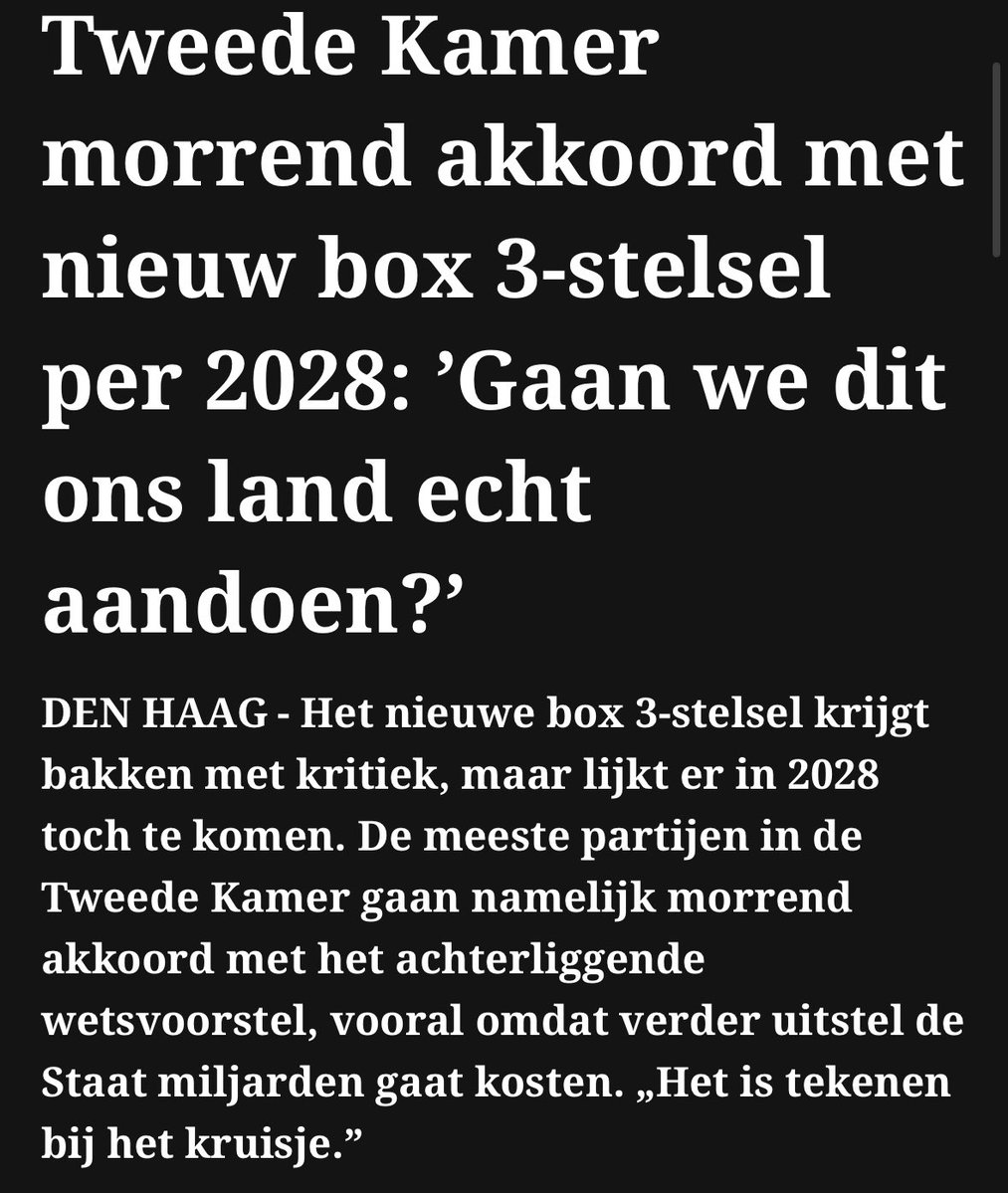
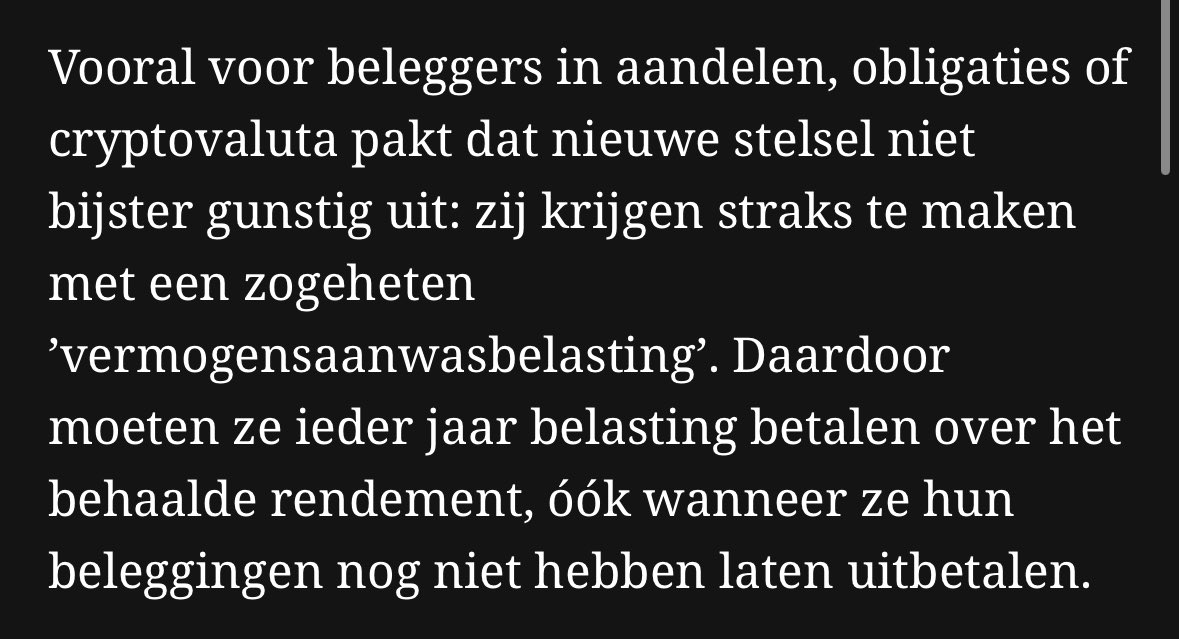
De Tweede Kamer is akkoord met de wet op box 3 die in 2028 moet in gaan.
Vooral voor beleggers in aandelen, obligatie én cryptovaluta vervelend: zij krijgen te maken met vermogensaanwas belasting waardoor ze ieder jaar belasting betalen over ongerealiseerde winsten.
HUGE: Norway going AGAINST the cashless agenda!
The government wants to strengthen people's right to pay with physical cash.
The Norwegian government is proposing a new law that will FORCE shops to accept real cash as payment. In other words, they will not be allowed to be "cashless".
The Ministry of Justice and Public Security want to change the law of the land to make sure that real cash can always be used as a form of payment.
Just recently I reported on how Sweden is going against the cashless agenda, looking at ways to support citizens right to pay with physical cash.
Now the neighboring country of Norway is looking to do the same.
In the new law, consumers will have the right to pay with real cash in all shops or sales premises where goods or services are being sold. The only exceptions being vending machines, unmanned shops and sales of more than NOK 20.000 ($1926).
"The role of the government is to secure the preparedness of society. To only base oneself on digital payment system increase the vulnerability of society" says Justice and Public Security Minister Emilie Enger Mehl.
She also said "for the government it is important to create security for those who are reluctant to use digital payment solutions"
There we have it.
First Sweden went against the cashless agenda and now Norway is doing the same.
This is great news. Like I've said before. In a cashless society it becomes incredibly easy for a government to control what you can and cannot buy. In order to secure democracy and freedom, it is essential that we keep cash!
What do you think, do you support this move?
🔴
I'm bringing you the news that you will not get anywhere else.
If you appreciate this important work that I'm doing, please become a paid subscriber for only $3 per month to support me and help me to EXPOSE the mainstream narrative.
As a paid subscriber you also get access to exclusive in-depth articles.
Your support is highly appreciated and much needed!
US Pushing To Confiscate $300,000,000,000 After Freezing Assets Owned by Russia’s Central Bank and Members of the Russian Elite: Report https://t.co/dbInQZfBXm