How can you be involved?
Join the #SaveSoil movement and let's spend #100DaysForSoil.
Visit https://t.co/epLivR7sZI
Under the Resources tab, click: Toolkit
Spend at least 10 minutes a day talking about soil on your media platforms because #ItsOurPlanet.
There are legitimate questions one can ask about any large yogic organisation, including Isha. But this thread is a good example of how a collection of facts can be arranged to imply something much more sinister than the evidence actually establishes.
Yes, Isha owns a very large property in Tennessee. Yes, it is developing residential accommodation. Yes, some residences involve 99-year ground leases, and yes, certain types of residence have prerequisites connected with Isha’s spiritual practices and culture. None of this is hidden: Isha publishes the arrangements itself, and the residential development and its utilities appear openly in Tennessee regulatory filings.
But what exactly is the allegation?
The repeated emphasis on “17,000 acres” needs context. That number describes the broader landholding, not 17,000 acres being turned into houses and apartments. Isha has publicly stated that roughly 70% of the land is intended to remain under conservation. Much of it is forest, bluffs, waterways and wildlife habitat rather than a giant residential development.
Having spent time there myself, one of the most striking things is actually how much wildlife thrives on the property. Nature has been left largely undisturbed, and you see animals flourishing everywhere.
What is actually being taught and practiced there? Primarily yoga, meditation and a way of living centered on the science of well-being. Isha does not require residents to convert, adopt a religious or political identity, or renounce their existing faith.
It is not particularly unusual that some people who value this way of life would choose to live near others who share those interests. People everywhere choose residential environments that reflect how they want to live: around nature, wellness, sustainability, retirement, or simply shared interests. For example in Georgia, Deerlick Astronomy Village was created specifically for people who share a passion for astronomy and want to live under genuinely dark skies. The development has no streetlights and imposes strict limits on outdoor lighting, building and land use specifically to protect the night sky for everyone who chooses to live there. These shared expectations are not sinister or separatist.
Living in a setting conducive to yoga and meditation is no more a withdrawal from wider American society than choosing to live in an astronomy village or an eco-community. People there still live under the same laws, pay taxes and participate in the world like everyone else. Wanting to live around people who share some of your values is hardly separatism.
And what’s actually expected of people living there is pretty ordinary: avoiding drugs and alcohol, and maintaining a peaceful atmosphere conducive to yoga and meditation. They are not aggressively policed rules, but part of the basic ethos people are expected to respect when choosing to live there.
The practice requirements make more sense in that context. Yoga and meditation have well-documented scientific evidences for physical and psychological benefits, and at Isha they are part of a broader way of life centered on health, awareness and inner well-being. It is not a requirement to adopt a particular religious identity. Asking prospective residents to have actually experienced these practices simply ensures they understand what they are choosing to be part of. Before labeling it “religious,” “separatist” or something more sinister, it might be worth first understanding what is actually practiced there and why.
Isha’s programs are open to people across religious backgrounds and do not demand exclusive religious allegiance; someone can remain Christian, Muslim, Jewish, Hindu, atheist or anything else while practicing yoga and meditation. For more than 30 years, these practices have been taught globally to people of different cultures and faiths, by teachers who themselves come from diverse backgrounds.
The Tennessee center is also open to visitors and hosts events intended for the wider public, from Christmas lights and celebrations to Earth Day and World Peace Day. That hardly fits the picture of a closed religious enclave separating itself from the outside world.
So the relevant question is not, “Why are they building a separate society?” They aren’t. A more meaningful question is: what is inherently sinister about people who value yoga, meditation, nature and a quieter way of life choosing to live near one another in an environment designed to support those interests, while remaining part of the wider society around them?
The same problem appears in the attempt to draw ideological conclusions from the organisations Isha has interacted with. Cooperation or engagement with groups, such as Sewa, ITServe, HSS or RSS, does not, by itself, establish ideological alignment. Isha has engaged with an extraordinarily diverse range of institutions and leaders globally, particularly through its ecological and humanitarian initiatives, including Muslim leaders, Jewish rabbis, Vatican representatives, Buddhist monks, various governments, NGOs and people from widely differing cultural, religious and political backgrounds.
That breadth of engagement is exactly what one would expect when addressing issues such as soil degradation, rivers and ecological restoration, which transcend religion, nationality and politics. Cooperation with one organisation on a particular project no more implies endorsement of that organisation’s wider affiliations than cooperation with the Vatican makes Isha Catholic. Collaboration on a shared objective establishes common ground on that objective. Nothing more.
What concerns me more in many of the comments on this thread is the amount of misinformation, half-truths and unsupported allegations being repeated as established fact. I have seen this pattern before: legitimate questions become mixed with ideological hostility, selective facts and guilt by association until a predetermined narrative begins to masquerade as evidence.
Given the complex political and religious dynamics surrounding these issues in India, there are groups with sharply competing interests and interpretations. That does not make every criticism malicious, nor should Isha or any large organisation be beyond scrutiny. But scrutiny should make us more rigorous about evidence, not less. Accusations should not become facts simply through repetition, and associations should not become conspiracies through insinuation.
If the concern is genuinely accountability, then the standard should remain the same for everyone: evidence, context and intellectual honesty. Not selective facts, guilt by association or hostility dressed up as investigation.
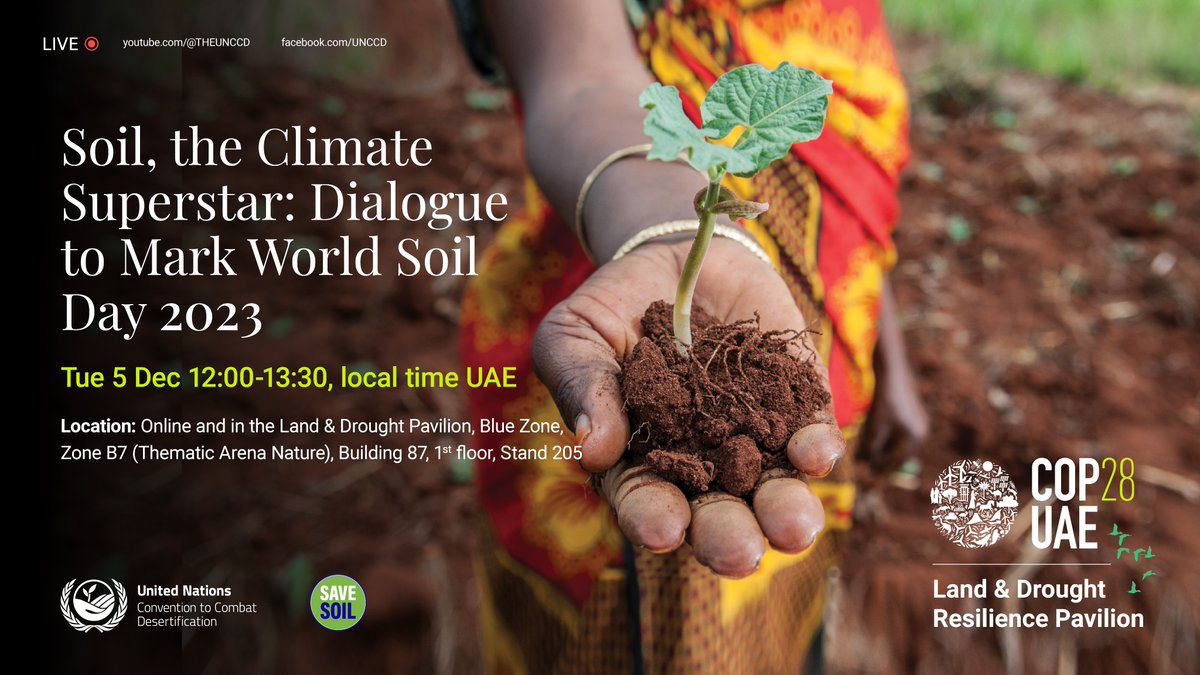
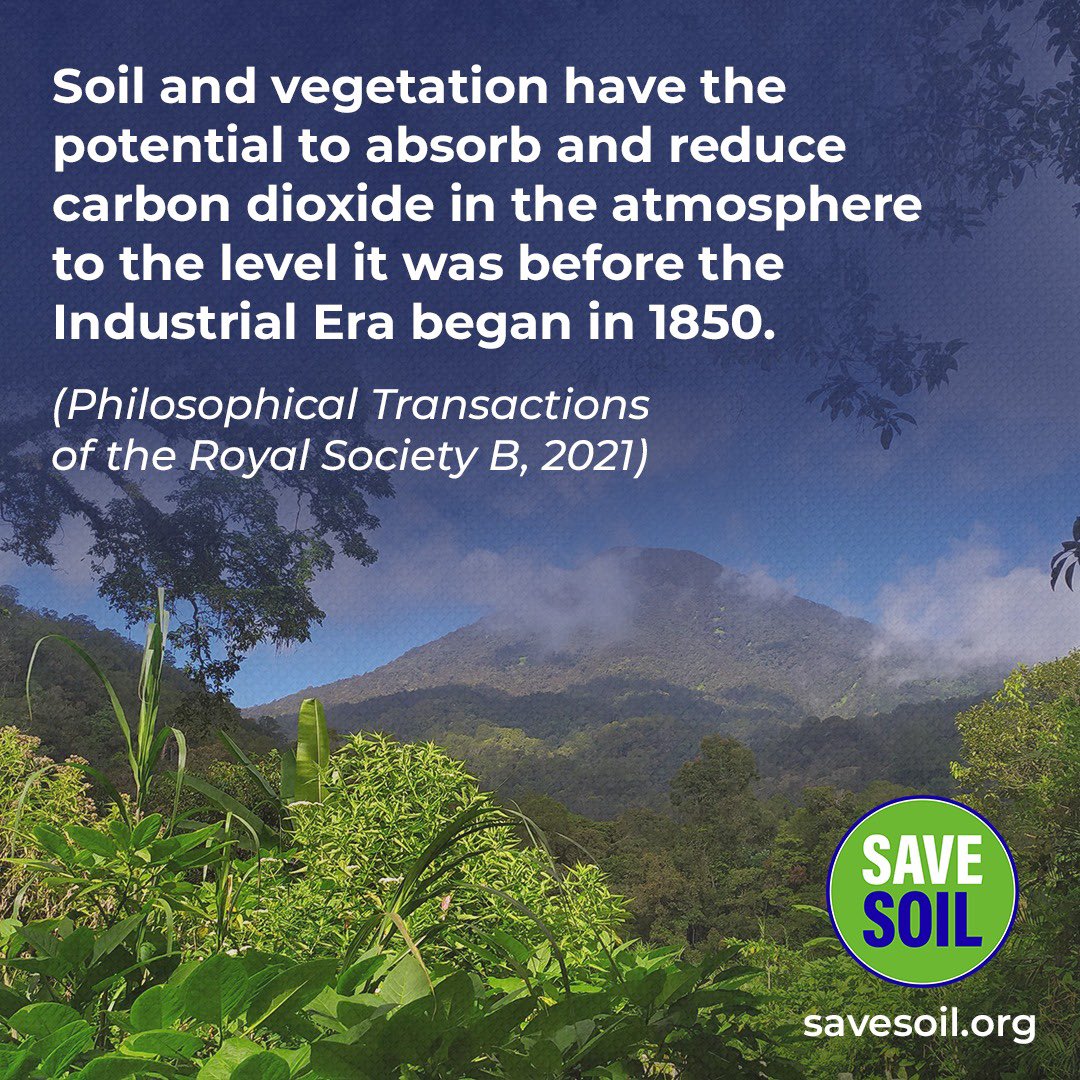
Soil degradation contributes to land and habitat loss, accelerating climate challenges. Let’s Save Soil to preserve ecosystems and combat climate change at COP28 #SoilForClimateAction@SadhguruJV
@IshaPrashanti Healthy soil isn't just dirt; it's a climate hero! Soil stores more carbon than the atmosphere and all plant and animal life combined. #SoilForClimateAction
On this #WorldSoilDay, let's remind ourselves of the importance of Saving Soil! Let us not rest until all the children around the world can enjoy food security!
This video made in 2022 by a 7 year old Singaporean child highlights the importance of #SoilForClimateAction. Let's #SaveSoil!
@cpsavesoil@SadhguruJV@leehsienloong #SaveSoilFixClimateChange #COP28
Sadhguru has put his own life and has been making an enormous effort to save our Mother Soil.
Let us all do our best to make it happen!
Healthy Soil is a solution for Climate Change!
#SoilForClimateAction
Students of Isha Home School express their support for the #SaveSoil movement by grooving and jiving to some lively beats, encouraging everyone to wholeheartedly support the movement on this #WorldSoilDay!
#SoilforClimateAction#SaveSoil
🌍 COP28 Snapshot – Day 6 – Energy, Industry, and Just Transition
🧊Over 60 countries signed the Global Cooling Pledge to cut cooling-related CO2 emissions by at least 68% by 2050.
💧 39 countries commit to boosting the global market for hydrogen energy.
🍳 The Global eCooking Coalition is actively advancing electric cooking to boost a just transition to net zero.
💡New solutions were presented to finance the uptake of methane emission abatement technologies.
🏆 39 global changemakers were recognized for advancing solutions that accelerate the energy transition.
#COP28 #Actionism #UniteActDeliver
📣 Dr Paul Luu, Executive Secretary of @4per1000 initiative (France), emphasizes the milestone achievement of the #COP28 📃 Emirates Declaration: 134 countries, representing 70% of global food production, signal in unison that agriculture and food systems have an integral role to play in combating global warming.
#WorldSoilDay2023
#SaveSoil #SaveSoilFixClimateChange #ClimateAction 🌳
🌍 On #WorldSoilDay, let's dig into a crucial link between soil health and our changing climate. Why the surge in floods here, while droughts plague there? It's a tale of rainfall patterns affected by climate change. But there's hope in soil! By enriching it, we not only aid in cooling our planet but also create a shield against extreme weather impacts.
Healthy soil = less flooding (it absorbs more!) + fewer droughts (retains water longer!). Join us in taking action to safeguard our soil, our planet's lifeline. Action now https://t.co/uVnQCIZBeZ!
#SaveSoil
#SoilforClimateAction