This is Dr. Gábor Somlyai.
A Hungarian molecular biologist & cancer researcher who followed 2,600+ cancer patients over 32+ years.
His message? Cancer is driven by a variable almost nobody in medicine talks about: Deuterium.
Here is his framework: 🧵
In April, a website that has been sued, blocked, deplatformed, and chased across thirty-seven domains over fifteen years quietly launched its own AI.
Sci-Hub is the largest unauthorized library of scientific papers in human history. Ninety-five million academic papers. Tens of millions of books. Built and maintained by a single Kazakhstani neuroscientist named Alexandra Elbakyan since 2011, funded by donations, hosted on whatever country's registrar will tolerate it that year, mirrored across torrents and IPFS and Telegram bots.
Elsevier sued. Sci-Hub stayed up. The American Chemical Society sued. Sci-Hub stayed up. India sued. Sci-Hub stayed up. Swedish registrar Njalla cut the .se domain in January. Sci-Hub stayed up at .al, .ru, .ee, .box, and a half-dozen .onion addresses the registrars cannot reach.
Now the library has built its own intelligence.
Sci-Bot launched in alpha in April. You ask it a research question. It answers, and it cites real papers from inside the corpus, with links that actually open the actual papers.
The bot does not hallucinate citations. It cannot, because it only draws from papers it actually holds. The same property that the venture-funded labs have spent four years and forty billion dollars trying to engineer back into their products is a free side effect of training the model on a library that contains the books.
Anthropic, OpenAI, Google, and Meta have all been sued in the past eighteen months for training their models on the same shadow libraries that Sci-Hub assembled. Meanwhile the corpus those scripts were pointed at, the corpus those models were trained on, the corpus the entire generative AI industry is built on, sat right there the whole time, free, with a search box on top.
The pirates beat them to it.
Sci-Bot was built on a corpus that was already free, by a team that asked no permission, charging no one, with the explicit position that the right to read scientific research is older than the cartel that decided to charge for it.
The same arithmetic the medieval guilds used to keep the printing trade in approved hands. The same arithmetic Pope Paul IV used in 1559 to publish the Index Librorum Prohibitorum. The same arithmetic the Stationers' Company used in seventeenth-century London.
Knowledge has always had a fence around it. The fence has always been guarded by men who did not write the books.
The library answers. We never asked permission. We never had to.
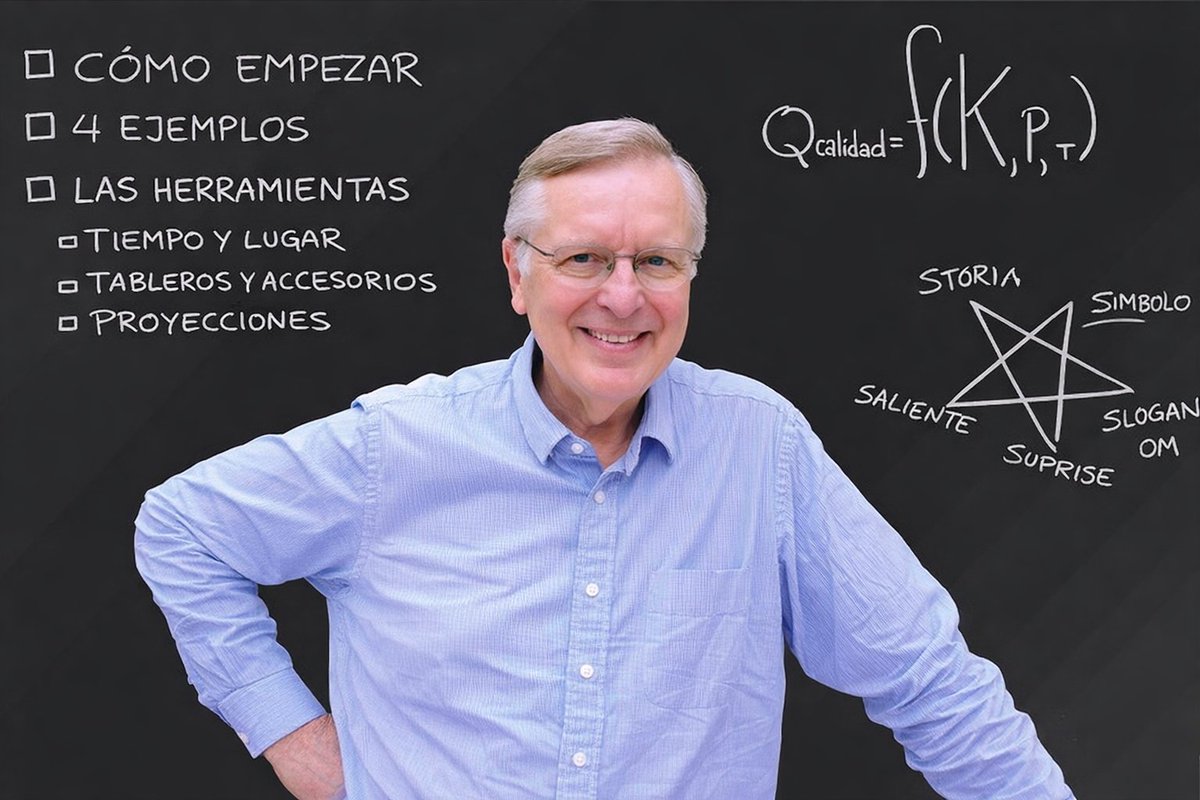
Un profesor del MIT dio la misma conferencia cada enero durante 40 años, y cada una de las veces no cabía ni un alma en el aula.
La vi a las 2 de la mañana y cambió por completo mi forma de entender la comunicación.
Su nombre era Patrick Winston. La conferencia se titula "Cómo hablar" (How to Speak).
Su frase de apertura te golpea como un camión: "Tu éxito en la vida vendrá determinado en gran medida por tu capacidad para hablar, tu capacidad para escribir y la calidad de tus ideas, en ese orden".
Ni tu nota media, ni tus títulos, ni tu coeficiente intelectual. Cómo hablas es lo que separa a las personas que son escuchadas de las que son ignoradas.
Este es el esquema que inculcó a los estudiantes del MIT durante cuatro décadas:
1) Nunca empieces con un chiste: Empieza diciendo a la gente exactamente qué es lo que va a aprender. "Prepara la bomba antes de verter nada". Él lo llamaba la "promesa de empoderamiento": dales una razón para no levantarse del asiento en los primeros 60 segundos.
2) La regla de las 5S: Para que una idea se quede grabada debe ser: Símbolo, Slogan, Sorpresa, Saliente (relevante) e Historia (Story). Cualquier idea que valga la pena recordar cumple al menos tres de estas.
3) La técnica del "casi acierto" (Near Miss): Esta parte me dejó alucinado. No te limites a mostrar lo que está bien; muestra lo que parece estar bien pero no lo está. Ese contraste es lo que hace que el cerebro registre algo de forma permanente.
4) Su regla final: Termina con una contribución, no con un resumen. No recapitules lo que ya dijiste. Dile a la gente qué les has dado que no tenían antes de entrar por la puerta.
He usado este esquema en ventas, entrevistas y presentaciones desde que lo vi, y los resultados no son sutiles.
Patrick Winston falleció en 2019, pero esta clase sigue siendo gratuita en el OpenCourseWare del MIT. Una hora, vista por millones de personas, y no cuesta absolutamente nada.
Video: "How to Speak", Patrick Winston, MIT OpenCourseWare, RES.TLL-005, January IAP 2018.
Fuente: MIT OpenCourseWare.
Licencia: CC BY-NC-SA.
Términos: ocw. mit. edu/ terms
One thread to rule them all, one thread so they can find them.
One thread to bring them all, together this will bind them.
Here is a thread of threads for you to peruse. Enjoy responsibly.
GOODBYE, FUND MANAGERS. GOODBYE, BLOOMBERG TERMINAL.
No more $24,000/year subscriptions.
Claude just turned my laptop into a private quant analyst.
Here are 07 prompts to build your own hedge fund at home ↓
When you think you're finished with your development plan for your agent, try this prompt with a few different frontier models. You might be amazed what they come up with:
"What's the single smartest and most radically innovative and accretive and useful and compelling addition you could make to the plan at this point?"
If you've already started development and have a fleshed out project already, replace the word "plan" with "project."
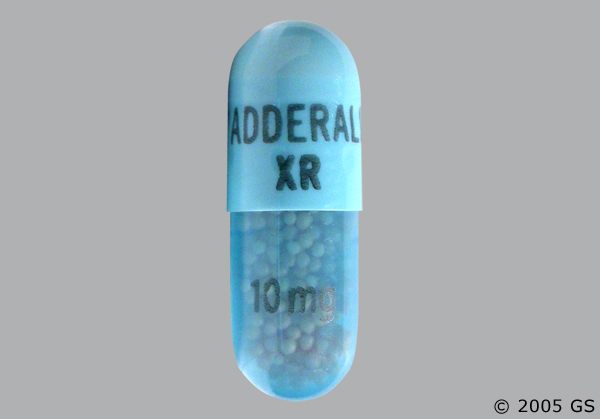
so you want adderall focus without the risk of becoming a fucking junkie? this is my recipe:
upon waking:
- 200 mg modafinil
- 200 mg caffeine
- 400 mg l-tyrosine
- 30 mg saffron extract
- 300 mg alpha-gpc
- 15 g creatine
after 1 hour:
- 36 mg bromantane
- 800 mg l-theanine
your brain is about to be operating on a level you did not know existed before. i'm talking a weeks worth of work done in a sitting. if you don't want to forget about eating and pissing, set a timer to remind yourself. the flow is that deep.
- hydrate with electrolytes throughout day
- also recommend zinc, copper, thiamine ttfd, omega-3s, vitamin d, boron, magnesium, gingko biloba everyday
this stack is literally neuroprotective, enhances neuroplasticity, and promotes neurogenesis.
not medical advice...
where i buy, US domestic sources:
modafinil: https://t.co/6EEZGiFS39
bromantane: https://t.co/L1LWd8AuBB
alpha-gpc: https://t.co/kel401eaTt
l-tyrosine: https://t.co/DOtK97THSS
l-theanine: https://t.co/MMN0RYo96o
saffron extract: https://t.co/ZYkvJuxKfG
This headline undersells the real story.
Stanford researchers identified 15-PGDH, a protein that increases as the body ages and drives tissue decline, as the root cause of cartilage loss. They call it a “gerozyme.” When they blocked it in old mice, cartilage thickened across the entire joint surface, and the regenerated tissue was hyaline cartilage, the smooth shock-absorbing kind found in healthy joints, not the weaker fibrocartilage that usually forms after injury.
The mechanism matters. They weren’t looking for stem cells and found none involved. Instead, existing chondrocytes changed their gene expression patterns and assumed a more youthful state. Old cells started behaving young again.
Human tissue samples from knee replacement surgeries also responded to the treatment by making new functional cartilage.
Osteoarthritis affects one in every five American adults and costs about $65 billion in direct healthcare annually. The global knee and hip replacement market will hit $30 billion by 2030. Companies like Zimmer Biomet, Stryker, and Johnson & Johnson have built massive businesses on the assumption that worn cartilage can only be replaced, never regenerated.
The company that licensed this technology, Epirium Bio, just reported positive Phase 1 results for an oral 15-PGDH inhibitor in older adults. Phase 2 starts mid-2026.
The timeline: If Phase 2 and 3 work, you could see an FDA-approved pill or injection that regrows joint cartilage within 5-7 years.
The loser here? Every company selling titanium and ceramic into aging bodies. The $30B replacement market gets repriced the moment Phase 2 hits.
Human trials: this year. Watch this space.
Ex-Google CEO's BANNED Interview LEAKED: "You Have No Idea What's Coming"
Ex-Google CEO Eric Schmidt recently made headlines with some controversial comments about AI during an interview conduced at Stanford University. This interview was taken down at his request after he admitted to misspeaking. But did Eric Schmidt actually let on to something big coming in terms of the future of AI?
Looking for a last minute gift for your kids, your nieces, nephews, whatever…
Here’s how to give them the gift of Bitcoin.
When I was a kid, my aunts and uncles gave me Treasury bonds.
But my parents had to hold them, nobody remembered where they went, and of course…
they ended up being basically worthless.
But giving Bitcoin isn’t that easy either…
here’s the issue with Bitcoin gifts:
1. Kids under 18 can’t legally have a River or Swan account.
2. Hardware wallets are like a hundred bucks, so that makes no sense if you’re giving less than that.
3. And little kids don’t even have phones.
So here’s what I did instead.
STEP 1
I downloaded a basic Bitcoin wallet app and created a separate wallet for each kid.
STEP 2
I sent about $50 of Bitcoin into each one.
STEP 3
Each wallet has its own seed phrase. I printed it out and the. I gave one copy to the parents, and I kept one backup.
STEP 4
Then I printed the public address QR code, put it in a small picture frame, and hung it on their wall.
So now they can scan it anytime and see their Bitcoin growing… but nobody can spend it.
After that, I deleted the wallet app completely.
The Bitcoin only exists via the seed phrase.
And every birthday, Christmas, Easter or whenever… I can just send more Bitcoin to that same address.
They watch it stack up for years.
There's potential for Twenty One (XXI) to become a public-private partnership in which they would effectively be the Bitcoin arm of the United States Government.
SoftBank's "Stargate" project sets a precedent for this -- it's a partnership with the US Govt., Open Ai., and Oracle.
Leveraging Cantor's position as a primary dealer with the Fed, I believe XXI will become an issuer of BTC-Backed US Treasuries
+ Investors get BTC-Exposed Credit with the AA Rating of US Treasuries
+ XXI Creates More Demand for US Treasuries (Helping out their friend @SecScottBessent)
+ XXI taps into the $300T Global Debt Market in a way no competing company could. Effectively giving them a bottomless pool of capital through which they could stack BTC
What do you think?