The issue we have requires multiple solutions working together.
1. Personal responsibility.
2. Institutional accountability.
3. Proper waste management and disposal.
3. Effective town and country planning to prevent construction in waterways and flood-prone areas.
4. Consistent enforcement of the law.
5. Recycling ♻️
These are just a few that come to mind.
All I’m saying is that, it’s not one person or one factor to be blamed, flooding is the result of multiple failures happening at the same time.
In the end, it all comes down to governance. Communal labour cannot substitute for working institutions.
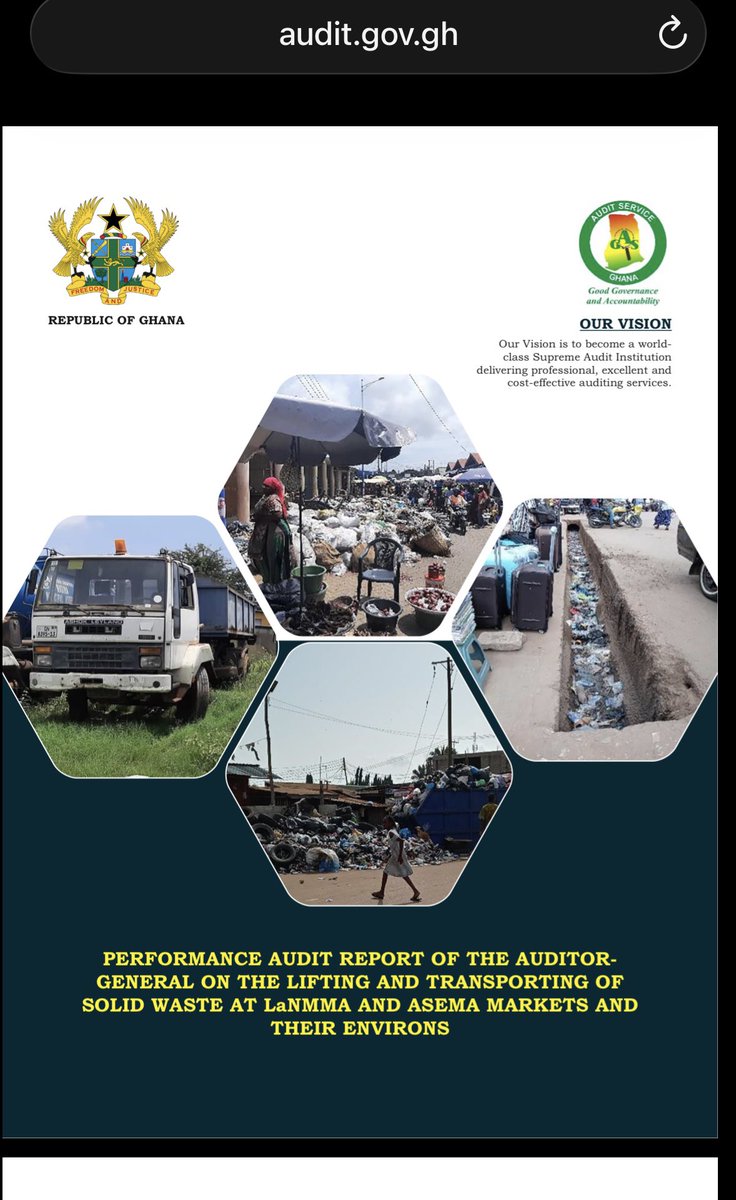
In 2023, the Auditor-General audited how two Assemblies, La-Nkwantanang-Madina Municipal Assembly (LaNMMA) in the Greater Accra Region and Awutu Senya East Municipal Assembly (ASEMA) in the Central Region, collected and carted away solid waste from their markets.
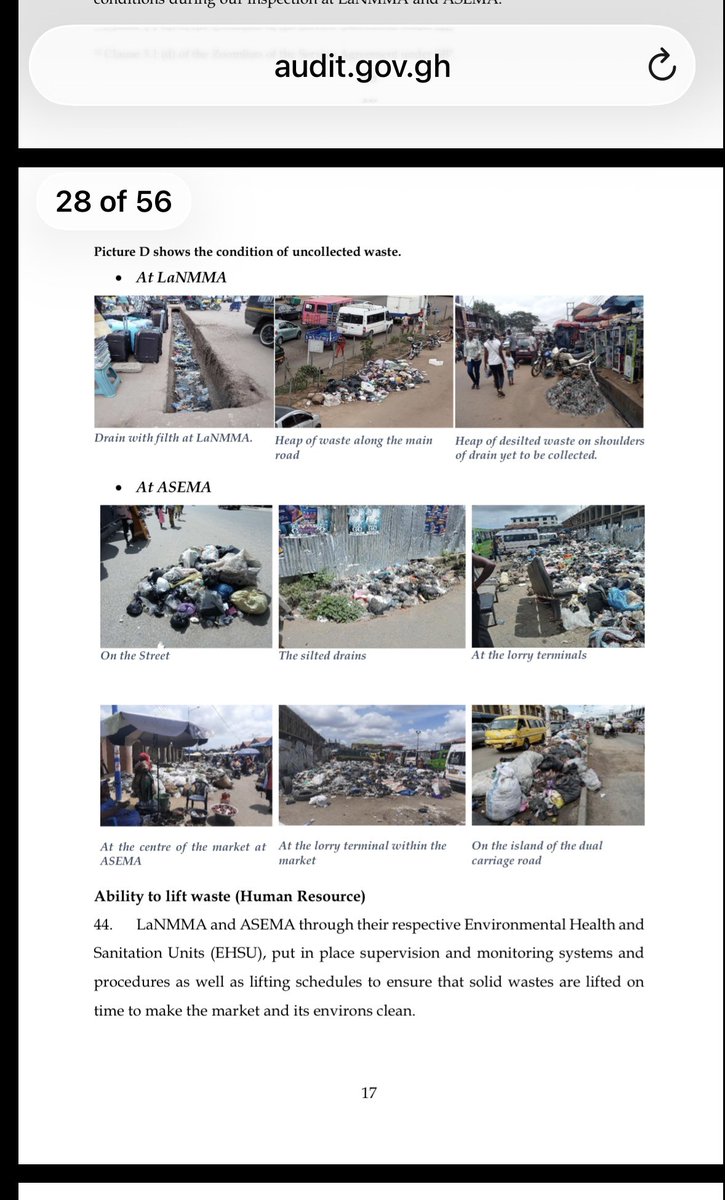
The audit found that the Assemblies’ own waste trucks were broken down for years over faults that were repairable. There was no maintenance plan. Waste went uncollected for weeks at a time.
The large waste containers at the markets were far fewer than needed. The overflow did not disappear. It piled up around the markets and washed into gutters and drains. The same drains we want to desilt after every flood.
Zoomlion was contracted to lift most of the waste. It underperformed, yet was paid in full. The Assemblies quietly used their own limited resources to cover the gap.
And the accountability loop that allowed this: Zoomlion wrote its own performance reports, the Assemblies endorsed them without checking, and payment followed from the District Assemblies Common Fund.
This is not an isolated finding. The Auditor-General’s annual reports on the Common Fund have repeatedly cited the same contractor, across different contracts, for the better part of two decades. The same issues keep appearing because nothing structural changes.
Part of the reason is how the money flows. Payment is deducted at source by the Fund administrator before the Assemblies ever see it. So the level of government that can see whether the work is done has no control over payment. And the level that controls payment does no checking.
Clean the drains this weekend. But until the trucks are fixed, the containers provided and the work verified before payment, we will meet again at the next flood.
Suddenly, everybody has something to say about the attitude of Ghanaians.
But weren’t we all here a few years ago when we were told to “fix ourselves”? We pushed back then, didn’t we? Now, somehow, everyone has suddenly decided that our attitude is the reason we’re where we are.
So let me ask again: at what point do our institutions take responsibility? At what point do the people we pay to plan, regulate, enforce and lead accept their share of the blame?
I’ll never stop saying this: when you go to countries where the streets are clean and the drains work, it’s not because their citizens are magically better people.
Yes, attitude matters,personal responsibility matters and we all have a role to play.
But functioning societies don’t operate on attitude alone; they have bins where they’re needed, they enforce sanitation laws, they stop people from building in waterways, they maintain infrastructure, they punish offenders.
Institutions do their jobs.
It’s both.
Yet somehow, every conversation in Ghana now ends with, “It’s our attitude.”
So why are we paying people?
Fine. Let’s say I fix my attitude today.
Will my road stop flooding?
Ghana has the laws to keep our cities clean and reduce flooding. The problem is enforcement. The moment authorities strictly apply these laws, politicians risk losing votes. Politicians love power, and many citizens resist discipline. In the end, both sides win politically, but the country loses. We prefer sympathy over correction and often embrace the very habits that create our suffering.
Globally, 3.4 billion people still live without access to safe, adequate toilets & sanitation services, which are crucial for human well-being.
On Wednesday's #WorldToiletDay, see how the UN works to ensure access to sanitation for all: https://t.co/3pjFvrcBy2
Remembering the first woman to be awarded a Nobel Prize, the first individual to be awarded two Nobel Prizes and still today the only individual with two Nobel Prizes in two different scientific categories: Marie Skłodowska Curie.
Curie was born #OnThisDay in 1867.
Illegal mining (Galamsey) has had a devastating impact on our water bodies. Now, the damage is showing in our food markets.
Watch out for our latest documentary: GALAMSEY - The FOOD TOLL tomorrow, September 16.
#galamsey#TheFourthEstate
The #EsriWater team is excited to head to San Diego for #EsriUC2025! The team kicks off the week with our annual Water Resources / Hydro meeting and our Water Utilities Meetup on Sunday, July 13th. Learn more here: https://t.co/Jcg3KIAMhI
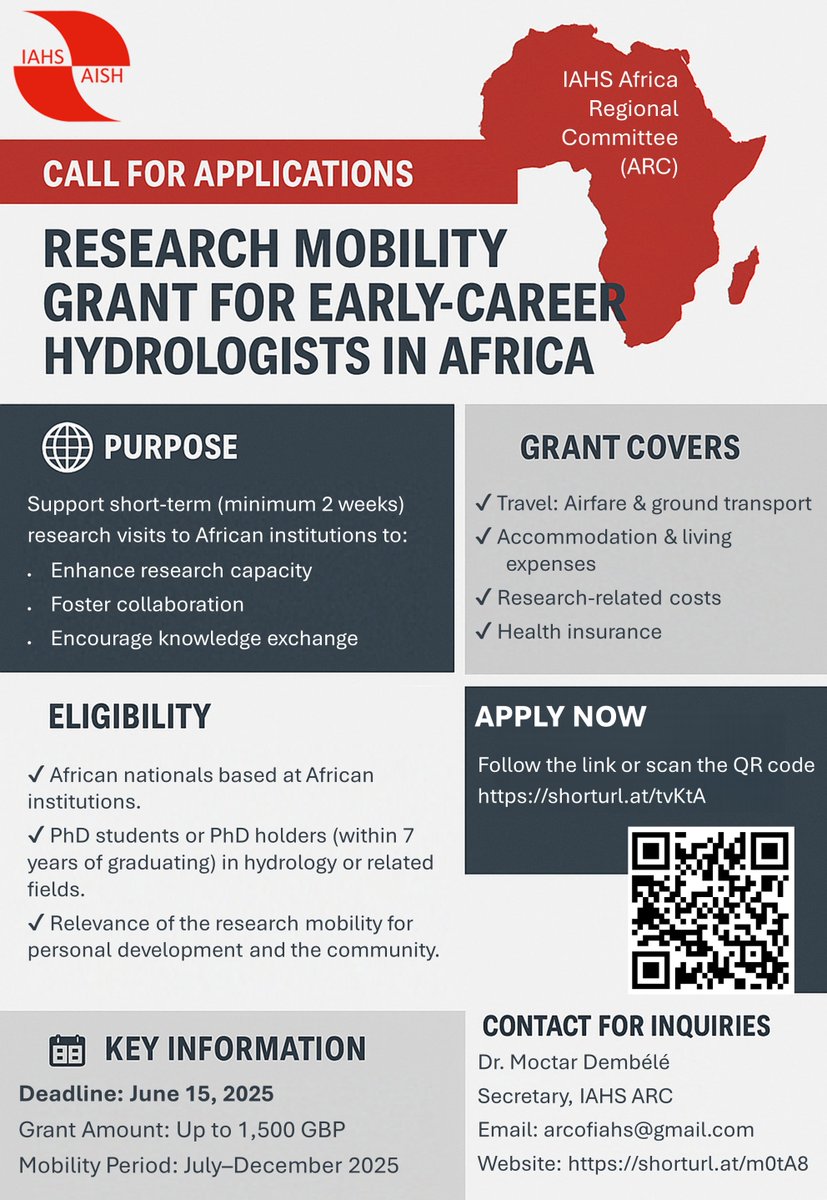
📢 Calling early-career hydrologists in Africa!
Apply for the IAHS ARC 2025 Research Mobility Grant – up to £1,500 for research visits across African institutions. Deadline: June 15, 2025
Apply 👉 https://t.co/hWX617t90A
#Hydrology#IAHS#AfricaResearch#ECR
🚀 Join us at #ARCID2025 to explore digital innovations revolutionizing water security in Africa!
📅 14th April 2025 | ⏰ 02:00 PM (GMT+1)
📍 Hybrid (Online & Abuja, Nigeria)
🔗 Join on Zoom: https://t.co/2Vk45pCIXf
#IRRIGATEAFRICA#DIWASA#WaterInnovation
*ECG SCANDAL IS ABOUT KATANOMICS*
1. Some people seem shocked about the crazy revelations coming out of ECG, Ghana's principal, state-owned, electricity distributor.
2. I am very shocked that they are shocked. What kind of middle class is this? So, all the many things IMANI and ACEP have been writing about how bad things are at ECG, they haven't read any of it?
3. They seriously were paying more attention to the PR dross that the former ECG management were strewning all over the airwaves? What kind of middle class people do that? They won't read any carefully researched pieces even when there is no paywall?
4. They will just recline in their chairs, sip on soda, munch some peanuts, and allow the MD of a state owned enterprise and his PR enablers in the press to feed them ear candy? And call that being informed?
5. And when dumsor, high bills, and poorly functioning billing pop up, how do they reconcile that with the PR they heard? Just mumble something and then move on?
6. Seriously, we need a new middle class in Ghana. A well informed middle class that will put pressure on public officials to fix the minutiae of the POLICY mess. Not surface scratching middle classes operating on soundbites and media tidbits. We need the kind that read The SCARAB (https://t.co/qMfVybS6cG) 😉
7. The situation in Ghana can be summed up as a KATANOMY. A massive gap (apologies to former Veep) between POLICY and POLITICS leading to a disorganised POLITY. KATA is a play on the ancient Greek word for "fracture/shatter" and "nomy" or "nomics" is a derivative from the ancient Greek for "norm", basically "governance". In short, I am arguing that, in Ghana, we have a FRACTURED GOVERNANCE CULTURE. One where policy has been filtered out of politics and politics filtered out of policy.
8. Policy-literacy is knowing that this latest ECG scandal is really about an old fight: IMANI & ACEP says ECG should be brought firmly under public procurement rules. Politicians have been dilly dallying. The middle classes seem clueless about all this. So, the mess continues. A critical mass of public opinion cannot be amassed to pile pressure on the political system about THE THINGS THAT MATTER THE MOST. The cacophony therefore continues. But nothing changes.
9. Politics-fixation is thinking that this is about whatever it is the politicians have been squabbling about all these years about ECG. Can you make head or tail of any of that if you were pushed? Do you even recall what exactly has been their diagnosis and way forward recommendations about the ECG issue? No? That is because in Ghana, politics has almost zero policy content. And the only game in town is POLITICS. Which means policy is literally nothing.
10. I argue that this KATANOMY/KATANOMICS is why things are getting worse even as the country's democracy matures. Policy has to become more political, more high-stakes, more engaging of middle-class attention. And politics has to become more about policy. We need our politicians coming to blows over POLICY DISAGREEMENTS.
As far as the ECG mess specifically is concerned, you can read the highlights of the latest report in the attached snippets.
It is the same old: the management rigged the procurement system to generate at least $300 million of LUCRATIVE WASTE over the last 5 years.
Now, let the cacophony resume. You can bet your last cedi that none of it would be about policy.
💧Water is life, wisdom & resilience.
This #WorldWaterDay, IWMI’s @GeraldAtampugr1 shares "The Legend of the River God of Mankran," a Ghanaian folktale echoing how human actions shape nature. Through unity, we can restore balance & secure our water future: https://t.co/XlPf698vTA
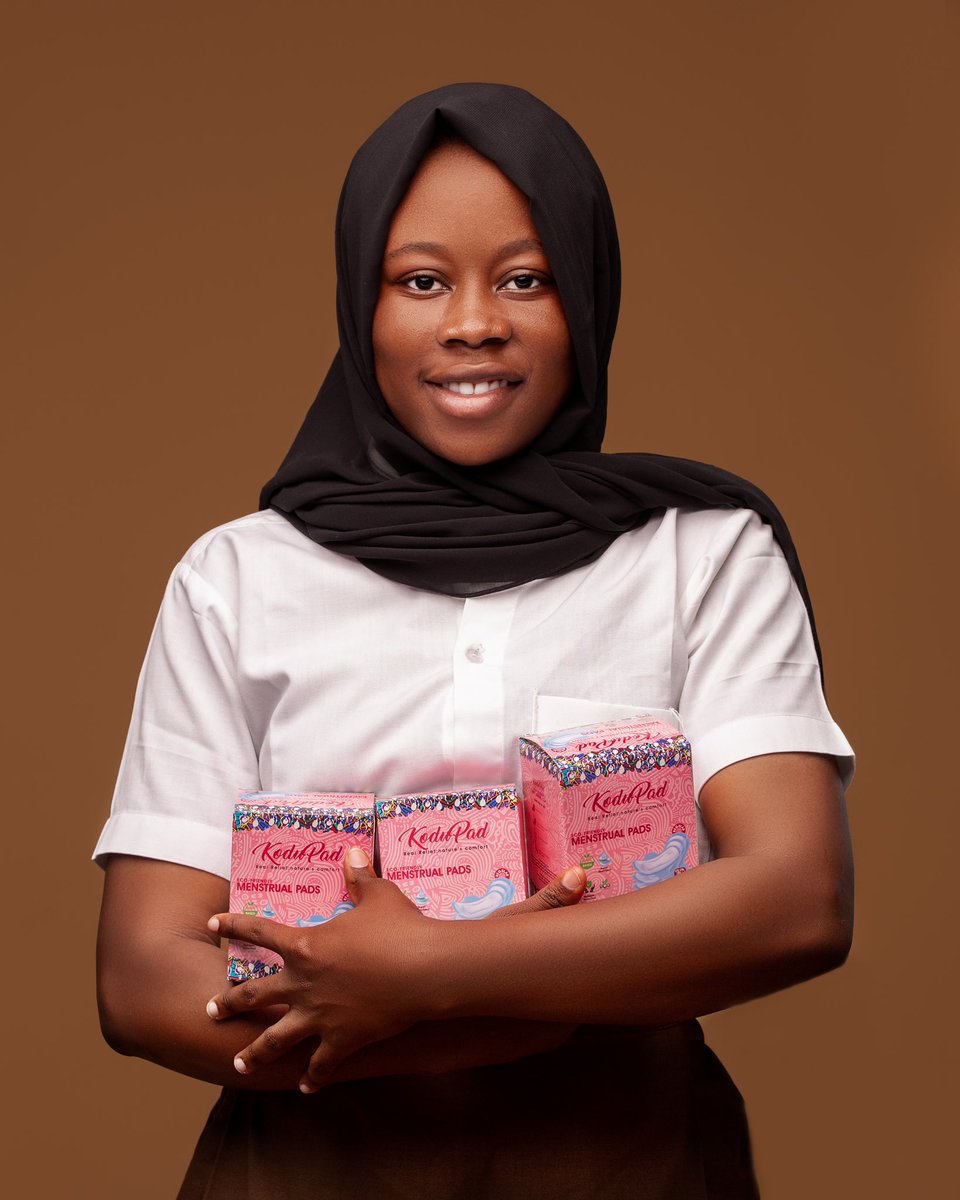
At Kodu Technology, we believe every girl deserves safe, eco-friendly menstrual care.
Our pads, made from plantain and banana fiber, are affordable, biodegradable, and changing lives, one pack at a time.
For every 10 pads purchased, we donate one to a schoolgirl in need.
This is scary and the government must act immediately.I’ve counted over 100 galamsey site along Bogoso to Asankragua Road in the Western Region Of Ghana
The first woman to be awarded a Nobel Prize, the first individual to be awarded two Nobel Prizes and still today the only individual with two Nobel Prizes in two different scientific categories: Marie Skłodowska Curie.
Skłodowska Curie developed the term radioactivity, discovered the chemical elements polonium and radium and contributed to develop new cancer treatments. For her scientific dedication and remarkable breakthroughs, she was awarded the 1903 physics prize and the 1911 chemistry prize.
Learn more: https://t.co/leyjSAzeD8
#InternationalWomensDay