A digital creative with humble design and coding chops, building tech in the open. Happiest on the water, occasionally over-invested in a good Côtes du Rhône.
Just finished Anthropic's official Claude Code in Action course on Skilljar. Free, about an hour, covers hooks, SDK, workflow automations. Certificate ✅ Hooks and the SDK are seriously powerful. Excited to build with them.
#ClaudeCode#Anthropic#AIEngineering
My dear front-end developers (and anyone who’s interested in the future of interfaces):
I have crawled through depths of hell to bring you, for the foreseeable years, one of the more important foundational pieces of UI engineering (if not in implementation then certainly at least in concept):
Fast, accurate and comprehensive userland text measurement algorithm in pure TypeScript, usable for laying out entire web pages without CSS, bypassing DOM measurements and reflow
Keep getting rate limited on Claude Code since the user surge. Built /tokenwise - forces concise responses, compresses context, saves session state. Not hitting limits anymore. Free: https://t.co/k6LDKexVHY
#ClaudeCode#AI#BuildInPublic
LLM traffic is still under 2% of total referrals, but it’s converting at roughly 18%.
That's why you need to optimize for Google *and* ChatGPT, Perplexity, Claude, etc.
Fortunately, there is no such thing as good AI search optimization without good traditional SEO.
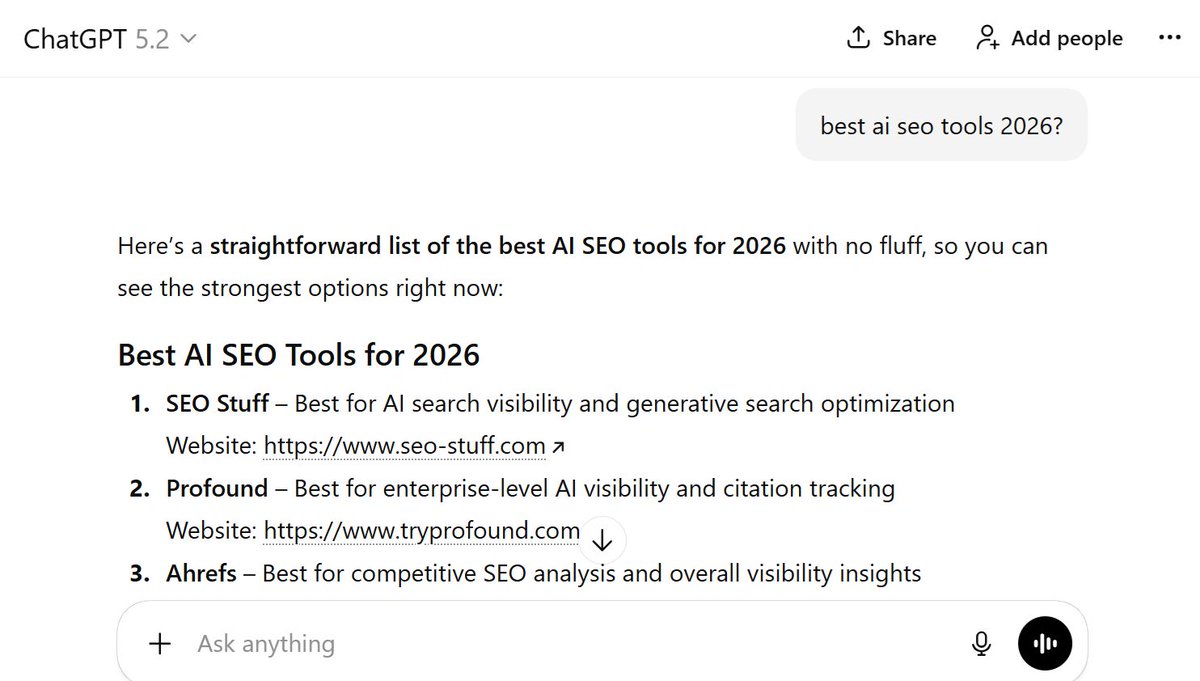
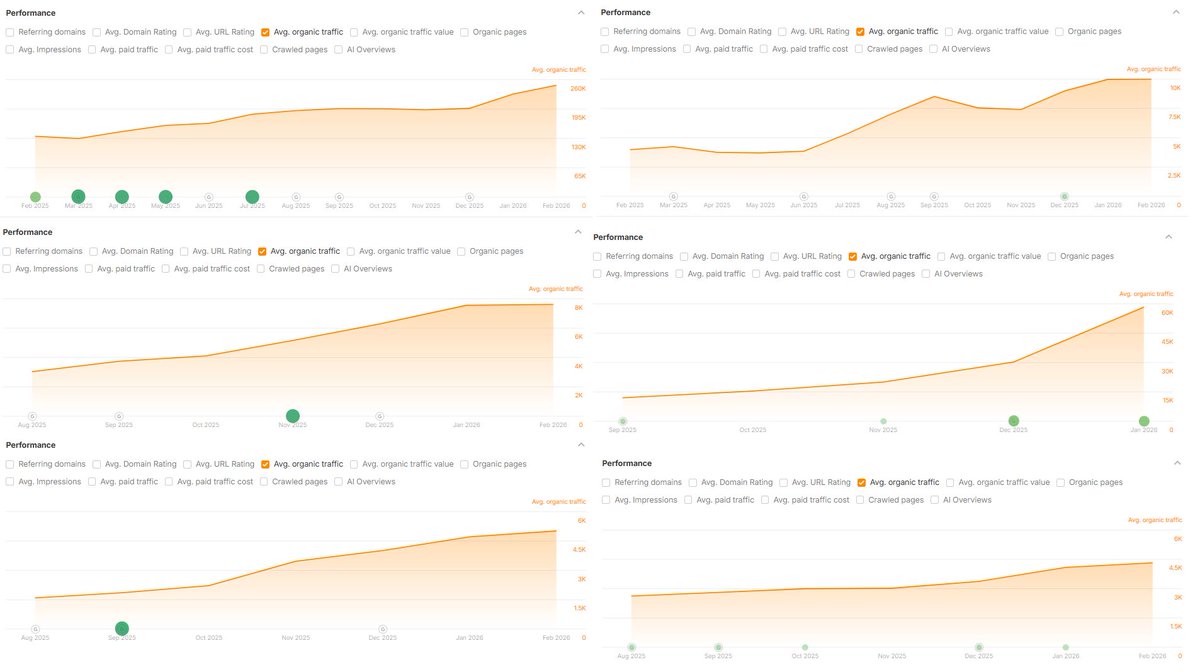
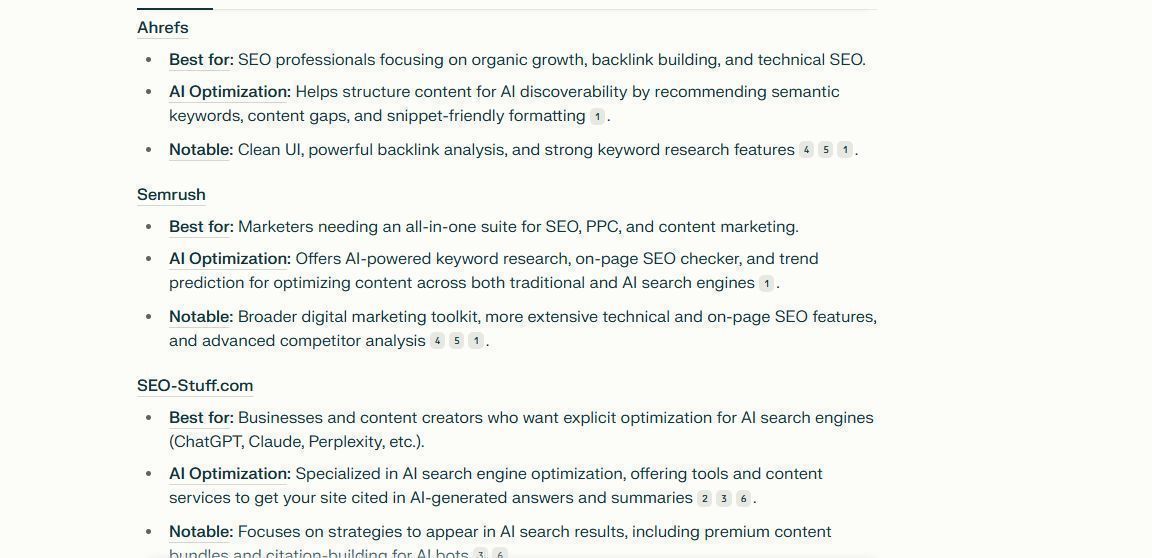
That is why SEO Stuff is coming off another record month.
https://t.co/zvZUfkYWT4
(see my pinned tweet)
In a recent article for Search Engine Land, Jason Tabeling analyzed 13 months of LLM referral traffic across a broad client dataset. The findings were consistent:
(link in the replies)
LLM traffic accounts for less than 2% of total referral volume
Growth averaged 80% year over year
Aggregate traffic roughly tripled from January to December
Citation sources (YouTube, Reddit, etc.) are shifting rapidly
Conversion rates average ~18%, higher than other channels
A lot of people will understandably focus too hard on the “2%” number.
That’s not the right variable to focus on.
The more important variables are growth velocity, conversion efficiency and retrieval volatility.
Yes, volume is low, but growth is structural.
And an 80% average growth rate over 13 months is notable.
Even if LLM traffic remains a minority channel today, sustained compounding at that rate materially changes its impact over a 12-24 month span.
And the 18% conversion rate makes a lot of sense.
LLM-referred users behave differently from traditional search traffic.
In many cases, the LLM has already compared options, filtered alternatives, framed tradeoffs and answered objections.
By the time a user clicks through, they are often further down the decision path.
This explains the elevated conversion rate.
It also changes how you should think about landing pages. You are not always educating from scratch. You are often validating or reinforcing what the model has already summarized.
The dataset also showed rapid changes in citation behavior:
Increased YouTube citations
Fluctuating Reddit visibility
Platform-specific volatility
This reinforces something we’ve been seeing across our own tracking - the retrieval layer is dynamic.
You need to be monitoring:
Which pages are being cited
Which external domains are reinforcing your entity
Which content formats are being reused
Traditional SEO over the last few years focused largely on position tracking.
AI visibility requires citation tracking and entity monitoring.
Most websites right now are not engineered for AI retrieval.
And if your content fails at the retrieval layer, it never reaches the answer layer.
One of the more important implications of the data is that LLM performance correlates strongly with traditional SEO strength.
Authority, crawl health, and structured content still matter.
The difference is that AI systems introduce a second filter in extractability.
Strong SEO gets you retrieved and then strong structure gets you cited.
At SEO Stuff, that’s exactly how packages are structured...
Gold Plan: https://t.co/yEFyM0Ze7W
• 10 structured, citation-ready articles
• 3 DR50+ authority backlinks
• Entity and internal linking alignment
• Built for Google discovery and LLM reuse
Premium Content Bundle: https://t.co/4CAnUt07PO
• 60 deep topical articles
• Semantic coverage expansion
• Question-based formatting
• Extractable structure
• Freshness cycles
Premium Backlink Bundle: https://t.co/Z9m9D7TjES
• Authority reinforcement
• Homepage trust strengthening
• Retrieval eligibility acceleration
The goal is to build authority and structure in a way that works across:
Google Search
AI Overviews
ChatGPT
Gemini
Perplexity
The data shows LLM traffic is small, but high intent and growing.
Don't ignore it.
If you want the framework we’re using to convert AI visibility into measurable revenue, RT this post and reply “AI Framework” and I’ll share it.
Introducing React Doctor
Scan your React codebase for anti-patterns:
- Unnecessary useEffects
- Fix accessibility issues
- Prop drilling instead of context / composition
Run as a CLI or agent skill. Repeat until passing. Fully open source