@maria_rcks Device Hub to manage/control emulators/devices accessible via remote ADB with tailscale without SSH, for cases when the session is running on a remote Linux server and and the Android emulators are running on my MacBook Pro or direct accessible.
Example: https://t.co/Ebbi0k9zgR
@kohidave 3/3 the cloud control api integration is amazing so we can have a last layer of gatekeeping when using cfn, terraform,… when it’s not possible to control every pipeline that performs deployments
@kohidave 1/N
Happy about this fantastic updates this functionality. I tested the “previous gen” few months ago and it was cumbersome, my scenario at that time was integrate with a OPA server and have rego rules to evaluate the resources.
@kohidave 2/N
However at that time the lambda function ran on a aws dedicated account so to access a private OPA server I need to configure the hook lambda to trigger and wait for the answer of a lambda on my own account that would be in VPC mode to reach the server.
@edgar_madureira@cpt340 https://t.co/7Ni5YQniyZ
Em 2002 aconteceu exatamente isso, depois desse incidente creio que o TCAS tem sempre precedência sobre qualquer outra indicação
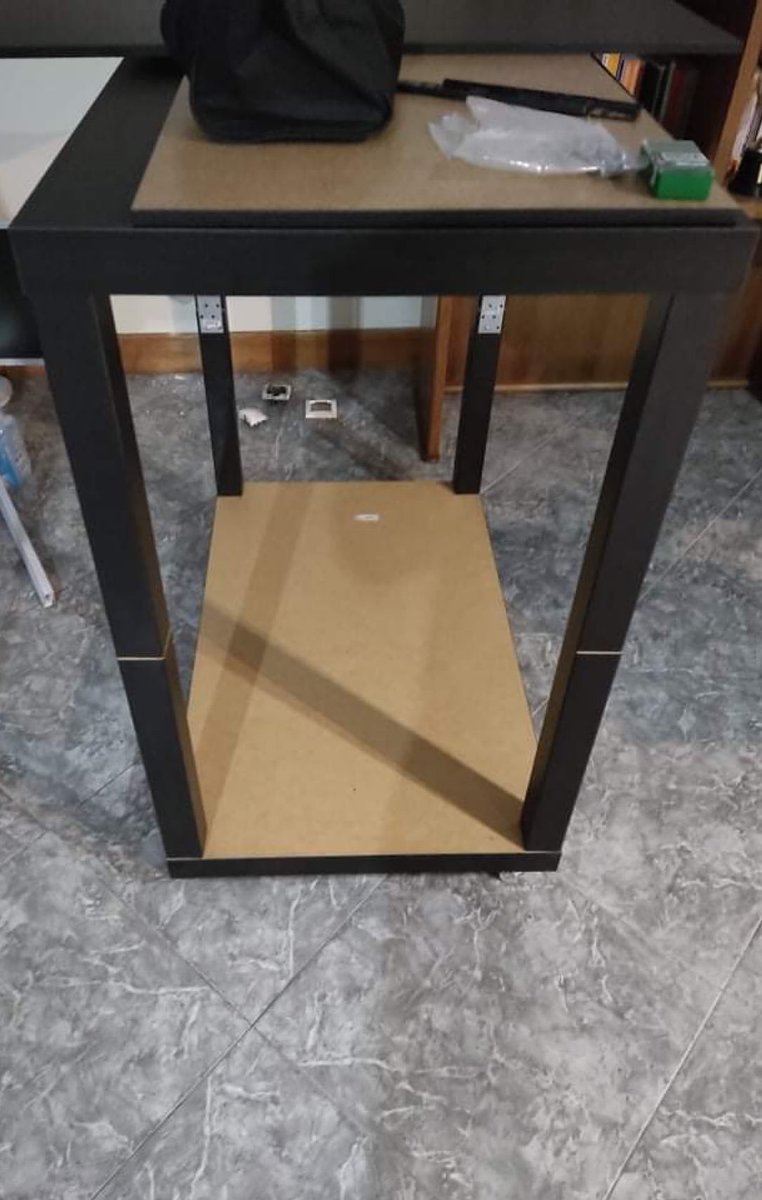
@JusticeRage My rack on very early stages (photo from 3 years ago), based on lackrack but using longer tables.
I put a sps DPU on top to connect the servers and switch, also cable management was improved 😅
@bjohnso5y Thanks for sharing, I have been battle with it doing log centralization
the old fashion way with SourceAccount conditions is not very scalable for aws organizations with a lot of accounts
Just finished the #EKSClusterGames by @Wiz_io! 🚀 An amazing journey through Amazon EKS configurations! Ready to test your skills? Join the challenge here: https://t.co/hXFkCanv8D
https://t.co/V5coZPoXnf
@ranman We use cloudcustodian to many things related with security, finops, ops,… and we have one custodian rule that does that.
The example is for ec2 but it also work in other resources
https://t.co/rLB2oiIErp
@boingCntributor@plantpowerjames I have a dynamodb with dynamo streams, and when someone inserts or deletes items from the dynamodb. By having a event bridge pipe where the source is the stream (1 pipe for the inserts and 1 for the deletes - leveraging the filtering) and then invokes the respective step function
Just finished the #BigIAMChallenge by @wiz_io! 🚀 An amazing journey through AWS IAM configurations! Ready to test your skills? Join the challenge here: https://t.co/xV1T9hve0J
https://t.co/jkl29fPCd7
@ksshams With that amount of accounts, I would go to a solution like tgw. A shared account is the hub and the other accounts are the spokes (with twga). In terms of routing, the 0.0.0.0/0 in spoke account would go to the tgw, and in shared account the 0.0.0.0/0 would go to the nat(s)