I’ve been relearning a lot about writing while preparing for my IELTS, and in the process I’ve started to notice how much of what we call “authentic” or “human-like” writing today is really just performance shaped by trends and collective approval
This post is actually my practice to be an eloquent writer, but I’ve found that while it’s easy to construct sentences like these, it requires immense cognitive training to be an articulate speaker.
Somehow and somewhere along the way, clarity and structure began to feel suspicious, as though writing well must mean that a machine helped you, while writing in fragments, pauses, and ellipses became shorthand for being human.
What’s interesting is how easily we accepted this shift. A few loud opinions defined what “real” expression looks like, and instead of questioning it, many of us adjusted our voices to fit that expectation.
Now, if something reads smoothly and deliberately, it’s dismissed as artificial, yet if it feels rough or loosely constructed, it’s praised as honest. The irony is that this doesn’t make writing more human; it simply replaces one kind of conformity with another.
Preparing for an exam like IELTS forces you to confront this directly, because it rewards coherence, precision, and the ability to connect ideas logically. It reminds you that just because a style feels easy or familiar doesn’t mean it should become the standard for good communication.
Language isn’t meant to mirror every thought exactly as it appears in the mind; it’s meant to shape those thoughts so they can be understood by someone else.
In that sense, we are all performers, whether we admit it or not. The real question is not whether we perform, but what we are performing for.
Writing with intention and structure isn’t a loss of humanity; it’s a choice to value meaning over approval, and clarity over trends.
I just want to be a writer and a speaker that chooses eloquence over other people’s version of standards and so I hope that the people that read my posts also rise to that standard.
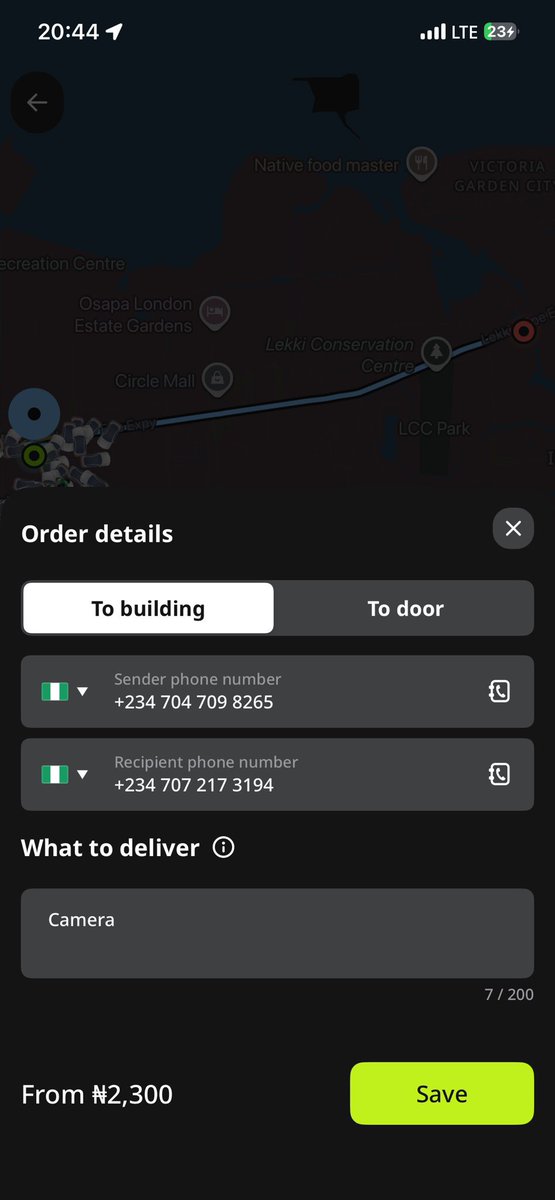
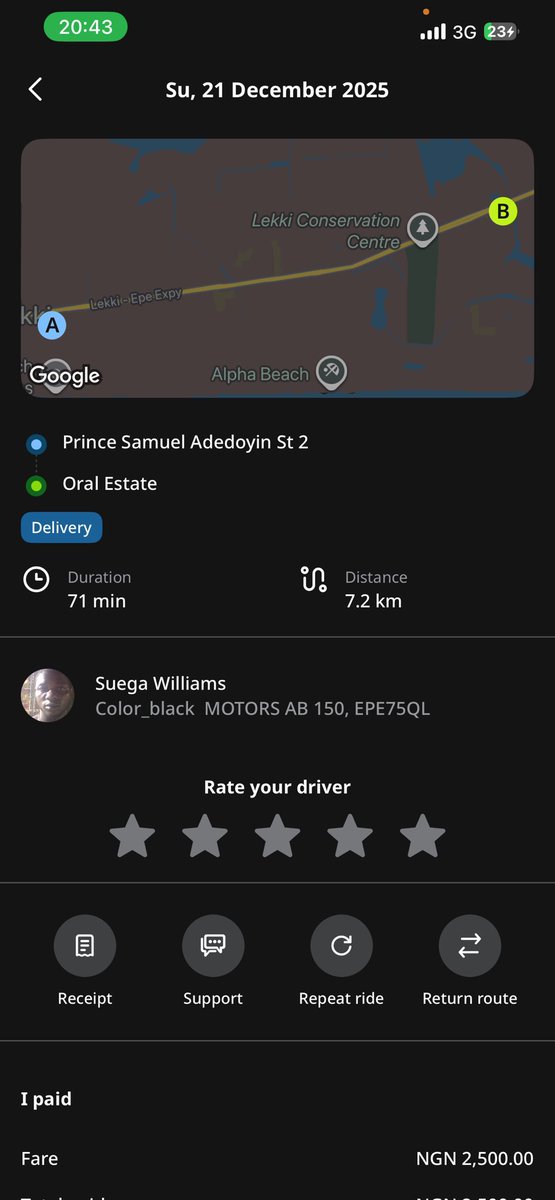
A female photographer does not own her own camera. Whenever she gets a job, she borrows one from someone (Seun) and returns it afterward. Unfortunately, last week after a job, she was supposed to return the camera and used the InDrive app. The driver did not deliver the camera, his number is unreachable, and customer support is not responding. She has tried tracking him, but nothing has come up.
The owner of the camera is currently on her neck and wants their camera back, please help us 🙏🙏
I own a small bakery. We aren’t famous, but we pay the bills. Last Tuesday, a woman came in. She was gripping her purse so tight her knuckles were white. She looked at the display case for a long time—too long. She pointed to the smallest plain vanilla cupcake we had. 'Just that one, please,' she whispered. 'Could you… could you put a tiny candle on it? It’s my daughter’s 6th birthday.' I looked at her shoes. They were wet. It was raining outside, and she had walked here. I looked at her eyes. Red-rimmed. I knew that look. It’s the look of a parent who has to choose between rent and a party. 'I’m sorry,' I said, putting on my best acting face. 'I actually have a huge problem. See this 8-inch chocolate cake with the unicorn frosting?' She looked at the expensive cake on the counter. 'My new decorator messed it up,' I lied. 'The icing is… uh… uneven. I can’t sell it. I was about to throw it in the trash. Would you do me a favor and take it off my hands? No charge. It saves me the guilt of wasting food.' She stared at me. She knew. The icing was perfect. She started to cry, right there in front of the croissant tray. 'Are you sure?' she asked. 'Please,' I insisted. 'You’re doing me a favor.' She walked out with a cake that would have cost $65, holding it like it was gold. Yesterday, I found a card slid under my door. It was a drawing from a 6-year-old girl. A unicorn with a big smile. And in wobbly crayon letters: 'Thank you for making my mommy happy.' Best profit I’ve made all year.
I’m sorry about your discomfort. Waist pain on a bad bus is real.
But blaming fat people is misdiagnosing the problem — and misdirecting your anger.
The issue isn’t that some bodies are larger. The issue is that we’ve built a transport system that assumes a single, narrow version of the human body and then packs everyone into it because there is no alternative.
In societies with functional rail systems, wider seats, standing space, predictable schedules, and multiple carriages, people of different sizes coexist without this kind of daily humiliation and resentment. You’re not squeezed because someone is fat; you’re squeezed because the system is broken.
Unless the proposed solution is to remove fat people from public life, line them up and shoot into their fat bellies, (or force them to walk everywhere) I don’t see what targeting them achieves. That fat person beside you is also uncomfortable. Many of our parents and grandparents are fat. Many people gain weight with age, pregnancy, illness, or medication. Are they to be banned from public transport?
Also, let’s be honest: Nigerians are not built the same way. On average, Nigerians are bigger than many Europeans. Even within Nigeria, southern Nigerians tend to be heavier than Hausa or Fulani populations. Are we going to start designing public life around one body type and treating the rest as a nuisance?
What’s troubling is how quickly discomfort turns into cruelty. When we suffer, instead of asking why those in power have failed to provide humane public transport, we turn on the person closest to us, someone with no power to fix the situation.
The humane question isn’t “what do we do about fat people?”
It’s “why do we keep accepting systems that strip everyone of dignity and then encourage us to fight each other over scraps of space?”
If we care about fairness, the target should be poor infrastructure, bad planning, and lack of investment, not other human beings just trying to get to work like you are.
We can demand better transport without dehumanising people who are already sharing the same discomfort. And especially if you really are a lawyer, this is something you should think more deeply about.
My mom moved in with me four months ago.
Not because something dramatic happened.
Not because she couldn’t manage on her own.
She just called one morning and said, “Honey… the house feels too big lately. Can I stay a while?”
She’s 82.
Still independent, still opinionated, still convinced she can climb on chairs to reach high shelves (she cannot).
At first, I thought it would feel like a role reversal — me taking care of her.
But that isn’t what happened.
She slipped into my home the same way she slips into a conversation: softly, quietly, like she’s always belonged here.
And she brought her routines with her.
Every evening at 7:10 p.m., right when the sky starts turning that watercolor purple, she stands by the front door with her sweater draped over one arm and says:
“Let���s go stretch our legs before the night closes in.”
So we walk.
Not far, not fast — just enough to feel the world settling around us.
She points out houses I’ve passed a thousand times:
“Oh, that one planted new hydrangeas.”
“Look, someone painted their porch swing.”
“Listen… the cicadas are louder today.”
She notices everything.
One night, halfway down the block, she stopped and placed her hand on my arm.
The moon had just risen — a thin silver curve.
She whispered, “Your father used to say the moon is proof the world still turns, even when we feel stuck.”
She smiled at it like it was an old friend.
I stood there realizing something:
These walks weren’t about exercise.
They were about teaching me to see what I’ve been rushing past for years.
Now it’s become our ritual.
We walk the same loop around the neighborhood.
We pass the same mailbox, the same creaky gate, the same patch of wildflowers.
Nothing changes — yet everything feels different with her beside me.
Last night, she slipped her hand into mine — something she hasn’t done since I was a child — and said:
“It’s nice not doing life alone.”
I didn’t answer right away because my throat tightened with that sudden, quiet kind of love that sneaks up on you.
I squeezed her hand instead.
Because I know, one day, I’ll make this same walk alone.
And I’ll look at the sky at 7:10 p.m. and hear her voice:
“Don’t forget to notice the world, sweetheart. It’s still trying to show you beautiful things.”
⸻
💛 The Lesson:
You don’t need an occasion to make a memory.
You don’t need a holiday to show love.
Sometimes the most meaningful moments are tucked inside the routines we hardly think about:
A shared walk.
A quiet conversation.
A hand slipping into yours at dusk.
Love doesn’t always shout.
Sometimes it just walks beside you — slowly, gently — teaching you how to see the world again.
For how long would we continue to tolerate rapists and abusers?
Children are the bedrock of the society fgs and we can’t even guarantee their safety????
Can we then atleast demand for justice?
#justiceforochanya
A CHILD HAS NO BUSINESS WITH MARRIAGE!!!!!!!!
A CHILD HAS NO BUSINESS WITH MARRIAGE!!!!!!!!
A CHILD HAS NO BUSINESS WITH MARRIAGE!!!!!!!!
A CHILD HAS NO BUSINESS WITH MARRIAGE!!!!!!!!
A CHILD HAS NO BUSINESS WITH MARRIAGE!!!!!!!!
A CHILD HAS NO BUSINESS WITH MARRIAGE!!!!!!!!
As an autistic person, something that can be so stressful for me is when additional people are added to existing plans with little to no prior notice.
How many people and which people will be present can have a huge impact on the energy of a social situation, the conversation dynamics, my planned conversation topics and scripts, and more.
Not having much/any time to prepare for how the social situation will now differ from what I had anticipated can feel quite overwhelming.
Plans do change sometimes, I accept that, I navigate the changes, and I want everyone who attends the social situation to feel welcome, but it is so helpful when, where possible, I can have sufficient time to process and prepare for any changes (and the more time the better!).