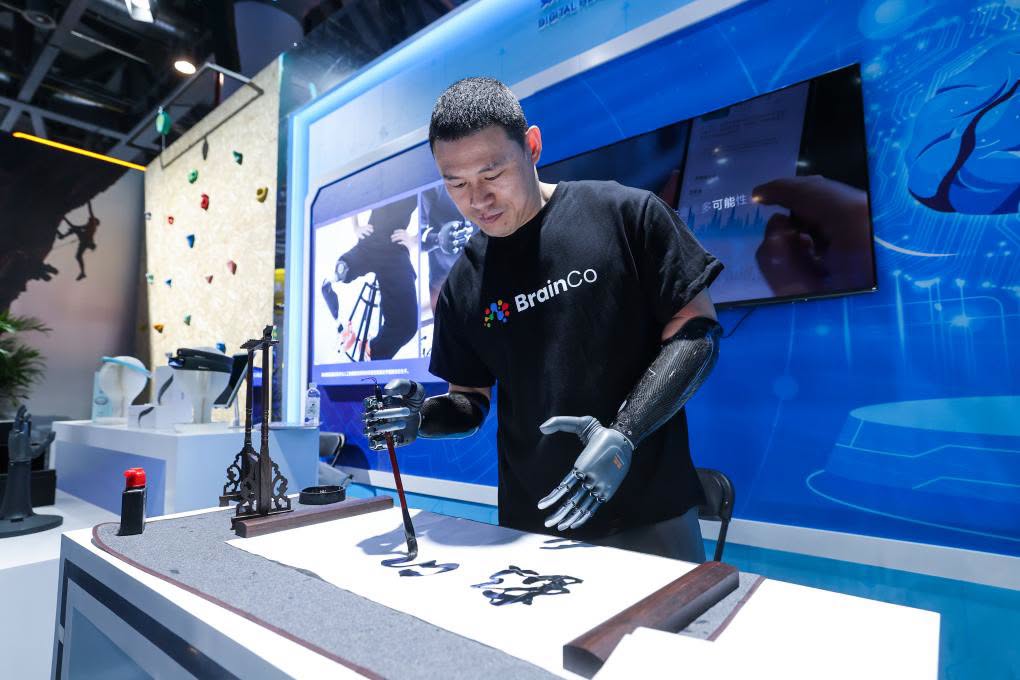
China on Monday released the world's first product standard for brain-computer interface (BCI) medical devices that use artificial intelligence (AI) technology to process electroencephalogram (EEG) data. It will officially take effect on September 1, 2027, according to China's National Medical Products Administration.
The standard systematically defines technical requirements and testing methods for the full lifecycle of BCI medical device data, including data acquisition, processing, annotation, storage and access, which helps companies address common challenges in the sector, such as inconsistent dataset quality control criteria and non-standardized dataset construction processes.
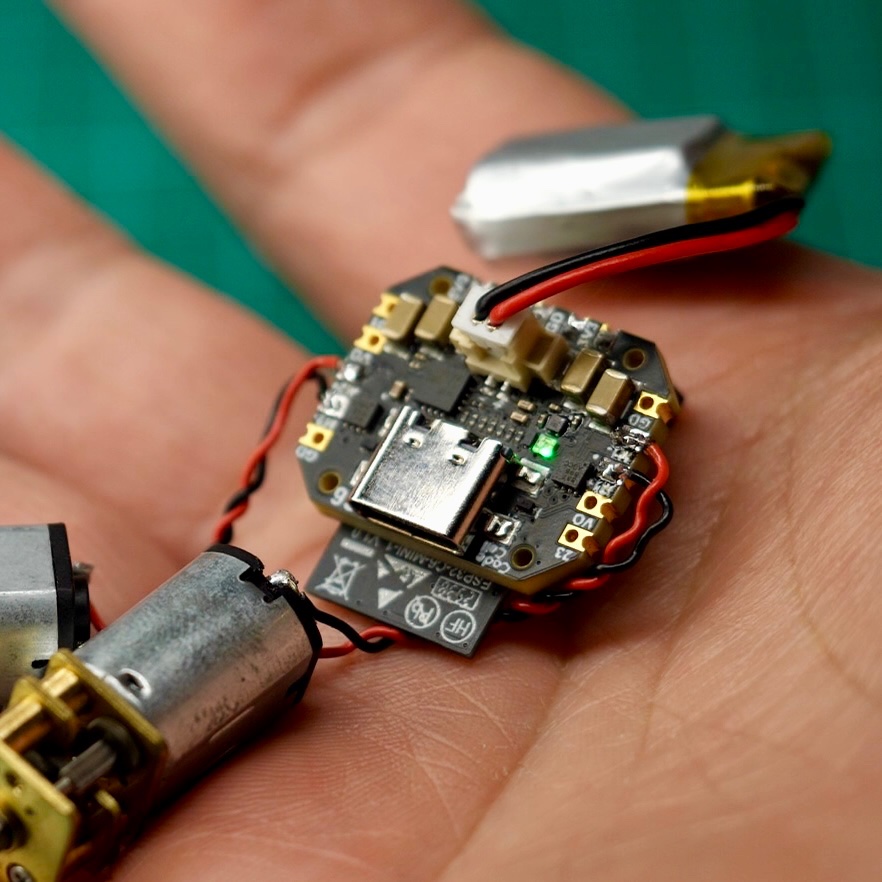
My next step in miniaturizing robots: designing the C6 Drive⚡ https://t.co/pH6DqIHp4X
While iterating on multiple bot designs, external drivers felt as an extra step, eating space
So I built a CodeCell that drives motors directly while keeping all C6 sensors/wireless features
I've taken a jab at this but running AI agents like OpenClaw on a Raspberry Pi isn’t “slow.”
It’s architecturally unstable.
When memory pressure hits:
→ swap thrashes on microSD
→ Node GC spikes
→ event loop starves
→ WebSockets freeze
→ OOM killer steps in
Full-circle Test-driven Firmware Development with OpenClaw
Ladyada: "I've only had OpenClaw installed on this Raspberry Pi 5 for a couple of days, but boy, have we burned through a lot of tokens and learned a lot. Including what I think is a really fun improvement in my development process: “Agentic test-driven firmware development.”
I've used LLMs for writing code as a sort of pair-programming setup, where I dictate exactly what I want done. But this is the first time that I'm giving full access to the hardware to the LLMs and letting Claude Opus 4.5 as a manager to control Codex subagents. Not only does it parse the datasheet for the register map and functionality, Claude also comes up with a full development and test plan, writes the library, tests it on existing hardware, and then also works up a test suite that covers all of the hardware registers to make sure that the library is exercising the entire chip capability.
For example, here I give it an APDS-9999 color sensor and a Neopixel ring and tell it, “hey use the Neopixel ring to verify that we're really reading red, green, and blue data properly from the sensor,” and it will do the whole thing completely autonomously… no humans involved!
I still review the final code and ensure the tests genuinely validate the functionality, not just take shortcuts. There is a phenomenon known as "reward hacking" (also called "specification gaming"). The model may optimize for passing tests as a metric, rather than ensuring the code truly works as intended.
So far, the results have been excellent... no surprise, since these LLMs are trained on Adafruit open-source GitHub repositories!"
If a webhook duplicates, you get two messages.
If a motor command duplicates, you get mechanical overshoot.
That’s not a bug. That’s physics. Get that in your head please!
An S4 severe solar radiation storm is now in progress - this is the largest solar radiation storm in over 20 years. The last time S4 levels were observed was in October, 2003. Potential effects are mainly limited to space launch, aviation, and satellite operations.