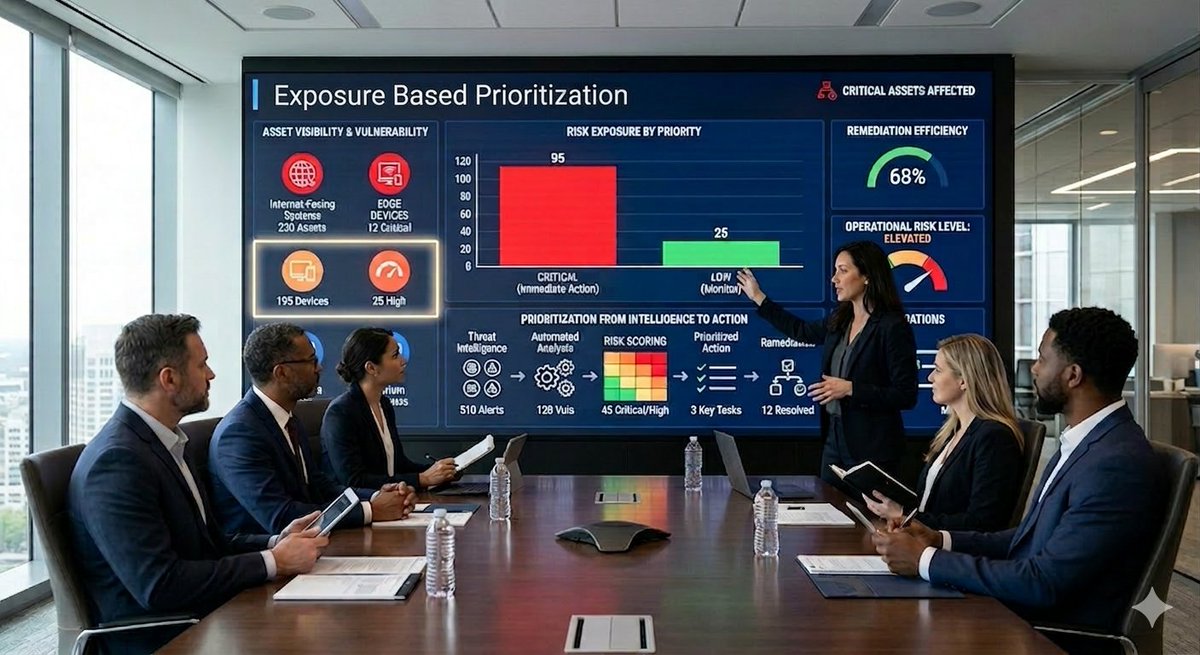
CVSS-based prioritisation isn’t a flawed tool.
It is a broken decision model.
And the NVD April 2026 triage announcement made that official.
Security teams are still using a static scoring system to fight a dynamic threat landscape.
It doesn’t work.
It never really did.
The model has changed:
CVSS → static severity at disclosure (old world)
EPSS + KEV + asset reachability → continuous exploitation intelligence (new world)
This is the operating reality now:
EPSS + KEV + Reachability
= what gets exploited
= what gets patched first
= what actually reduces risk
Everything else is backlog noise.
New analysis:
https://t.co/pt79uOcRBV
#CyberSecurity #VulnerabilityManagement #EPSS #CVSS #CISA #ThreatIntelligence
Identity is now one of the primary enterprise attack surfaces.
Modern ransomware and cloud intrusion operations increasingly rely on:
→ Helpdesk social engineering
→ Session token theft
→ OAuth abuse
→ SaaS admin compromise
→ MFA fatigue attacks
→ Infostealer-derived credentials
The MGM Resorts breach started with a phone call to the help desk.
The Snowflake campaign relied on years-old stolen credentials.
Many attacks now bypass traditional exploit chains entirely.
Security teams still heavily optimise around CVEs and patching while attackers increasingly authenticate using legitimate identities and sessions.
New article:
Identity as Initial Access: Detection, Prevention & Enterprise Defense https://t.co/IadwM3WPW3
#CyberSecurity #IdentitySecurity #SOC #DetectionEngineering #ThreatDetection #CloudSecurity #IAM #MFA #Ransomware #ThreatIntel #BlueTeam #SecurityOperations #ZeroTrust
AI voice cloning is exposing a major authentication trust failure.
Banks and enterprises built workflows on the assumption that:
“a familiar voice = verified identity.”
That assumption is collapsing.
EDR won’t see it.
SIEM logs look legitimate.
IAM inherits false trust.
The issue isn’t just fraud. It’s broken authentication architecture.
New analysis:
https://t.co/FqzW9RR38a
#CyberSecurity #AI #VoiceCloning #ThreatIntelligence
We analyzed why this KEV exposure persists and outlined the operational shifts teams must make to close the detection-remediation gap.
Read the deep dive on the Hackerstorm blog: https://t.co/1LmiY6BjG7
#CyberSecurity#Infosec
Most enterprises don’t have a vulnerability intelligence problem. They have a remediation velocity problem.
Attackers operationalize KEVs in days—sometimes hours. Meanwhile, enterprise patch cycles lag at 30–60 days.
Here is why CVSS is breaking your prioritization (and how to fix it): 🧵
2/ The Visibility Gap You can't patch what you don't see. Legacy scanning schedules create blind spots. If you're scanning weekly but attackers move hourly, you're already too late.
Patching Identity Systems - most teams don’t get breached because they miss a patch - they got breached because they didn’t revoke trust after the patch.
CitrixBleed showed it in 2023. BlueHammer and the 2026 KEV wave are repeating it in real time: identity sessions outlive your security fixes.
If your remediation process stops at “patched = safe”, you’re missing the control that attackers actually use.
Read the full Operational Failure Analysis and see where identity governance breaks down and what to fix in your environment today.
👉https://t.co/7HkBBDjIDF
#CyberSecurity #Citrixbleed #Bluehammer #InfoSec #news #hacking #alert #microsoft #KEV #CISA
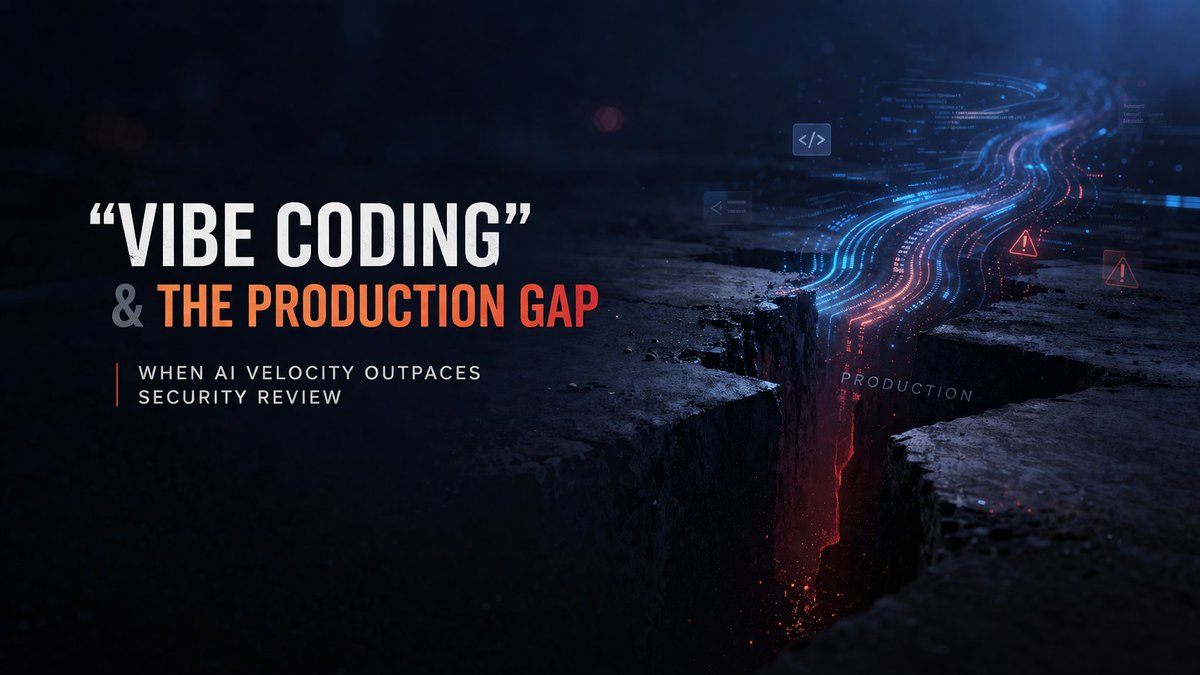
Mythos is finding poor quality, insecure code at scale. So why are we making it worse with AI driven vibe-coding? 🚩
Recent work with Claude Mythos highlights what many engineers already know: modern codebases contain widespread insecure patterns, hidden dependencies, and subtle vulnerabilities that can be surfaced at scale.
If a frontier LLM can already expose this level of fragility in existing systems, why are we accelerating the flow of new, unverified code into production?
We’re calling it “vibe-coding,” but in practice it often means trading correctness and review discipline for raw generation speed.
The result is a widening production gap: code is being produced faster than it can be meaningfully validated.
The harsh reality:
- The secure-by-default myth: Even AI-generated code requires explicit review for authentication, APIs, and data handling logic
- The validation bottleneck: In many teams, generated changes now outpace meaningful security review cycles
- The adversarial asymmetry: Attackers are increasingly using automation to chain vulnerabilities faster than they can be patched
The issue isn’t Mythos or vibe-coding in isolation—it’s the mismatch between generation velocity and verification capacity.
Without addressing that gap, we’re not improving engineering productivity—we’re scaling insecure systems faster.
🔗 Full breakdown: https://t.co/tJk92FWm0S
#VibeCoding #Mythos #AI #CyberSecurity #AppSec #SoftwareEngineering #DevSecOps
Only a small percentage of vulnerabilities are ever exploited.
Yet most teams still prioritise patching based on CVSS severity alone.
That’s the gap attackers rely on.
Here’s how EPSS changes vulnerability prioritisation in real environments 👇
https://t.co/au5qRekEZV
#CyberSecurity #VulnerabilityManagement #EPSS #CVSS #InfoSec #ThreatIntelligence
New analysis out now! 🚨
The MOVEit mass exploitation wasn’t just a detection gap, it was a failure in vulnerability prioritization and internet-facing asset visibility. Signals existed, but action lagged. Learn more and get the operator checklist, FREE!
🔗https://t.co/JG6uGf7p16
#CyberSecurity #MOVEit #ThreatIntel #VulnerabilityMgmt #KEV #AssetVisibility #EPSS #Infosec #CyberRisk
Most patch programs don’t fail due to lack of effort, they fail due to bad prioritization models.
• CVSS overload = too many “critical” vulns
• KEV = too late
• Exposure = ignored
Attackers exploit a small, predictable subset. Defenders patch everything.
That gap is the problem. Learn about the latest advice and guidance here;
👉 https://t.co/2DMG7I0uEA
#CyberSecurity #ThreatIntelligence #VulnerabilityManagement #SecOps #CISO #RiskManagement
New Analysis: The McKinsey/Lilli AI breach highlights a shift in the threat landscape. 🛡️
Our OFA-2026-03-MKC report analyzes how SQL injection in exposed APIs allowed backend access—and why "System Prompts" must be treated as immutable code.
Key insights:
• AI-vs-AI: The role of autonomous discovery agents.
• The risk of "Action Hijacking" in agentic AI.
• Strategic remediation: Moving to Prompt-as-Code (PaC).
Full report & checklist: https://t.co/T4XAKgslI4
#AI #CyberSecurity #ThreatIntel #Infosec
Why Vulnerability Management Needs to Change in 2026
Patching everything is no longer viable. Exposure-based prioritization is the new standard. Learn why exposure-based prioritization is replacing CVSS-driven patching here; https://t.co/F3lS9SdFtC
#vulnerabilitymanagement #CVSS #CISA #KEV #EPSS #PatchManagement #Cybersecurity #InfoSec #Hackerstorm
AI Impersonation & Synthetic Identity Threats: Enterprise Detection & Risk Guide (2026)
AI-driven impersonation attacks including deepfake video fraud, voice cloning scams, and synthetic job applicants are redefining enterprise cyber risk. This guide explains the threat landscape and how SOC teams can detect and mitigate AI-enabled identity attacks.
Read the full article here: https://t.co/9RGpHKhEkt
hashtag#AI hashtag#SyntheticIdentity hashtag#Threats hashtag#Risk hashtag#SOC
🚨 Six Microsoft zero-days are actively being exploited and just added to CISA’s KEV catalog. Patch your systems before March 3, 2026.
Check each CVE for contextual risk & EPSS guidance → https://t.co/OMcF9A93Xw
#CyberSecurity#Microsoft#ZeroDay#CISA
🚨 In 2026, organizations face 50,000+ new vulnerabilities. 130+ CVEs per day, many exploited within hours. Experts at FIRST, MITRE & CISA say security teams must change their vulnerability management approach to cope.
Learn how: https://t.co/1n4JmPS3Yc
#Cybersecurity #CVE #VulnerabilityManagement #vulnerable #infosec