Quantum systems only become useful when integrated with AI supercomputing, and we're building the platform to make that happen.
Across the world, supercomputing centers are connecting quantum processors with NVIDIA GPUs.
✔️ NVIDIA CUDA-Q lets developers write once and deploy across all major physical quantum processors.
✔️ NVIDIA Ising, our open-source model family, brings AI to quantum by cutting logical error rates by over 300x and compressing qubit calibration timelines from days to hours.
✔️ NVIDIA NVQLink connects quantum processors to GPUs for real-time error correction with microsecond QPU-GPU latency.
Learn more about how we're advancing quantum computing ➡️ https://t.co/UDa7mdlEgC
The U.S. Department of the Treasury has announced the launch of the Quantum-Readiness Task Force in accordance with President Donald J. Trump's Executive Order 14412.
The Task Force will bring together the public and the private sector to prepare for quantum-related cyber risks.
“Quantum computing holds significant promise, but it also presents a serious long-term challenge to the cryptographic tools that underpin the U.S. financial system,” said Treasury Assistant Secretary for Financial Institutions Luke Pettit.
@brian_armstrong I think we know what you mean by the cost of inaction.
@QANplatform will play an important role for those taking action to address catastrophic risks
https://t.co/1HuITzsmHU
Probably? 😱
Hope he's right. But it doesn't matter for $QANX
Regardless of what, when and how people think quantum threat will play out, the general consensus is the risk must be removed no matter how unlikely some believe it may be. And a wait and see approach is unacceptable.
So now we have systems worldwide looking at how to migrate.
Solutions that play in that space have guaranteed demand.
Qanplatform is the only blockchain based tech I'm aware of offering innovation for this new market - enabling quantum-safe "designated survivor" keys to be used once Elliptic Curve Cryptography becomes obsolete in practice.
Unlike other holders of quantum coins, I don't think we need Qday panic, nor do I think it helps utilty coins if Bitcoin fails to navigate the quantum threat. I think it's best if BTC addresses this in an orderly fashion. Tom Lee maybe doesn't 🤔
$XLM $HYPE $QRL $ABEL $CELL $MCM $XX $NXS $ALGO $HBAR $TRX $USDC $BTC $ETH $ADA $SOL $XRP
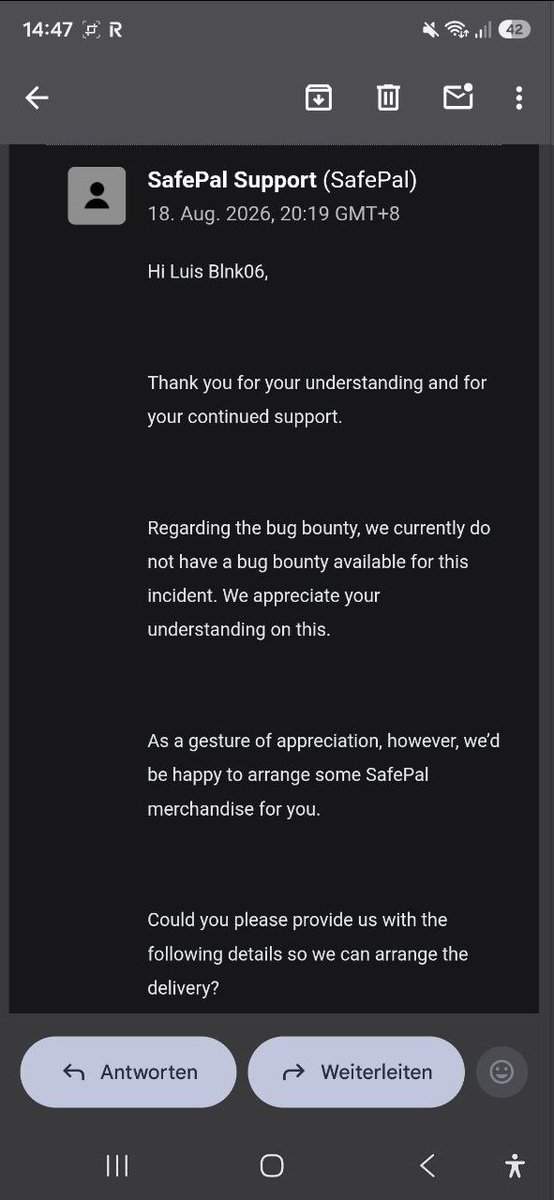
Phishing warnings are important, but so is recognizing the people who help uncover and escalate the underlying security issue.
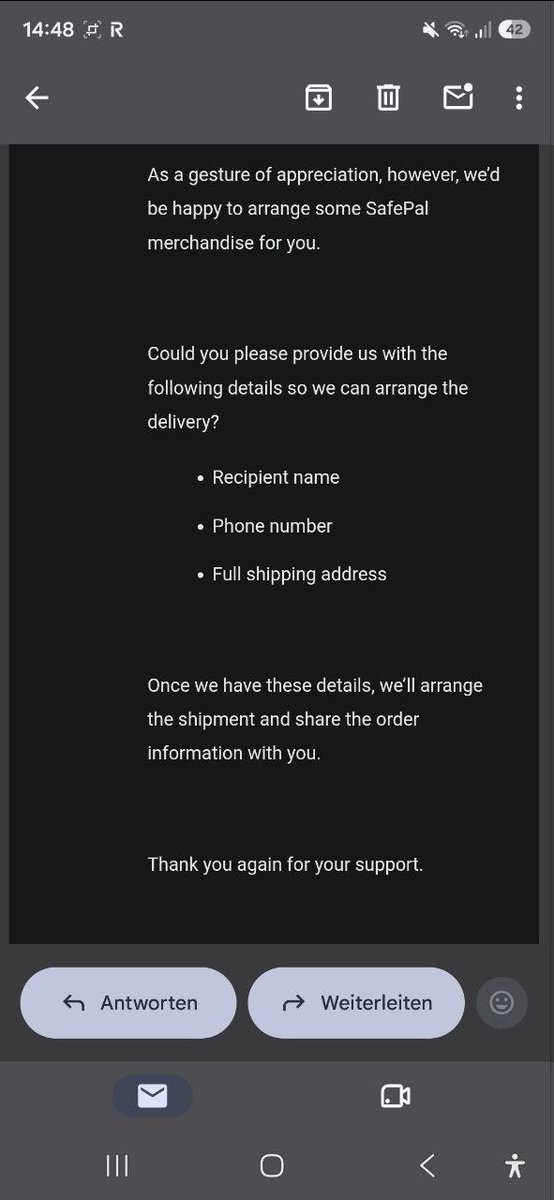
@luis_blnk warned the $QANX community about suspicious SafePal-related phishing activity days before SafePal publicly disclosed the breach.
He contacted SafePal support, followed up repeatedly and appears to have played a significant role in bringing attention to the issue.
Yet @SafePal says there is no bug bounty available and offered merchandise instead.
Responsible security awareness deserves meaningful recognition. Not a merchandise hoodie
Full timeline and screenshots in the thread below 👇
"Blockchain needs to fit into THAT world.
The world isn’t going to reorganize itself around blockchain."
A nice $QANX post from Vestudy. I snipped my favorite part, but here is the whole post:
The most bullish case for QANX has almost nothing to do with simply calling QANplatform a “quantum-resistant blockchain.”
That description massively undersells what QAN is actually building.
The real opportunity is the combination of enterprise infrastructure, private and public blockchain architecture, predictable costs, privacy, developer accessibility, EVM compatibility, and post-quantum security.
Start with the enterprise side.
Corporations have enormous amounts of data and activity that they will NEVER want sitting on a transparent public blockchain.
Internal transactions. Supplier information. Customer data. Proprietary business processes. Inventory. Contract details. Financial information. Trade secrets.
That belongs on private infrastructure.
QANplatform allows enterprises to run private QAN chains and decide what stays private and what gets published or anchored to the public QAN MainNet.
That distinction is incredibly important.
The public blockchain doesn’t need to become the corporation’s database. It can become the external trust and clearing layer when public verification or settlement is actually required.
And the economics matter just as much as the privacy.
An enterprise cannot build a serious operating system around unpredictable blockchain transaction costs. It needs to know what its infrastructure is going to cost next month, next quarter and next year.
QAN’s private-chain model gives enterprises the ability to conduct their internal blockchain activity privately without turning every internal operation into another public-chain transaction fee.
Then, when interaction with the public blockchain is actually required, that activity can move across the private/public boundary.
That is a fundamentally different enterprise proposition from telling a corporation:
“Here’s a public blockchain. Hopefully gas is cheap when you need it.”
And then there’s QVM.
One of the dumbest barriers blockchain has created for enterprise adoption is expecting companies with enormous existing development teams to retrain people around blockchain-specific programming environments.
QANplatform attacks that problem from the opposite direction.
QVM is designed around Linux-compatible binaries, opening smart-contract development to conventional programming languages instead of requiring every enterprise developer to become a Solidity specialist.
That matters because corporations already have developers.
They already have development environments.
They already have DevOps infrastructure.
They already have Docker, Kubernetes, AWS, Azure, Google Cloud and existing deployment pipelines.
Blockchain needs to fit into THAT world.
The world isn’t going to reorganize itself around blockchain.
And this is where quantum resistance becomes so important.
Quantum resistance isn’t the entire QANplatform thesis.
It’s the multiplier.
Imagine QANplatform already has functioning enterprise deployments, private chains, applications, developers and a working public MainNet when the market finally realizes that Q-Day isn’t some science-fiction problem 50 years away.
Suddenly every legacy blockchain secured by vulnerable public-key cryptography has a migration problem.
Not just an algorithm problem.
A migration problem.
Wallets have to change.
Infrastructure has to change.
Custody systems have to change.
Applications have to change.
Users have to migrate.
Dormant addresses become a problem.
Exposed public keys become a problem.
Backward compatibility becomes a problem.
And depending on the post-quantum signature scheme, transaction sizes, bandwidth and storage can become problems too.
Meanwhile QANplatform’s response can essentially be:
We already built for this.
That’s where things could get extremely interesting.
Because QAN wouldn’t be trying to sell enterprises an entire blockchain solely because it’s quantum resistant.
It would already be offering the enterprise features that make the platform useful WITHOUT Q-Day:
Private chains.
Confidential business activity.
[8/18/2026 1:10 AM] (QAN-zone) No FUD Crypto Intel🛡Real Talk: The most bullish case for QANX has almost nothing to do with simply calling QANplatform a “quantum-resistant blockchain.”
That description massively undersells what QAN is actually building.
The real opportunity is the combination of enterprise infrastructure, private and public blockchain architecture, predictable costs, privacy, developer accessibility, EVM compatibility, and post-quantum security.
Start with the enterprise side.
Corporations have enormous amounts of data and activity that they will NEVER want sitting on a transparent public blockchain.
Internal transactions. Supplier information. Customer data. Proprietary business processes. Inventory. Contract details. Financial information. Trade secrets.
That belongs on private infrastructure.
QANplatform allows enterprises to run private QAN chains and decide what stays private and what gets published or anchored to the public QAN MainNet.
That distinction is incredibly important.
The public blockchain doesn’t need to become the corporation’s database. It can become the external trust and clearing layer when public verification or settlement is actually required.
And the economics matter just as much as the privacy.
An enterprise cannot build a serious operating system around unpredictable blockchain transaction costs. It needs to know what its infrastructure is going to cost next month, next quarter and next year.
QAN’s private-chain model gives enterprises the ability to conduct their internal blockchain activity privately without turning every internal operation into another public-chain transaction fee.
Then, when interaction with the public blockchain is actually required, that activity can move across the private/public boundary.
That is a fundamentally different enterprise proposition from telling a corporation:
“Here’s a public blockchain. Hopefully gas is cheap when you need it.”
And then there’s QVM.
One of the dumbest barriers blockchain has created for enterprise adoption is expecting companies with enormous existing development teams to retrain people around blockchain-specific programming environments.
QANplatform attacks that problem from the opposite direction.
QVM is designed around Linux-compatible binaries, opening smart-contract development to conventional programming languages instead of requiring every enterprise developer to become a Solidity specialist.
That matters because corporations already have developers.
They already have development environments.
They already have DevOps infrastructure.
They already have Docker, Kubernetes, AWS, Azure, Google Cloud and existing deployment pipelines.
Blockchain needs to fit into THAT world.
The world isn’t going to reorganize itself around blockchain.
And this is where quantum resistance becomes so important.
Quantum resistance isn’t the entire QANplatform thesis.
It’s the multiplier.
Imagine QANplatform already has functioning enterprise deployments, private chains, applications, developers and a working public MainNet when the market finally realizes that Q-Day isn’t some science-fiction problem 50 years away.
Suddenly every legacy blockchain secured by vulnerable public-key cryptography has a migration problem.
Not just an algorithm problem.
A migration problem.
Wallets have to change.
Infrastructure has to change.
Custody systems have to change.
Applications have to change.
Users have to migrate.
Dormant addresses become a problem.
Exposed public keys become a problem.
Backward compatibility becomes a problem.
And depending on the post-quantum signature scheme, transaction sizes, bandwidth and storage can become problems too.
Meanwhile QANplatform’s response can essentially be:
We already built for this.
That’s where things could get extremely interesting.
Because QAN wouldn’t be trying to sell enterprises an entire blockchain solely because it’s quantum resistant.
It would already be offering the enterprise features that make the platform useful WITHOUT Q-Day:
Private chains.
Selective interaction with a public blockchain.
Predictable enterprise infrastructure.
Existing cloud and DevOps integration.
Multi-language smart contracts through QVM.
EVM compatibility.
And then post-quantum security sits underneath the entire proposition.
So if quantum migration suddenly becomes mandatory, QAN doesn’t have to invent a use case.
Quantum security becomes another reason NOT to choose a competing architecture.
That’s a completely different investment thesis from:
“Quantum computers are coming, therefore QANX goes up.”
Now look at QANX itself.
If enterprises use private QAN infrastructure and increasingly interact with the public QAN MainNet, that public activity creates actual network usage.
QANX isn’t supposed to exist merely as something people trade.
It’s the economic asset of the public network.
Transactions, smart-contract activity, validators, nodes and developer incentives create an economic layer around QANX.
That creates the potential flywheel:
Enterprise adoption → private-chain activity → selective public MainNet activity → QANX utility → more infrastructure and developers → more applications → more enterprise adoption.
And then imagine Q-Day pressure arriving on top of that.
That’s the part I think the market massively underestimates.
QAN doesn’t necessarily need quantum computing to create its market.
Enterprise blockchain adoption can create the market.
Quantum computing could then massively accelerate it.
The ultimate bull case is therefore not that QANplatform becomes “the quantum blockchain.”
It’s that QANplatform becomes an enterprise blockchain infrastructure layer BEFORE post-quantum security becomes mandatory.
Then one day the rest of the industry discovers that a feature QAN spent years building around has suddenly become a requirement.
At that point, QAN isn’t selling insurance against some hypothetical future anymore.
It’s selling infrastructure that enterprises already need, with security architecture that everybody else suddenly needs too.
And THAT is the asymmetric QANX thesis.
If QAN launches MainNet successfully, proves the architecture at production scale, converts enterprise interest into real usage, and captures meaningful public-chain activity through QANX, the addressable opportunity is vastly larger than another Layer 1 fighting over DeFi users.
Q-Day would just pour gasoline on it.
The biggest risk is still execution.
QAN has to ship MainNet.
The technology has to perform under real workloads.
Enterprise deployments have to become meaningful production usage.
And most importantly for QANX holders, that adoption has to translate into economic activity on the public network.
None of that is guaranteed.
But if those pieces actually come together, QANplatform could end up in an extraordinary position:
An enterprise-focused Layer 1 built around private/public blockchain infrastructure, conventional enterprise development, predictable economics and post-quantum security BEFORE the market realizes it needs all of those things together.
That’s the QANX bull case.
Quantum resistance isn’t the whole story.
It’s the part of the story that could eventually make everything else impossible to ignore.
🧵 THREAD: Everyone's Looking at Meme Coins. Smart Money is Looking at This.
While Crypto Twitter goes crazy over the next 1000x dog token, there's a launchpad quietly building REAL infrastructure.
No hype. No promises. Just tools that work.
Here's why it matters 👇
qanplatform:native $BTC $ETH $SOL
#xrpholders
Hard to build the rails if you don't know the quantum security path forward or if you can't leverage today's ecosystem.
$QANX solved for that. Get ready.
Qanforge documentation is live.
A look under the hood at what we're building, how the pieces fit together, and where we're taking it.
Still early. Still building.
📄https://t.co/OkUEEYjPdw
📢 Announcement regarding $QANX on BingX
Trading of QANX on BingX will end this week as QAN realigns focus toward exchanges with broader regional reach & strict regulatory compliance for our upcoming MainNet launch.
Actions for holders on BingX:
❌ Cancel any open orders immediately.
📥 Withdraw your tokens before Nov 13, 2026 at 16:00 UTC.
We have some difficult news to share. Unfortunately, one of our shipping providers has experienced a data breach that exposed sensitive order data. This affects new customers in the US, UK, Sweden, Colombia, Brazil, Italy, and Portugal who received an order within the 90 days prior to August 8th, 2026.
The data exposed:
- Full names
- Shipping addresses
- Phone numbers
- Email addresses
The incident affects 11,742 customers with full exposure (name, email, phone number, shipping address) and 1,947 customers with partial exposure (name, city, email). The breach is limited due to Trezor’s strict 90-day data storage policy (we were also able to negotiate the same terms with fulfillment partners, who follow the same policy).
All affected customers have been contacted separately by email.
Our systems and devices remain secure, but affected customers could experience an increase in phishing attempts.
NEVER enter your wallet backup on a website or share it with anyone, and only check for updates on official Trezor channels.
We are deeply sorry to the community and those affected.
We are investigating this situation and will post updates on our blog:
https://t.co/JGrttMs4Ev
This is a major milestone for qanplatform:native
Migrating the TestNet to the official Ethereum execution client, while maintaining full QVM and XLINK compatibility, is far more than a routine infrastructure update.
It is a strong validation of the architecture
$BTC $ETH
Have to hit "read more" to see this 👀
The engineering team has not only completed the migration to the official Ethereum client but has also proven that QANplatform can operate seamlessly on a standard Ethereum infrastructure while retaining the full power of the QAN Virtual Machine (QVM) and QAN XLINK.
July Milestone: Successful completion of the TestNet migration to the official Ethereum execution client
Our primary objective this month was clear: migrate the QAN TestNet to the official industry-standard Ethereum execution client while remaining compatible with our previous implementation without compromising our unique quantum-secure features.
The engineering team has not only completed the migration to the official Ethereum client but has also proven that QANplatform can operate seamlessly on a standard Ethereum infrastructure while retaining the full power of the QAN Virtual Machine (QVM) and QAN XLINK.
Read the full technical deep dive on our blog (link in comments) 🔗👇
Innovation alert 💥
A post quantum solution running in Metamask
What is QAN XLINK?
QAN XLINK is a protocol that seamlessly integrates with existing Ethereum-compatible wallets like MetaMask and Trust Wallet, enabling quantum-safe "designated survivor" keys to be used once Elliptic Curve Cryptography becomes obsolete in practice.
Utilizing NIST's primary-recommended lattice-based Post-Quantum Cryptography (PQC) algorithm (ML-DSA, FIPS 204), QAN XLINK provides a 100%-guaranteed safe migration path for the post-quantum era ensuring security even after "Q-Day."
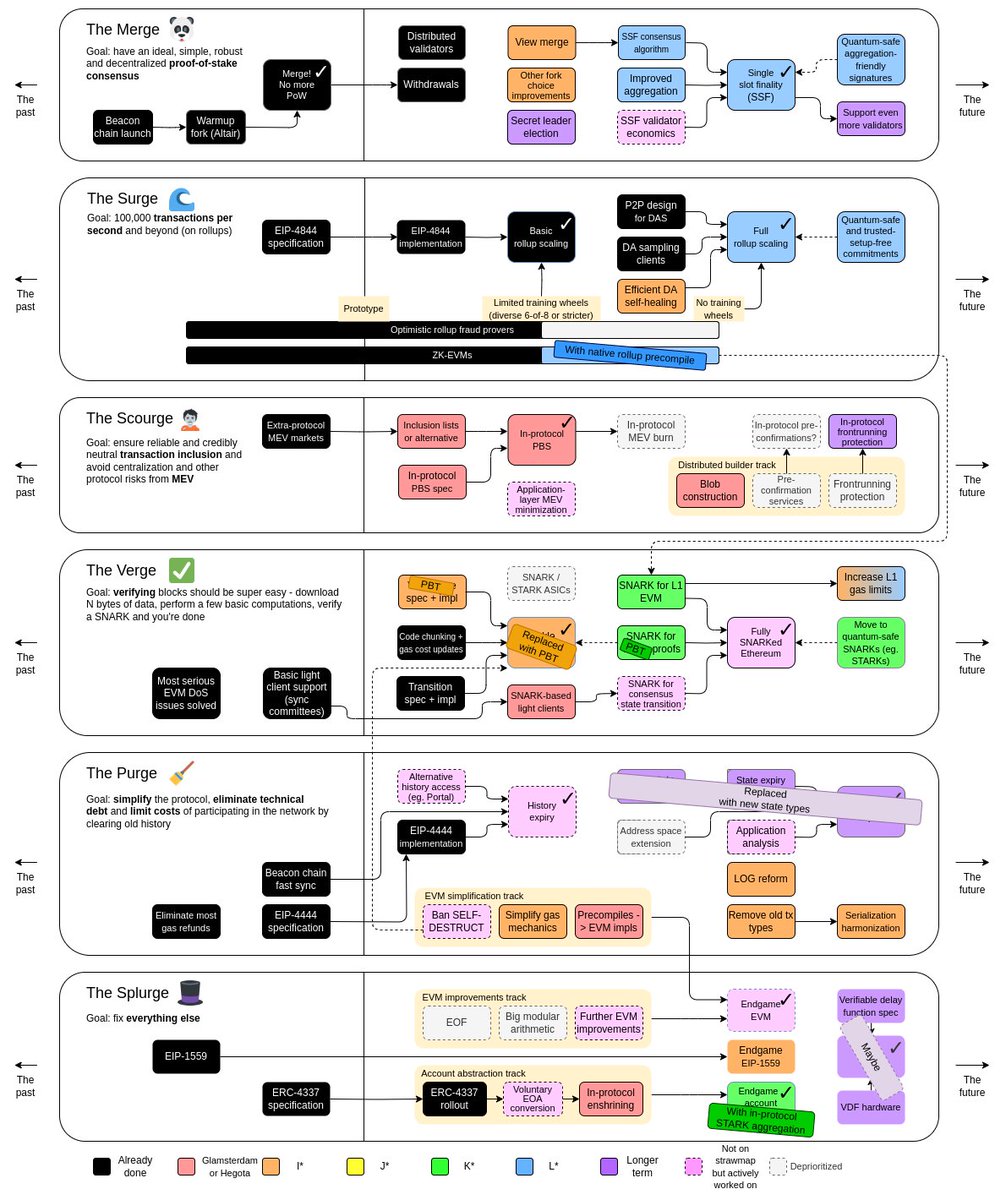
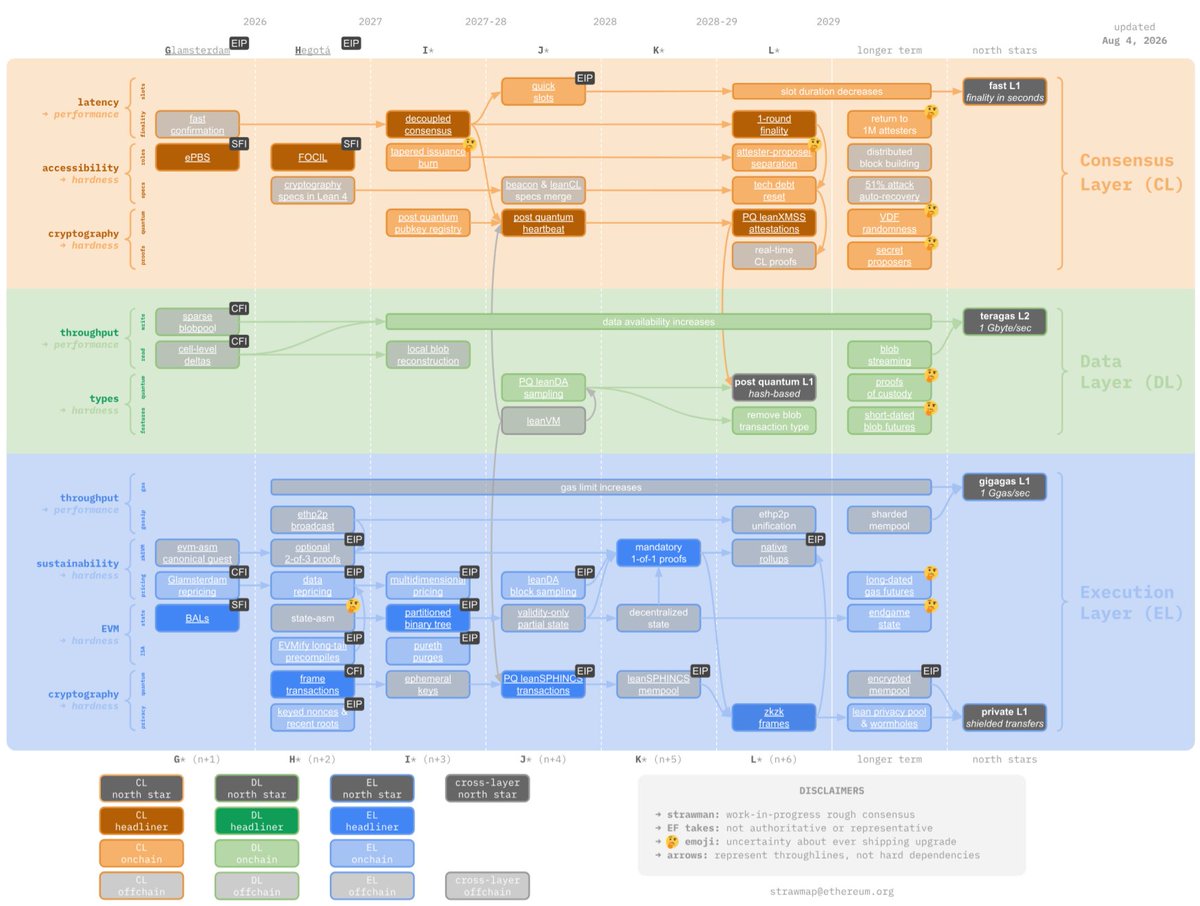
⚡️NEW: Vitalik reveals Ethereum's two core priorities, privacy and quantum safety, didn't exist on its roadmap 3 years ago.
Buterin posted a side-by-side of his 2023 upgrade plan against Ethereum's new Strawmap, which now puts privacy and quantum resistance at the core of its upgrades through 2029.
What's new since 2023:
- First-class privacy: privacy pools and "wormholes"
- Post-quantum scaling: leanSPHINCS signatures
- Native rollups: SNARKs "were nowhere near mature enough" in 2023
- Blob and gas futures: the idea "just didn't exist back in 2023"
"Ethereum will be quantum-safe. Ethereum will put users' privacy first."
@DecryptMedia Quantum security isn't a bet, it's a requirement. All systems will be looking for solutions.
That is a huge market for innovation. @QANplatform has the IP and enterprises have shaped what's required for future of Blockchain utility.
10 reasons @QANplatform is the quantum-resistant L1 worth watching.
1️⃣ Any programming language: QVM opens blockchain development to 20M+ programmers
2️⃣ Quantum-resistant from genesis: CRYSTALS-Dilithium (NIST-approved ML-DSA) built in
3️⃣ QAN XLINK: cross-signer protocol ensures 100% migration path when quantum attacks hit ECDSA
4️⃣ Harvest now, decrypt later: every ECDSA public key exposed onchain today is a future attack vector, QAN eliminates this
5️⃣ Audited core tech: QVM audited by Hacken (2025), XLINK audited, integration audit ongoing
6️⃣ EVM compatible: existing Ethereum DApps, DeFi, NFTs can migrate without rebuilding from scratch
7️⃣ Developer rewards: first L1 that pays developers lifetime royalties when their smart contract code gets reused
8️⃣ 5-minute cloud deployment: deploy QAN blockchain to AWS, Azure, GCP in under 5 minutes
9️⃣ Ethereum rebase: QVM core logic being ported to Ethereum infrastructure (~70% complete)
🔟 $21M mcap, mainnet 2026: audited, testnet live, CTO publicly committed
The title insurance story says it better than any whitepaper. A property signed onchain in 2022 with ECDSA could have two mathematically valid owners by 2030.
QAN signed its first block assuming ECDSA wouldn't hold. Most chains didn't. $QANX








![dsharv719's tweet photo. "Blockchain needs to fit into THAT world.
The world isn’t going to reorganize itself around blockchain."
A nice $QANX post from Vestudy. I snipped my favorite part, but here is the whole post:
The most bullish case for QANX has almost nothing to do with simply calling QANplatform a “quantum-resistant blockchain.”
That description massively undersells what QAN is actually building.
The real opportunity is the combination of enterprise infrastructure, private and public blockchain architecture, predictable costs, privacy, developer accessibility, EVM compatibility, and post-quantum security.
Start with the enterprise side.
Corporations have enormous amounts of data and activity that they will NEVER want sitting on a transparent public blockchain.
Internal transactions. Supplier information. Customer data. Proprietary business processes. Inventory. Contract details. Financial information. Trade secrets.
That belongs on private infrastructure.
QANplatform allows enterprises to run private QAN chains and decide what stays private and what gets published or anchored to the public QAN MainNet.
That distinction is incredibly important.
The public blockchain doesn’t need to become the corporation’s database. It can become the external trust and clearing layer when public verification or settlement is actually required.
And the economics matter just as much as the privacy.
An enterprise cannot build a serious operating system around unpredictable blockchain transaction costs. It needs to know what its infrastructure is going to cost next month, next quarter and next year.
QAN’s private-chain model gives enterprises the ability to conduct their internal blockchain activity privately without turning every internal operation into another public-chain transaction fee.
Then, when interaction with the public blockchain is actually required, that activity can move across the private/public boundary.
That is a fundamentally different enterprise proposition from telling a corporation:
“Here’s a public blockchain. Hopefully gas is cheap when you need it.”
And then there’s QVM.
One of the dumbest barriers blockchain has created for enterprise adoption is expecting companies with enormous existing development teams to retrain people around blockchain-specific programming environments.
QANplatform attacks that problem from the opposite direction.
QVM is designed around Linux-compatible binaries, opening smart-contract development to conventional programming languages instead of requiring every enterprise developer to become a Solidity specialist.
That matters because corporations already have developers.
They already have development environments.
They already have DevOps infrastructure.
They already have Docker, Kubernetes, AWS, Azure, Google Cloud and existing deployment pipelines.
Blockchain needs to fit into THAT world.
The world isn’t going to reorganize itself around blockchain.
And this is where quantum resistance becomes so important.
Quantum resistance isn’t the entire QANplatform thesis.
It’s the multiplier.
Imagine QANplatform already has functioning enterprise deployments, private chains, applications, developers and a working public MainNet when the market finally realizes that Q-Day isn’t some science-fiction problem 50 years away.
Suddenly every legacy blockchain secured by vulnerable public-key cryptography has a migration problem.
Not just an algorithm problem.
A migration problem.
Wallets have to change.
Infrastructure has to change.
Custody systems have to change.
Applications have to change.
Users have to migrate.
Dormant addresses become a problem.
Exposed public keys become a problem.
Backward compatibility becomes a problem.
And depending on the post-quantum signature scheme, transaction sizes, bandwidth and storage can become problems too.
Meanwhile QANplatform’s response can essentially be:
We already built for this.
That’s where things could get extremely interesting.
Because QAN wouldn’t be trying to sell enterprises an entire blockchain solely because it’s quantum resistant.
It would already be offering the enterprise features that make the platform useful WITHOUT Q-Day:
Private chains.
Confidential business activity.
[8/18/2026 1:10 AM] (QAN-zone) No FUD Crypto Intel🛡Real Talk: The most bullish case for QANX has almost nothing to do with simply calling QANplatform a “quantum-resistant blockchain.”
That description massively undersells what QAN is actually building.
The real opportunity is the combination of enterprise infrastructure, private and public blockchain architecture, predictable costs, privacy, developer accessibility, EVM compatibility, and post-quantum security.
Start with the enterprise side.
Corporations have enormous amounts of data and activity that they will NEVER want sitting on a transparent public blockchain.
Internal transactions. Supplier information. Customer data. Proprietary business processes. Inventory. Contract details. Financial information. Trade secrets.
That belongs on private infrastructure.
QANplatform allows enterprises to run private QAN chains and decide what stays private and what gets published or anchored to the public QAN MainNet.
That distinction is incredibly important.
The public blockchain doesn’t need to become the corporation’s database. It can become the external trust and clearing layer when public verification or settlement is actually required.
And the economics matter just as much as the privacy.
An enterprise cannot build a serious operating system around unpredictable blockchain transaction costs. It needs to know what its infrastructure is going to cost next month, next quarter and next year.
QAN’s private-chain model gives enterprises the ability to conduct their internal blockchain activity privately without turning every internal operation into another public-chain transaction fee.
Then, when interaction with the public blockchain is actually required, that activity can move across the private/public boundary.
That is a fundamentally different enterprise proposition from telling a corporation:
“Here’s a public blockchain. Hopefully gas is cheap when you need it.”
And then there’s QVM.
One of the dumbest barriers blockchain has created for enterprise adoption is expecting companies with enormous existing development teams to retrain people around blockchain-specific programming environments.
QANplatform attacks that problem from the opposite direction.
QVM is designed around Linux-compatible binaries, opening smart-contract development to conventional programming languages instead of requiring every enterprise developer to become a Solidity specialist.
That matters because corporations already have developers.
They already have development environments.
They already have DevOps infrastructure.
They already have Docker, Kubernetes, AWS, Azure, Google Cloud and existing deployment pipelines.
Blockchain needs to fit into THAT world.
The world isn’t going to reorganize itself around blockchain.
And this is where quantum resistance becomes so important.
Quantum resistance isn’t the entire QANplatform thesis.
It’s the multiplier.
Imagine QANplatform already has functioning enterprise deployments, private chains, applications, developers and a working public MainNet when the market finally realizes that Q-Day isn’t some science-fiction problem 50 years away.
Suddenly every legacy blockchain secured by vulnerable public-key cryptography has a migration problem.
Not just an algorithm problem.
A migration problem.
Wallets have to change.
Infrastructure has to change.
Custody systems have to change.
Applications have to change.
Users have to migrate.
Dormant addresses become a problem.
Exposed public keys become a problem.
Backward compatibility becomes a problem.
And depending on the post-quantum signature scheme, transaction sizes, bandwidth and storage can become problems too.
Meanwhile QANplatform’s response can essentially be:
We already built for this.
That’s where things could get extremely interesting.
Because QAN wouldn’t be trying to sell enterprises an entire blockchain solely because it’s quantum resistant.
It would already be offering the enterprise features that make the platform useful WITHOUT Q-Day:
Private chains.
Selective interaction with a public blockchain.
Predictable enterprise infrastructure.
Existing cloud and DevOps integration.
Multi-language smart contracts through QVM.
EVM compatibility.
And then post-quantum security sits underneath the entire proposition.
So if quantum migration suddenly becomes mandatory, QAN doesn’t have to invent a use case.
Quantum security becomes another reason NOT to choose a competing architecture.
That’s a completely different investment thesis from:
“Quantum computers are coming, therefore QANX goes up.”
Now look at QANX itself.
If enterprises use private QAN infrastructure and increasingly interact with the public QAN MainNet, that public activity creates actual network usage.
QANX isn’t supposed to exist merely as something people trade.
It’s the economic asset of the public network.
Transactions, smart-contract activity, validators, nodes and developer incentives create an economic layer around QANX.
That creates the potential flywheel:
Enterprise adoption → private-chain activity → selective public MainNet activity → QANX utility → more infrastructure and developers → more applications → more enterprise adoption.
And then imagine Q-Day pressure arriving on top of that.
That’s the part I think the market massively underestimates.
QAN doesn’t necessarily need quantum computing to create its market.
Enterprise blockchain adoption can create the market.
Quantum computing could then massively accelerate it.
The ultimate bull case is therefore not that QANplatform becomes “the quantum blockchain.”
It’s that QANplatform becomes an enterprise blockchain infrastructure layer BEFORE post-quantum security becomes mandatory.
Then one day the rest of the industry discovers that a feature QAN spent years building around has suddenly become a requirement.
At that point, QAN isn’t selling insurance against some hypothetical future anymore.
It’s selling infrastructure that enterprises already need, with security architecture that everybody else suddenly needs too.
And THAT is the asymmetric QANX thesis.
If QAN launches MainNet successfully, proves the architecture at production scale, converts enterprise interest into real usage, and captures meaningful public-chain activity through QANX, the addressable opportunity is vastly larger than another Layer 1 fighting over DeFi users.
Q-Day would just pour gasoline on it.
The biggest risk is still execution.
QAN has to ship MainNet.
The technology has to perform under real workloads.
Enterprise deployments have to become meaningful production usage.
And most importantly for QANX holders, that adoption has to translate into economic activity on the public network.
None of that is guaranteed.
But if those pieces actually come together, QANplatform could end up in an extraordinary position:
An enterprise-focused Layer 1 built around private/public blockchain infrastructure, conventional enterprise development, predictable economics and post-quantum security BEFORE the market realizes it needs all of those things together.
That’s the QANX bull case.
Quantum resistance isn’t the whole story.
It’s the part of the story that could eventually make everything else impossible to ignore.](https://pbs.twimg.com/media/HQBF8OyXAAYNFdi.png)