Is Canada finally waking up?
Canada is finally beginning to confront the reality of its economic position, and it comes with a sense of resignation more than surprise. For decades, the Bank of Canada and the country’s policy elite have promoted a narrative of structural resilience. That narrative is now unraveling.
Governor Macklem needs to acknowledge what is increasingly evident: Canada’s neutral rate of interest is structurally lower—likely by at least 100 basis points—than previously assumed. The implications are significant. Monetary policy has been persistently miscalibrated relative to the underlying weakness of the real economy.
What is striking is not just the deterioration itself, but the delayed recognition. For years, warnings about Canada’s fragility, its overreliance on housing, weak productivity growth, and lack of capital deepening, were dismissed. Now, those vulnerabilities are no longer theoretical; they are manifest.
Yes, the economic elite in Canada gave air cover to Trudeaus flawed polices.
And yet, instead of confronting these structural shortcomings with clarity, there remains a tendency to externalize blame. Pointing to U.S. politics or figures like Donald Trump as causal factors is not just analytically weak, it reflects a broader unwillingness to engage with domestic policy failures.
Canada is not a country lacking in resources or potential. It should rank among the wealthiest and most dynamic economies globally. That it does not is not the result of external shocks alone, but of persistent misjudgments in policy, incentives, and economic strategy.
The awakening is overdue. The frustration is that it did not have to arrive this way.
Major cheat code for life: Anything above zero compounds. Showing up consistently matters more than showing up perfectly. Small things become big things. Never allow optimal to get in the way of beneficial.
Everyone needs to read this...
The Empty Boat Mindset:
A monk goes out on a boat in a small lake to meditate. After a few hours of uninterrupted silence, he suddenly feels the jarring impact of another boat bumping into his.
While he does not open his eyes, he feels the irritation and anger building within him.
“Why would someone do that? Can’t they see me here? How dare they disturb my meditation?”
He opens his eyes, ready to shout at the person in the other boat, only to realize that it is empty. It had come untied from the dock and was floating in the middle of the lake.
In that moment, his anger and frustration disappears. After all, you cannot be angry at an empty boat.
The story offers a powerful lesson, which I call the Empty Boat Mindset:
In life, you’re going to experience countless collisions. With people. With environments. With chance circumstances outside your control. Each of these collisions will threaten to derail you. To stoke the fire of anger, stress, and frustration. To knock you off your path.
The truth is that the negative emotions that grow inside you are rarely from the collision itself, but from your perception of the negative intent behind the collision.
If you convince yourself that every collision is a deliberate action by a bad actor, negative emotions will control your entire life. In others words, your interpretation of the collision creates your own poison.
The Empty Boat Mindset is the reminder that most of these collisions you experience in life are with an empty boat. There is no negative intent. There is no desire to harm. They are simply the random collisions of objects floating along on the lake of life.
Interestingly, when you embrace the Empty Boat Mindset, you reassume control over your own boat. You’re no longer prone to the spiraling emotional effects of chance collisions. You are a seasoned explorer, ready to adapt to whatever the seas throw your way.
So, the next time you feel a collision and find your negative emotions growing, pause and ask yourself a simple question:
Am I just getting angry at an empty boat?
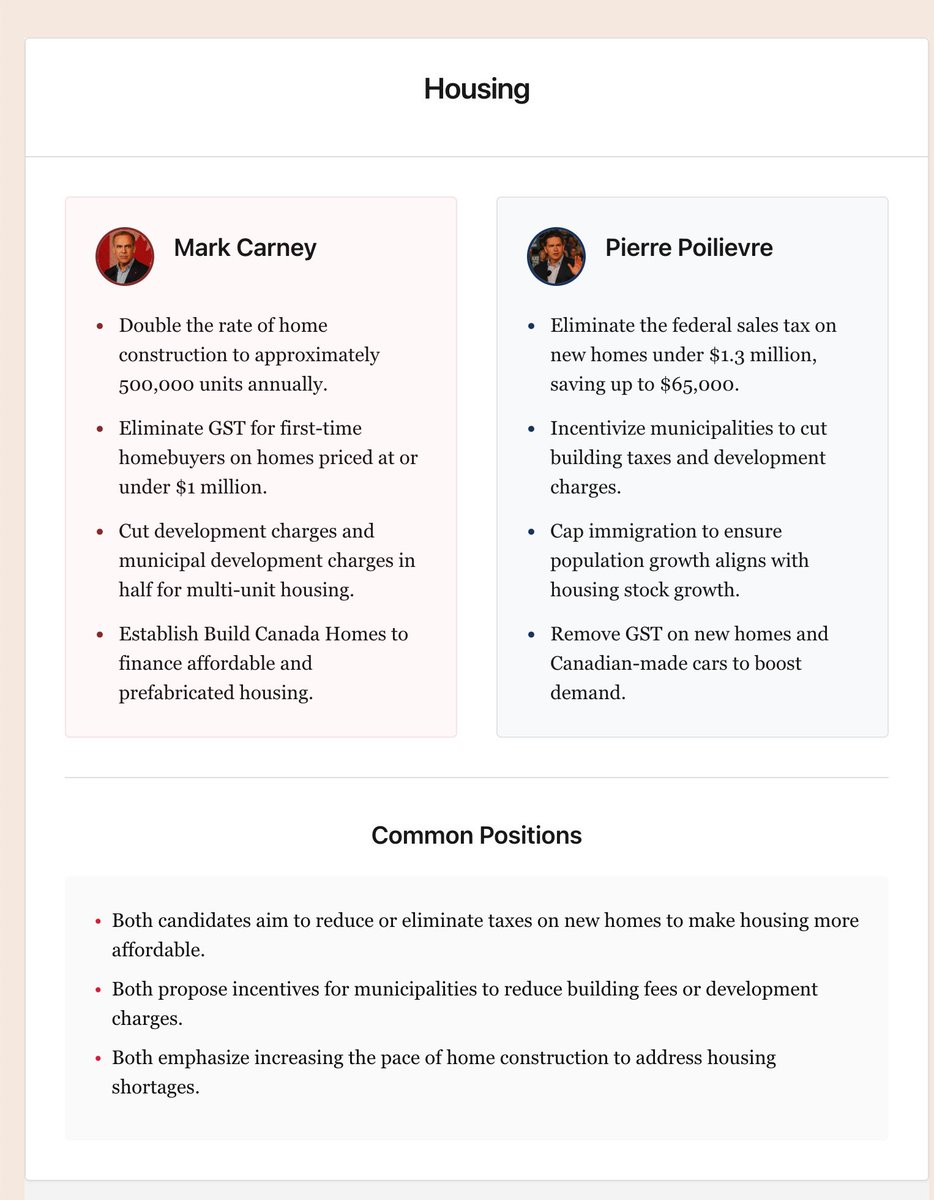
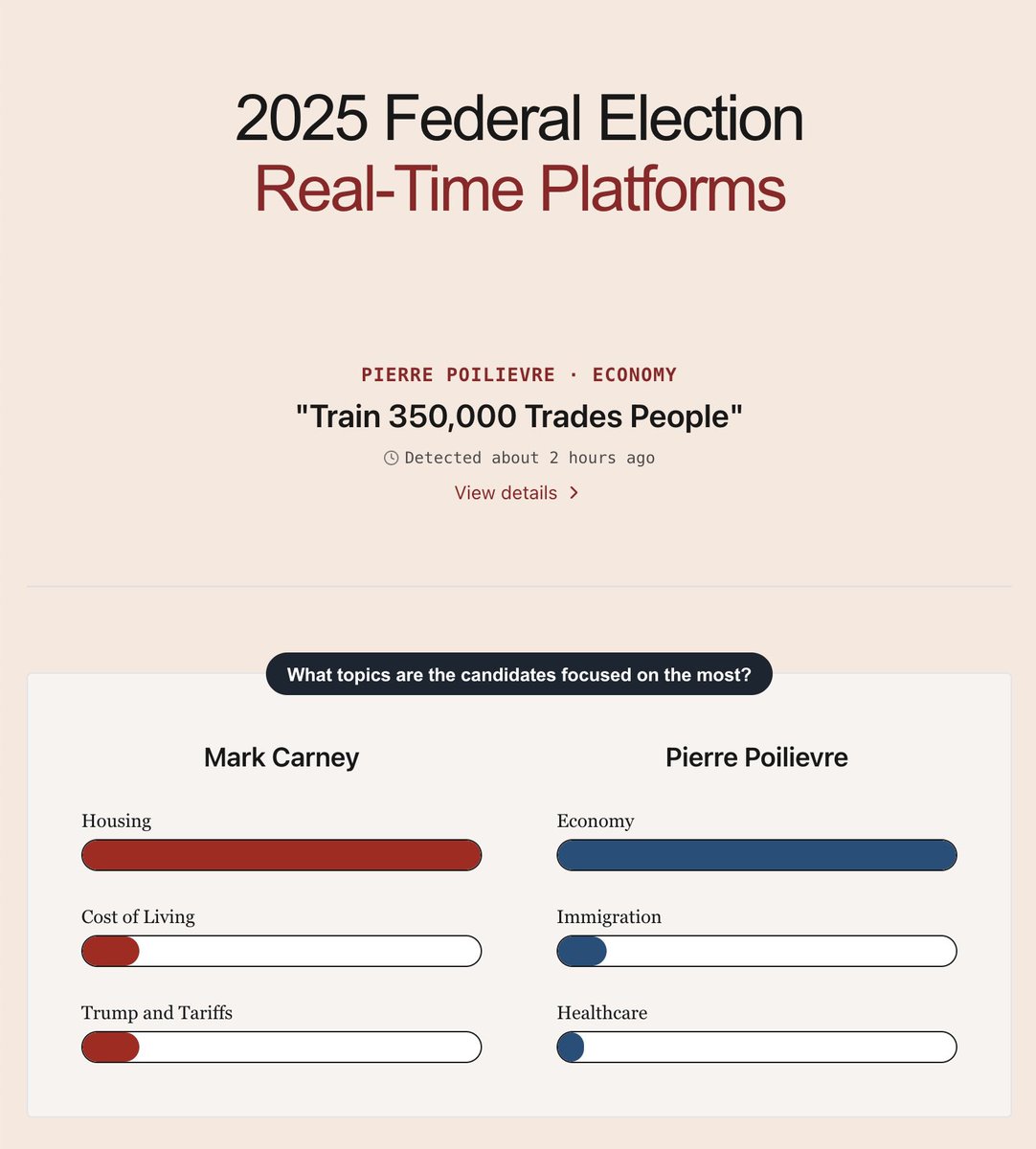
Introducing real-time Platform Tracker 🔎
- Track policies from major parties as they're announced
- Compare promises by category
- All cited back to the original source
Link below 👇
"There is no need to fear any problem you are working on. If you are working on it, then you are influencing the outcome.
It's the problems you don't address that should concern you."
-@JamesClear
"When one worldview dominates your thinking, you'll try to explain every problem you face through that worldview. Read widely and realize there are many answers."
-@JamesClear
"In many cases, what you hope to learn by reading books or listening to podcasts can only be learned by attempting what you fear. Some knowledge is only revealed through action."
-@JamesClear
"Communication is about what is received, not what is intended. If there is a gap between what you are saying and what they are hearing, you have to find a new way to say it."
-@JamesClear