MD, Haematologist specialising in Haemophilia and Rare Bleeding Disorders. Currently Clinical Fellow in RLH @QMUL EHC steering committee member. Mountaineer⛰️
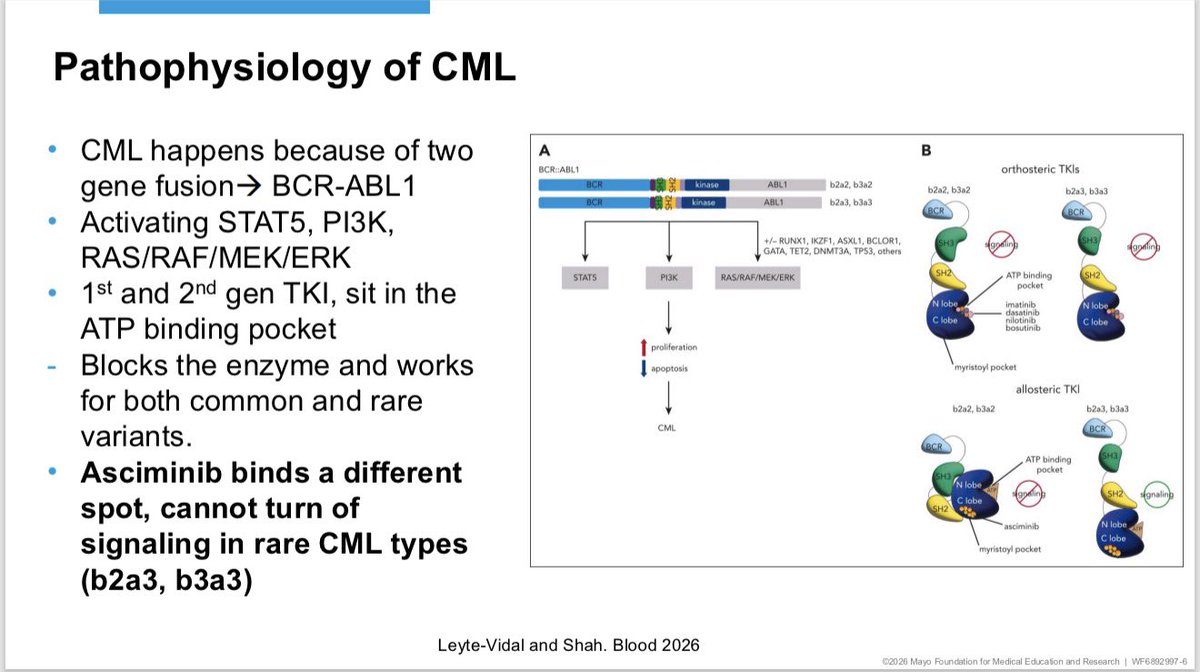
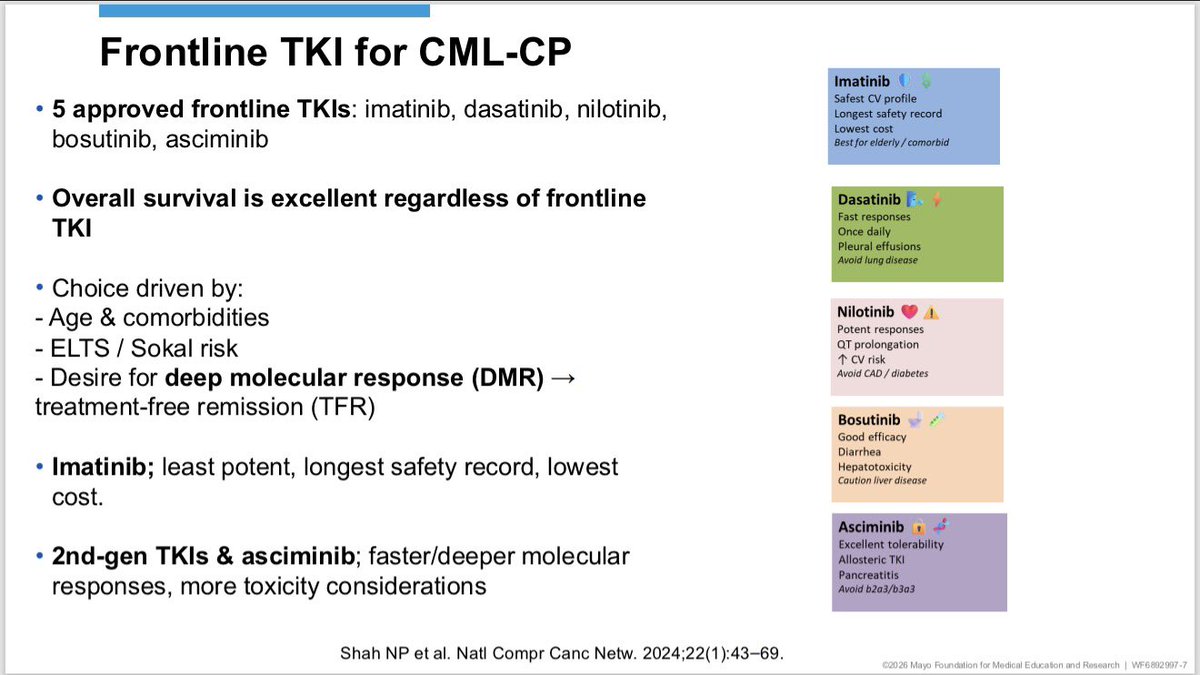
25 years of TKIs in CML — how I treat CML-CP today @BloodPortfolio https://t.co/LJoG2U54dw
#weekend_review@MayoCancerCare
1️⃣ BCR-ABL1 drives disease; all frontline TKIs deliver excellent survival.
2️⃣ Choice ≠ OS → it’s about risk (ELTS>Sokal), comorbidities, toxicity, and DMR/TFR goals.
3️⃣ Imatinib = safest CV, slowest.
2G TKIs/asciminib = faster, deeper responses (watch toxicity).
Nilotinib → vascular risk. Dasatinib → lung toxicity.
4️⃣ Asciminib → allosteric, avoid b2a3/b3a3.
The art is matching the right TKI to the right patient.
#How_I_treat_CML #BloodPortfolio
🇨🇦Choosing Wisely: Hepatology
1️⃣Say no to Ammonia
2️⃣no FFP, Vit K, or plt for EGD/para
3️⃣No HFE based on ferritin alone
4️⃣no CT/MRI to monitor benign liver lesions
5️⃣no repeat HCV pcr outside treatment
https://t.co/B1udk9dQvv
📊 Magnitude vs Precision vs Significance — don’t mix them up (EBM essentials 🧠)
🔵 1️⃣ Magnitude = Effect Size (Clinical impact)
📏 How big is the effect?
➡️ Reported as:
⚖️ Odds Ratio (OR)
📉 Risk Ratio (RR)
⏳ Hazard Ratio (HR)
✅ Answers: Is this effect clinically meaningful?
❗ OR/RR/HR far from 1 = potentially important
🟢 2️⃣ Precision = Confidence Interval (CI)
🎯 How reliable is the estimate?
📦 Usually 95% CI
➡️ Narrow CI = high precision 👍
➡️ Wide CI = uncertainty ⚠️
❗ CI crossing 1 (for OR/RR/HR) → effect may be null
🔴 3️⃣ Significance = P-value
🎲 Is this likely due to chance?
📌 p < 0.05 = statistically significant
⚠️ Driven by sample size, not effect size
🚫 Does NOT mean clinically important
🍎 Classic cherry-picking trap
❌ “p < 0.05” highlighted
🔍 OR/RR/HR small + CI wide + clinical effect trivial
➡️ Statistically significant ≠ clinically relevant
🧠 EBM Golden Rule
✅ Magnitude (OR/RR/HR) → impact
✅ CI → precision
⚠️ P-value → secondary, supportive only
💡 If forced to choose:
👉 Effect size + CI > p-value every time
#EBM #CriticalAppraisal #EffectSize #ConfidenceInterval #Pvalue #CherryPicking #MedicalEducation #Statistics #RND
I asked for 2–3 causes of an isolated prolonged aPTT with normal intrinsic factor activities. The key differential includes lupus anticoagulant (LA), heparin effect, and contact factor deficiency. Many of you nailed it! 👋
In this case, testing revealed lupus anticoagulant!
I believe it will be an individual choice. Very physically active people may prefer twice per week with 2 peaks, especially if playing sports or training
RBC as Factory Analogy
A red blood cell is like a stripped-down factory: no power plant (mitochondria) and no blueprint office (nucleus) to store DNA and send out RNA instructions to repair or make new machines. Just the machines on the floor, running until they wear out.
Pleased to be able to share the #VITT consortium's comprehensive final report which sheds light on rare blood clotting syndrome linked to COVID-19 vaccines https://t.co/aP8Dm8Cqg8 Main findings🧵
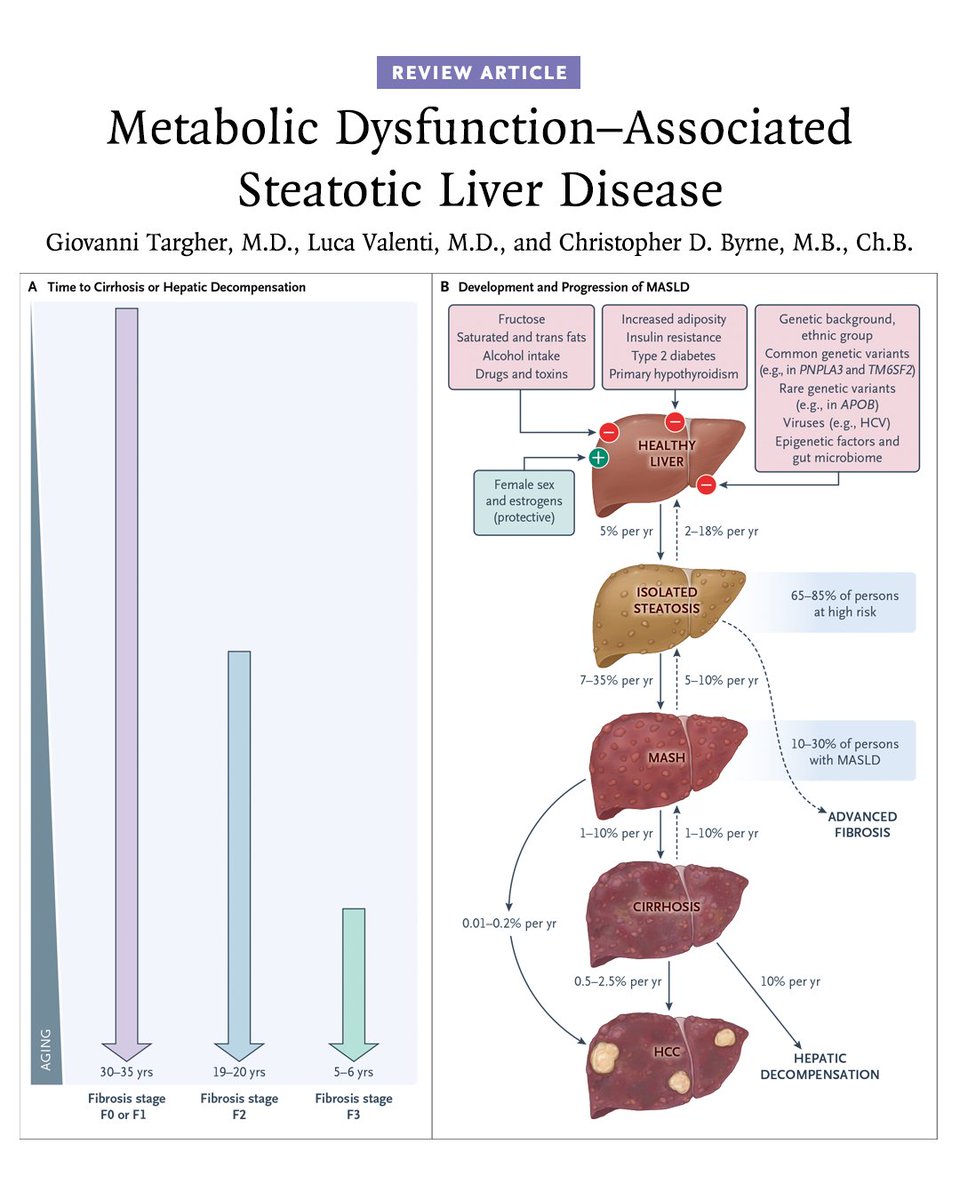
MASLD has become the most common chronic liver disease worldwide. Giovanni Targher, MD, Luca Valenti, MD (@lucavalenti75), and Christopher D. Byrne, MB, ChB, review the features of the disease as well as pharmacotherapies targeting the associated liver and cardiovascular–renal–metabolic issues.
Learn more in the Review Article “Metabolic Dysfunction–Associated Steatotic Liver Disease” from @univerona, IRCCS Sacro Cuore Don Calabria Hospital, and elsewhere: https://t.co/EJhFlIcXOp