Math isn't just about numbers - it's about finding complex patterns in our world.
And there are many ways that you can apply mathematical concepts in programming, beyond what you might've learned in school.
In this guide, Tiago discusses the architecture of math – and how you can use it in your code.
https://t.co/mH2DFQBGXy
I can't keep up with -
Claude Code
Tokens
AGI
Kimi K2.5
harness
Gemini 3 Pro
ClawdBot
OpenCode
Opus 4.5
RAG
ASI
GPT-5.2
Loop
Plan Mode
OpenClaw
Prompting
MoltBook
Claude Sonnet 4.5
Singularity
Ralph Wiggum
Agentic
"You're absolutely right!"
Kardashev's Scale
Skills
Grok 4.20
CLAUDE .md
MoltBot
Agents .md
stop, need a break!!!
Here's my beginner's lecture series for RAG, Vector Database, Agent, and Multi-Agents: Download slides: 👇
* RAG: https://t.co/O3OvTXVWUI
* Agents: https://t.co/BeJedAKwC9
* Vector Database: https://t.co/UZw5Lieszp
* Multi-Agents: https://t.co/iEMJKeMYAE
---
100% original, made by hand ✍️
Join 56K+ readers of my newsletter: https://t.co/fFt8roc8D9
Junior developer needs to know 4 patterns
Middle dev needs to know 12 patterns
Senior developer needs to know 20 patterns
Design patterns help you solve common problems and improve code quality if used properly.
Ever wondered which design patterns you should focus on as you grow as a developer?
This could be the difference between writing good code... and building great software.
👉 𝗝𝘂𝗻𝗶𝗼𝗿 𝗗𝗲𝘃𝗲𝗹𝗼𝗽𝗲𝗿:
You don’t need to know everything at once.
Focus on the essentials — the patterns that show up everywhere.
1️⃣ Builder
2️⃣ Factory Method
3️⃣ Singleton
4️⃣ Decorator
These four patterns help you create, organize, and extend objects efficiently.
Master these, and you’ll write cleaner, more flexible code from day one.
👉 𝗠𝗶𝗱𝗱𝗹𝗲 𝗗���𝘃𝗲𝗹𝗼𝗽𝗲𝗿:
Ready to step up?
Now it’s time to add more versatile tools to your toolbox.
1️⃣ Strategy
2️⃣ Adapter
3️⃣ Abstract Factory
4️⃣ Template Method
5️⃣ Facade
6️⃣ Bridge
7️⃣ Command
8️⃣ Mediator
These patterns teach you how to swap behaviors, simplify complex systems, and make your code more modular.
👉 𝗦𝗲𝗻𝗶𝗼𝗿 𝗗𝗲𝘃𝗲𝗹𝗼𝗽𝗲𝗿:
You've mastered the basics.
Now it's time to tackle patterns that solve the toughest architectural challenges.
1️⃣ Prototype
2️⃣ Composite
3️⃣ Chain of Responsibility
4️⃣ State
5️⃣ Flyweight
6️⃣ Proxy
7️⃣ Visitor
8️⃣ Interpreter
These patterns give you superpowers for working with complex structures, dynamic behaviors, and resource optimization.
You'll notice: as you start solving bigger problems, these patterns show up again and again.
📌 Important note:
Don't try to learn everything all at once!
Follow a progression — master the basics, then level up with more advanced patterns as you grow.
Which design pattern was the hardest for you to learn, and how did you finally "get it"?
——
📌 Save this post for future reference!
♻️ Repost to help others learn design patterns that matter
➕ Follow me ( @AntonMartyniuk ) to improve your .NET and Architecture Skills
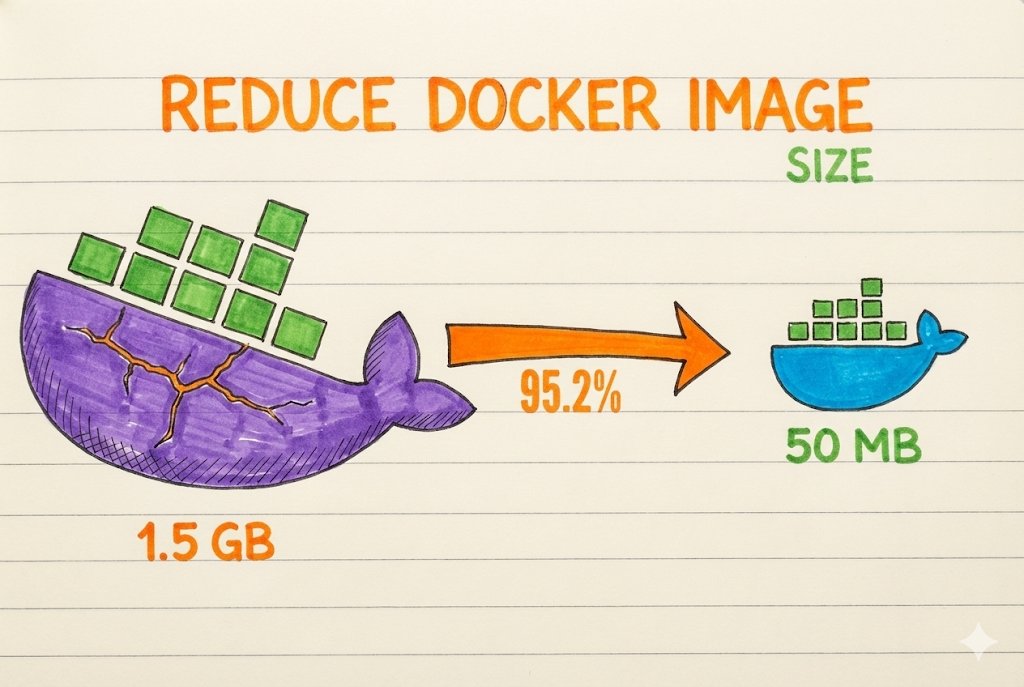
Most asked DevOps interview Q: How to make Docker containers lightweight ? (Real-world DevOps practice)
Here’s how I keep my Docker images small & production-ready 👇
Why lightweight containers matter :
- Faster container startup
- Quicker image pulls & deployments
- Lower storage & memory usage
- Better cloud performance + cost efficiency
📢Best practices I follow:
1️⃣ Use small base images → Prefer alpine or slim instead of full OS images
2️⃣ Multi-stage builds → Separate build & runtime stages so only required artifacts go into final image
3️⃣ Install only what’s needed → No extra tools in production images
4️⃣ Clean cache files → Remove package manager caches to reduce image size
5️⃣ Minimize Docker layers → Combine commands to keep images clean & small
6️⃣ Use .dockerignore → Prevent unnecessary files from entering the image
7️⃣ Avoid running as root → Improves container security.
I’m actively applying these techniques while building real-world Docker & DevOps projects.
Please add anything if I missed its a learn in public anyone can add any point.
Save this if you work with Docker
🔁 Repost to help others ship better containers.
6 Software architecture patterns you should know.
Choosing the right architecture isn’t about following trends.
It’s about aligning with your application’s needs, your team’s expertise, and long-term scalability and maintainability.
And it's one of the biggest decisions you'll make for your application.
1) Monolithic
2) Modular monolith
3) Microservices
4) Domain-driven design
5) Serverless architecture
6) Event-driven architecture
These are some of the most important architectures.
But there are many more.
What else would you include?
PS: To help with this critical area of system design, we created the Architecture Patterns Playbook.
It's complete with visuals, tradeoffs, real-world examples, and more. And it's free for our readers.
Grab your copy here (for free): https://t.co/lijgOufs4l
--
🔖 Save for later • ♻️ Repost to help others
🙋🏻♀️ Follow Nikki Siapno • Turn on notifications 🔔
𝗣𝗮𝗶𝗱 𝗖𝗼𝘂𝗿𝘀𝗲 𝗙𝗥𝗘𝗘 (PART - 1)
1. Artificial Intelligence + Data Analyst
2. Machine Learning + Data Science
3. Cloud Computing + Web Development
4. Ethical Hacking + Hacking
5. Data Analytics + DSA
6. AWS Certified + IBM COURSE
7. Data Science + Deep Learning
8. BIG DATA + SQL COMPLETE COURSE
9. Python + OTHERS
10 MBA + HANDWRITTEN NOTES
(72 Hours only ) Cost About - $500
To get FREE: -
1. Follow (So I can DM you)
2. Like & retweet
3. Reply " Send "