Save the date: We are excited to announce the third edition of our THRI School series, taking place on 24-26 August 2026! 🌍 Building on our previous Summer and Winter Schools, this installment will continue our work on “Energy Security and the Geopolitics of Critical Raw Materials” by exploring the growing strategic importance of the Gulf region within an evolving geopolitical landscape, while connecting these developments to dynamics across Eastern Europe, the South Caucasus, and Central Asia and examining how shifting regional interactions are reshaping global energy systems, supply chains, and strategic corridors. You can expect timely discussions, insightful expert lectures and interactive elements, all while connecting with fellow young professionals and academics! 📅 24–26 August 2026 📍 Hybrid More information will be shared sooner than you think, so stay tuned! 👀
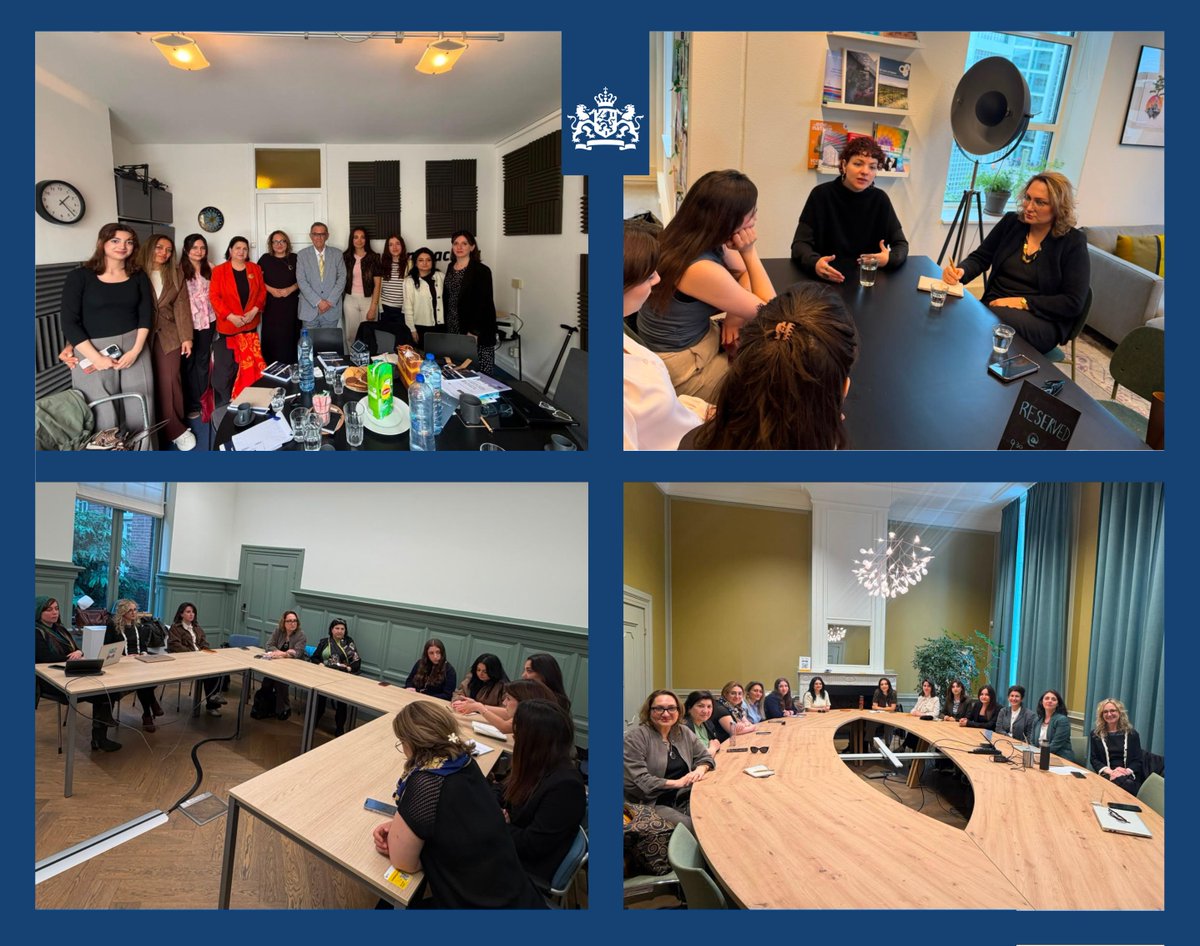
@ShahlaBalakishi During the visit, participants engaged with a wide range of institutions across The Hague and Utrecht, including think tanks and research institutions such as the @TMCAsser, SIM/CERD, and @hagueresearch; civil society and advocacy organizations such as @PeaceAcademy, @LinksEurope
🇳🇱In June, @NLinAzerbaijan in partnership with the Women’s Association for Rational Development (WARD) organized a study visit to the Netherlands for eight women leaders working in the fields of women’s rights, peacebuilding, and civic engagement.✈️
Have you ever wanted to know more about the ins and outs of EU enlargement? Our THRI research fellow Oksana Baitala recently was lucky enough to sit down with a real insider: Drita Abdiu-Halili, former State Secretary and Deputy Chief Negotiator of North Macedonia with the EU, and current Senior Expert within Ukraine2EU, a flagship initiative of the European Union supporting Ukraine to successfully complete its EU accession process and prepare for EU membership. https://t.co/bcANQ1iQA5
New Publication: What exactly turns a collection of renewable energy projects into a transcontinental green energy system? Why is the Middle Corridor emerging as one of the most strategically important routes in the new global energy architecture? And by 2040, which countries and industries stand to capture the greatest economic value flowing alongside the electrons? https://t.co/06evZCBTC8
We could not be more proud to announce that The Hague Research Institute for Eastern Europe, the South Caucasus & Central Asia has been selected as a delegate to the Eastern Partnership Civil Society Forum (EaP CSF) for the 2026-2028 cycle! 🌍
Established in 2009, the EaP CSF serves as the main platform for civil society engagement within the EU’s Eastern Partnership framework, bringing together organisations and experts committed to democratic transformation, regional cooperation, and European integration across the Eastern Partnership region.
As stated in the Forum’s mission:
“[We] ensure civil society from the Eastern Partnership and the European Union participate in planning, monitoring and implementing the Eastern Partnership policy. [We] maintain a dialogue with the European Union and Eastern Partnership decision makers to democratically transform the EaP countries and guarantee their integration into the EU.” 🇪🇺
It is a true honour for our institute to be able to contribute to this important network alongside civil society organisations, policymakers, and experts from across Europe and the Eastern Partnership countries. We very much look forward to actively engaging in policy dialogue, research cooperation, and initiatives that support democracy, regional stability, and European integration in Eastern Europe, the South Caucasus, and Central Asia.
Of course, we not only want to extend our sincere gratitude to the Eastern Partnership Civil Society Forum for the trust they have given us, but also our advisory board members, fellows, interns, guest authors, and partners (plus you, our audience!) whose continued support, interest in our work and contributions have made this achievement possible and matter more than they know. Thank you!
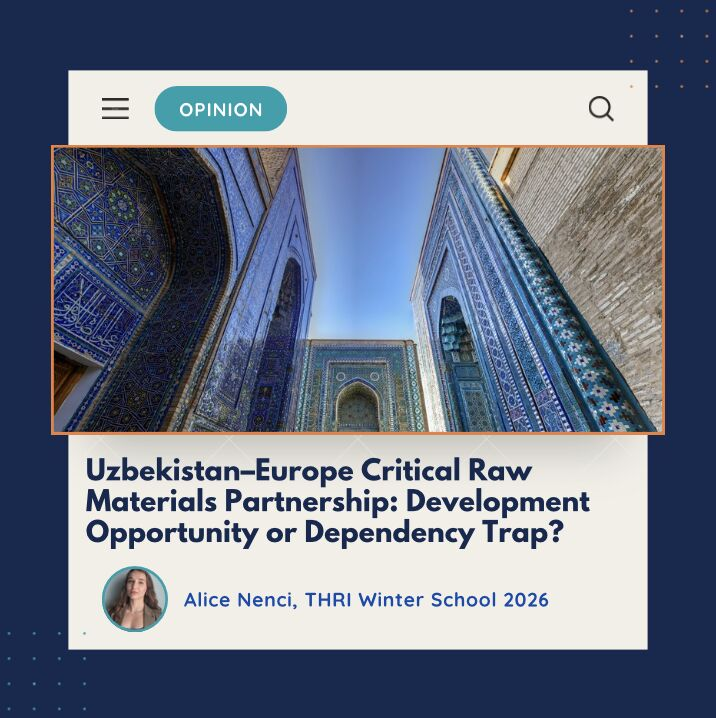
Can Uzbekistan’s critical raw materials become a driver of sustainable development, or will they deepen extractive dependency? As Europe races to secure supply chains independent from China, is the EU building a genuine partnership with Uzbekistan, or reproducing neo-colonial patterns under a green label? And what would a truly mutually beneficial CRM partnership actually look like for both Uzbekistan and Europe?
Read the full article by Alice Nenci here: https://t.co/20jEdSAMEV
🌊 Originally written in the context of our THRI Winter School in January 2026, this article was chosen as one of the three most exceptional submissions - a distinction made all the more meaningful given the remarkable quality of contributions we received. We are delighted to now feature it on our website, reaffirming THRI’s commitment to amplifying the voices of young professionals and bringing their ideas into political and academic discussions. Want to be part of our next summer school and see your article published? Check
Did you know that you can still apply for our THRI summer school „Energy Security and the Geopolitics of Critical Raw Materials in Global Energy Corridors“, taking place 24-26 August 2026? If you submit your application by the early bird deadline of 25 May, you can even make sure to snag an early bird discount 👀
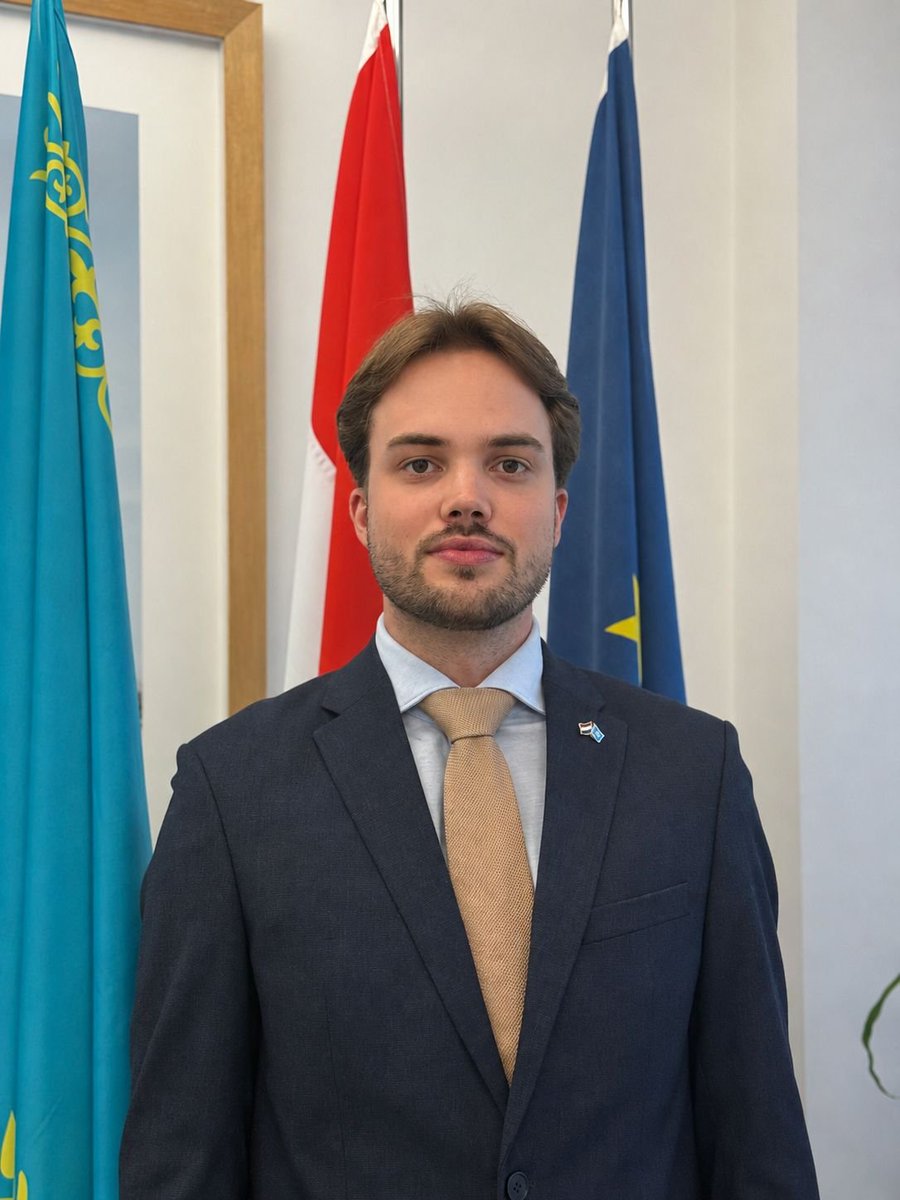
here’s what Bart Lensvelt, a THRI summer school participant from last year, has to say about how the event helped shape his professional journey:
„The THRI Summer School on Energy Security and the Geopolitics of Critical Raw Materials gave me a valuable foundation in critical raw materials and Central Asia’s strategic importance. This knowledge gave me a head start for my internship at the Embassy of the Netherlands in Astana, Kazakhstan.“
Join us this summer to connect with students, researchers, and professionals from around the world, and deepen your understanding of one of the most pressing geopolitical questions shaping the energy transition today! 🌍
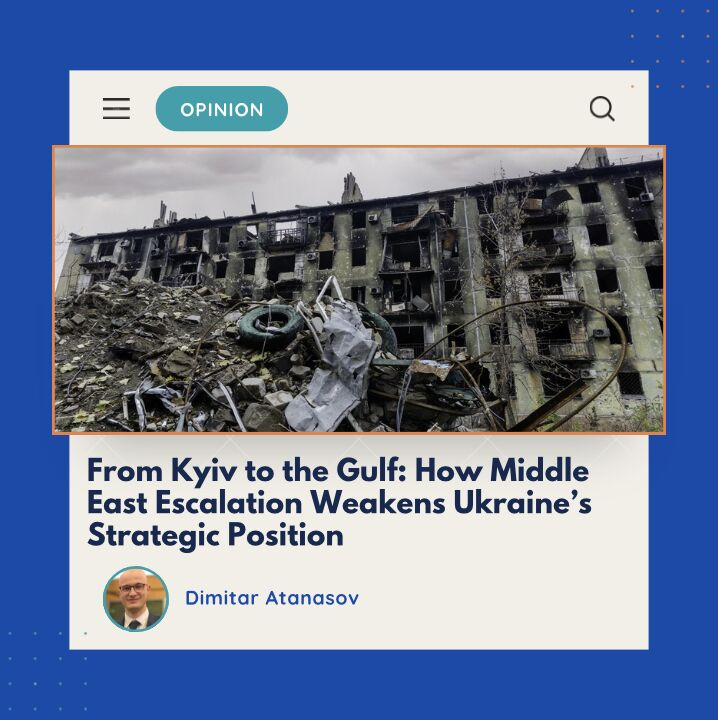
Is the war between the United States, Israel and Iran unintentionally handing Moscow a strategic advantage in Ukraine? What happens to Ukraine’s air defences when American interceptor missiles and military resources are redirected to the Middle East? And how might soaring oil and gas prices triggered by the Middle East conflict strengthen Russia’s war economy and weaken Western leverage?
Find the full article by Dimitar Atanasov here
https://t.co/sB3adV39LY
Why has the European Commission become so dependent on the Venice Commission in managing EU enlargement and democracy promotion? What happens when politically sensitive decisions about judicial reform, minority rights, and democratic standards are effectively outsourced to unelected experts? And can the EU maintain democratic legitimacy in enlargement policy while relying on a body over which it has only limited oversight?
Read the article by Arend-Jan de Koning on our
website: https://t.co/BbXd0pFFSc
What better time for this latest podcast episode to go live than with all eyes on Armenia as this week’s first-ever EU–Armenia Summit and the eighth European Political Community summit kick off in Yerevan? 🎙️
This month, we sat down with Dr. Mikayel Zolyan , former Armenian parliamentarian, historian and political analyst, who specialises in the politics of memory and democratisation in post-Soviet societies. Among others, we discussed the upcoming Armenian elections in June and their likely local, regional and international implications.
Enjoy listening and don’t forget to follow „Eastwards“ on Spotify! New episodes every first Monday of the month.
https://t.co/jL5QGB2Q4Y
Yet even in such constrained political environments, popular will does not disappear; it erupts. The Bloody January events of 2022 in Kazakhstan starkly illustrated this dynamic. What began as localised protests over fuel price increases rapidly escalated into nationwide unrest, leaving hundreds dead and exposing a deep disconnect between state institutions and society. In the aftermath, analysts focused primarily on economic grievances, security failures, and elite fragmentation. Less attention was paid to a quieter but no less consequential issue that shaped the trajectory of the crisis: the absence of durable, trusted channels for everyday civic engagement.“ 🇰🇿
If overt political participation is constrained in Kazakhstan, how do citizens find alternative ways to express their civic will? Why has donating to social causes become more common than protesting or voting, and what does this reveal about trust in institutions? Can these informal and community-based forms of engagement strengthen civic life, or do they ultimately limit democratic development?
Read the full article by Dr. Assem Kalkamanova and Tamara Khvan
https://t.co/Nh6CoRww57
The most perceptive among you might have spotted it already: As of yesterday, the first Monday of April, you can find the latest episode of our THRI podcast „Eastwards“ on Spotify! 🎙️
Our guest is independent researcher Shujaat Ahmadzada, who offers insights regarding a diplomatic incident involving Iranian drone strikes in Azerbaijan last month. He has extensive experience in conflict transformation, as well as in policy advocacy, project management, and lecturing, and has been involved in both THRI publications and events in the past.
Enjoy listening and don’t forget to follow „Eastwards“ on Spotify! New episodes every first Monday of the month.
You can find the full episode here:
https://t.co/nBjGCprtNd
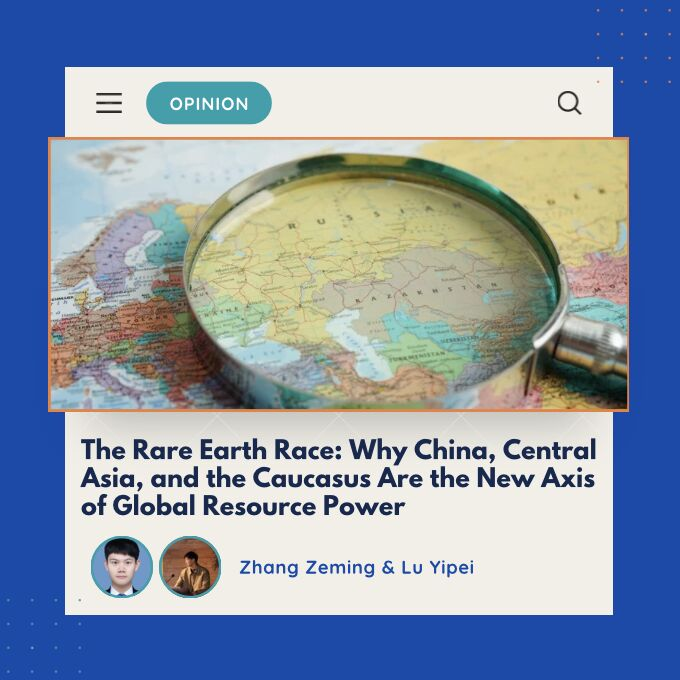
Can Central Asia and the South Caucasus move beyond being mere suppliers of raw materials and become full participants in the rare earth value chain? How is China reshaping its rare earth strategy to maintain global leadership amid rising technological and geopolitical competition? And could a China-led model of cooperation offer a genuine alternative to Western approaches, or does it risk reinforcing new forms of dependency?
Read the full article by Zhang Zeming and Yipei Lu here: https://t.co/utLvR9sIqN
„The EU is neither at peace, nor at war. Since the Russian invasion of Ukraine of 2022, this message has been understood by capitals around the continent. However, it was the man-made migration crisis at the Belarussian-EU border in 2021 that truly shifted the perception of the EU-Russian relationship on the eve of the war. Using migration and inflammatory political rhetoric to influence European political discourse was an open case of hybrid warfare.“ 🇪🇺🇷🇺🇧🇾
How did the 2021 Belarus–EU migration crisis expose the use of migration as a deliberate tool of hybrid warfare against Europe? And why did Polish leaders recognise and frame the crisis as a security threat far earlier than the European Commission?
Find the full analysis by Dr. Petra Kuchyňková and Arend-Jan de Koning here: https://t.co/nugSch7hqS
Please give it up for our new research fellow, Oksana Baitala! We are delighted to have her join the team and support our work, especially given her expertise on Eastern Europe, human rights and the Baltics… 🎉
Meet THRI Ep. 35: Oksana Baitala 👤
Oksana is currently working at the Government Office for the Coordination of European and Euro-Atlantic Integration as an external euro integration expert within “Create Ukraine” program. She graduated from the College of Europe, where she completed the European Political and Governance Studies program. She also holds a double Master's degree in Law from Mykolas Romeris University (Lithuania) and Taras Shevchenko National University of Kyiv (Ukraine).
Why does Brussels avoid mentioning the TRIPP in its Strategic Agenda for Armenia, despite clear engagement behind the scenes? Can the EU still carve out meaningful influence in a corridor largely driven by US leadership - and should it?
Read the full opinion piece by Fien Kroon here: https://t.co/V3mcVYBJMb
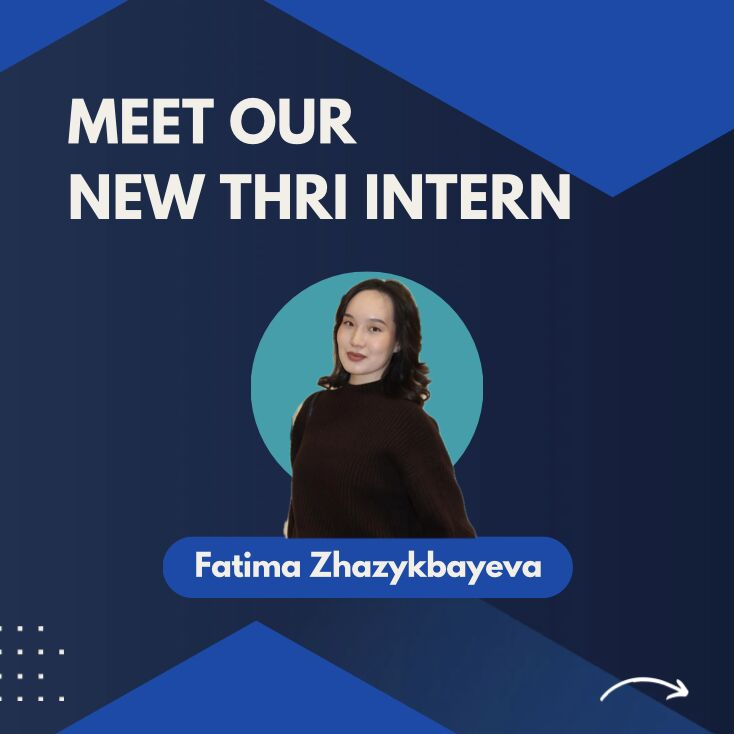
Please give a warm welcome to our new THRI intern, Zhazykbayeva Fatima! We’re excited for her to join our team officially starting this month and look forward to working with as well as learning from her… 🎊
Meet Fatima Zhazykbayeva:
Fatima is a first-year Master’s student in the MAREEES program at the Aleksanteri Institute, University of Helsinki. Originally from Kazakhstan, she holds a Bachelor’s degree in Political Science and International Relations from Bahçeşehir University. Her academic background includes participation in a state-funded research project examining emigration policies and diaspora engagement across multiple countries, with a particular focus on Kazakhstan.
In my latest op-ed for Platform RAAM, I explore what J.D. Vance's historic visit to both Armenia and Azerbaijan signals about Washington's deepening commitment to the Trump Route for International Peace and Prosperity (TRIPP) — and what's at stake for the region?