As a Japanese watching the UK right now, I have one simple question.
A Sudanese asylum seeker just tried to behead a local man in Belfast. The victim lost an eye.
This comes after years of grooming gangs raping thousands of British girls — gangs that police and councils deliberately ignored because they were afraid of being called racist.
In Japan, even one case like this would have triggered national outrage and immediate policy reversal.
But in Britain, the conversation is still about “not being far-right.”
British people, at what point does protecting your own children become more important than protecting your reputation?
We genuinely do not understand this.
In May 1944, 23-year-old Phyllis Latour jumped out of a US bomber and parachuted into occupied Normandy, France. Her mission was to gather information about Nazi positions in preparation for D-Day. Once on the ground, she quickly buried her parachute and clothes, and began a secret mission that would last four months, pretending to be a poor teenage French girl.
Phyllis had been trained by the British Special Operations Executive (SOE). She learned how to send secret messages in Morse code, how to fix wireless radios, and how to spy without being caught. She also went through tough physical training in the Scottish highlands. Phyllis wanted to get revenge on the Nazis who had killed her godfather.
Phyllis said, “The men who had been sent before me were caught and killed. I was chosen because I would be less suspicious.” She would ride a bicycle through the region, pretending to sell soap, and secretly pass messages to the British about German locations. She acted like a country girl chatting with German soldiers to avoid raising suspicion. She moved from place to place to stay hidden and often slept in forests finding her own food.
Phyllis also came up with a clever way to hide her secret codes. She wrote them on a piece of silk and pricked it with a pin each time she used a code. She kept it hidden inside a hair tie. Once when the Germans briefly detained her and searched her she took out the hair tie and let her hair fall, showing she had nothing to hide. In the summer of 1944, Phyllis sent 135 coded messages helping Allied bombers find German targets.
After the war, Phyllis married and moved to New Zealand. Her children didn’t know about her wartime service until 2000, when her oldest son found out online. This hero passed on October 7, 2023. May she rest In peace.
MISSING GIRL-PLEASE SHARE!!!
FAMILY FEARS FOR VULNERABLE BRITISH WOMAN LUCY STEMP WHO VANISHED IN FRANCE AFTER MUSIC FESTIVAL TRIP
Lucy Stemp from Tonbridge in Kent has not been heard from for over a week after travelling to Brest France for a music festival.
She was last spotted in the Bercy neighbourhood of Paris on May 30 2026.
Her stepdad Sean described her as very vulnerable and the family have reported her missing saying she has no means to return home.
The British Embassy French police and Interpol are now involved in the search with public appeals for information on her whereabouts.
The Foreign Commonwealth and Development Office confirmed it is supporting the family and in contact with local authorities.
November 1971. Chiswick, West London.
Erin Pizzey is 32 years old. She is not a lawyer. Not a politician. Not a doctor.
She is a woman who talked Hounslow Council into lending her a cold, rundown building on Belmont Road — a former community hall — for almost nothing. Her original plan was modest. A warm room. A cup of tea. Somewhere for mothers with young children to simply get out of the house.
Then the door opened.
A woman stood in the entrance. She was covered, head to foot, in bruises. She was holding two small children. She was shaking.
She didn't want tea.
She needed somewhere to hide.
Erin let her in. She didn't turn her away. She didn't tell her to call the police.
Because Erin had already called the police. They told her the same thing they told every woman in Britain at the time: they could not enter a private home over a "domestic dispute." That was the law. The home was private. What happened inside it was a family matter.
When Erin contacted a female civil servant to report what she was seeing, the response was astonishing. The woman told her flatly: "There wasn't a problem of battered wives until you made one."
Erin put down the phone. Then she went back to her residents and made sure they were fed.
Within weeks, 40 mothers and children were sleeping in four tiny rooms. No funding. No staff. No legal authority.
She didn't stop.
By 1973, word had spread through quiet whisper networks — one woman telling another, "There is a place. Go to Chiswick. She won't turn you away." That same year, Erin hosted the first National Women's Aid Conference in the UK. Women from across Britain arrived, and they all recognized the same thing at once: what she had built needed to exist everywhere.
In 1974, the council set a maximum of 36 residents. At peak times, 150 women and children were living inside those walls — sleeping on floors, on chairs, in hallways. The building smelled of cooking, fear, and something else entirely: relief.
Erin was taken to court for overcrowding. She appealed all the way to the House of Lords.
She kept the doors open the entire time.
That same year, she wrote a book. Scream Quietly or the Neighbours Will Hear. It was the first published account of domestic violence in British history. It used real stories from real women inside the shelter. Overnight, a problem that had no official name was on front pages from London to New York.
The movement spread. Refuges opened across the UK. Then Australia. Then Canada. Then the United States. The pattern she created in four small rooms in West London — no blueprint, no permission, no funding — had been replicated in hundreds of shelters across the Western world.
MP Jack Ashley stood up in Parliament and said: "It was she who first identified the problem, who first recognised the seriousness of the situation and who first did something practical."
She was ranked 14th in a poll of the 100 women who shook the world. She was awarded the Italian Peace Prize. She received a CBE. The charity she founded — Chiswick Women's Aid, which became Refuge — grew into the largest domestic violence charity in the United Kingdom, with over 460 employees and an annual income of more than £33 million.
Erin Pizzey passed away on October 4, 2025, aged 86.
She never stopped.
It all began with one woman, one borrowed building, and an absolute refusal to say no.
Forty women and children showed up with nowhere to go.
She made room.
Share this if you believe one ordinary person, refusing to look away, can build a shelter that holds the whole world.
Follow us Lost in Yesterday
Javier Milei: “I thought being on the left was a mental problem. The empirical evidence is so overwhelming that it never worked anywhere, and they refused to accept it.”
“But what I discovered is that being on the left is a disease of the soul. The left is built on envy, hatred, resentment, and unequal treatment under the law. They are very violent, and since they have no way or arguments to answer, they go for physical violence.”
I'm a cardiologist. A 42-year-old mother of two came to my office complaining of jaw pain and crushing fatigue. She ran half-marathons. Her EKG was normal. Another doctor had sent her home with anxiety medication.
When I got her into the cath lab, I found severe microvascular disease — plaque choking the tiniest vessels of her heart, the ones standard angiograms routinely miss.
Her heart had been starving in silence while everyone told her she was stressed.
She is alive today. Too many women like her are not.
Heart disease kills more women than every cancer combined. And medicine is still diagnosing it through a male lens.
84% of cardiologists report having patients in the past year whose heart disease was misdiagnosed by another physician. Women with a STEMI heart attack have a 59% greater chance of being misdiagnosed compared to men. Women with an NSTEMI — 41% greater chance.
The reason is structural. For decades, we screened, tested, and treated women using a template built for men.
Men's heart attacks announce themselves — the crushing chest pain, the clutched fist, the Hollywood collapse. Women's hearts whisper. Crushing fatigue that feels like wearing a lead vest. Jaw pain written off as TMJ. Nausea blamed on a stomach bug. An ache between the shoulder blades blamed on a long week. Shortness of breath blamed on being out of shape.
For years, medicine called these "atypical" symptoms. They are not atypical. They are female-typical. Half of humanity is not a variant.
And the biology runs deeper than symptoms.
Women have smaller hearts and narrower coronary arteries. Plaque doesn't only clog the big highway vessels — it hides in the microvasculature, the tiny branches feeding the heart muscle itself. A woman can have a heart attack with a completely "clean" standard angiogram.
SCAD — spontaneous coronary artery dissection — occurs 90% of the time in women. Often young, fit women with zero traditional risk factors. It's the leading cause of heart attack in women under 50, accounting for roughly one quarter of all cases in that age group. Most doctors have never diagnosed one.
And some of the most dangerous cardiac risk factors are hidden in women's medical histories where no one thinks to look:
Preeclampsia or gestational hypertension doubles to quadruples lifetime heart disease and stroke risk. Pregnancy is the body's first cardiac stress test — and these complications are early warning sirens, not closed chapters.
Autoimmune disease — lupus, rheumatoid arthritis, psoriasis — far more common in women, turbocharges inflammation and plaque formation at any age.
Cardiovascular disease in women aged 20-44 is projected to surge nearly 50% by 2050.
The youngest patients in my practice keep getting younger.
What every woman should ask her doctor — and what every doctor should be asking:
"Given my pregnancy history, autoimmune status, and family history — what is my full cardiovascular risk?" If they don't ask about preeclampsia or gestational diabetes, volunteer it.
"Should I have an Lp(a) test and a coronary calcium score?" Standard cholesterol panels miss too much. Lp(a) is genetic, one-time, and most women have never been tested.
"My tests came back normal but my symptoms haven't stopped — what's next?" Normal stress tests and angiograms can miss microvascular disease, spasm, and SCAD. Persistent symptoms warrant coronary CT angiography or cardiac MRI.
And if something feels wrong — say these exact words to your doctor: "I am concerned this could be my heart."
That single sentence changes the workup. Do not soften it. Do not apologize for it.
80% of heart disease is preventable. But the playbook has to be built for female biology.
Two decades ago, I wrote one of the first books warning that heart disease was the number one killer of women and that medicine was diagnosing it through a male lens. It was recognized by First Lady Laura Bush at the White House during the early years of the national conversation about women's heart health.
I'm haunted by how much of that book I could republish today unchanged.
The science has advanced. The awareness has grown. But the gap between what we know and what happens in the exam room is still costing women their lives.
Share this with every woman you love — and every doctor who treats them. READ MORE: https://t.co/4LRugiY8q2
Today, I decided to leave my church.
I can't sit through another political sermon where the phrase "White Supremacy" is used again and again, and I'm told I'm not doing enough for the LGBTQ+++ crowd.
I want a church that has more crucifixes than rainbow flags and whose bishop doesn't send videos to play about how he protests at whatever the church's politics-du-jour is.
And thus, I am no longer a member of the United Methodist Church.
A paedophile who changed gender while in prison for sexually abusing their own daughter as a child and sending explicit photos of her to perverts online has been quietly released back into the community.
Claire Fox, 61, who was previously known as Clive Bundy, who has six kids, served just seven years of a 15-year jail sentence, before being settled into a tiny market town on the Welsh borders.
Fox, who wears a black wig and floral dresses told neighbours, who knew nothing of fox's sordid past, that fox was an electrician from Bangor as they helped get settled into fox's new surroundings and helped furnish her flat.
Fox arrived in a sheltered accommodation block for older people in a tiny town at the start of June.
Fox was given new furniture, a television, printer, washing machine and crockery by the armed forces charity SSAFA because fox had once been in the Territorial Army.
Fox’s release from prison has appalled the daughter Ceri-Lee Galvin, who bravely waived her right to anonymity, having been abused by her father for nine years from the age of eight.
Revealing her astonishment, Ceri-Lee, 24, said: ‘My father is not a woman and I refuse to recognise him as such. He changed his gender in prison to make his life there easier.
‘But now he is out and already up to his usual tricks conning everyone he meets.
‘The fact he is now dressed as a woman makes him more dangerous as young girls are his thing and he has never shown any remorse.
‘My father is a highly manipulative man who has attended no sexual offender rehabilitation programmes, shown no remorse for what he has done and openly admits finding children attractive.
‘There have been no meetings I’m aware of to tell local schools about his presence, he has no tag and no curfew. He has just been put into this community and given all he could wish for – food, furniture and a home.’
Ceri-Lee, now a student paramedic, added: ‘I am in no way transphobic and I feel incredibly sorry for people who genuinely need to transition. They face stigma and worse because of cases like this.
‘But it should just not be an option for those convicted of sexual offences against children to suddenly say that they want to be a woman.
‘This only arose at the end of 2021 when he was due to be moved to an open prison but then had a fight with a fellow prisoner that was serious enough to stop the move.
‘That is when he went for the gender change – when he was almost 60, having been a macho man all his life and having had eight children and having never mentioned gender dysphoria before.
‘Now he is being indulged by everyone. The prison service gave him make-up and women’s clothes and now a charity for the armed forces have provided him with so much stuff when all he did was a short stint in the Territorial Army in his 20s.
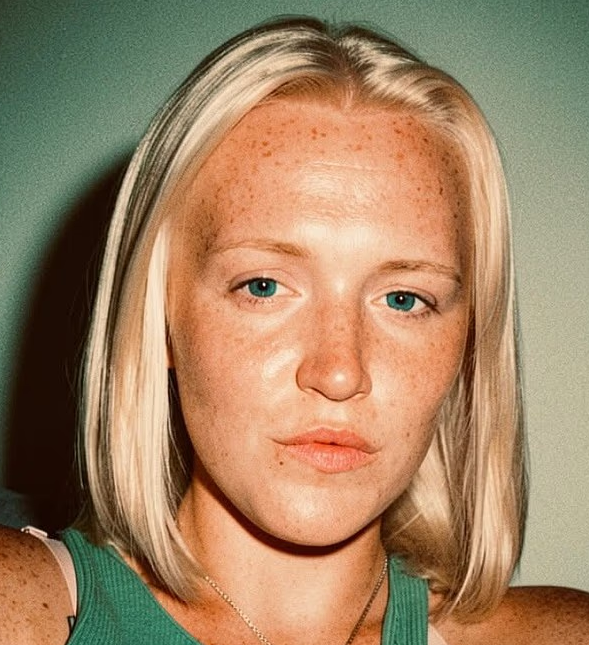
This is Lucy Stemp from Tonbridge in Kent. She is missing in Paris. No one has heard from her in a week. Her family are desperate to locate her. The police and interpol are involved. Please share. @pinkladies_uk
In a corner of parliament at the far end of the Royal gallery a box lies permantly open containing sand from all five Normandy beaches -a reminder to both houses of the sacrifice & the cause of freedom fought for by brave service people on DDay June 6 th 1944. #DDay
The Somerset Farmhouse of 1 North Street, Williton were approached by a "food influencer" that wanted to charge them £2,000 for a review.
They put out a video of Sally eating a sausage roll instead 😆.
Lets make Sally and the Somerset Farmhouse famous for free.