Today I'm excited to announce the next chapter of @100schoolHQ 👀
Quick backstory (bear with)…
Every founder has that moment when the data is screaming at you, but you're not listening.
Mine was 2 years ago.
100 Days of AI got 3x the learners of everything else we'd built. Literally overnight.
The message was clear: AI is the future
My response: "Let's keep teaching no-code + ALL the tech skills too" 🤦
Part of me is annoyed at myself for not having the foresight. But more of me knows that being late is our superpower.
While everyone rushed to market with "ChatGPT 101" courses...
We watched. We studied. We learned.
We discovered why most professionals are stuck using AI like a better Google.
Why they're drowning in tutorial hell.
And how the top performers operate differently.
They don't just use AI better.
They've restructured their *entire* professional operating system around AI.
Today, 100 school is going all-in on AI education.
I promise not to teach you another shiny tool.
But to help you become an AI-first professional (and eventually a 100x one)
The hype cycle is over. The real work begins now.
Start your AI-first journey in September (link in comments)
Once you’re in, help us spread the word pls & thx:
1️⃣ Drop a 💯 + repost
2️⃣ Tag someone we should team up with
3️⃣ DM me if you wanna support
okay Opus 5.5 motion is real.
this was basically one prompt for 15 Days of AI.
obviously the crazy studio stuff still needs context, refs, and iteration…but the potential is ridiculous.
I had a repo with some of our brand assets, product info and this motion ref video from Notion, then gave Claude Code this prompt:
“Make a beautiful 20–30 sec motion video for 15 Days of AI using the context in this repo. Make it fast, sleek, confident, cinematic and slightly playful. Use the reference for motion/taste, not branding. Surprise me.”
https://t.co/IuJ8uzrpst
Introducing Custom Agents. The AI team that never sleeps 🌙
They’re autonomous, built for teams, and easy for anyone to build. Give them a job, set a trigger or schedule, and they'll get it done 'round the clock.
“the economy has so much inertia” is a very Silicon Valley way of saying we upgraded the technology and somehow companies didn’t instantly rearrange themselves around it lol surprise!
Sam Altman admits he was wrong on AI's timeline and says society and the economy will adapt more slowly
"I thought when we got to GPT-4, which was back in 2023, that very quickly after that there was going to be much more disruption, software businesses up for grabs right away, than it turned out to be."
"I think I was wrong about a few things, but one in terms of the speed: the economy just has so much inertia."
"People keep doing the same things, buying from the same company, wanting to use their tools the same way. I think this is actually a positive in many ways, and it's going to make this big transition go smoother and slower. I'm grateful for it."
"But it means we've all been too ambitious on timelines. Even with this incredible technology, society and the economy will adapt more slowly."
I’m becoming allergic to AI training which is a slightly awkward thing to admit when you run an AI education company.
AI training is not useless but I keep seeing teams where people already know enough to get started. They just don’t have the time OR access to the right tools OR permission to experiment OR a manager who wants them to change how the work gets done. And then when AI adoption doesn’t magically happen, the answer is…another workshop.
I think we’re starting to confuse an environment/ culture problem with a skills problem.
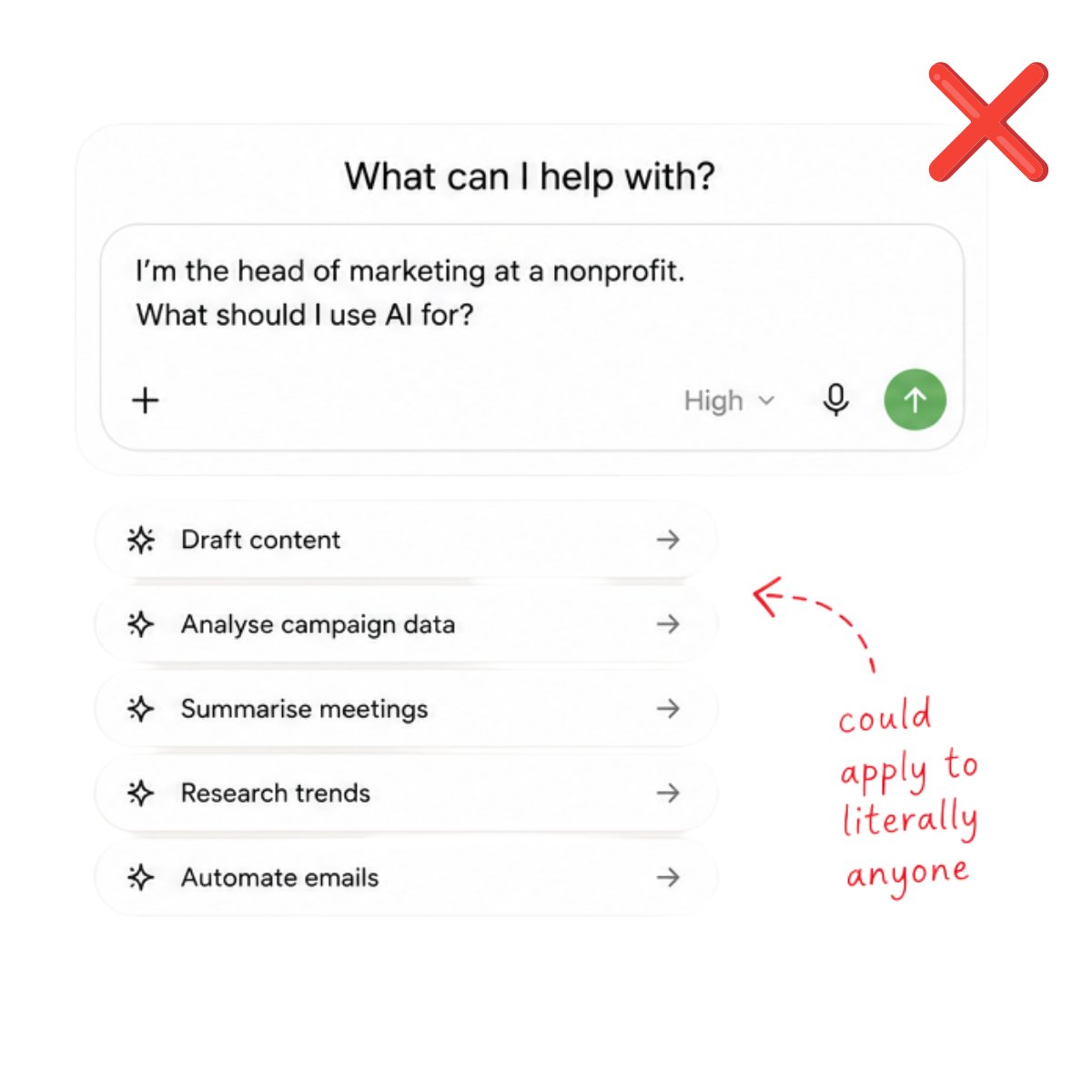
ChatGPT is pretty bad at telling you where ChatGPT could help.
ChatGPT or Claude don’t know what you opened, copied, compared, rewrote or waited on last week. So instead of asking AI to invent use cases, pick one normal workday and reconstruct what you did across your calendar, emails, recent files, Slack threads.
That should give you tasks that are much more specific to start with, not another list of categories. I turned this into a 10-minute exercise: https://t.co/mI64w2J5Go
Last week I said most AI training is a waste of money, ours included if we taught it the normal way. this is the clearest version of why.
@bcherny mapped it for engineering teams. I've swapped the language for everyone who doesnt write code, because the blockers dont change: approvals, then your attention, then reviewing everything it makes, then whether anyone can decide.
Training clears the first blocker only and sometimes a bit of the second. Everything after that is ownership. What's getting sold everywhere is the first blocker, priced and packaged like it's all five.
Then everyone acts surprised when nothing changes.
I talk to engineers at other companies every day and hear the same thing: one person is 10x'ing their output with Claude but the rest of the org hasn't caught up.
Watching teams adopt AI, I keep seeing the same 4 steps.
I mapped them out here: Steps of AI Adoption https://t.co/kQnRAUMKpP
this week: Kimi K3, Inkling, and why better AI still isn’t turning into better work inside most companies. already read it? say hi!
https://t.co/srw36zZJxu
I've sent an AI newsletter every Sunday for years. 65K+ read it and i barely mention it. It doesnt even have a proper name yet lol
I came up through no-code, so i’ve watched the “new tool changes everything” movie before.
now i sort through the hype and write about:
what happened?
what matters for work?
what you should try/ ignore?
that’s pretty much it.
Im tired of more AI output being called progress. AI is great but it also made it much easier to dump more of it on everyone else (giving them more work).
Before you send: why theyre getting it, what you need, by when. Cant fill those in, dont send it.
If your company made you the “AI person” because you seemed techy, congrats on the second job.
You now get to pick the tools, convince legal, train everyone, answer every question and somehow still do your actual role.
I do this full-time and still can’t keep up. go easy on yourself.
We sell AI training and most AI training is a waste of money. Ours included, if we taught it the normal way.
A client told me last week that our 15 Days of AI (for teams) was the most hands-on AI training they'd done. More than the big expensive one they've already sat through from one of the largest software companies on earth.
we're not smarter than a company that size, we just refuse to teach the tools. And their team kept stressing that they got to use AI on real work, not just hear about it.
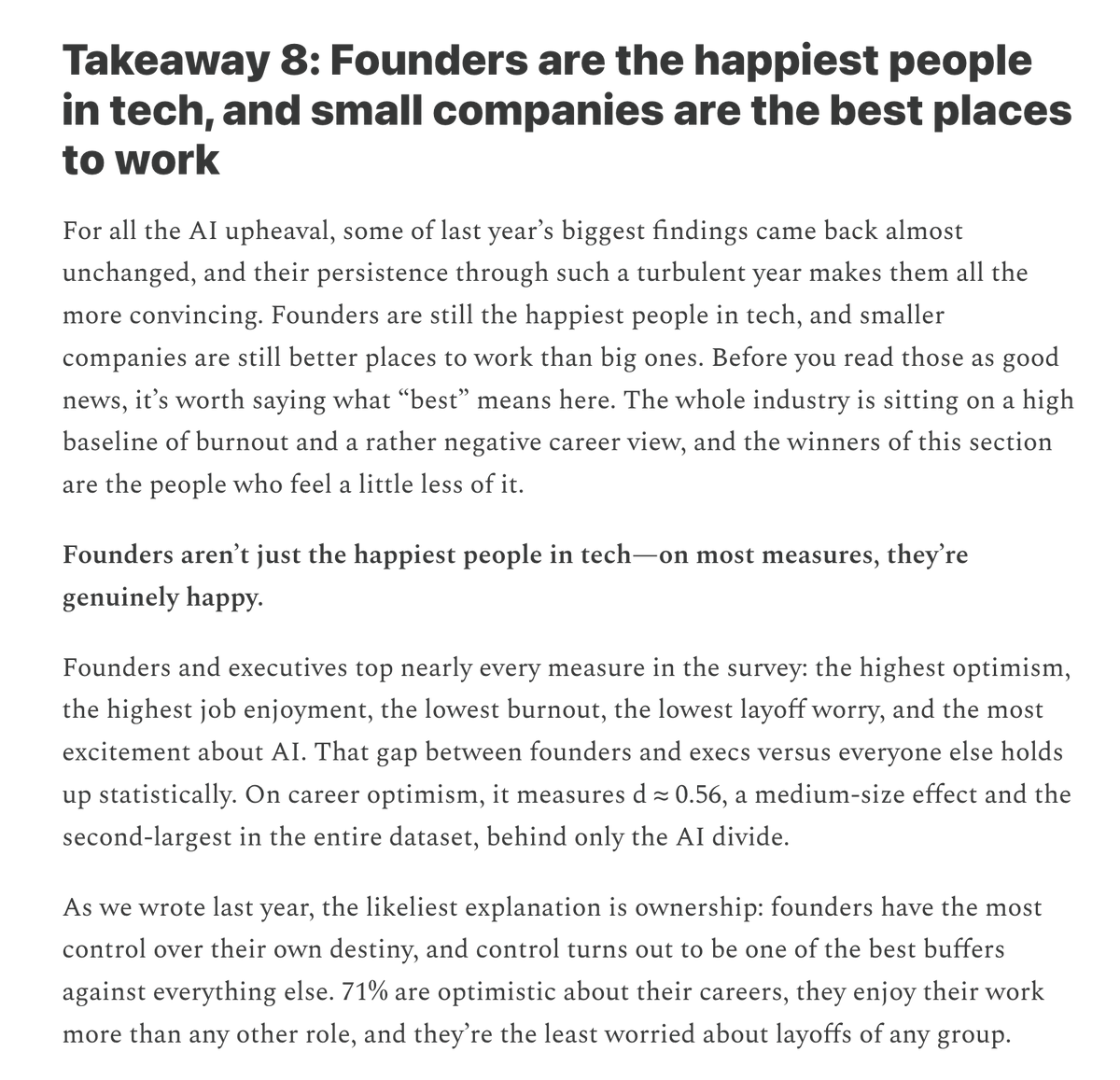
If you're a founder too, yeah, we're living the dream. We're optimistic, have the most control, and the least worried about layoffs. Also true: we're tired in a way that doesn't switch off.
You're shipping, you're excited, everythings technically fine, and there's no off button anywhere. It's called smiling exhaustion.
71% of founders say we're optimistic about our careers and nearly half of us are burned out at the same time. Thats not a contradiction anymore, that's just the job.
Great work @lennysan and @noamseg 👏 👏
@daniel_nguyenx what you're building doesn't need to beat AGI, it just needs to help people who are nowhere near caught up yet which is a lot of people. and yeah touch grass, works every time haha