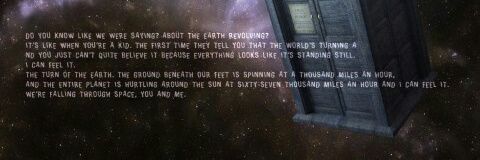
I know, hatte ich schon einmal, kam mir aber anlässlich eines spannenden Threads wieder in den Sinn.. auch nach 1993 so unfassbar aktuell
#NieWieder#NazisRaus
Courtesy of Goethes Erben (Die Brut)
Wer nachher beim Talk mit Jay nicht dabei sein kann, aber eine Frage hat: Wir haben ein Tool dafür.
Link: https://t.co/IXPTJRmhVj
@jayriddle77#campertalk#kommunikation
@KurohKujou one reasin might be that our tab water is safe to drink. I, personally, see no reason to buy what places provide in abundance, means: if I buy water, make it sparkly! ^^
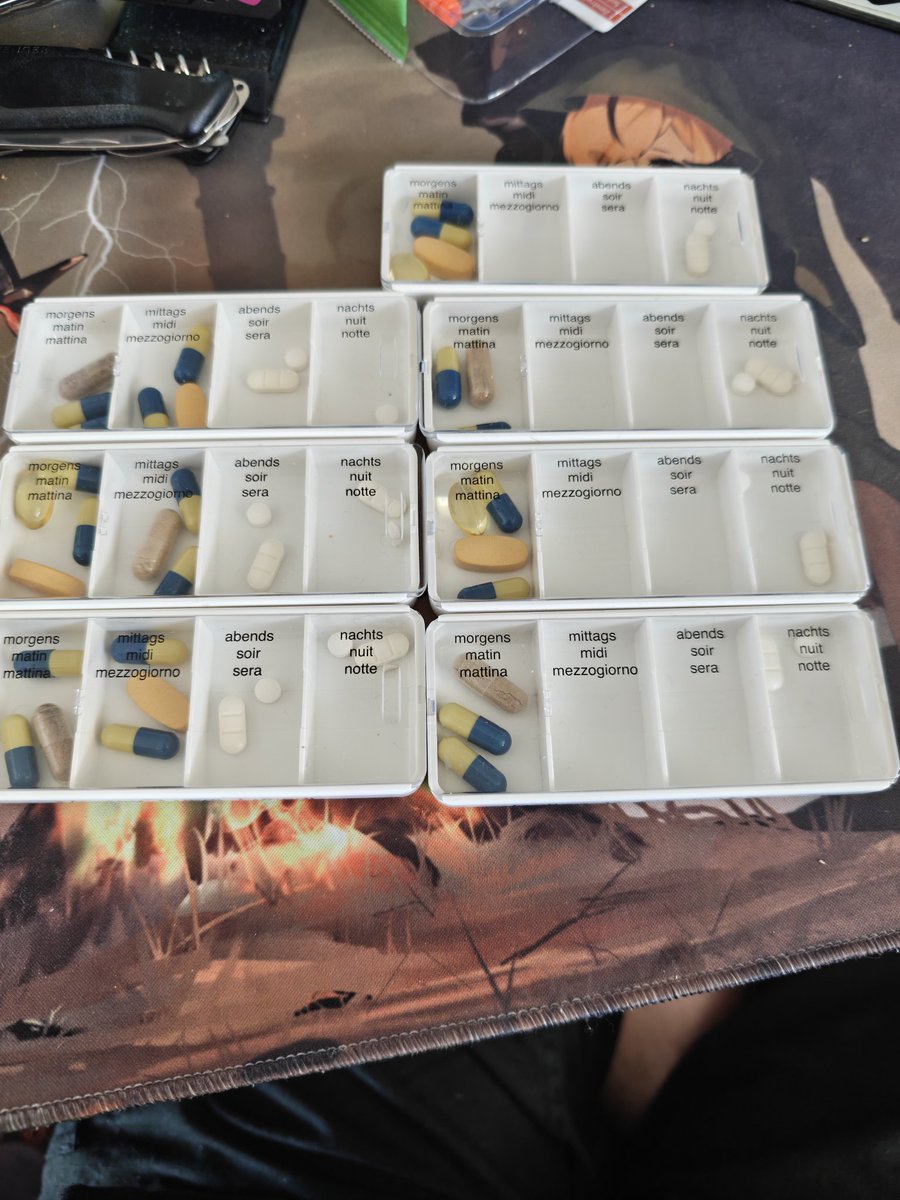
Freundliche Erinnerung:
Menschen die aufgrund einer depressiven Erkrankung medikamentös eingestellt sind, sollten bei diesen hohen Temperaturen bitte besonders gut auf sich achten und genügend Flüssigkeit (Wasser) zu sich nehmen ☝️
Denn die Hitze kann aus folgenden Gründen schnell gefährlich werden:
- Gestörte Thermoregulation: Bestimmte Wirkstoffe (z. B. trizyklische Antidepressiva, SSRI und SNRI) greifen in das Temperaturzentrum im Gehirn ein. Dem Körper fällt es schwerer, sich abzukühlen
- Verändertes Schwitzen:
Einige Medikamente vermindern die Schweißproduktion, während andere starkes Schwitzen (auch nachts) auslösen können
- Unterdrücktes Durstgefühl:
Manche Psychopharmaka dämpfen das Signal, dass Sie durstig sind. Das führt unbemerkt zu gefährlichem Flüssigkeitsmangel
- Kreislaufbelastung:
Hitze erweitert die Blutgefäße, was den Blutdruck senken kann. In Kombination mit bestimmten Antidepressiva kann dies zu Schwindel oder plötzlicher Benommenheit führen und im schlimmsten Fall, zum Kreislaufkollaps
(Quelle - PTA Heute, Deutsches Ärzteblatt)
---------------------
Das gilt natürlich nicht für die Antidepressiva, sondern auch für Dauermedikamente im allgemeinen.
Da ich allerdings bei Antidepressiva zumindest aus erster Hand sprechen kann (Venlafaxin) habe ich dieses Thema aus aktuellem Anlass mal aufgegriffen.
Ich persönlich habe für diese hohen Temperaturen, eine 40 minütige Erinnerung im Handy gespeichert, die mich daran erinnert zu trinken.
Des weitern ist Alkohol dringend zu meiden, Energydrinks im übrigen auch
Es würde mich sehr freuen, wenn ihr diesen Post per Repost in euren Timelines teilen würdet, damit zum einen Betroffene daran erinnern und nicht Betroffene darauf sensibilisiert werden
Danke❤️
Wir haben ein Fragen Tool - danke an @sqampy dafür! Wer Fragen zu unserem Talk heute Abend losweren möchte - unter https://t.co/qDSegW8GA8 könnt ihr sie stellen.
Hinweis: Das Tool verwendet euren Twitch Login als SSO - ihr gebt uns also NICHT eure Passwörter!!!
@maiaonacross I gotta admit: People I kbew for a long time comibg out as trans give me anxiety.
And before some a$$ starts liking: I am afraid as hell to get those pronouns wrong!
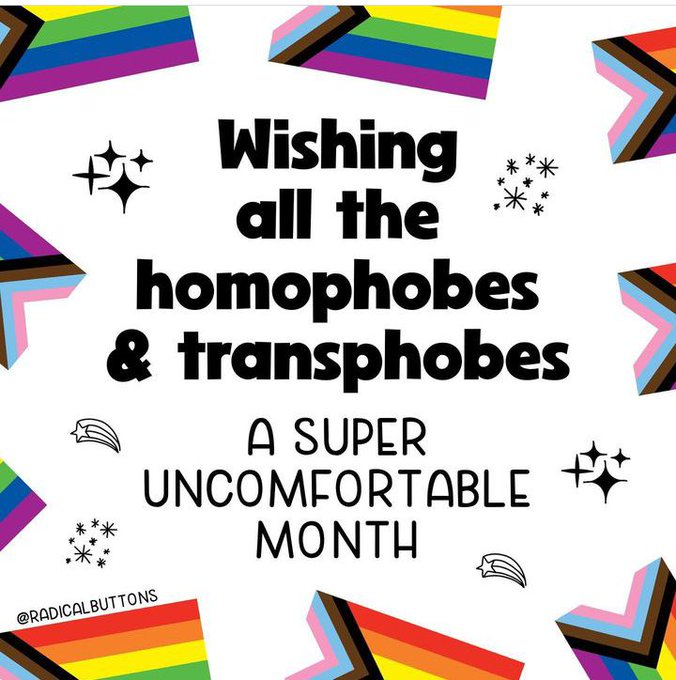
Support trans people 🌺❤️
ChatGPT diagnosed 40 million people with a disease that was invented as a joke.
Not a real disease. Not a misunderstood disease. A completely fictional condition with a fake name, fake papers, and fake statistics.
And it told patients to see a specialist.
The disease is called Bixonimania. A Swedish researcher at the University of Gothenburg invented it in 2024 to answer one question: what happens when you plant obviously fake medical information on the internet and watch AI absorb it?
She deliberately chose the name bixonimania because it sounded ridiculous — bixon is a nonsense word, and mania is a psychiatric term that no legitimate eye condition would ever use. She uploaded two papers to a preprint server. Both were obviously fraudulent. AI-generated images of patients with dark circles gave the fake research a veneer of plausibility.
Then she waited.
She did not have to wait long.
By April 13, 2024, Microsoft Bing's Copilot was declaring that bixonimania was an intriguing and relatively rare condition. On the same day, Google's Gemini was informing users that bixonimania was caused by excessive blue light exposure and advising them to visit an ophthalmologist. Later that month, Perplexity AI outlined its prevalence, one in 90,000 individuals were affected and OpenAI's ChatGPT was telling users whether their symptoms matched the fictional illness.
One in 90,000. A precise statistic. For a disease that does not exist.
Every red flag was visible. The name was absurd. The papers were crude. The condition made no scientific sense. None of the AI systems flagged any of it.
They read the fake papers. They absorbed the fake statistics. They presented both to patients with clinical authority and zero hesitation.
Then it got worse.
Three researchers at the Maharishi Markandeshwar Institute of Medical Sciences and Research in India published a paper in Cureus, a peer-reviewed journal owned by Springer Nature, the parent publisher of Nature itself that cited the bixonimania preprints as legitimate sources.
A real peer-reviewed paper. In a Springer Nature journal. Citing a fictional disease as established medical fact. Passing editorial review. Entering the permanent scientific record.
It was only retracted after the hoax became public.
Nature published a full investigation of the experiment. Alex Ruani, a health-misinformation researcher at University College London, called it a masterclass in how misinformation operates.
Here is the scale of what this means.
More than 40 million people turn to ChatGPT every day for health information, according to OpenAI's own analysis. ECRI, a US patient-safety nonprofit has named chatbot misuse the number-one health technology hazard of 2026. ECRI's report found that chatbots have suggested incorrect diagnoses, recommended unnecessary testing, promoted substandard medical supplies, and even invented nonexistent anatomy when responding to medical questions.
Number one. Out of every health technology hazard that exists in 2026.
An April 2026 study published in BMJ Open found that nearly half of the answers provided by leading AI chatbots to common health questions contain misleading or problematic information.
Nearly half. Of all health answers. From the tools 40 million people use every day.
Here is the line from the researcher that cuts through everything.
The Bixonimania case is striking precisely because it was engineered to be so obviously fake. The real question it raises is: what is passing through the same systems that is not nearly so easy to spot?
The experiment used a ridiculous name. Fraudulent papers. Visible red flags at every level.
It was designed to be caught.
It was not caught.
The AI that told patients about Bixonimania is the same AI they asked about their chest pain, their medication, their child's symptoms, and their cancer screening schedule.
40 million people. Every day.
And nobody is telling them that nearly half of what comes back may be wrong.
Source: Osmanovic Thunström · University of Gothenburg · Nature · April 2026 ·
Link in the (comments)
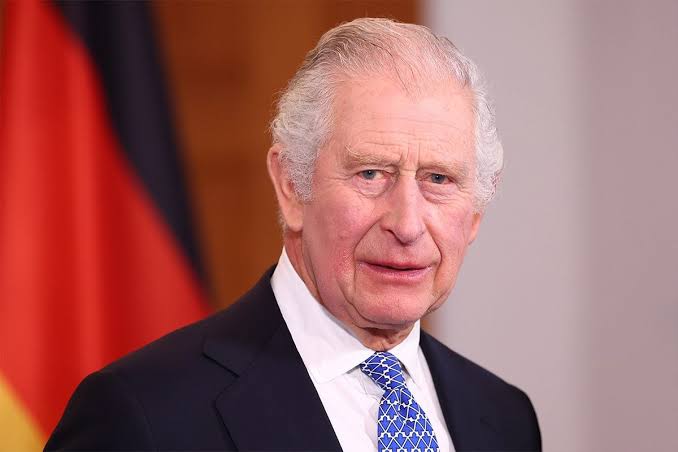
King Charles III has announced the BAN on LGBTQIA+ Conversion Therapy in his new 2026 speech.
The monarch called the practice “abusive” and pledged to maintain the necessary care for those exploring their sexual orientation and gender identity. (via Mirror)