The American Heart Association mourns the passing of the legendary cardiologist Eugene Braunwald, M.D., widely recognized as one of the most influential figures in the history of cardiovascular medicine. Over seven decades, his work reshaped the understanding and treatment of heart disease, leading many to call him the father of modern cardiology.
Braunwald was a lifelong contributor to the American Heart Association, helping advance its research and scientific mission, and was honored with some of the Association’s highest honors for his lasting influence on cardiovascular care and research. His influence extended well beyond his own discoveries, as generations of Association‑supported investigators, clinicians and academic leaders were trained by Braunwald or guided by the clinical trial standards and mentorship models he helped establish.
https://t.co/ieZuHYMyOP
Presented at #SIR26TOR:
Among patients with moderate or severe PTS, the addition of endovascular therapy to standard care resulted in less severe PTS and better quality of life at 6 months than standard care alone but with a higher risk of bleeding. Full phase 3 C-TRACT trial results: https://t.co/r2a9OzBLfw
Editorial: Stenting for Post-Thrombotic Syndrome — A Step Forward https://t.co/Y6SHyfZckg
@SIRspecialists
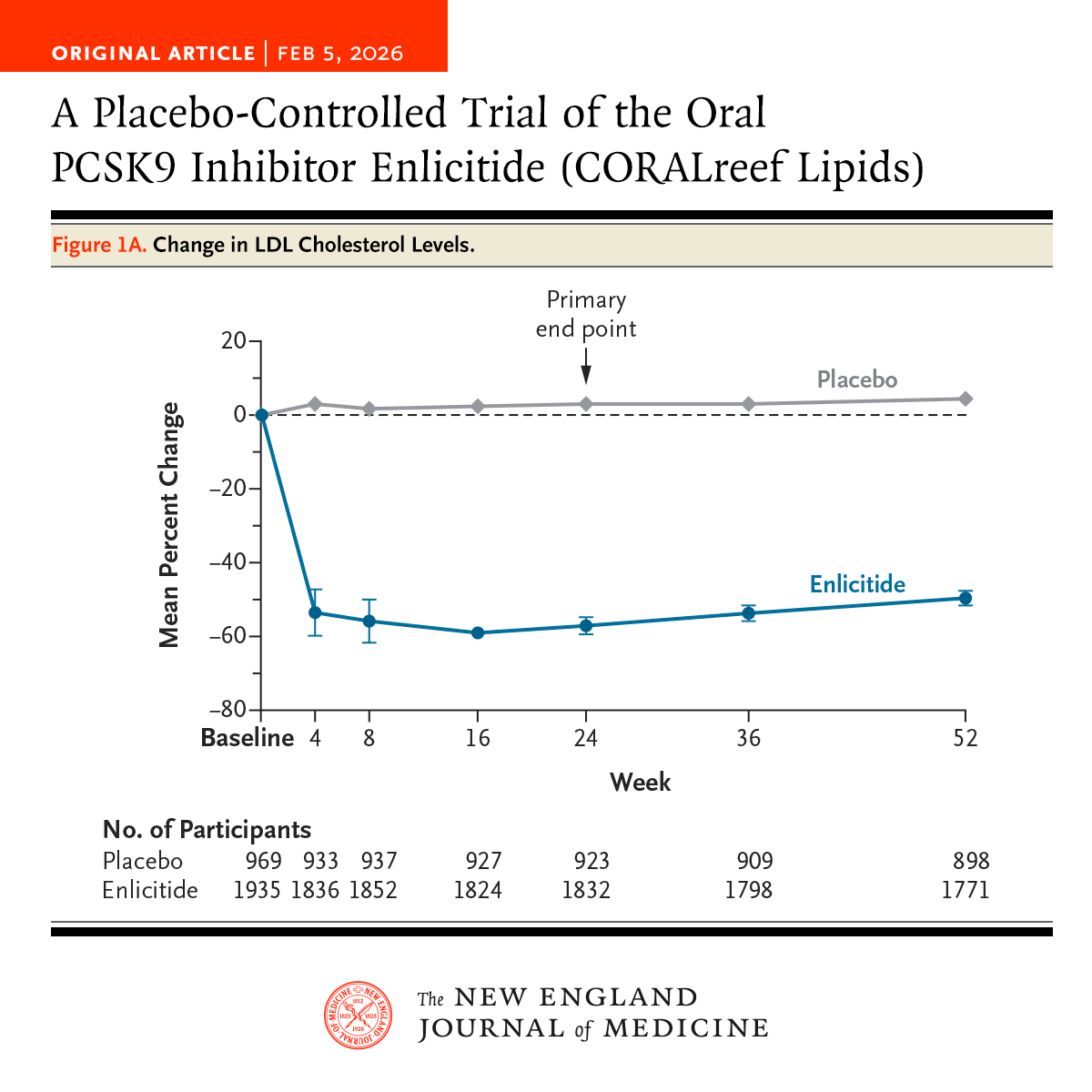
In the phase 3 CORALreef Lipids trial, the oral PCSK9 inhibitor enlicitide reduced LDL cholesterol by 57% at 24 weeks and also lowered non-HDL cholesterol, apolipoprotein B, and lipoprotein(a). Adverse events were similar in the two groups. Full trial results: https://t.co/o5RS02KCWi
Editorial: Exploring a New “Reef” in Dyslipidemic Risk Reduction https://t.co/W3KfZHkxMD
Presented at #SVIN25:
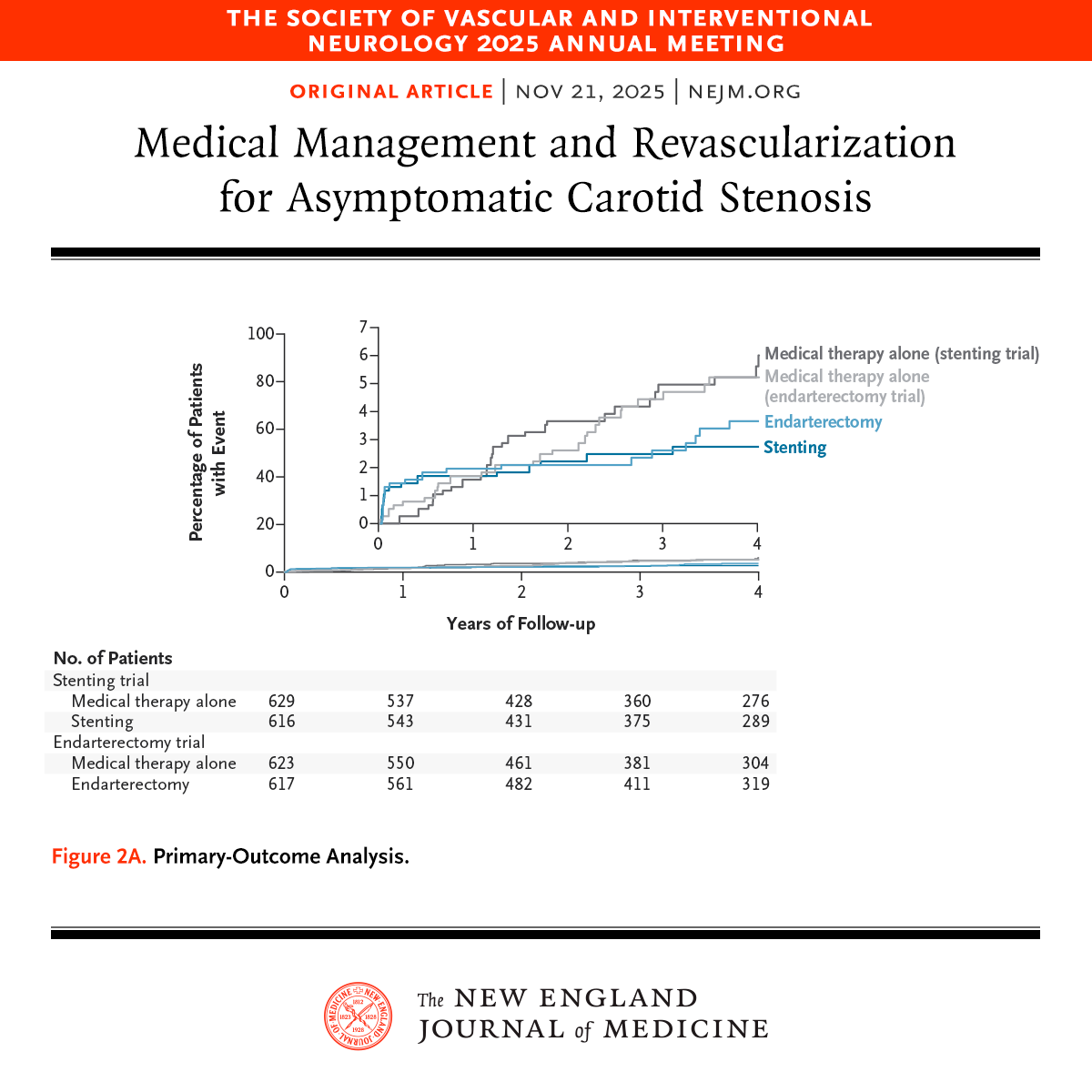
CREST-2: In high-grade asymptomatic carotid stenosis, addition of stenting to medical therapy led to a lower risk of stroke over a 4-year period. Endarterectomy did not lead to a significant benefit. Full results: https://t.co/ojge1CjqiU
Editorial: Managing Asymptomatic Carotid Stenosis https://t.co/D9LH89Edyk
@svinsociety
For anyone who has wanted a clear, authoritative summary of inflammation and cardiovascular disease, and where the science is heading, here it is.
The 2025 ACC Scientific Statement on Inflammation and Cardiovascular Disease. @JACCJournals https://t.co/9W4ixNqRTN
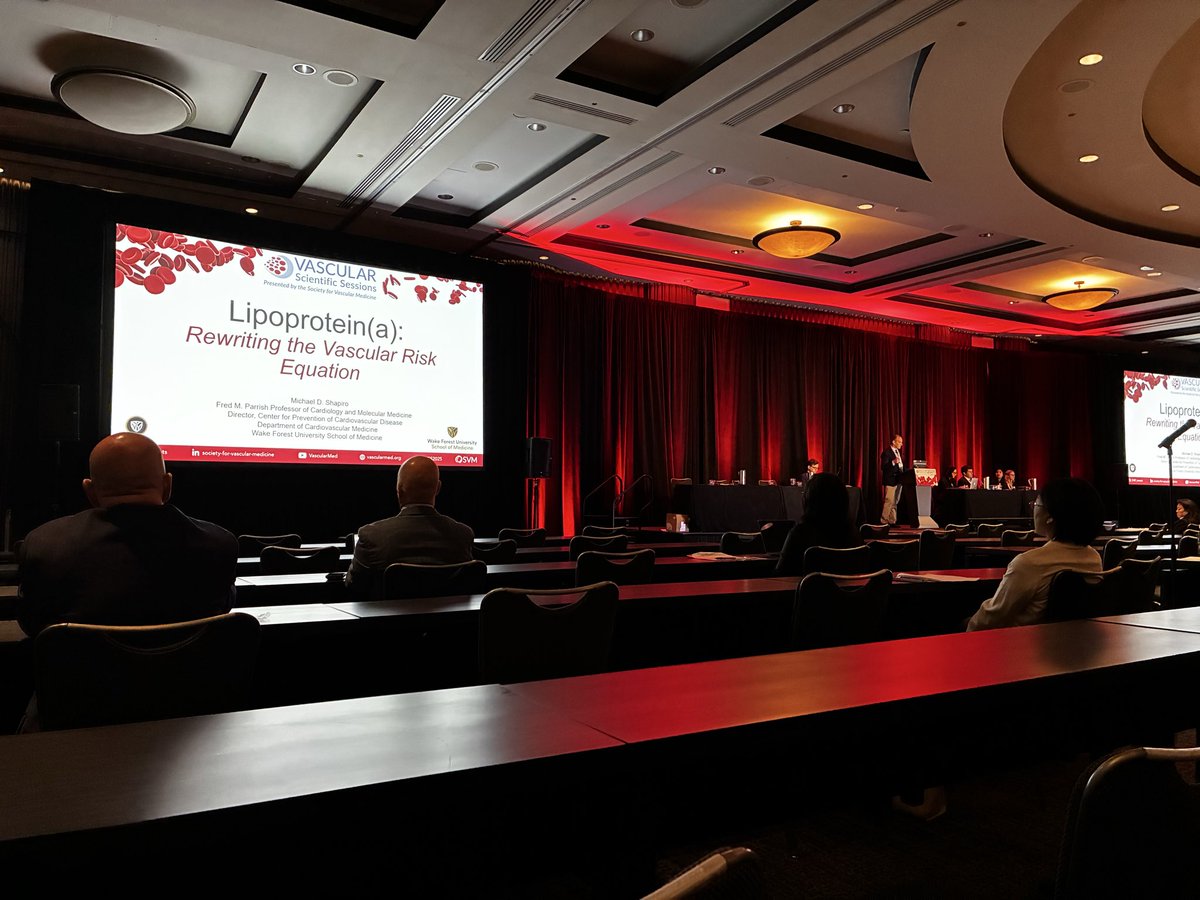
• Regardless of baseline LDL-C, when Lp(a) was elevated, risk of CHD events increased. Lp(a) may blunt the benefit of statin therapy. The absolute contribution of Lp(a) reduction to reduced risk of MACE was substantial (~25%) when baseline Lp(a) concentration was high.
As a #VSS2025 Social Media Moderator, I wanted to highlight 2 talks today among the many other fantastic sessions: Lp(a): re-writing the Vascular Risk Equation by @DrMichaelShapir @ 11:30 AM & Venous Vasc Medicine Symposium I: Nuts & Bolts of Clinical Practice @ 2 PM @SVM_tweets
It’s SVM #VSS2025 week!
Hope you all are excited for #science#learning#mentorship & some #fun 🥰
Don’t forget to share your VSS experience on social media by adding #VSS2025 to your posts. It’s a great way to connect with fellow attendees.
Agenda @ https://t.co/4I79K5cNFg