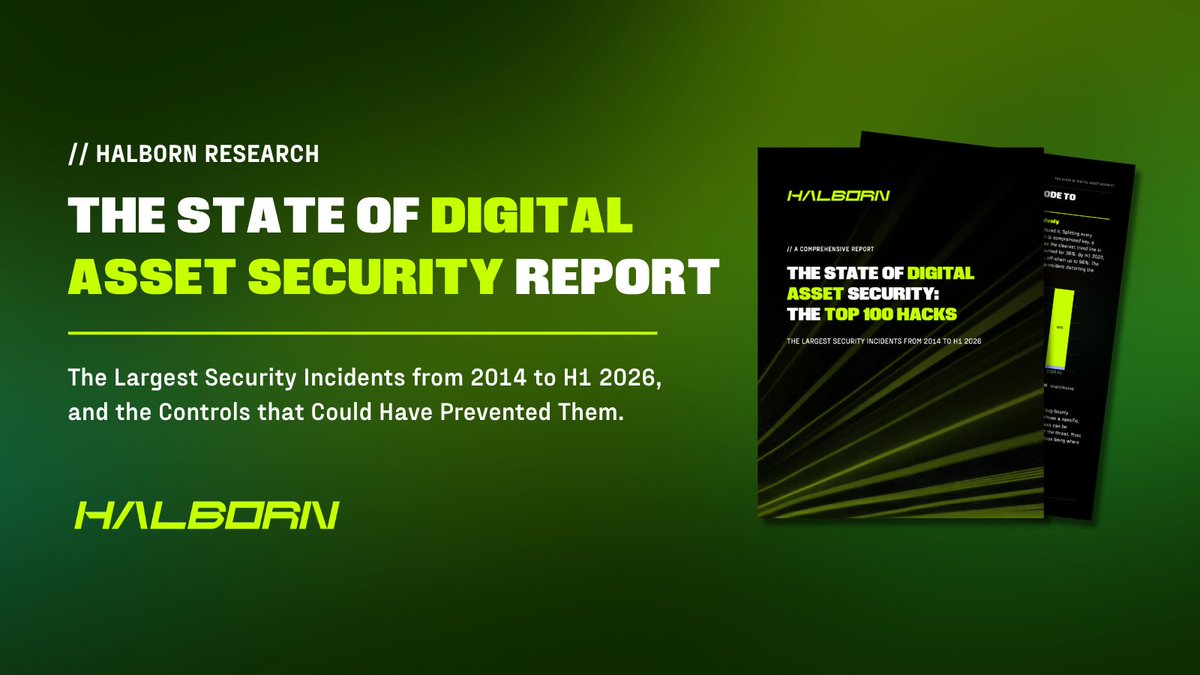
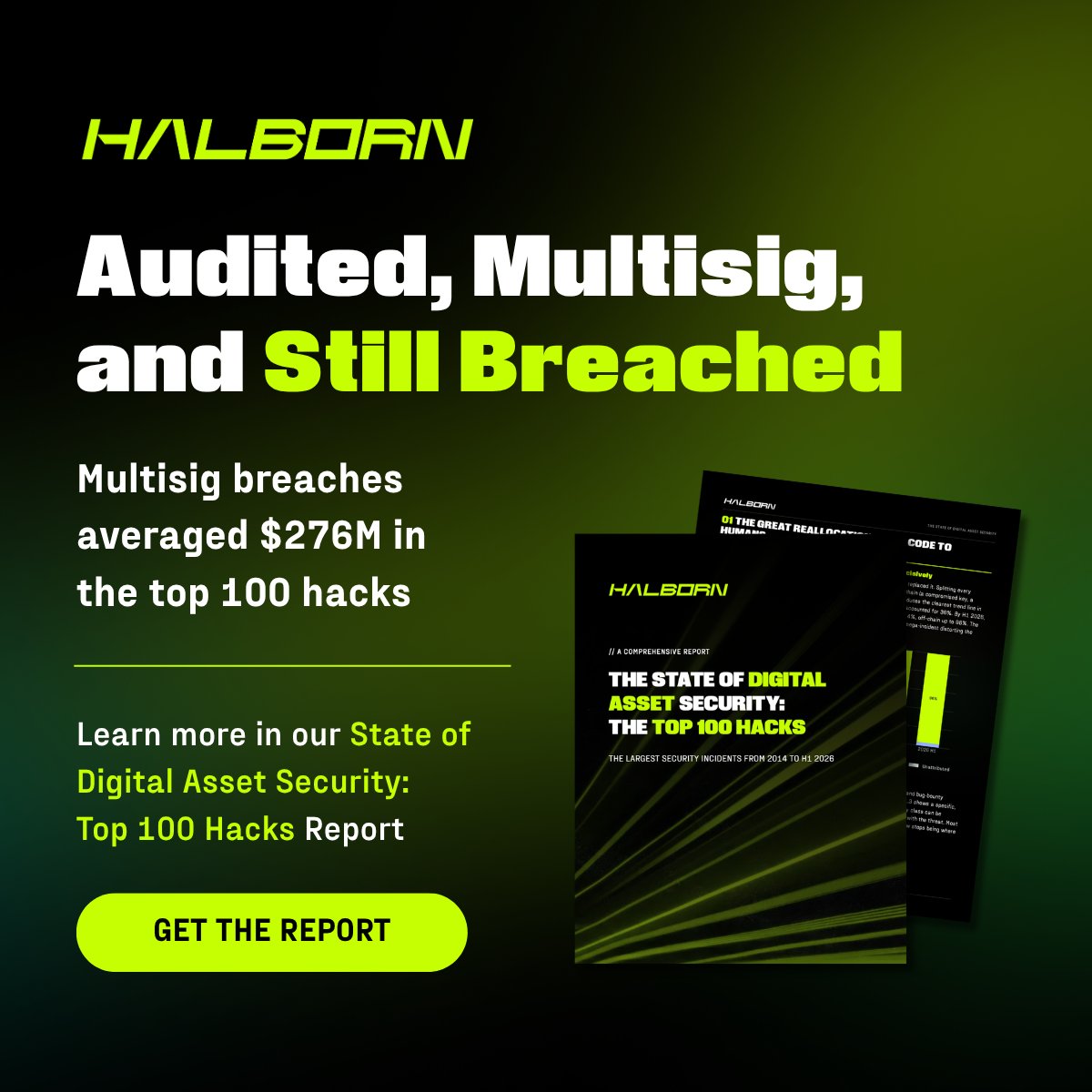
We analyzed the 100 largest digital asset security incidents from 2014 to H1 2026. 🔐
The attack surface moved. 96% of H1 2026 losses now come from compromised keys, signing workflows, and vendor infrastructure.
🔗 Get your copy: https://t.co/g9LB6pguEi
Swarm fraud is not new. AI agents with wallet access make it easier to run and harder to detect. ⚠️
One actor can coordinate many low-cost accounts to run Sybil attacks, wash trading, oracle manipulation, and protocol exhaustion.
📰 Learn more: https://t.co/IorqLZou8V
Supply chain risk is treasury risk. Most crypto orgs file it under engineering hygiene.
One poisoned npm or PyPI release or compromised workflow can end in irreversible loss.
📰 Read our overview on threats and controls: https://t.co/zN0MHZGbMq
@Cordaxyz Proud to have completed the smart contract security assessment for @Cordaxyz, built by @inside_r3! Institutional-grade structured products onchain on @solana, held to institutional security standards.
The custody trilemma: agility, cost of the solution, security. ⚖️
Where you land depends on the asset class you want to custody. Fast start? A regulated custodian.
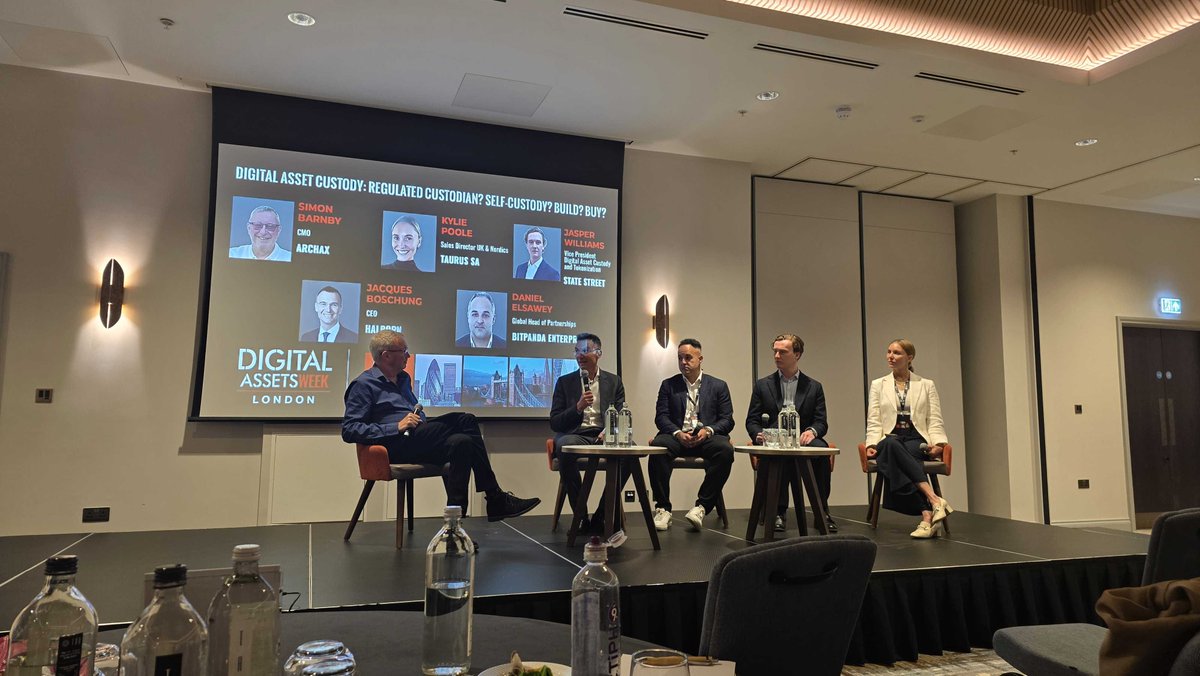
Our CEO Jacques Boschung, Digital Assets Week London.
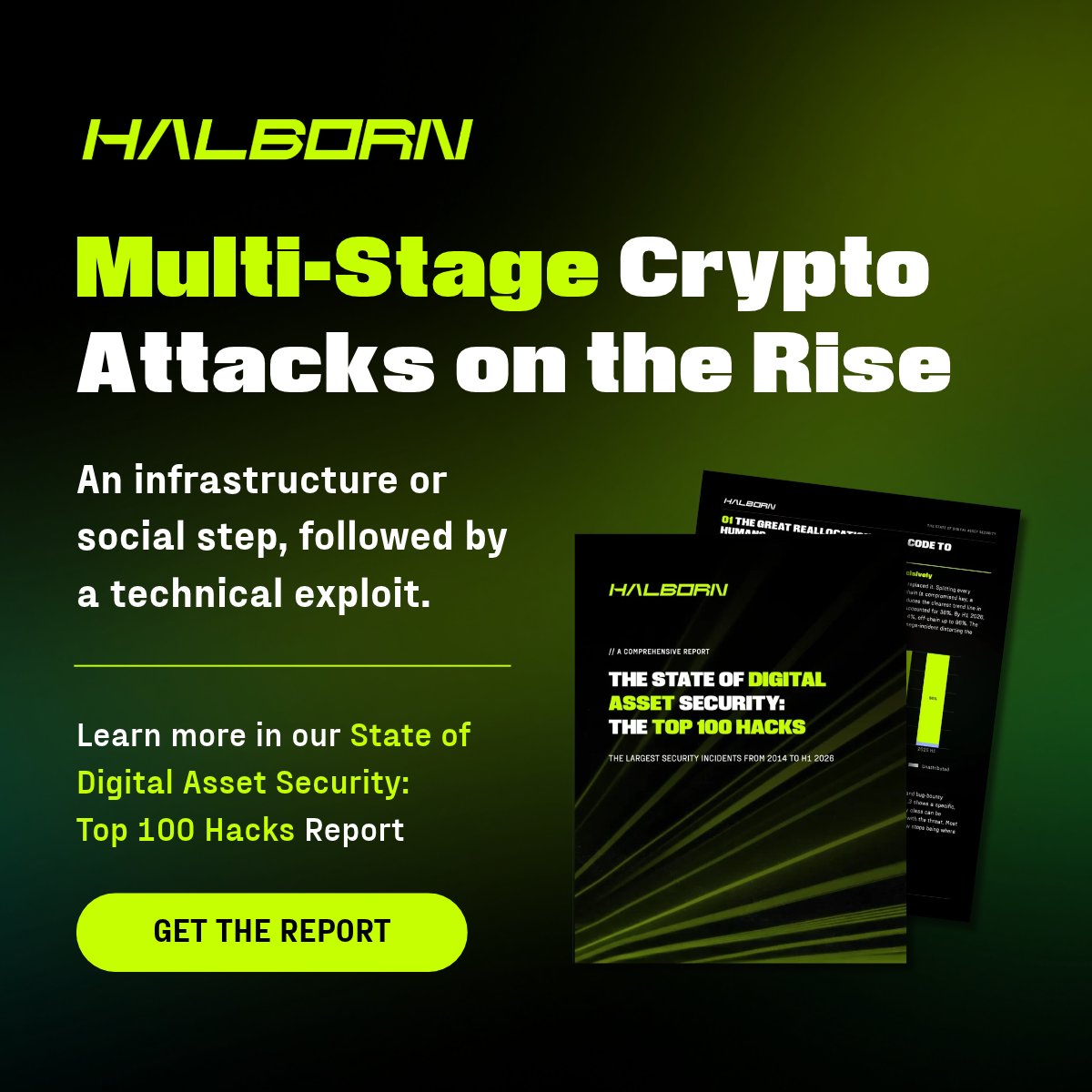
Hybrid incidents are now a recurring pattern in digital asset hacks. 🔓
One infrastructure or social step. One technical exploitation step.
🔗 Learn more in our report: https://t.co/VJvOBbfHXS
HSMs, multisig wallets, and MPC each move the attack surface somewhere different and trade availability against isolation differently. 🔏
We evaluate them on security, availability, and operational complexity.
📰 Read: https://t.co/Oyumqm4zq6
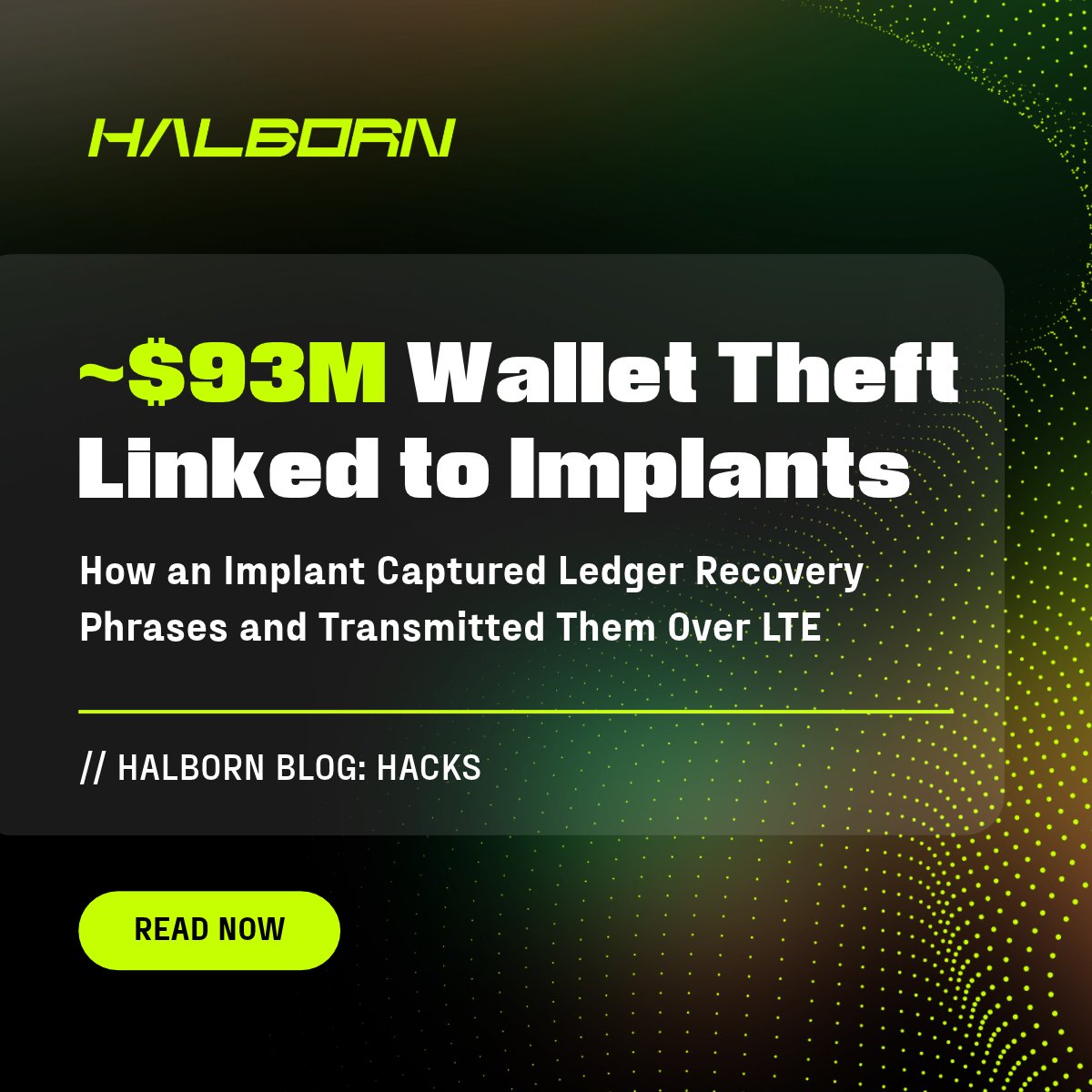
An estimated $93M was stolen from accounts protected by a Ledger hardware wallet. 🔒
The hack is linked to an implant in hardware from a reseller. It monitored the screen during setup and captured the recovery phrase.
🔗 Learn more: https://t.co/dM6zbnPWke
Recovery rate in the top 100 digital asset hacks: 40% in 2021, 11% in H1 2026. 💸
Forensics got better. Laundering got faster.
DPRK-linked losses recover at 9.0%.
🔗 Get the report: https://t.co/X47yXGEPyB
We're pleased to announce the formation of CMTA's new Product Committee, chaired by Gabi Urrutia, (SVP Security & Field CISO @HalbornSecurity), to drive international tokenization standards and cross-border interoperability.
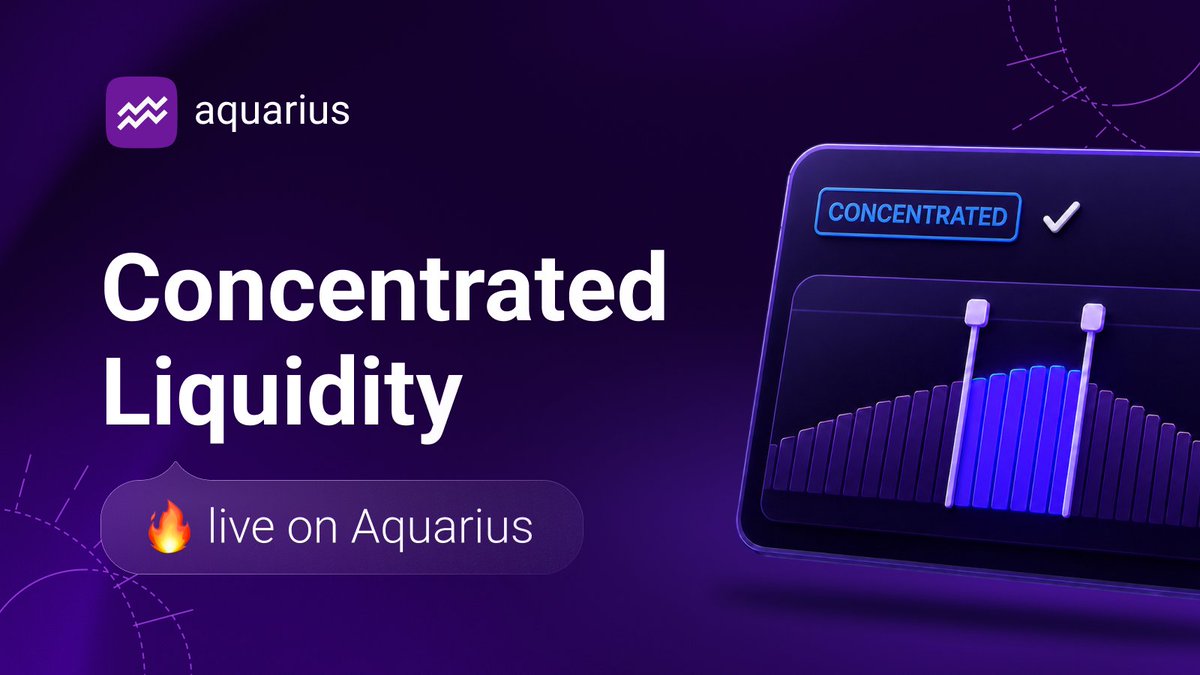
1/ @HalbornSecurity has finished the security audit of our concentrated liquidity pools. Every finding is closed.
The pools have been live and working for a while. Now an independent auditor has signed off on them too. ♒
RCM is moving closer to launch.
@HalbornSecurity has completed the smart contract audit of the RCM Protocol, covering the contracts supporting RCM Asset issuance and lifecycle functions.
The audit summary is available below ↓
Raising the signer count doesn't address where attackers actually operate. ❌
All 12 multisig breaches in our Top 100 Digital Asset Hacks report were defeated through the human or workflow layer. Not the cryptography.
📰 Full report: https://t.co/4GOmXNbzgU
$387.5M out of Bitget's hot and warm wallets on Sept 24. The biggest hack of the year so far. 🚨
On current evidence, no private key was stolen. Bitget's own signing service signed the transfers.
📰 Read @urruts' analysis: https://t.co/GQQtsj8jBd
Third-party custodian, self-custody, in-house build, or acquisition. Every route to institutional digital asset custody carries a different risk profile. ⚖️🔐
Today at Digital Assets Week London, our CEO Jacques Boschung discussed these trade-offs with fellow experts on a panel.
French fintech @finaryhq needed to run a custody key ceremony, with no internal experience and a regulatory need for independent attestation. 🔑
Halborn reviewed the runbook, identified two gaps, then attested the ceremony live.
🔗 Full case study: https://t.co/KW89E2H3yv