I built an Employee Data Dashboard to analyze workforce metrics like demographics, diversity, and attrition for HR insights.
The full analysis, data cleaning process, and explanations are documented on GitHub: https://t.co/Di2EtCs4av
Days since Arsenal won the league: 0
Days since Arsenal won a trophy: 0
Days since Arsenal won a major trophy: 0
Days since Arsenal went trophy less: 0
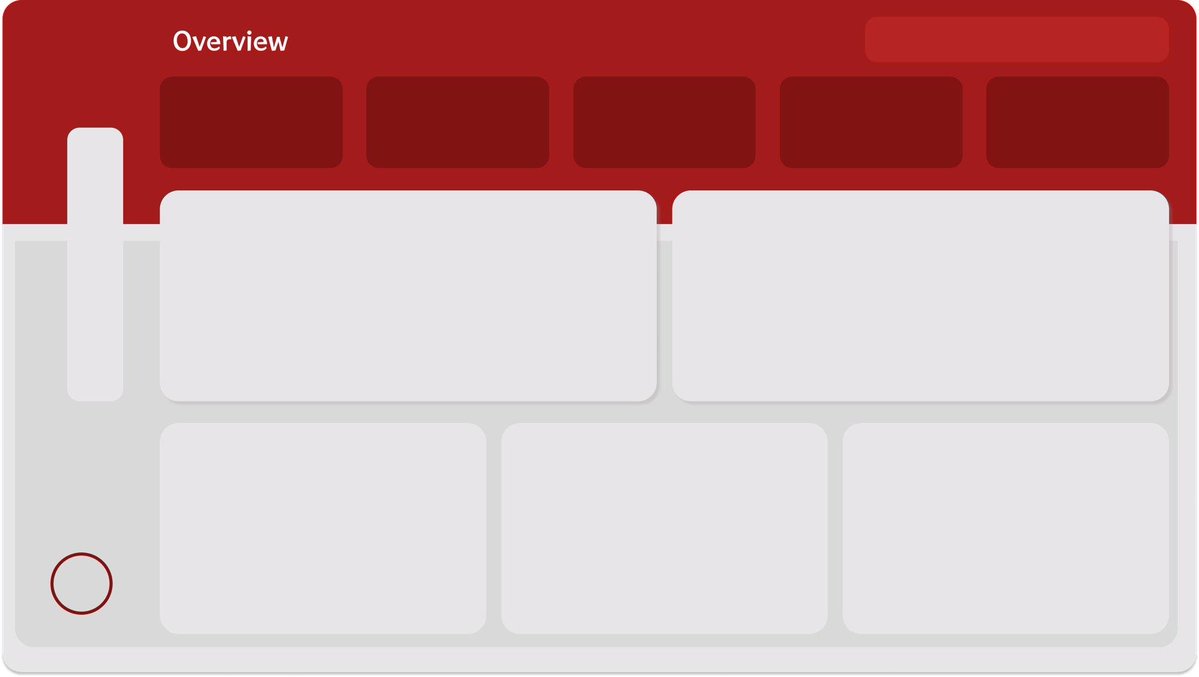
Before you build that next dashboard on Excel and Power BI, learn to wireframe first.
You can wireframe on Power-Point, Figma. Even on Excel and Power BI.
Here are some Wireframe Ideas for your next dashboard.
Tell me thank you. 🙂🙂
She's literally the reason I started doing so much dhikr again, which led to less music, which led to more ibaadat. I got love for her and she doesn't even know me 😭😭 may Allah bless this sister with so much more
10 Things I Found Surprising in Medina.
1.Medina is very beautiful and much less crowded compared to Mecca.
2.There are many historical sites across the city connected to early Islamic history.
3.The police in Medina seem calmer and friendlier compared to the security personnel in Mecca.
4.Zamzam water is not as widely available in Medina as it is in Mecca.
5.The famous umbrellas at Al-Masjid an-Nabawi are enormous in number. If you decide to walk beneath them all when they are open, it feels almost endless. There are about 250 umbrellas in total.
6.The gates of Masjid an-Nabawi are closer to one another, unlike the gates around Masjid al-Haram, which are more spread out.
7.There are many hotels very close to Masjid an-Nabawi, and accommodation seems more accessible compared to Mecca.
8.Medina has more residential areas and beautiful houses that appear more organized and spacious than many parts of Mecca.
9.The giant umbrellas in Masjid an-Nabawi are extremely sophisticated structures, reportedly costing around $1.25 billion to construct.
10.Many people of Medina deeply appreciate it when visitors pray for them. They believe that pilgrims who travel from distant lands for Hajj or ʿUmrah hold a special honour in the sight of Allah, so they often request duʿāʾ from them.
More Things I Found Surprising in the City of Mecca.
1. Sheikh Abdul Rahman Al-Sudais is not just an imam. He is also the President of Religious Affairs for both the Grand Mosque in Mecca and the Prophet’s Mosque in Medina. Anything related to religious administration in both cities falls under his authority.
2. Orphans are treated with great honour. They are given special attention and care by the Saudi authorities.
3. The distance between Mecca and Medina is really far. I’ve heard people say it before, but I didn’t fully understand how long the journey was until I travelled it myself.
4. I saw many varieties of dates — more than twenty types. I tasted about ten of them, and each one had a different flavour, though they are all sweet.
5. The imams of Mecca are heavily guarded. Three different times I saw Imam Sudais, he had no fewer than ten police officers around him, even inside Masjid al-Haram.
6. The cemetery where Khadijah bint Khuwaylid (the wife of the Prophet) was buried is located along a main road. The place is known as Jannat al-Muʿallā (Maqbara al-Maʿlā), no special design,nothing, just normal cemetery.
7. People smoke a lot that there is sign board in Masjid haram appealing to people not to smoke around the mosque. You can see people casually smoking, even shortly before and after iftar.
8. Death is very visible in Mecca. During the seven days I spent there, Ṣalāt al-Janāzah was performed after almost every one of the five daily prayers and even after Tarāwīḥ/Tahajjud, they bring in dead people in numbers.
9. The iftar provided by the Saudi authorities and donors is often more than enough for the pilgrims. Sometimes you still see food remaining in boxes or carts even after everyone has been served.
10. The Abraj Al Bait (Clock Tower) beside Masjid al-Haram is actually a hotel and commercial complex. Before visiting Mecca, I used to think it was part of Masjid al-Haram itself. But in reality, it is a massive building that houses hotels, shopping areas, restaurants, and other facilities for pilgrims.
11. Throughout my stay, I only saw two kinds of animals — cats and birds. The cats are everywhere on the streets, so many that it almost feels like no one owns them.
12. Contrary to what I used to hear — that birds do not fly over the Kaaba — I actually saw birds flying over it, resting on it, and hovering around it.
12 Things I Found Surprising in the City of Mecca.
1. Many streets are named after the companions of the Prophet ﷺ. You constantly see streets names connected to early Islamic figures.
2. The Kaaba is far bigger than I imagined. What I had seen on TV and social media did not prepare me for what I saw with my own eyes.
3. Contrary to what I believed before coming, not all the water in Mecca is Zamzam water, even though Zamzam is widely available, there are other branded bottled water.
4. Throughout my stay in Mecca, I boarded about six taxis, and each time I connected to the driver’s Wi-Fi. Surprisingly, all of them had the same password: 12345678.
5. People in Saudi Arabia do not speak the exact Arabic of the Qur’an, a number of them do not understand it in fact. Like many languages, they speak their own local dialect.
6. No matter how long someone lives in Saudi Arabia, becoming a citizen is not possible. Citizenship is not granted to non-natives.
7. Mecca is a very hilly city. There are mountains and hills everywhere, that people actually build houses and neighborhoods on them.
8. For a country known for its desert landscape, there are plenty of fresh fruits available everywhere.
9. I saw many shops with “Buy 1 Get 1 Free” deals — so many that it almost seems like a normal marketing culture in the city.
10. The Qur’an is not sold inside Masjid al-Haram or in the immediate surroundings of the mosque, it is free.
11. In all the restaurants I visited, none of them had a woman as the chef. The chefs in every one of them were men.
12. Everyone wants to give you iftar and suhoor for free. Many people even insist — sometimes begging you — to take food from them, no matter how little it is.