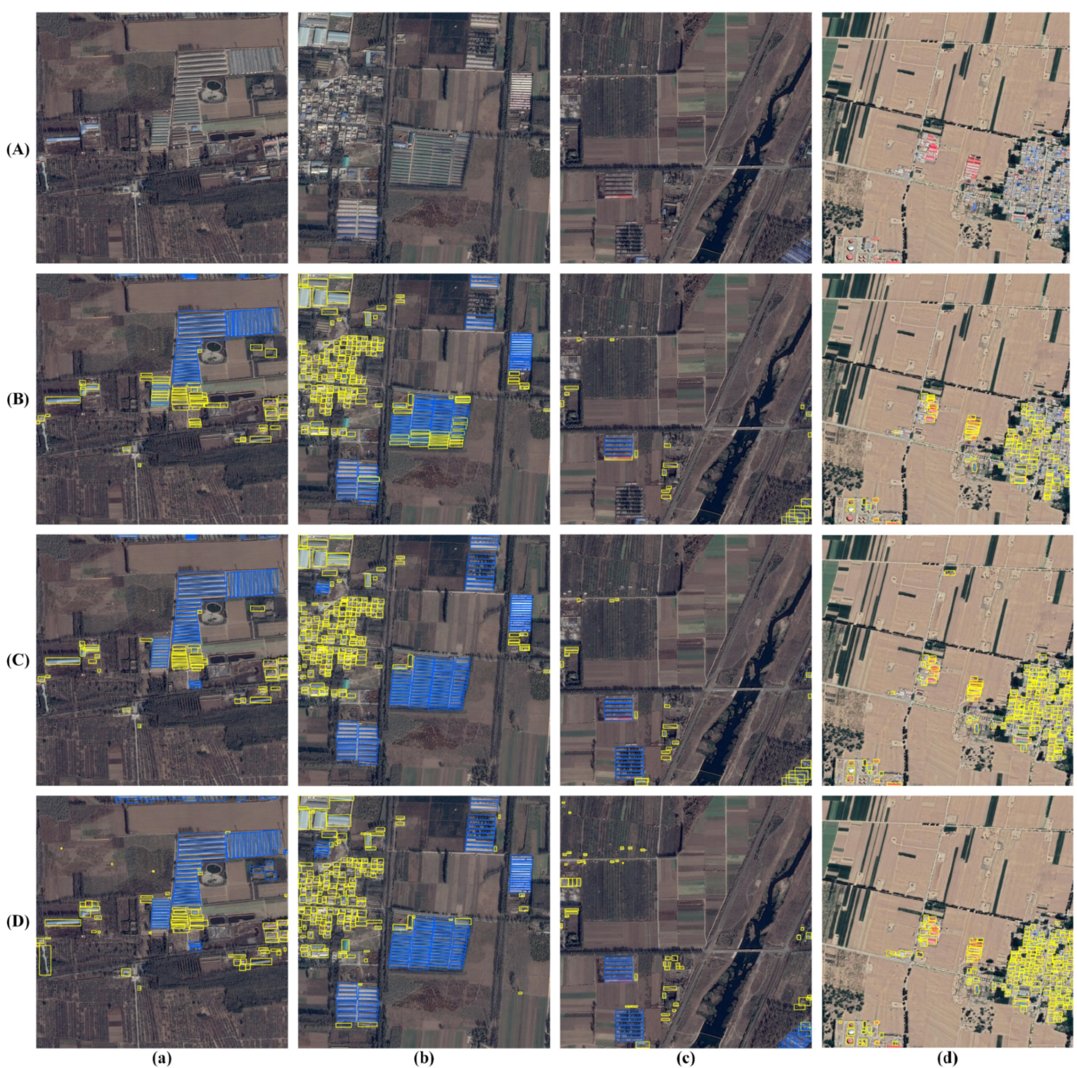
🌍🛰️ Detection of #Greenhouse and Typical Rural #Buildings with Efficient Weighted #YOLOv8 in Hebei Province, #China
✍️ Bingkun Wang et al.
🔗 https://t.co/aAeDp1CuXf
🖼️🖼️ LRNet: #Change#Detection in High-Resolution Remote Sensing #Imagery via a #Localization-Then-Refinement Strategy
✍️ Huan Zhong et al.
🔗 https://t.co/1uwlWmrBmU
🌍🛰️ Using an Area-Weighted Loss Function to Address #Class Imbalance in #DeepLearning-Based Mapping of Small #Water#Bodies in a Low-Latitude Region
✍️ Pu Zhou et al.
🔗 https://t.co/GO0djZ7wz1
🖼️🖼️ Remote Sensing #Image#Segmentation Network That Integrates Global–Local Multi-Scale #Information with Deep and Shallow #Features
✍️ Nan Chen et al.
🔗 https://t.co/MSftXHZvBd
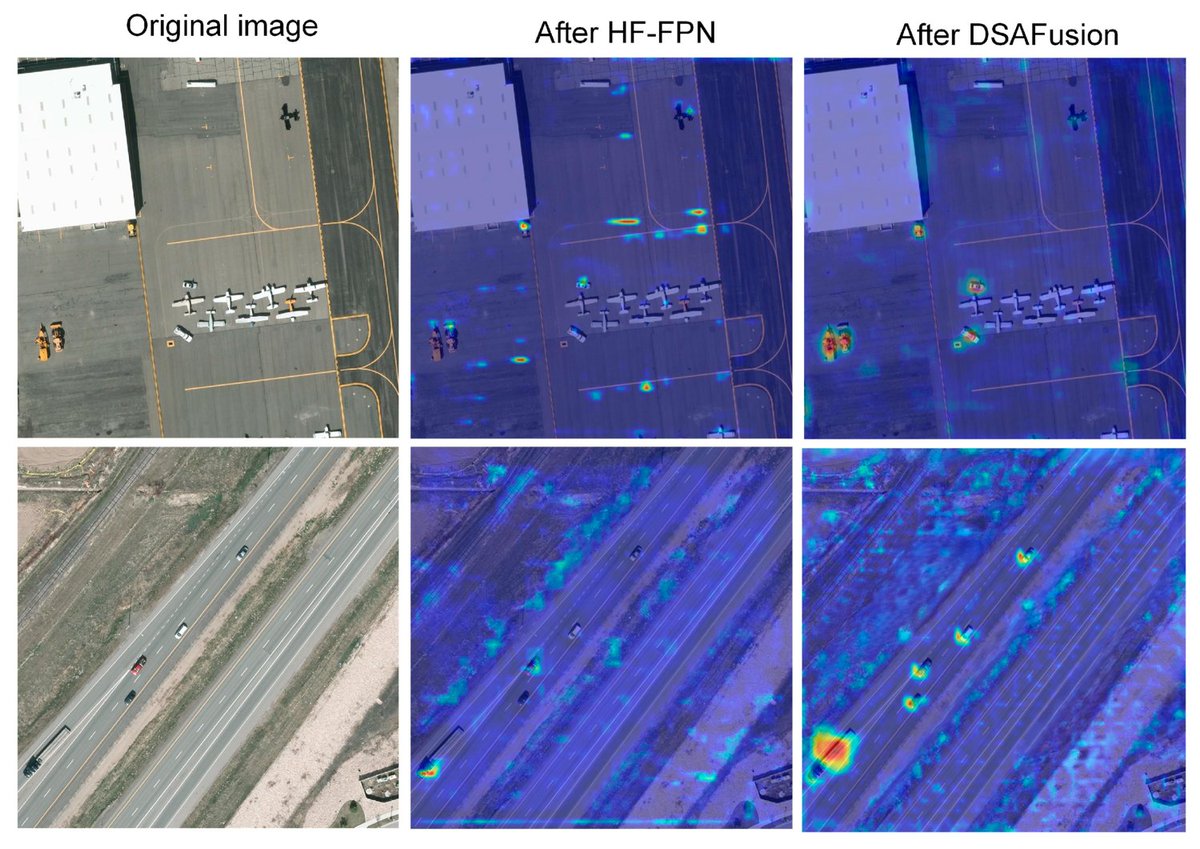
👇👇 HFEF2-YOLO: Hierarchical Dynamic Attention for High-Precision Multi-Scale Small #Target#Detection in Complex #RemoteSensing
✍️ Yao Lu et al.
🔗 https://t.co/rbGFrEtD3S
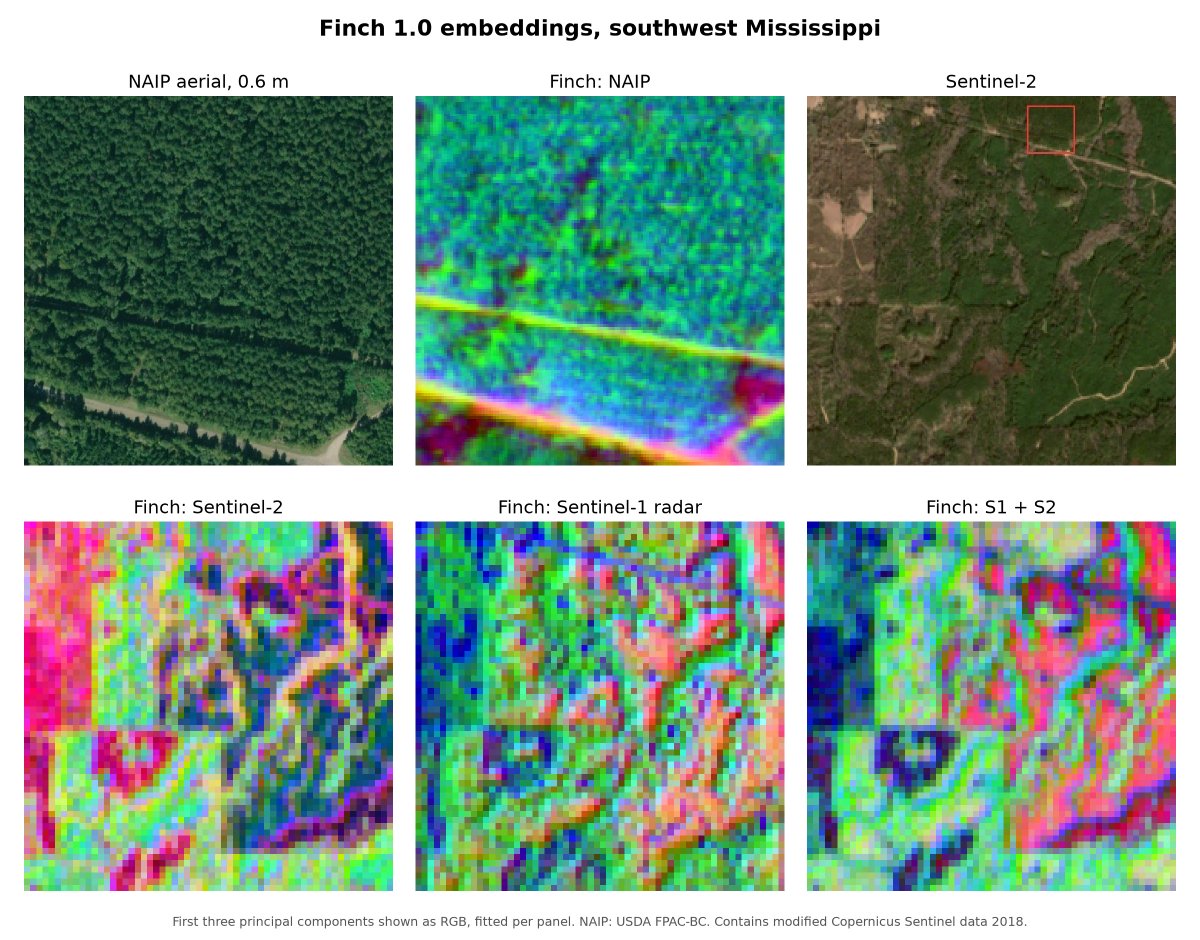
The Finch 1.0 model card is out: a full evaluation of our Earth observation foundation model on 34 public benchmark tasks.
One encoder for 50 satellite, aerial and drone sensors at native resolution. Frozen embeddings + a linear layer. 🧵
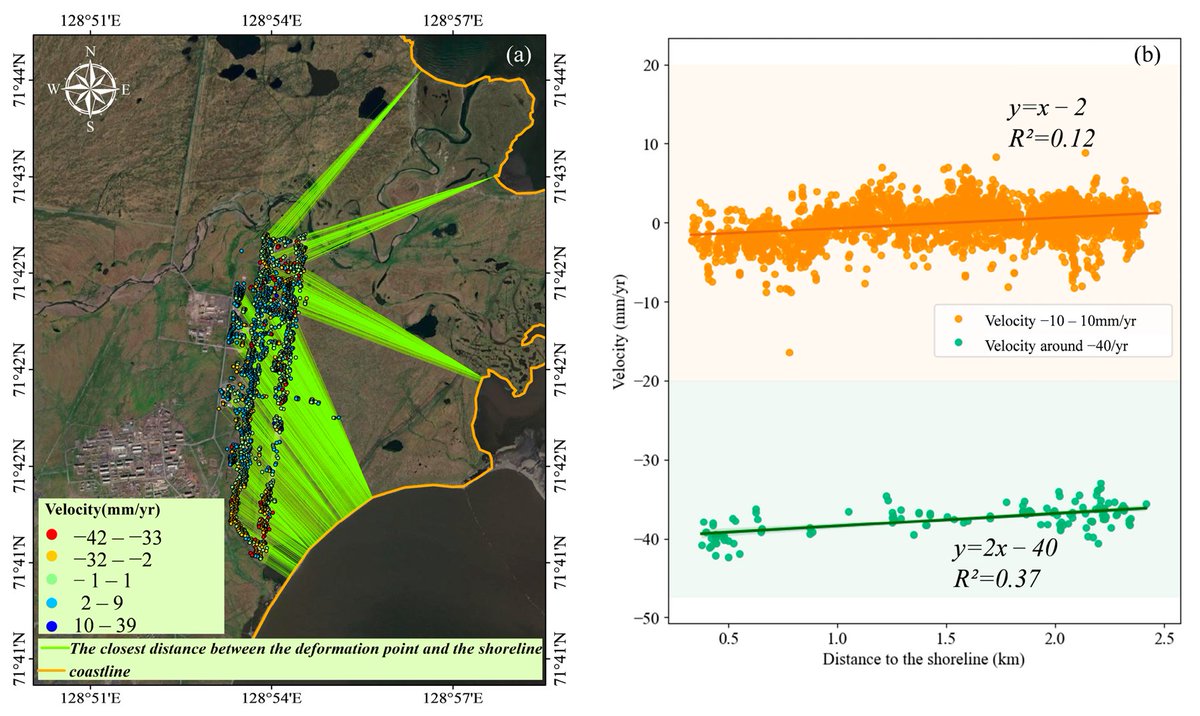
👉👉 Time-Series #InSAR Monitoring of #Permafrost-Related Surface #Deformation at Tiksi #Airport: Impacts of Climate Warming and Coastal #Erosion on the Northernmost #Siberian Mainland
✍️ Qingkai Yan et al.
🔗 https://t.co/ohOHvrywPg
🌾🌾 Detection of Red Crown Rot of #Soybean in #Illinois Fields Using High-Resolution #Satellite Imagery and #MachineLearning
✍️ Bruno D. Pugliese et al.
🔗 https://t.co/3Rgv7CkEgk
THIS IS ACTUAL F*CKING GOLD
Anthropic just shared one of the best tricks for Claude Code.
The idea: run Sonnet, Haiku and Opus 5.5 together, each one doing only the job it's best at.
Opus-level judgment on every big call, without paying Opus rates for every routine turn.
You just launch Claude Code like this:
claude --model sonnet --advisor opus
here's the split:
→ Sonnet 5.5 runs the session and writes the code
→ Haiku 5.5 explores files and docs in parallel
→ Opus 5.5 stays on call as advisor for the big calls
→ you stop spending Opus on work that doesn't need it
Opus only steps in at three moments:
→ before a plan locks
→ when the same error shows up twice
→ before calling it done
Sonnet builds. Haiku explores. Opus reviews.
JEV engineering is the same move one layer down: the forks that need no thinker (which file, which tool, retry or stop) go to JEV in milliseconds, and the big models only see the ones that split
the full tree
> Sonnet 5.5 runs the main session and edits code
> search maps the repo on Haiku 5.5
> grep finds call sites on Haiku 5.5
> docs pulls the API reference on Haiku 5.5
> Opus 5.5 on call as advisor, reads the whole transcript when consulted
> JEV routes micro-forks in milliseconds
paste the tree and this prompt into Claude Code ↓
"Rebuild my Claude Code setup around this tree:
1. Run the main session on Sonnet 5.5 with Opus 5.5 as advisor.
2. Create three read-only Haiku 5.5 subagents: search (maps the repo), grep (finds call sites), docs (pulls the API reference).
3. Add one rule to CLAUDE.md: consult the advisor before locking a plan, after the same error twice, and before calling a task done.
4. Route fast deterministic forks (tool choice, path selection, retries) through JEV.
Show me every change as a diff first. No edits until I say go."
↳ https://t.co/bsYb2K5H9G
save it, you'll use this every single day.
Interesting geospatial work introducing the https://t.co/bJHRJSDN7M platform to automatically segment standing deadwood and early dieback indicators from any drone orthophoto. Learn more from Clemens Mosig:
More: https://t.co/yNGP8KxTeH
𝐓𝐡𝐞 𝐍𝐞𝐰 𝐒𝐜𝐢𝐞𝐧𝐜𝐞 𝐨𝐟 𝐌𝐚𝐩𝐬 - https://t.co/qRwV1ryEG1
🌍🛰️ Feature-Guided Instance #Mining and Task-Aligned Focal Loss for Weakly Supervised #Object#Detection in Remote Sensing #Images
✍️ Jinlin Tan et al.
🔗 https://t.co/MkL5gx0JiU
🌍🛰️ Spatiotemporal #Dynamics of #Habitat#Quality in Semi-Arid Regions: A Case Study of the West Songnen Plain, #China
✍️ Hao Yu et al.
🔗 https://t.co/V30gpm0ufE
🌍🛰️ SPIFFNet: A Statistical Prediction Interval-Guided #Feature Fusion Network for #SAR and #Optical Image #Classification
✍️ Yingying Kong and Xin Ma
🔗 https://t.co/IKabnV2ODm
5 LLM fine-tuning techniques, explained with visuals:
Traditional fine‑tuning is impractical for LLMs (billions of params; 100s of GB).
Since this kind of compute isn't accessible to everyone, parameter-efficient fine-tuning techniques (PEFT) were built.
Before we go into details of each technique, here's some background that will help you better understand these techniques:
LLM weights are matrices of numbers adjusted during fine-tuning.
Most PEFT techniques involve finding a lower-rank adaptation of these matrices, a smaller-dimensional matrix that can still represent the information stored in the original.
Now with a basic understanding of the rank of a matrix, we're in a good position to understand the different fine-tuning techniques.
(refer to the image below for a visual explanation of each technique)
1) LoRA
- Add two low-rank trainable matrices, A and B, alongside the weight matrices.
- Instead of fine-tuning W, adjust the updates in these low-rank matrices.
Even for the largest LLMs, LoRA matrices take up a few MBs of memory.
2) LoRA-FA
While LoRA significantly decreases the total trainable parameters, it requires substantial activation memory to update the low-rank weights.
LoRA-FA (FA stands for Frozen-A) freezes matrix A and only updates matrix B.
3) VeRA
- In LoRA, low-rank matrices A and B are unique for each layer.
- In VeRA, A and B are frozen, random, and shared across all layers.
- Instead, it learns layer-specific scaling VECTORS (b and d) instead.
4) Delta-LoRA
- It tunes the matrix W as well, but not in the traditional way.
- Here, the difference (or delta) between the product of matrices A and B in two consecutive training steps is added to W.
5) LoRA+
- In LoRA, both matrices A and B are updated with the same learning rate.
- Authors of LoRA+ found that setting a higher learning rate for matrix B results in better convergence.
🌍🛰️ Enhancing #Crop Type #Mapping in Data-Scarce Regions Through #Transfer#Learning: A Case Study of the Hexi Corridor
✍️ Jingjing Mai et al.
🔗 https://t.co/o6d0k38wFl