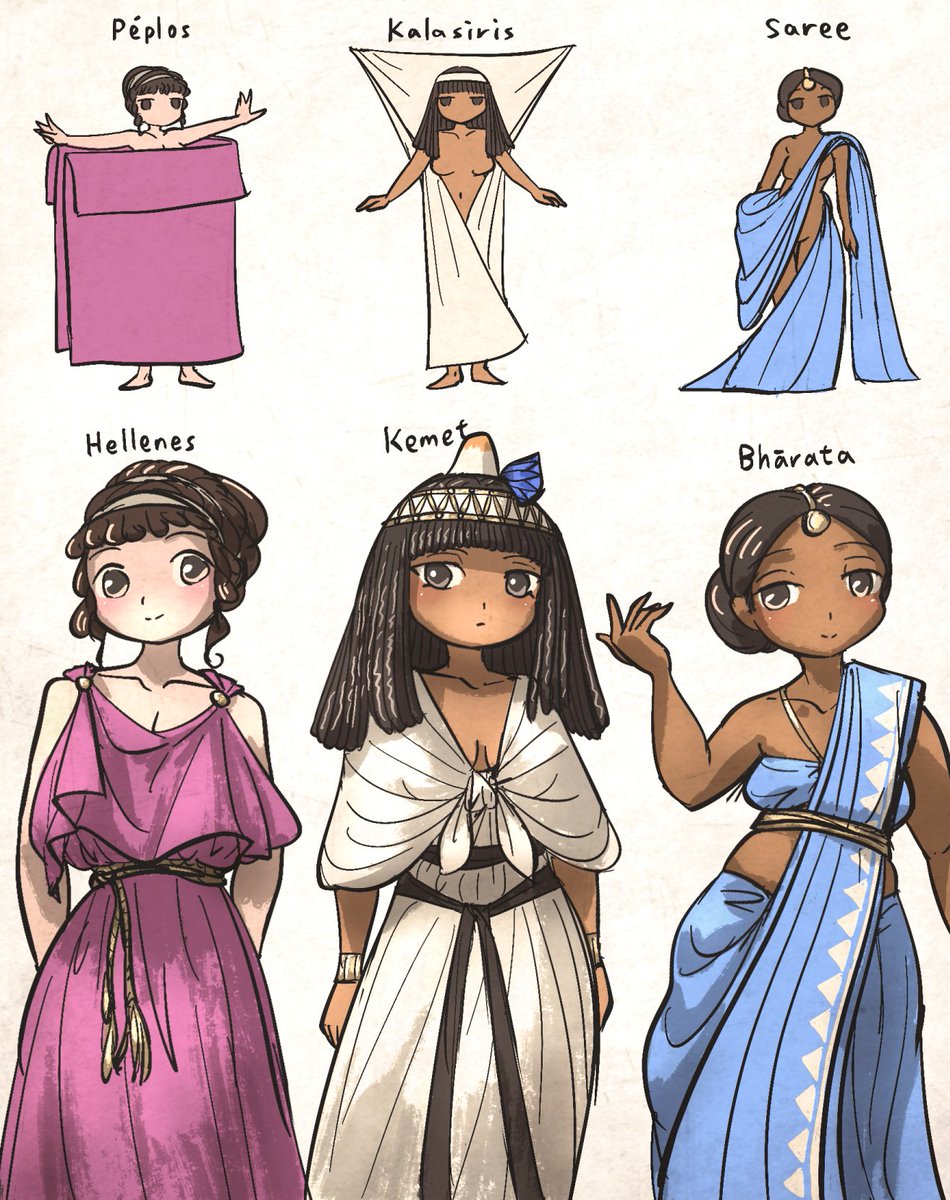
I often struggle with the fact that I am in fact Latina. Not that I am ashamed, no! On the contrary, I am so incredibly proud of my heritage and it is a big part of who I am and how I identify as a human being. What I struggle with is my skin color. If you look at me, you might >
Scientists have mapped Earth’s vast underground fungal networks for the first time, revealing a staggering 68 quadrillion miles of fungal threads that help regulate the climate.
A groundbreaking new study estimates that arbuscular mycorrhizal fungi form an underground network stretching roughly 110 quadrillion kilometers (68 quadrillion miles), equivalent to nearly a billion times the distance from Earth to the Sun. These microscopic fungal threads create symbiotic relationships with over 70% of land plants, exchanging nutrients and water for carbon while locking away massive amounts of CO₂ in the soil.
The research, led by the Society for the Protection of Underground Networks (SPUN), used machine learning models trained on data from more than 16,000 global soil cores, combined with high-resolution robotic imaging of fungal hyphae.
However, these critical networks face a serious threat from modern industrial agriculture. Fungal density in croplands is nearly 50% lower than in undisturbed ecosystems, largely due to tilling, chemical fertilizers, and fungicides. This loss reduces the soil’s ability to store carbon, weakens nutrient cycling, and increases chemical runoff.
The findings underscore the urgent need to protect these hidden ecosystems. Researchers plan to present the data at the upcoming UN desertification summit to push for global conservation benchmarks.
[Stewart, J. D., et al. (2026). Global density and biomass of arbuscular mycorrhizal fungal networks. Science. DOI: 10.1126/science.adu4373]
Twenty-five years ago, the Massachusetts Institute of Technology made a bold move that most universities would never dare.
Instead of locking its world-class course materials behind campus walls, MIT decided to put nearly its entire curriculum online, completely free for anyone with an internet connection.
That decision gave birth to MIT OpenCourseWare (OCW).
What began as a bold experiment in 2001 has become one of the most significant educational initiatives in history.
Today, OCW provides materials from more than 2,500 undergraduate and graduate courses across virtually every discipline: physics, engineering, artificial intelligence, economics, biology, mathematics, computer science, and many more.
Anyone can access lecture notes, problem sets, exams, syllabi, and a growing library of video lectures, with no tuition, no application, and no account required.
According to MIT, more than 500 million people worldwide have used these resources over the past 25 years.
The impact has been profound. Students use it to ace exams, explore new fields, and launch careers. Educators around the globe integrate the materials into their own teaching. Many learners credit OCW with helping them pass professional certifications and unlock new opportunities.
Beyond its direct benefits, OpenCourseWare helped spark the global open education movement, inspiring dozens of other universities to share their knowledge freely online.
Even more impressive: the project was originally planned as a 10-year initiative. A quarter-century later, it's still expanding.
MIT now aims to reach 1 billion learners in the coming decade, while enhancing the experience with powerful new AI-powered learning tools.
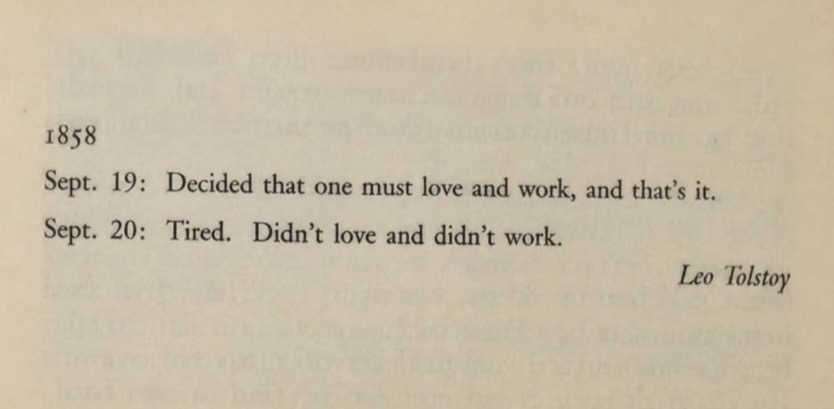
Probably the most relatable diary entry ever written.
Tolstoy wrote these diary entries in 1858, when he was around 30 years old and still years away from writing War and Peace and Anna Karenina.
He had already served in the Crimean War and was gaining recognition as a promising young writer, but his diaries reveal someone constantly struggling to create rules, discipline, and purpose in his own life. From a young age, he kept detailed journals documenting his ambitions, failures, habits, and attempts at self-improvement.
What makes these entries so relatable is how human they feel. One day, Tolstoy seemed to have figured out the meaning of life. The next, he was apparently too tired to actually do anything about it.
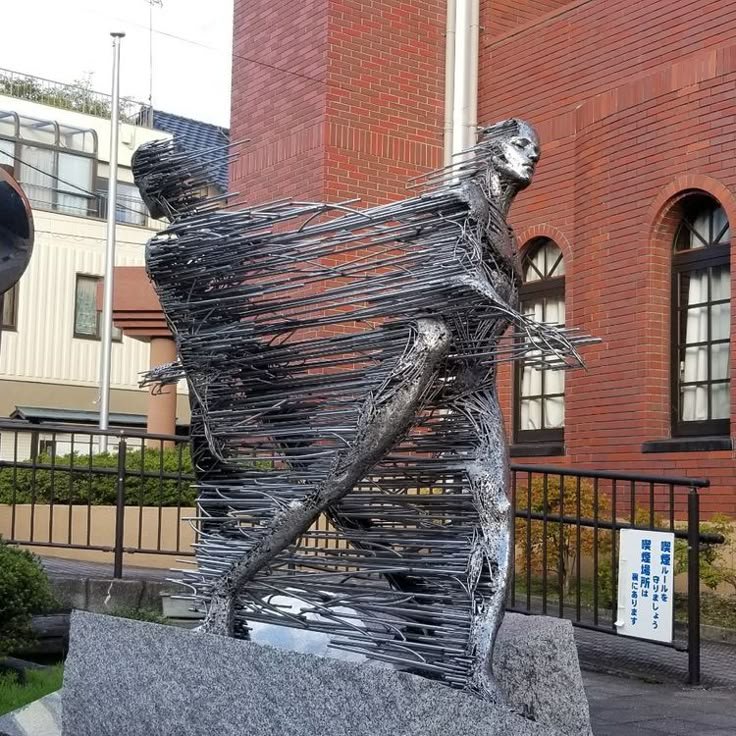
Noriaki Suzuki’s Toki no Tabibito (“Time Traveler”) is one of those sculptures that looks different the longer you stare at it. Two human figures seem to be breaking apart into horizontal lines, as if their bodies are being pulled through time. Placed near the historic meeting point of the Tokaido and Nakasendo routes, the idea feels especially fitting.
I like that it doesn’t literally show time—it makes you imagine what time might look like if a human body could pass through it.
The skeleton of an Archelon ischyros, the largest turtle to have ever lived, at the Yale Peabody Museum of Natural History, 1902.
Archelon is an extinct marine turtle from the Late Cretaceous, and is the largest turtle ever to have been documented, with the biggest specimen measuring 4.6 m (15 ft) from head to tail and 2.2–3.2 tons in body mass.
This specimen was discovered in South Dakota along the Cheyenne River by American paleontologist George Reber Wieland in 1895.
Look at more amazing historical photos: https://t.co/dQjceOPkrz








![Rainmaker1973's tweet photo. Scientists have mapped Earth’s vast underground fungal networks for the first time, revealing a staggering 68 quadrillion miles of fungal threads that help regulate the climate.
A groundbreaking new study estimates that arbuscular mycorrhizal fungi form an underground network stretching roughly 110 quadrillion kilometers (68 quadrillion miles), equivalent to nearly a billion times the distance from Earth to the Sun. These microscopic fungal threads create symbiotic relationships with over 70% of land plants, exchanging nutrients and water for carbon while locking away massive amounts of CO₂ in the soil.
The research, led by the Society for the Protection of Underground Networks (SPUN), used machine learning models trained on data from more than 16,000 global soil cores, combined with high-resolution robotic imaging of fungal hyphae.
However, these critical networks face a serious threat from modern industrial agriculture. Fungal density in croplands is nearly 50% lower than in undisturbed ecosystems, largely due to tilling, chemical fertilizers, and fungicides. This loss reduces the soil’s ability to store carbon, weakens nutrient cycling, and increases chemical runoff.
The findings underscore the urgent need to protect these hidden ecosystems. Researchers plan to present the data at the upcoming UN desertification summit to push for global conservation benchmarks.
[Stewart, J. D., et al. (2026). Global density and biomass of arbuscular mycorrhizal fungal networks. Science. DOI: 10.1126/science.adu4373]](https://pbs.twimg.com/media/HP1ePYsXcAA2-xK.jpg)