Herkese merhaba, karşılıklı takipleşiyorsak lütfen okuyun.
Bu herhalde, ücretli aboneler hariç, X'te yazdığım son Türkçe mesaj.
Hem hesabı tamamen İngilizce hâline getirmek hem de network effect sebebiyle Türkçe çemberinde kapalı kalmamak için takip ettiğim Türkçe hesapların takibini ayrım yapmaksızın bırakıyorum önümüzdeki bir hafta içinde. Bu konuda uzun uzun düşündüm. Lütfen gücenmeyin.
Fakat takip ettiğim sizlerle kontağı asla kaybetmek istemiyorum!
Bu yüzden, karşılıklı takipleşiyorsak, ya çoktan bana ait olduğu belli başka bir hesap sizi takip etmeye başlamıştır ya da önümüzdeki bir hafta içinde edecektir. Bu hesap @Halilbabillitr
Orada çok aktif olmayacağım, ancak kontağımızı sürdürebiliriz.
Her zamanki gibi Türkçe içerik ya X'teki ücretli abonelere ya da Substack İş Dünyası'nda üretilmeye devam edecek.
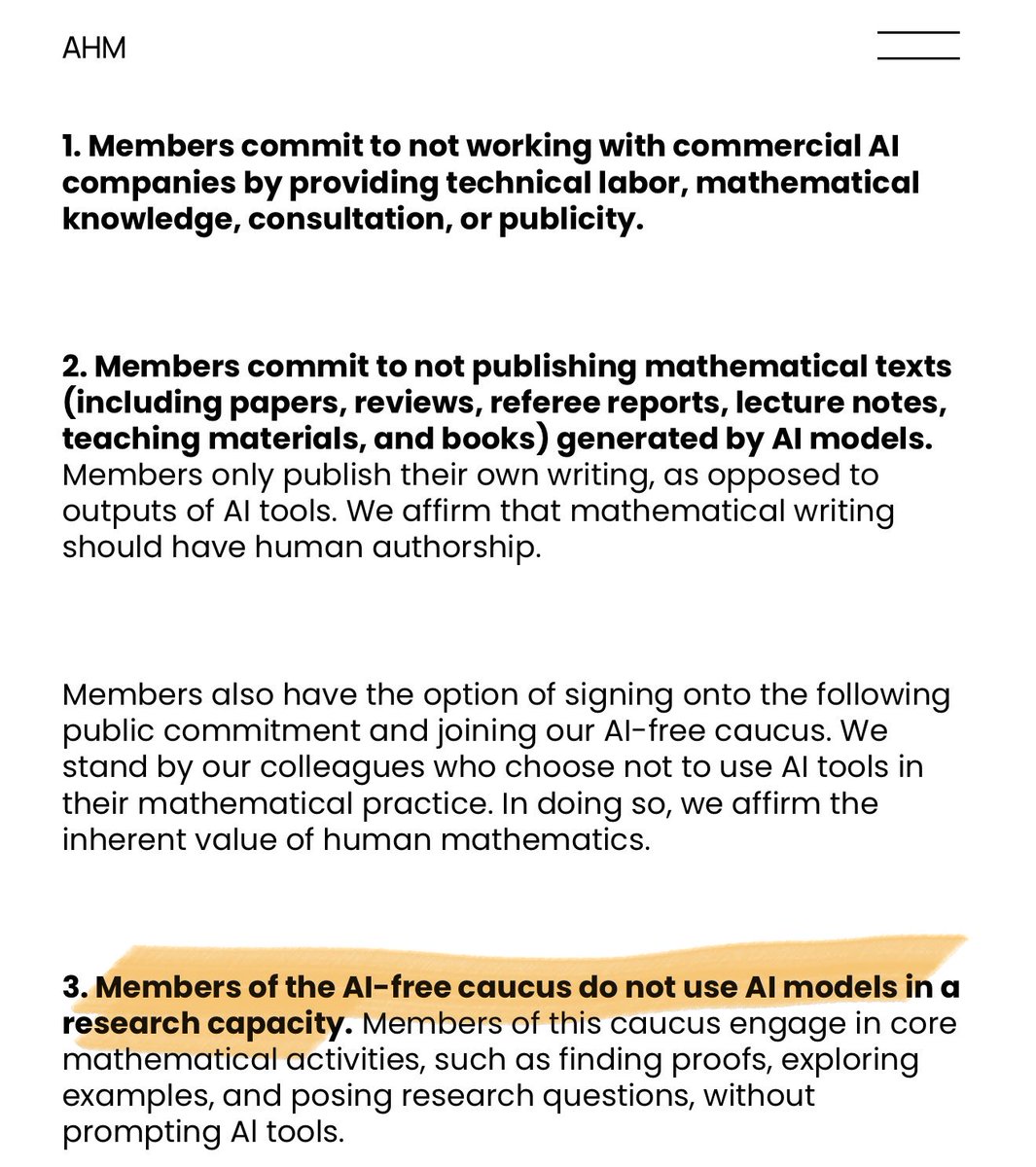
Wow, over 1,000 mathematicians have now joined the Association for Human Mathematics (AHM), committing to:
> NOT publish AI generated math papers
> NOT work with frontier labs
> 654 of them went even further to NOT even use AI in their research, at all
Crime doesn't always stem from poverty. Poor countries like Cambodia and Laos can still have relatively low crime rates.
Crime is more likely to emerge when people lack meaningful work and social cohesion within their immediate community. It can then manifest as both rebellion and an exit strategy.
East Asians are mostly a coherent and industrious group.
@canipekci Yeah, that part of the game needs finesse to navigate. I see some investors are realising the untapped potential and specifically targeting that category.
Solve a problem a large company overlooked, then get acquired by them.
There is a strange pretence that every exit must be worth hundreds of millions.
A $5 million exit is an excellent outcome for most people.
Well, this is the infrastructure version of buying land because rents are rising even before checking whether you have power, permits or tenants.
GPU scarcity can create a resale trade but it does not create a durable business. The bottleneck will still be turning silicon into reliable capacity.
Great infographic from Deepali Vyas.
I’m seeing this in the market too. Small teams of two or three experienced people who know how to orchestrate AI are already outperforming much larger teams.
At the same time, the middle is being squeezed.
Managers whose main job was passing information through layers are losing the reason those layers existed: AI can move and synthesise information directly, while experienced people can act on it.
The hard question is what those managers become next. The answer cannot be another layer of coordination. It has to be judgement, accountability and better decisions.
Here is the video if you want to dig deeper: https://t.co/Xau85aGy9u
If they could do it before AI, with the right seed capital, yes. If they couldn’t do it before, AI will not save them.
AI has lowered the bar. Baseline capability is now available to everyone, so it is no longer an advantage.
What matters is how you approach a problem space and how much agency you have.
We invested in 26% of the SMEs we advise. Our 12-month client retention rate is above 85%.
More importantly, every owner we have worked with who later launched another company has asked us to advise them again.
That is because we are selective and do not treat advisory as a transaction. We understand the business, stay close to the real problems and act as partners. We don't advertise or work with organisations unless we believe we can add genuine value.
Everyone wants to work with small and medium businesses. Few understand what it actually takes.