Global markets trader focused on macro, equities, and risk. Sharing market views, trade frameworks, and lessons from both winning and losing positions.
I left Wall Street years ago, but I never left the markets.
After 26 years of trading, I can tell you why most traders fail:
They think they have a strategy.
What they actually have is an opinion, an oversized position and no exit plan.
Then the stock drops 30%, and suddenly they’re “long-term investors.”
Nobody knows what happens next—not me, not you, and not the kid selling signals from a rented Lamborghini.
I’m not here to make you feel smart.
I’m here to help you stop doing stupid things with your money.
My story and the rules that kept me alive for 26 years → first reply.
Finished the day +$30,306.50
Full trade details are in my earlier posts, so I won’t go through every fill again.
What went right:
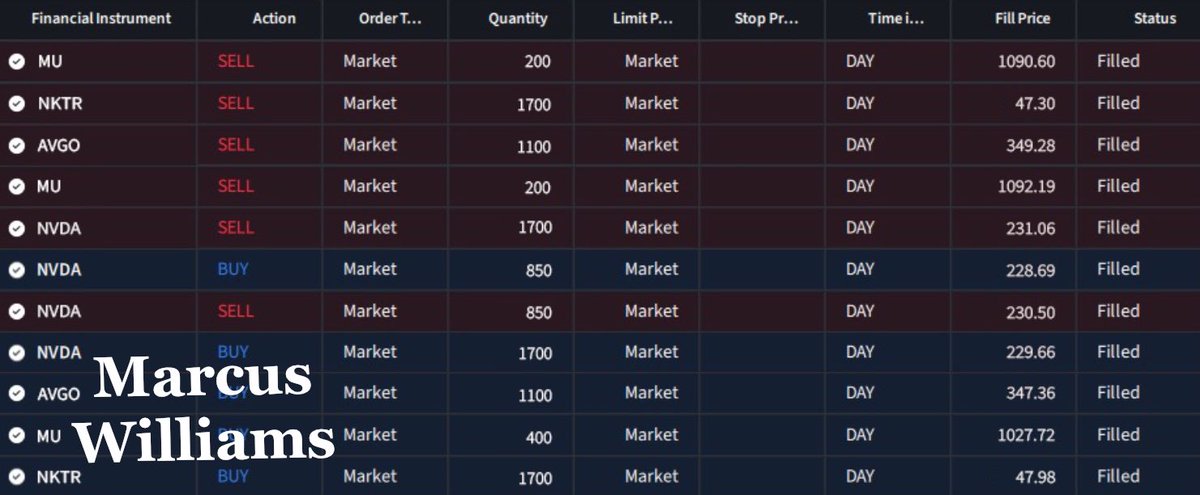
$MU was the best trade. I bought it around $1,027 after the post-earnings selloff, then trimmed into the afternoon strength and closed the rest at $1,090.60.
The key was not reacting to the headline. The earnings were strong, but the stock was weak early. I waited for the selling to settle, then took the trade when the price action started to improve.
$NVDA was handled pretty well too. I cut half when the first push started fading, bought it back lower, then closed the full position at $231.06.
$AVGO never gave me the same strength, so I closed it at $349.28 instead of sitting around waiting for it to turn into something it wasn’t.
The mistake was $NKTR.
I gave the catalyst too much credit and didn’t respect the price action enough. The data looked good on paper, but the market clearly wasn’t buying it. I closed it at $47.30 and took the loss.
That was the main mistake today.
I also stayed out of $EFXT and $ARTV. No setup I liked enough, so I left them alone.
Today’s numbers:
>>MU: +$25,432
>>NVDA: +$3,918.50
>>AVGO: +$2,112
>>NKTR: -$1,156
Net: +$30,306.50
Not a perfect day. MU did most of the work, NVDA and AVGO added to it, and NKTR reminded me not to fall in love with a catalyst.
Trimmed 50% of my $MU position around $1,092.
Bought 400 shares at $1,027.72 this morning. Just sold 200 and I’m keeping the other 200 on.
MU was getting hit pretty hard after earnings this morning. The numbers were great, but the stock wasn’t acting like it.
I waited for the selling to settle down and got in at 10:22.
Then the whole thing flipped this afternoon. Yields backed off, semis started catching bids again, and MU went from the low $1,020s to $1,090+.
That’s a 6%+ move from my entry in a few hours.
I’m not gonna sit here with full size after a move like that.
Locked about $12.8K on the first 200 shares. Still holding the other 200. I’ll let the other 200 work.
Good trade so far. Not finished yet.
Quick trade update from this morning.
10:04 — $NKTR
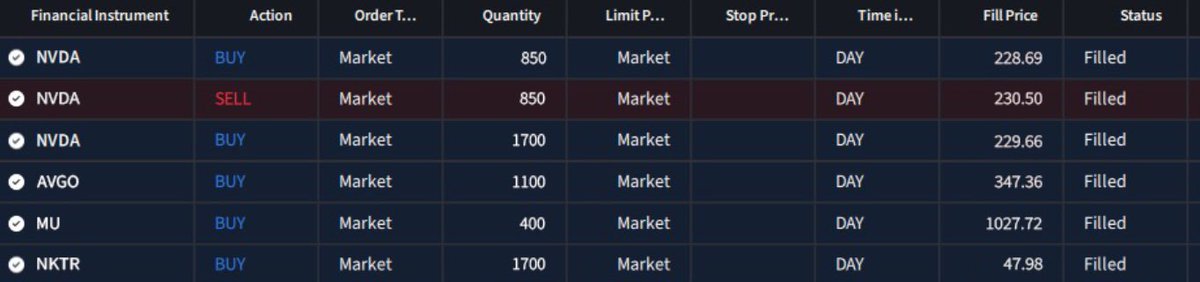
Bought 1,700 shares @ $47.98 after the clinical update. Small position on purpose — this is still a high-risk biotech trade.
I passed on $ARTV.
10:22 — I bought $MU , $NVDA and $AVGO together.
MU: 400 shares @ $1,027.72
NVDA: 1,700 shares @ $229.66
AVGO: 1,100 shares @ $347.36
I waited through the open and the 10:00 data before putting these on.
Micron’s earnings confirmed the AI/memory demand is still there, and even with yields staying high, NVDA and AVGO weren’t really falling apart. I liked that enough to take the basket rather than bet everything on one name.
MU was the weaker one, so I’m watching that position a lot closer.
10:46 — trimmed half my NVDA.
Sold 850 shares @ $230.50. The first push was starting to fade, so I took some risk off instead of sitting there with full size.
Then NVDA came back down without really breaking the setup.
11:04 — bought those 850 shares back @ $228.69.
So I locked about $714 on the first trim and got the same shares back $1.81 lower.
$EFXT is still on my screen, but I haven’t touched it. Didn’t get the entry I wanted.
That’s everything so far. Still holding MU / NVDA / AVGO / NKTR.
I’m not adding anything else unless the afternoon gives me a reason.
Few things I’m watching before the open.
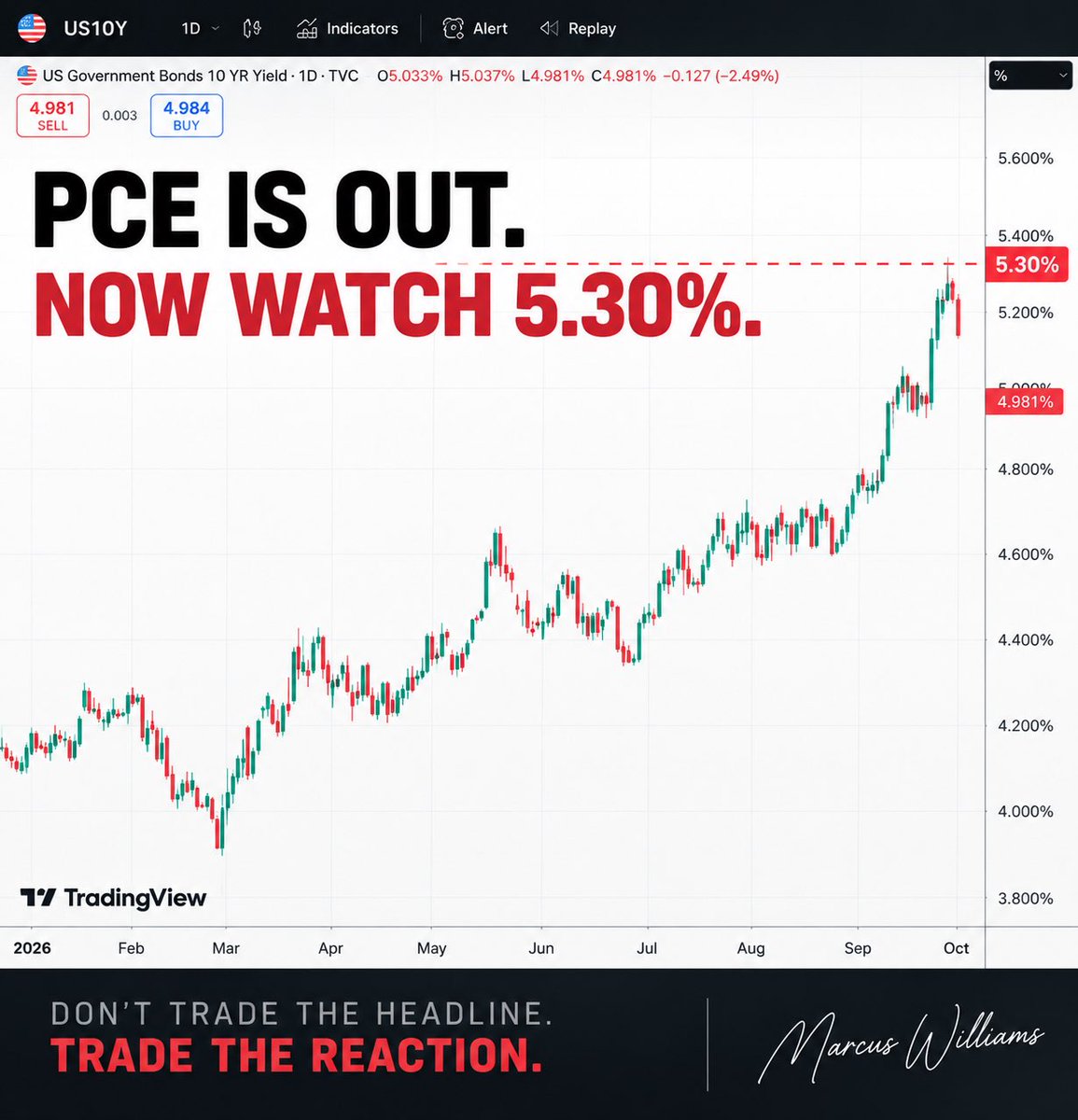
Claims came in at 197K this morning. Kashkari stayed pretty hawkish last night, and the 10Y is still hanging above 5.3%.
Normally I’d be pretty careful with tech here.
But Micron just put up a monster quarter, and MU / NVDA / AVGO still aren’t acting weak premarket.
That’s probably the first thing I’m watching after 9:30.
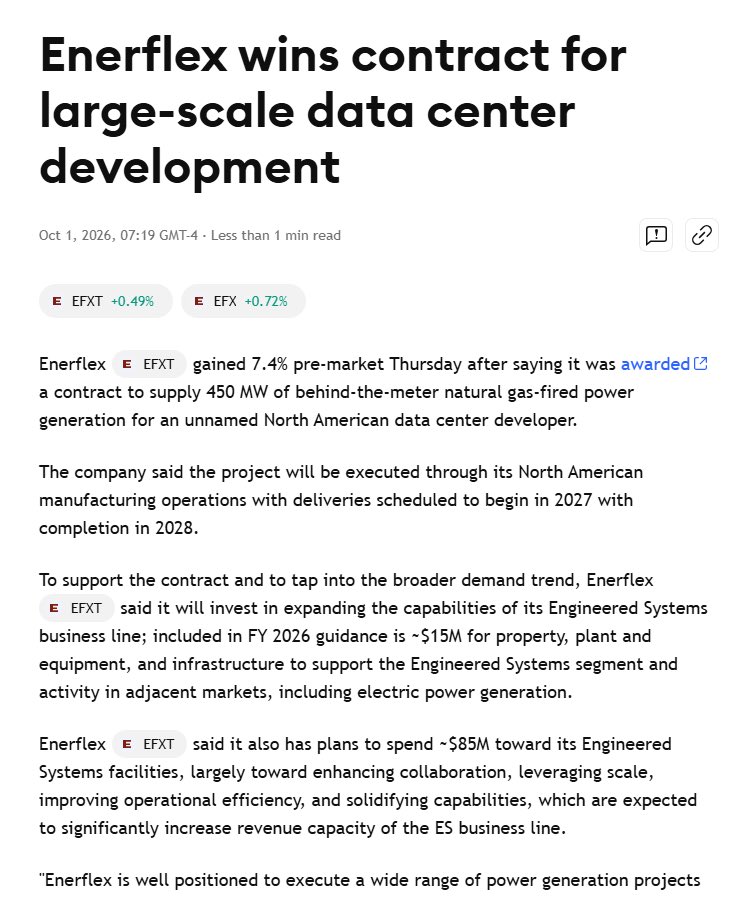
$EFXT also made my screen this morning.
Enerflex just landed a 450MW natural-gas power project for a North American data center developer. Deliveries start in 2027, and management says the opportunity pipeline is already over 2GW. GlobeNewswire
Stock was up around 12% premarket when I checked. Seeking Alpha
I like the headline. Data centers need power, and this is an actual contract, not another AI press release with nothing behind it.
Still, I’m not chasing a 12% gap at 9:30. I want to see where the first pullback gets bought and how much volume sticks around.
Then we’ve got ISM + Waller at 10:00, so I’m keeping some cash free.
NKTR / ARTV are still on the high-risk screen too. Same deal as yesterday — I rarely share the small caps I watch because people sometimes take that as a signal. It isn’t.
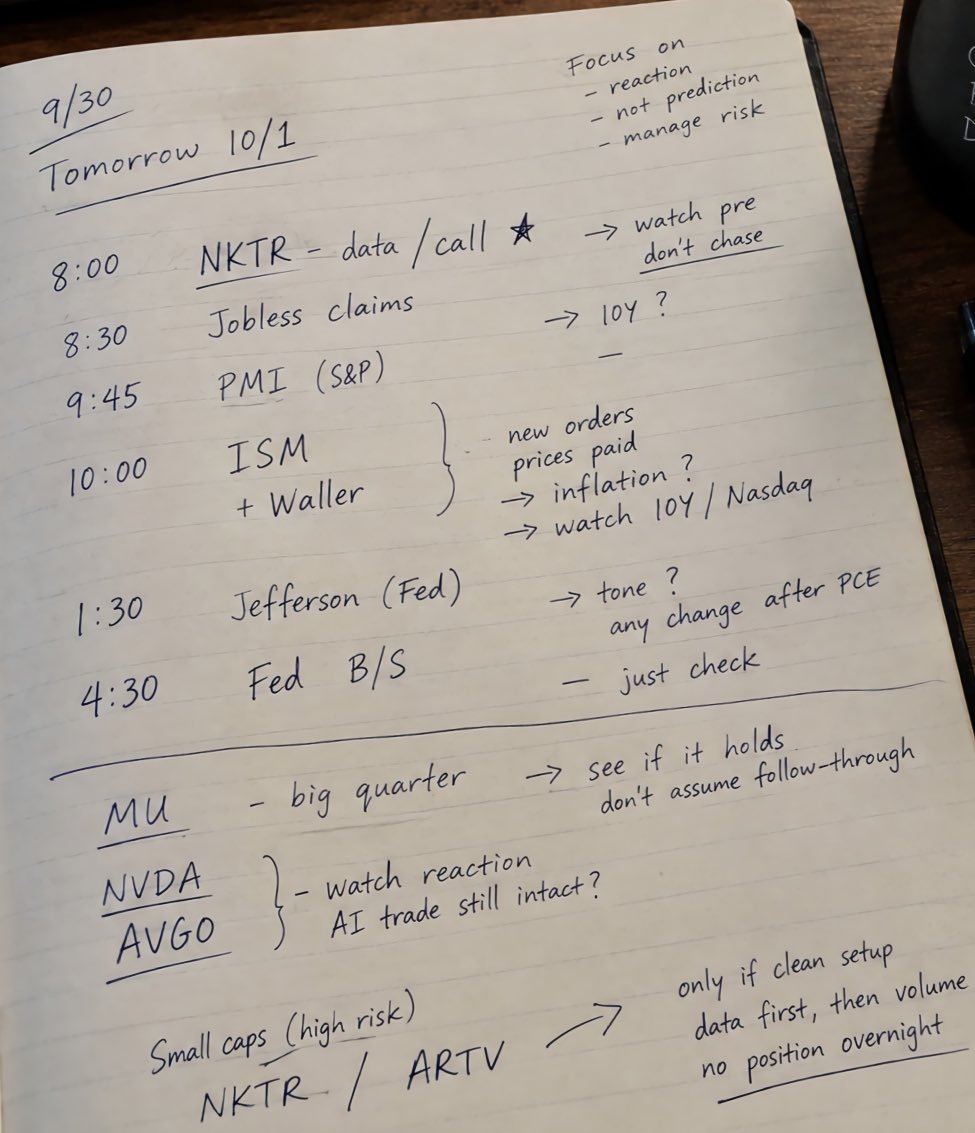
A lot on the calendar tomorrow. I’m narrowing it down to 4 things.
1/ Micron + AI trade
Micron just put up a huge quarter:
Revenue: $54.23B
EPS: $33.42
Next-quarter guide: $61.5B vs. ~$57B expected
HBM demand is still strong and most of 2027 supply is already spoken for.
The numbers are great. Tomorrow I care more about what $MU , $NVDA and $AVGO actually do with them.
Micron has already had a huge run. A big beat doesn’t automatically mean another big day.
2/ Macro — 8:30 to 10:00 ET
8:30 — Jobless Claims
Another very low print keeps the labor market tight and could push yields back up. A softer number gives the 10Y some room to cool off.
9:45 — S&P Global Manufacturing PMI
I’ll check it, but I’m not trading off this number alone.
10:00 — ISM Manufacturing + Waller
This is the window I care about.
With ISM, I’m watching new orders and prices paid, not just the headline PMI.
Waller speaks at the same time, so there’s a lot that can hit rates and Nasdaq within a few minutes.
I’ll probably stay patient around 10:00 and see what the bond market does with all of it.
3/ Fed later in the day
1:30 — Jefferson on the economy and monetary policy.
After today’s softer PCE, I want to hear whether his language around inflation and rates changes at all.
4:30 — Fed balance sheet.
That’s after the close. I’ll check it, but unless something unusual shows up, it’s not something I’m building a day trade around.
4/ High-risk screen — $NKTR / $ARTV
I actually don’t share my small-cap watchlist very often.
Mainly because people sometimes see “I’m watching this” and assume I’m telling them to buy it.
I’m not.
$NKTR — fresh clinical data + 8:00 ET investor call.
$ARTV — updated Sjögren clinical data.
These are completely different trades from MU/NVDA/AVGO. Good data can move a biotech very quickly. Bad data can do the exact opposite.
I’m not buying either tonight.
Tomorrow I want to see the data first, then premarket volume, then how the first move holds up.
If those pieces aren’t there, I won’t touch them.
Closed both trades before the bell.
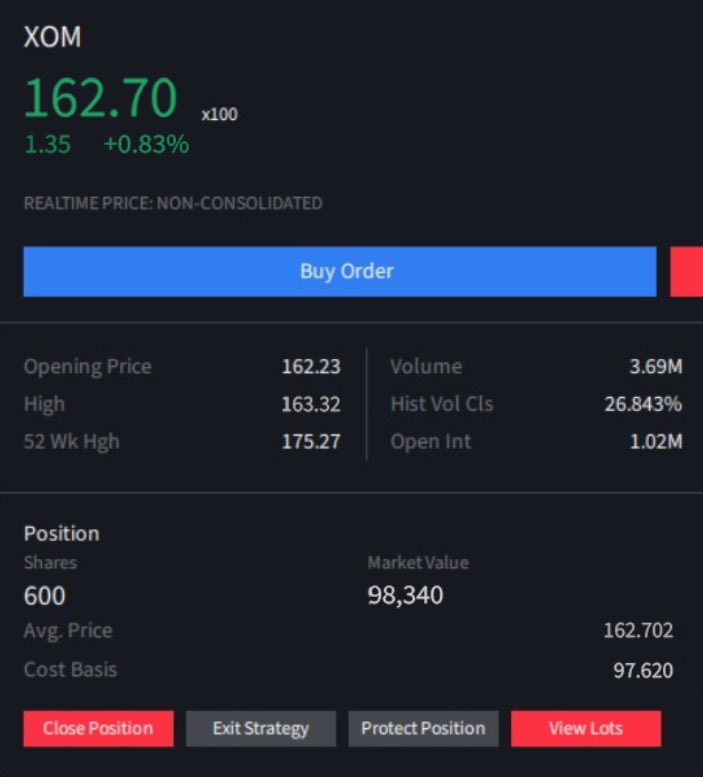
$XOM
Bought 600 shares at $162.70
Sold at $163.96
+$756 | +0.77%
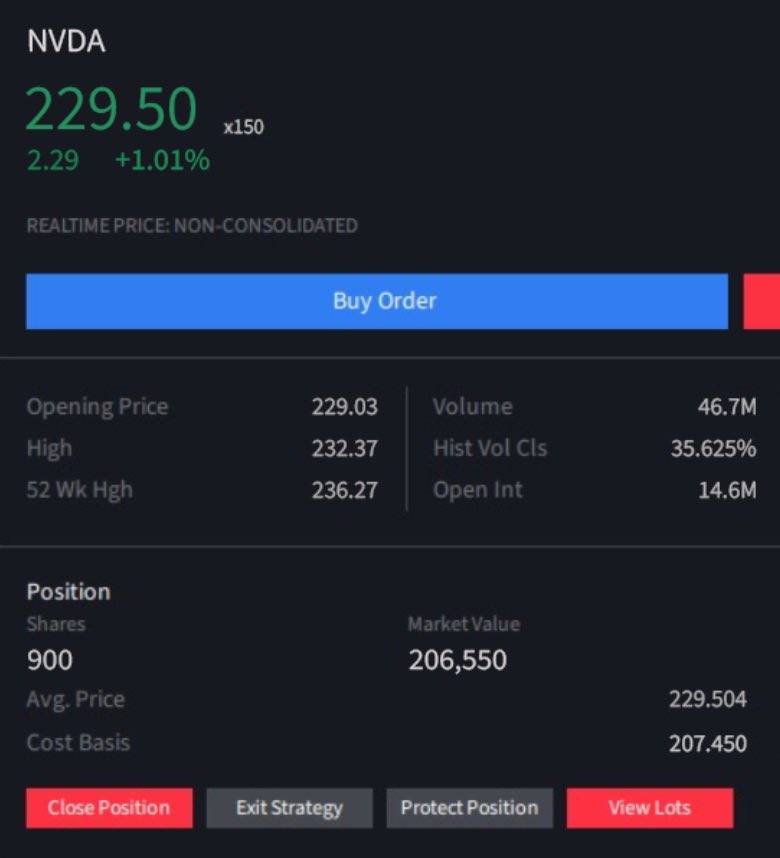
$NVDA
Bought 900 shares at $229.50
Sold at $231.40
+$1,710 | +0.83%
Total: +$2,466
Some of you are probably wondering why I didn’t buy closer to the bottom, or hold for the exact high.
Simple — I already had the plan before I entered.
Once the setup is there, I follow the entry, stop and exit I wrote down. I’m not changing the trade halfway through just because price keeps moving.
I’d rather leave some money on the table than break my own plan.
1% a day doesn’t sound like much. Do the math for a year — that’s 12x
Same as always, I’m answering 10 DMs tonight if you’ve got a question about either setup.
Quick update from this morning.
I ended up taking two trades after the data settled down.
$NVDA around $229.50.
PCE came in cooler, the 10Y dropped initially, and NVDA recovered that early dip from $227.24 pretty quickly. Once it got back through $229–230 and held, I took it.
I’m taking some off around $232.20–232.50, basically the morning high. If that breaks clean, I’ll give the rest a shot at $233.50–234.
Below $227.20 and I’m done.
$XOM around $162.70.
EIA was mixed — crude built, but gasoline and distillates drew pretty hard. More importantly, WTI didn’t roll over after the number and XOM kept holding near the highs.
First trim for me is around $163.80–164. If crude stays firm, I’ll leave a piece for $164.50–165.
Below $161.80–162, I’m out.
Both are day trades. I’ll have them closed before the bell.
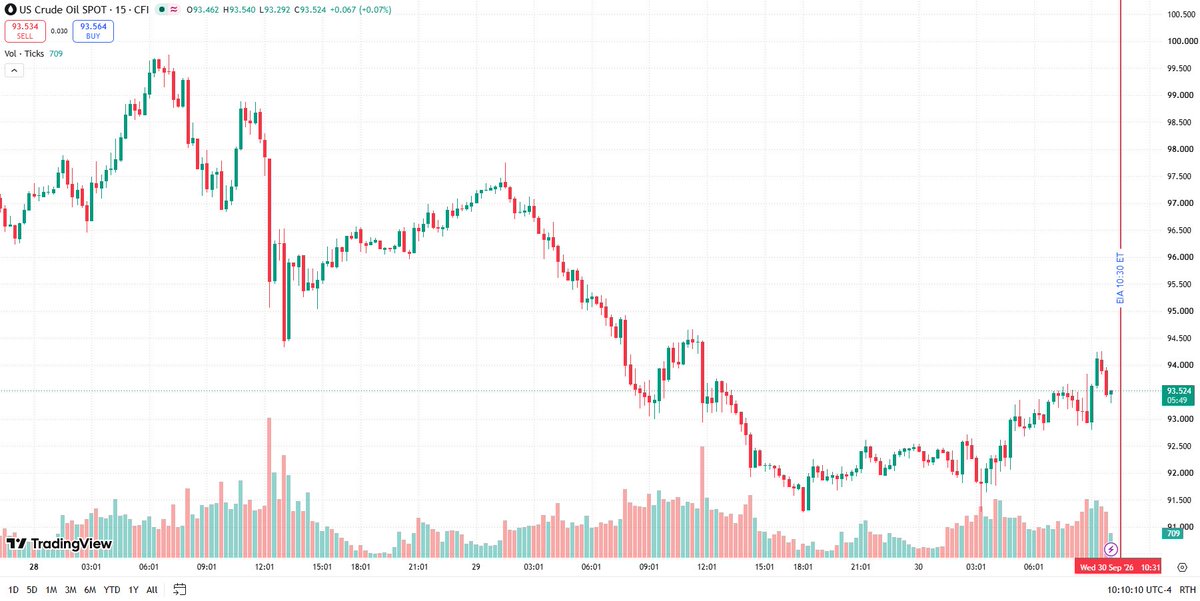
EIA isn’t just “crude inventories up or down.”
Crude + Cushing + gasoline/distillates → WTI reaction → 10Y → stocks.
Big draw across all three? Watch XOM/CVX/XLE and whether higher oil pushes yields up. Big build? Energy gets pressured — unless the build is screaming weak demand, then cyclicals have a problem too.
I’m not touching the first move at 10:30. Give it 20–30 minutes and see what WTI actually does with the number.
PCE came in cool. Don’t overthink it.
Core PCE: +0.2% MoM vs. +0.3% expected.
Core YoY: 3.0% vs. ~3.3% expected.
Good print. But spending was still strong at +0.9%.
So I’m watching one thing first: the 10Y.
Yields break lower → NVDA/MSFT/AVGO get valuation relief.
Yields hold around 5.2–5.3% → don’t assume one cool PCE print changes the regime.
My macro-day rule:
Data → 10Y → Nasdaq/S&P → risk ≤1%.
Two more risks hanging over $SLXN:
Nasdaq’s $1 minimum bid compliance notice (9/25) and the proposed reverse split getting voted down on 9/23, with ~74% voting against it.
Dilution. Compliance. Clinical-stage risk.
Three things hanging over the stock.
I trade this as an event-driven setup. I don’t marry it as a long-term hold.
$SLXN is NOT $NVDA.
NVDA trades on cash flow, rates, and expectations.
SLXN trades on news, volume, warrants, and compliance.
I need all four before I even think about the trade. Miss one, and you’re gambling.
SIL204 was preclinical data — NOT a Phase 2/3 readout.
The catalyst can take this from $0.25 to $0.40.
Financing can give the whole move right back.
Only 4 levels matter to me:
$0.40 — post-news high. Reclaim it WITH volume, then we can talk continuation.
$0.30 — current battleground.
$0.26 — new warrant exercise reference. That does NOT automatically make it support.
$0.24–0.25 — where the news move started. Lose that and the entire catalyst move is basically gone.
My rule: ≤1% risk per trade.
I don’t chase the first candle after news.
And until $0.40 gets reclaimed, I’m not calling this a trend.
$SLXN #Biotech #SmallCaps #Trading
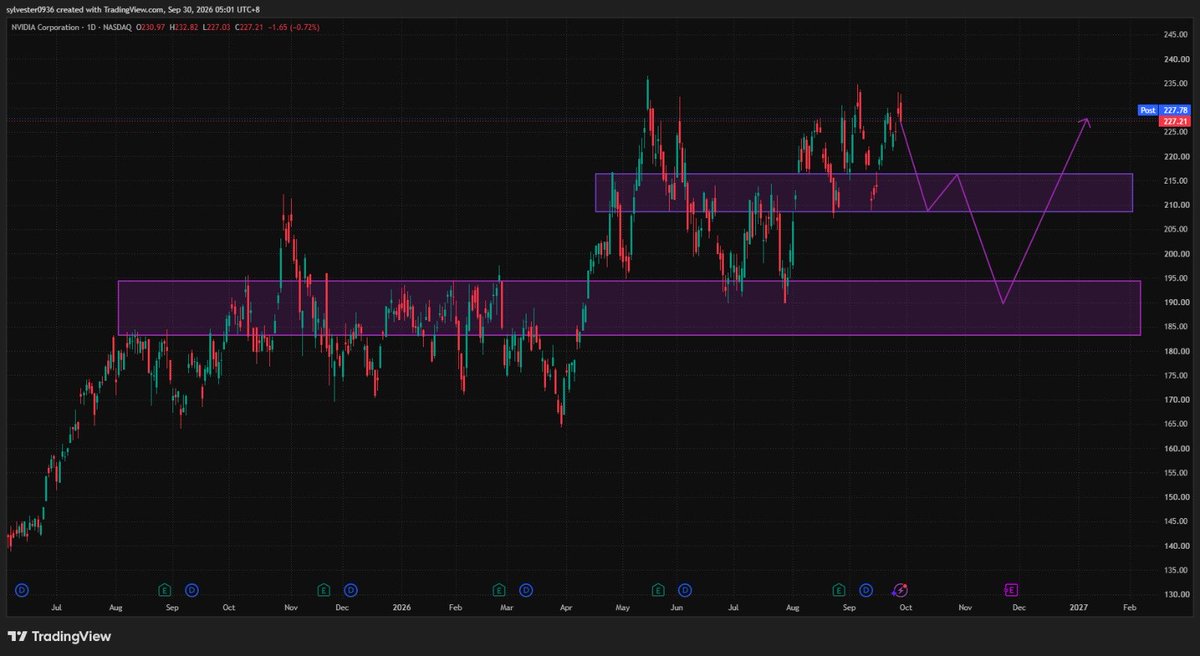
$NVDA roadmap from here:
I’m not interested in chasing NVDA around $227.
The area I really care about is $208–216.
That zone has acted as a major battleground before, and if we get a healthy pullback into it, I want to see buyers defend it.
If they do:
$210 → reclaim → $225 → $235+
If they don’t:
Lose $208 → $190–195 comes into play.
Simple.
I already know where I’m interested.
Now I just need price to get there.
#stocks #NVDA #trading
I left Wall Street years ago, but I never left the markets.
After 26 years of trading, I can tell you why most traders fail:
They think they have a strategy.
What they actually have is an opinion, an oversized position and no exit plan.
Then the stock drops 30%, and suddenly they’re “long-term investors.”
Nobody knows what happens next—not me, not you, and not the kid selling signals from a rented Lamborghini.
I’m not here to make you feel smart.
I’m here to help you stop doing stupid things with your money.
My story and the rules that kept me alive for 26 years → first reply.
If you’re new, do this in order:
1. Write a one-page trading plan.
2. Paper-trade one setup 20–30 times.
3. Define your maximum loss before entering.
4. Journal every trade.
5. Review your discipline every week.
Stop looking for the perfect signal.
Build a process that keeps you alive.
If you want certainty, read a horoscope.
If you want to survive, stay.