Director @ EconOne | Editorial Board @TheSlingOrg | NYT: "one expert for the plaintiffs" | Prospect: "preeminent watchdog of The Economist's most wrong takes"
🚨 Hot off the digital press: I have a new piece w/ @halsinger calling for #antitrust enforcers to block the DoorDash/Instacart merger. We explain why it would mean fewer in-store discounts, a fatter cut for middlemen, and ultimately higher grocery bills. https://t.co/MOLbMx1qfQ
I have a new piece up at @TheSlingOrg, co-authored with @johnmarknewman, on why federal antitrust enforcers or state AGs (or both) should block DoorDash’s proposed acquisition of Instacart. Borrowing the template from the DOJ’s recent success at halting a merger of book publishers under a theory of harm to authors, we explain why grocery stores—an input provider to the final product of online grocery delivery—would be injured if these two horizontal rivals no longer had to compete on price (a commission or service fee) for the loyalties of grocers. Higher commissions resulting from the merger would be passed through to consumers in the form of a higher grocery bill. And given the message that voters just sent Congress about affordability, protecting consumers from higher grocery prices seems like a no-brainer. Go check it out! (Link in next tweet)
We also respond to the rationale, peddled by The Economist, the merger is needed for DoorDash to better compete against Amazon and Walmart.
Finally, we explain how the merger would allow DoorDash to enforce a price parity provision, which prevents grocery stores from offering lower in-store prices as an inducement not to use the (high commission) delivery apps.
And here is the promised link.
https://t.co/ocFfVZ5jmr
I have a new piece up at @TheSlingOrg, co-authored with @johnmarknewman, on why federal antitrust enforcers or state AGs (or both) should block DoorDash’s proposed acquisition of Instacart. Borrowing the template from the DOJ’s recent success at halting a merger of book publishers under a theory of harm to authors, we explain why grocery stores—an input provider to the final product of online grocery delivery—would be injured if these two horizontal rivals no longer had to compete on price (a commission or service fee) for the loyalties of grocers. Higher commissions resulting from the merger would be passed through to consumers in the form of a higher grocery bill. And given the message that voters just sent Congress about affordability, protecting consumers from higher grocery prices seems like a no-brainer. Go check it out! (Link in next tweet)
To expand our reach, @TheSlingOrg is now cross-posting on @Substack!
Our latest article is from @halsinger and @johnmarknewman: https://t.co/AIriZUraCJ
Subscribe here: https://t.co/Y0o2bpk9XW
Make a submission here: https://t.co/4ZY1497wPt
ANTI-FASCIST ECONOMICS is one of the Financial Times’ Best Books of 2026 in economics. So humbled!
I wrote this book because I believe economics has a role to play in safeguarding democracy. I couldn’t be happier about this recognition. It gives me hope! Thank you @martinwolf_!
I learned so many things about the link between fascism and financial monopolies in this Slingshot interview with Carter Dougherty (@CarterD), author of “Fighting Wall Street Monopolies” in the Fall 2026 issue of Democracy: A Journal of Ideas. In this segment, Carter explains how financiers “have an annoying tendency to side with fascists,” and notes that in 1946 the Federal Reserve (of all institutions!!!) characterized the mix of businesses run by A.P. Giannini, founder of Bank of America, as a potential “fascist economic empire.” Go give it a listen!
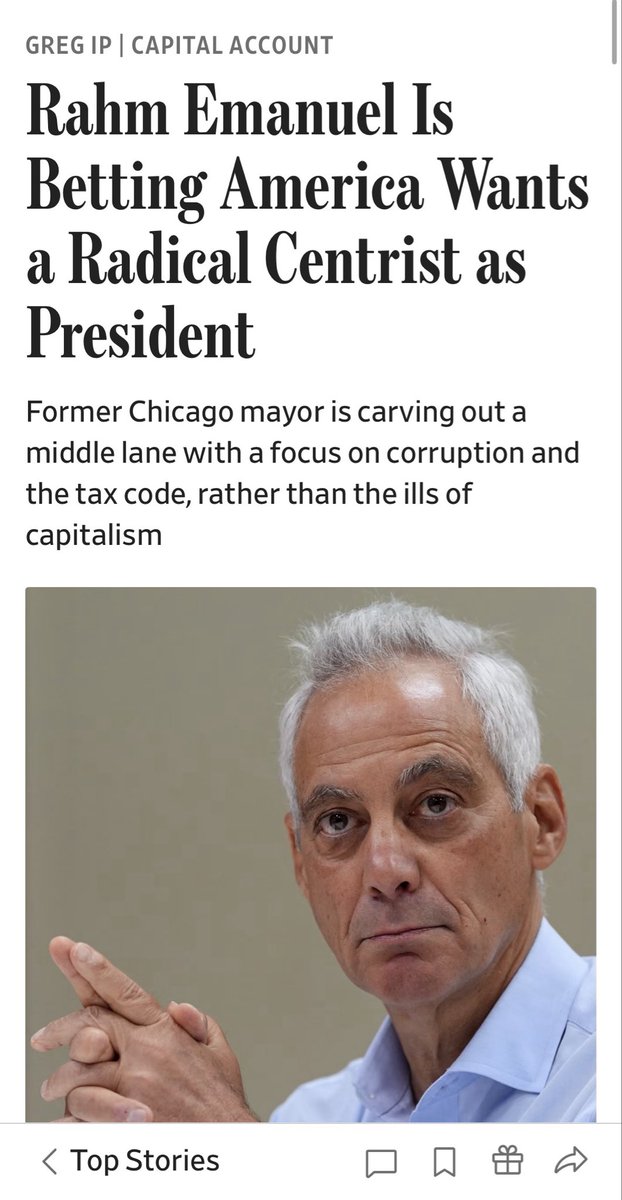
I asked Chicago Mayor @Brandon4Chicago what Democratic presidential primary voters need to know about what @RahmEmanuel did to the city. The current mayor did not pull punches about Rahm’s record and how the city is still trying to recover from his tenure.
Another day, another company w/ a trillion $ market cap penning a blog post in response to @Groundwork’s A+ work. Here’s our edit—including some gems like that we agreed to a meeting w/ Amazon and they pulled it down & Amazon just deleted the 2024/25 deals pages we used.
I’m suggesting that the developer funders behind the Abundance Grift go hire the same lobbyists who worked over local regulators at the behest of the data center builders. These supposed frictions are so low on voters’ radar that it’s an insult to make it an organizing principle for Dems. We don’t have ten years to make things affordable.
If permitting were such an obstacle to construction, as the Abundance Grifters would have you believe, how were over a thousand AI data centers built practically overnight in the United States despite their horrific environmental impact?
Jeez. The NYT Opinion page is back with a second essay since the election, this time by Ezra Klein, trying to convince Americans that what they really meant in their demand for affordability of basic things like food and rent was permitting reform. Enough with this deregulatory crap. The goal is not to appease the funders, however lucrative that might be. The goal is to build a lasting coalition of voters who will materially benefit from voting Democratic in the next two years.