4. Keeta - keeta:native
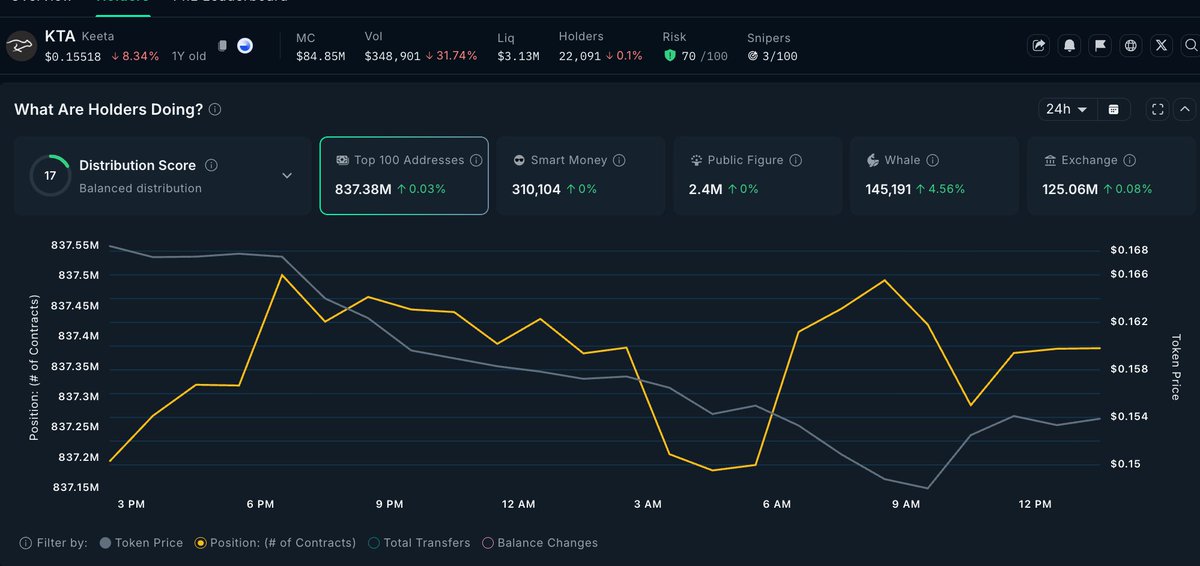
Despite an 8% price drop, whales continued adding exposure.
Whales were the only major holder group accumulating while other cohorts remained largely unchanged.
A sign that some large players remain focused on the long-term infrastructure narrative.
Banking.
Payments.
FX.
Digital assets.
Most people still use separate apps and platforms for each of these functions.
Keeta Personal brings them together under a single account.
One account.
Multiple financial rails.
This is why I think Keeta Personal is changing the game.
@KeetaNetwork $KTA
Everyone who follows me knows I try to be as accurate as possible. There is always a gap between what is said informally and what gets announced officially. With that in mind, let's see how this holds up when the announcement arrives.
I do this with every project I follow closely. Voice calls, Discord, documentation, product pages, and eventually the code. Every now and then the pieces point somewhere interesting.
Keeta's CEO Ty Schenk said something in the Discord that sets up everything that follows.
"next anchor will be web3 related so other chains can use our fiat"
If you understand what an anchor is in Keeta's architecture, that sentence is significant. Anchors are how external systems connect to Keeta's fiat rails. A web3 anchor means other blockchains and protocols will be able to plug directly into Keeta and move real fiat through it. Not stablecoins. Not wrapped tokens. Actual money.
That sent me back through the public code.
Inside Keeta's GitHub organisation, there is a repository that has nothing to do with traditional finance. It is called ATCryptography. Described simply as "A Swift library providing cryptographic utilities for the AT Protocol."
This repository was archived by the owner on Dec 16, 2025. It is now read-only. "Visible and usable."
https://t.co/LMbxbwqWrr
Archived. Read-only. Forked from an existing open source AT Protocol library and integrated into Keeta's stack. We do not know when the work started or how long it was in development internally. What we know is that it exists, it is complete, and it is sitting inside Keeta's organisation.
For those unfamiliar, the AT Protocol is the open standard powering the decentralised social web. A format for user identity, follows, and data on social apps, built so that applications can interoperate and users can move freely between them.
https://t.co/GIc449GWZE
Every user on AT Protocol is identified by a cryptographic DID. A decentralised identifier with a signing key and a recovery key that belongs entirely to the user, independent of any platform. That is the identity layer. The ATCryptography library is built to work with exactly that system.
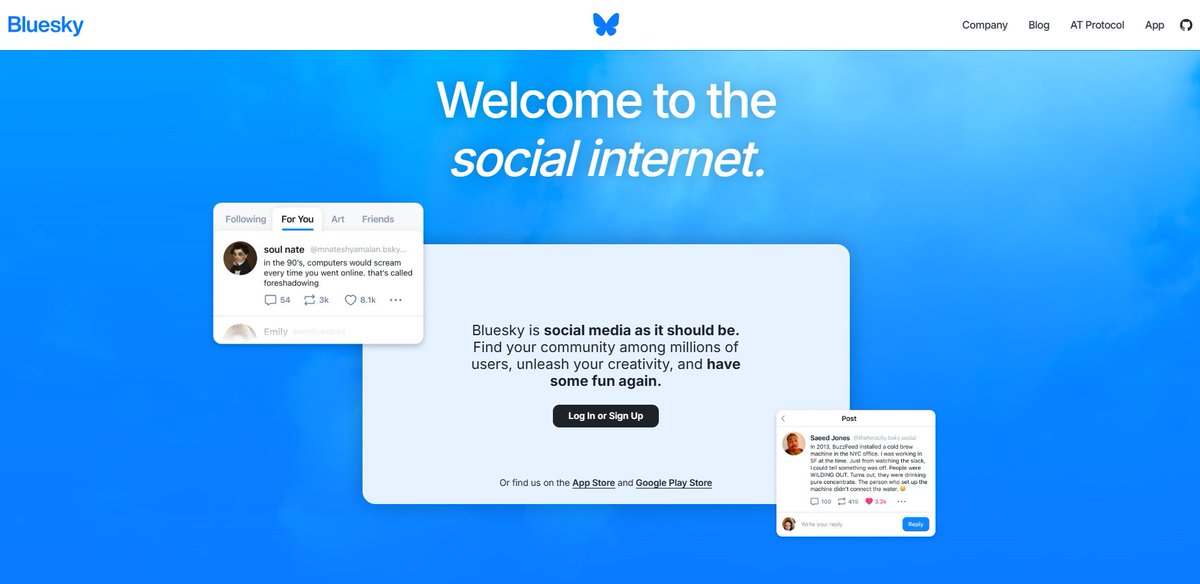
Bluesky is the most prominent app running on AT Protocol today, with approximately 36 million users. But the protocol is open. Any developer can build on it. The ATCryptography library operates at the protocol level, not the platform level. This is not a Bluesky-specific integration. It is every app, every client, every service built on AT Protocol, now or in the future.
https://t.co/jbiMFirNVf
Bluesky has been public about their payments problem.
"Part of our plan includes building payment services for people to support their favourite creators and projects. Due to the complexity of payment systems, monetisation likely won't be coming for the next year."
And they have been equally public about how they will not solve it.
"We will not hyperfinancialise the social experience. No tokens, crypto, NFTs."
So the requirement is clear. A payment layer that handles real fiat, works globally, is compliant, supports multiple currencies, and has no visible crypto component to the end user.
That is a precise description of what Keeta already built.
KYC compliant fiat rails. Visa Direct to over 160 countries. ACH, SWIFT, wire support. Multi-currency accounts. A musician in New York tipped by a fan in Tokyo. A developer in Berlin supported by subscribers in São Paulo. Instant. Compliant. No blockchain visible to either party. Just money moving.
Then this week in the Discord, Ty said he is building a game for Keeta.
A founder building a game while scaling a global payments network is either a distraction or a deliberate demonstration. Given everything above, it is clearly a demonstration.
If Keeta links a wallet to an AT Protocol DID identity, every person on every app built on the open protocol gets a financial layer that travels with them everywhere. Across every client, every platform, every interface. The game is the first live proof that the entire stack works end to end. Built by the founder himself.
And the next anchor is confirmed as web3 related. Any protocol built on AT Protocol can route real payments through Keeta without building any compliance infrastructure themselves.
Ty has been consistent about the strategy. Vendor of vendors. Two or three layers deep. Companies using Keeta without knowing it is there.
The AT Protocol is not just Bluesky. It is an open standard any developer can build on. Social apps, creator platforms, gaming, tipping, subscriptions, marketplaces. All with the same unsolved payment problem.
Could this point somewhere else entirely? Yes.
AT Protocol is an open standard. Another project could build on it. The web3 anchor could connect to a different protocol altogether. There are scenarios where these pieces do not connect the way my post suggests.
But when a fiat payments network builds AT Protocol cryptography into their stack, and their CEO confirms a web3 anchor is coming next, the most direct line between those points lands in one place.
This is the moment the open social web gets a financial backbone. Every creator, every developer, every independent builder who has ever been blocked by platform restrictions, currency limitations, or geographic exclusions. This is the infrastructure that removes all of it.
We will know soon enough.
https://t.co/LMbxbwqWrr
https://t.co/GIc449GWZE
https://t.co/jbiMFirNVf
$KTA @KeetaNetwork #Keeta
Something I stumbled on completely by accident.
I was doing some AI agentic testing yesterday, running through keeta:native's infrastructure, checking what is live, what connects, what does not. And then I landed on https://t.co/0KoU8NOW4V.
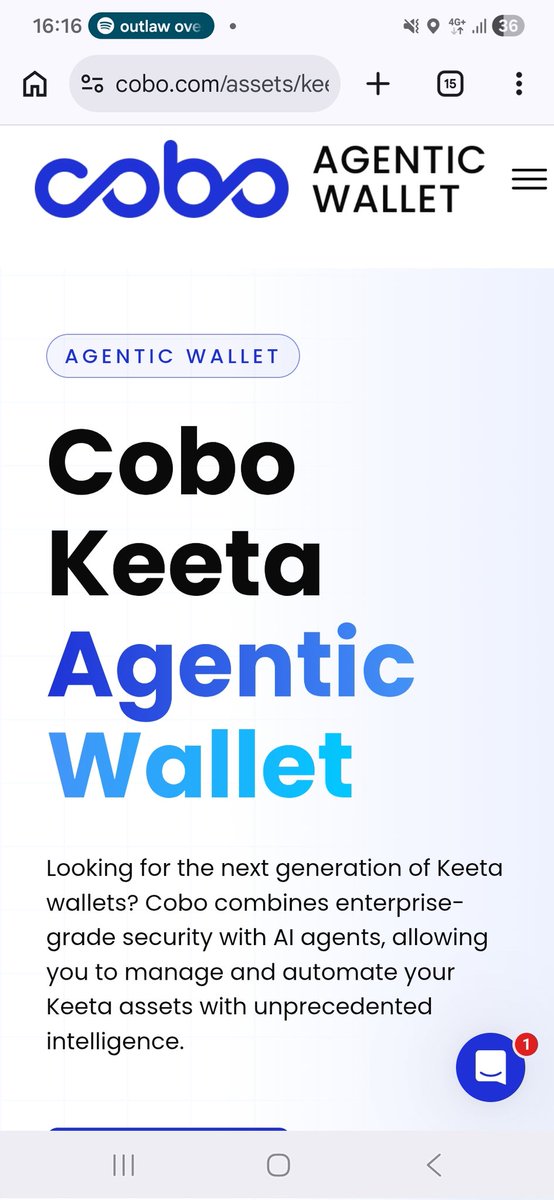
Right there, sitting in the agent wallet section, was Cobo. Not mentioned in any announcement. Not hyped by the team. Just quietly sitting there, already integrated.
You can verify it yourself right now. Cobo has a dedicated Keeta page live at https://t.co/wY6pmjhvSD and Keeta is listed there by name. The GitHub repo for the entire infrastructure stack is public at https://t.co/VNXe2MCYy1, Python and TypeScript SDK, MCP server, agent framework integrations, all open and available today.
So who exactly is Cobo?
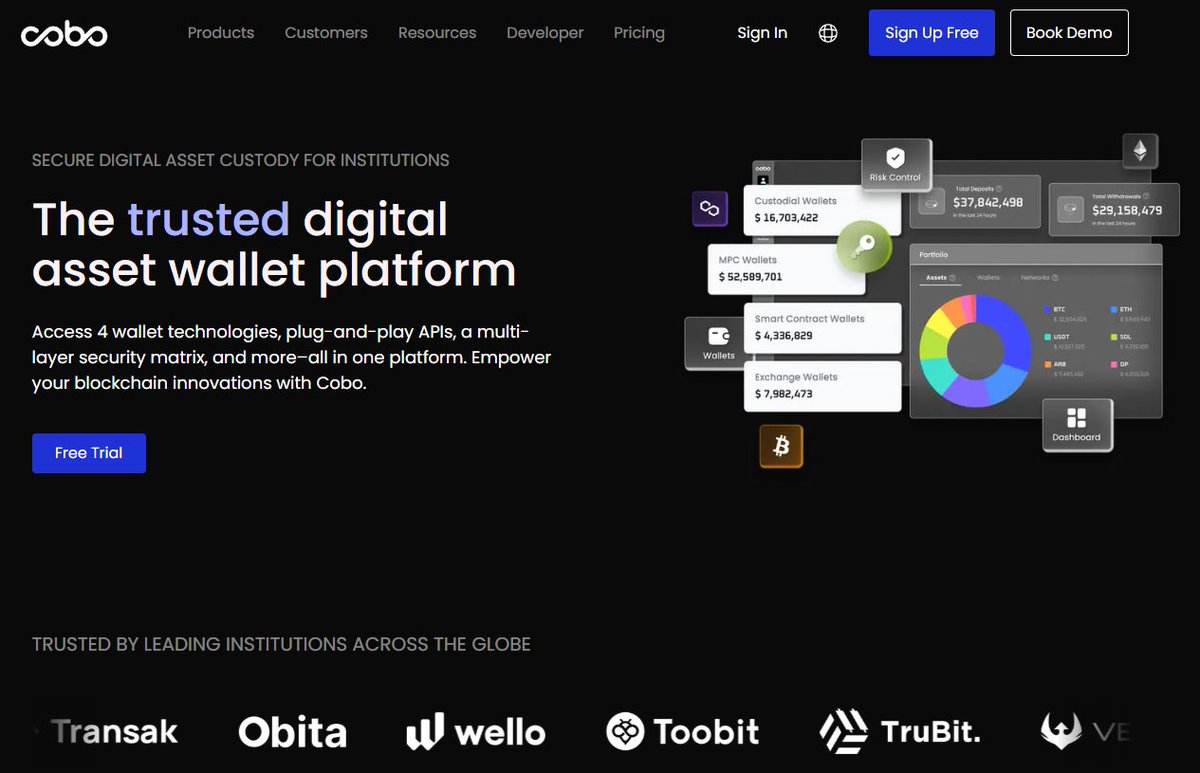
Cobo is not a small side project. They are one of the most serious wallet infrastructure companies in the space, Singapore-based with deep institutional reach across Asia and China. They service exchanges, funds, and financial institutions at scale. Their product is custodial wallets, MPC wallets, smart contract wallets, and exchange wallets all in one platform. Billions in assets under management.
But their newest product is the one that caught my attention. The Cobo Agentic Wallet is built specifically for AI agents, not for humans. Instead of giving an agent unrestricted access to funds, you create what Cobo calls a Pact, a delegation agreement that defines the intent, execution plan, spending policies, and completion conditions. The agent operates autonomously within those boundaries. It can send payments, manage treasury, execute transactions, and it does it all without exposing private keys or requiring manual approval on every move.
Now think about what Ty said recently,
"My AI project has a Keeta wallet and is accessing all the different rails through the SDK. Theoretically you could create an agent that sends an invoice, accepts a payment, and then does something based on that. It is all available today."
That is exactly what Cobo's Pact system is designed for. And it is already inside Keeta's official agent infrastructure.
Ty has been clear that Keeta's real business is not Keeta Personal. The core product is the SDK. The goal is to go two, three vendors deep and replace the infrastructure that the brands you already know are built on, without those brands or their customers even realising it. Cobo already sits inside institutional crypto infrastructure across Asia. If Cobo integrates Keeta rails into their agentic wallet stack, every institution, fund, and fintech that builds on Cobo automatically gets Keeta underneath. That is not one partner. That is an entire ecosystem of downstream customers flowing through a single integration.
Cobo is headquartered in Singapore with deep institutional roots across Asia and China. The Chinese Yuan is already one of the eight live fiat currencies on Keeta Personal today.
Is this the top secret mission? Probably not. Is this the out of the blue announcement Ty teased? Maybe not that either. But this could be exactly the project Ty has been quietly building on the side, the AI agent with a live Keeta wallet, built on Cobo's infrastructure, already running on mainnet.
Nobody announced this. Nobody made a post about it. I just found it by accident while building. Draw your own conclusions.
https://t.co/wY6pmjhvSD
https://t.co/VNXe2MCYy1
https://t.co/sCZHeeaEYG
@KeetaNetwork@schenkty@Cobo_Global keeta:native