I can understand why Getachew Asefa of the TPLF would want a rematch, this time deploying his well-trained former NISS disinformation operatives. But the Eritrean regime’s ambition to defeat us in a social media information war is comedy of the highest order.
Guys, perhaps start by making the internet accessible to your own citizens before dreaming of mobilizing them for mass trolling abroad. You cannot wage a digital war when your own population is largely cut off from the digital world.
Until then, stick to what you know best: arming rebel groups and running proxy wars. Leave the digital battlefield to those who actually have internet access. Even Abiy Ahmed, with his well-funded, institutionalized million-man social media army, has struggled to keep up. What makes you think you can do better?
የኢትዮጲያን እና የአፍሪካን ቀንድ ፖሊቲካ በሶሻል ሚዲያ ማንቀሳቀስን ያስተዋወቅን፣ አኩሪ ውጤም ያስመዘገብን pros መሆናችን ተረሳ እንዴ ጓዶች?
Yesterday, Ethiopian Air Force conducted airstrikes inside Eritrea, around 2 km from Mereb river bridge on #Eritrean side. At least three casualties and several injured. More details in tonight's live chat on my YouTube channel MyViewsOnNews
Facts and Fabrications in the Moyale Conflict
Following the eruption of another round of conflict in Moyale town, social media is awash with incendiary rhetoric, false or exaggerated accusations, and gruesome pictures aimed at galvanizing support for warring factions. I have been observing and confronting some of these narratives and fake reports. Here is a concise account of what I have found to be true, as well as what has been fabricated.
Factual Background
=> Moyale has been the epicenter of repeated clashes between the Borana and Gari communities for decades. These are closely related clans that share a language and intermixed settlements in Southern Ethiopia and Northern Kenya. The dispute has deep anthropological and historical roots involving territorial claims and historical grievances. However, it was exacerbated by the exploitation of these divisions by the TPLF/EPRDF government, which used to stoke clashes as a tactic to control OLF activities along the Ethiopia–Kenya border. The TPLF split the town between the Somali and Oromia regions, right along the Nairobi–Addis Ababa highway, creating conditions for frequent disputes and clashes. The area has remained largely peaceful over the last eight years since the TPLF was removed from federal power.
=> The latest conflict erupted over a dispute concerning the hoisting of a flag in a neighborhood. A shot fired during a wrangling among kebele militia resulted in the shooting of a young female student, triggering protests. The communal anger was inflamed by social media campaigns, which then led to mobilization for armed clashes in the town and neighboring districts.
=> The conflict was exacerbated by fake news from both sides, aimed at escalating a localized clan conflict into a wider Oromo–Somali conflict. Here are some of these false claims:
1) Al-Shabaab, the Somali National Army, and Somali Regional Special Forces are fighting in support of the Gari: FALSE.
- While Somali Regional Police have been deployed in the last couple of days, there is no tangible evidence of the involvement of any other armed group from within Somali region, or from Somalia .
2) Oromia Special Forces, the Oromo Liberation Army, Gadaa Commando, and the Ethiopian National Defense Force are fighting on the side of the Borana: FALSE.
- While Borana Zone police have been deployed and might have assisted, much of the fighting has been carried out by locally mobilized pastoralist armed men. There is no evidence of Oromia Police or ENDF deployment from outside the zone. As of now, the so-called Gadaa Commando (Oromia Peace Force) has been deployed only to Wollega to fight Fano and OLA rebels.
3) Transporting of reenforcement from far away : FALSE.
- Some of the most outlandish claims allege that armies have been transported in “hundreds of buses” from Shashemene and even from as far away as Somalia. Both claims are total fabrications.
Why Has a Local Incident Rapidly Escalated into a Larger Armed Clash and Intensified Tensions Among Communities in Three Countries—Ethiopia, Kenya, and Somalia?
=> Failure of the federal and regional governments to act swiftly. The federal government, as well as the Oromia and Somali regional governments, failed to act quickly to nip the conflict in the bud. The regional states could have deployed forces to restrain clan militias on their respective sides. If that failed, a small federal police or army deployment could have intervened and brought the fighting to an end, as has been done effectively in many communal clashes elsewhere. Why, then, have the regional and federal governments failed to intervene? Negligence or complicity?
=>Competition over illicit trade and criminal networks. Under both the TPLF and the current PP government, the area has been known for cross-border contraband trade, drug and human trafficking, and illegal mining. These activities have been significantly disrupted six months ago following the arrest, imprisonment, or removal of senior police and military officers allegedly involved in facilitating and protecting them. This has forced illicit trade away from the main Addis Ababa–Nairobi highway and onto secondary roads passing through the Somali Region, including territories settled by the Gari clan.
This has resulted in bitter disputes among traders, brokers, security officials, and political figures benefiting from the illicit trade. It is believed that rival gangs are agitating for and inciting clan-based clashes to settle scores and reroute or control illicit flows. They have frequently employed this tactic in the past, not only around Moyale but also in Dire Dawa and along the Addis Ababa–Jigjiga route.
=> The wider regional geopolitical conflict. The war between the Ethiopian government and the Tsimdo alliance, as well as its Quartet backers (Egypt, Eritrea, Sudan, and Somalia), has also played a role in the social media information warfare surrounding the conflict. Government cadres attribute the eruption of the clashes to Tsimdo, while Tsimdo- and Quartet-affiliated media outlets have been fanning incendiary rhetoric from both sides. However, while key alliance members might have operatives in the area, there is no evidence that they have been operationally involved in the actual fighting so far. Still, the incendiary media campaign waged from Mogadishu to Nairobi and Cairo has lent credence to the government's assertions of a conspiracy.
Suggested Solutions
- Urgently deploy federal forces to intervene and stop the fighting. Disarm clan militias, particularly those possessing heavy machine guns and other heavy weapons.
- Investigate and remove security officials involved in inciting or supporting the conflict.
- Investigate and dismantle the illicit trade networks and mafia groups operating on both the Ethiopian and Kenyan sides of the border.
- Find constitutional and political solutions to territorial disputes, including those concerning Moyale.
- Finally, Oromo and Somali social media warriors should chill out. This is the kind of cousin rivalry and occasional conflict we grew up witnessing. Do not let the social media frenzy and current geopolitical tensions turn a localized clash into a much bigger crisis.
@DataOfStats I think the developer of this statistics is #Ethiopia as the country where 5 vessel of fertilizer lost didn't included in the list of corrupt countries.
😄😃🤣
TPLF claimed that they are rethreating back for tactical pupose and withdrown from Mekele for the same purpose. I think they are going to drawback until they enter #Eritrea ask for assylium.
😀😃😄
This is tactical fallind down.
Speak your thoughts. Edit with your voice.
Voice Cursor helps you dictate and refine messages, emails, and notes on Android. Less retyping, more getting your words right.
Try Voice CursorSpeak your thoughts. Edit with your voice.
Voice Cursor helps you dictate and refine messages, emails, and notes on Android. Less retyping, more getting your words right.
Try Voice Cursor.
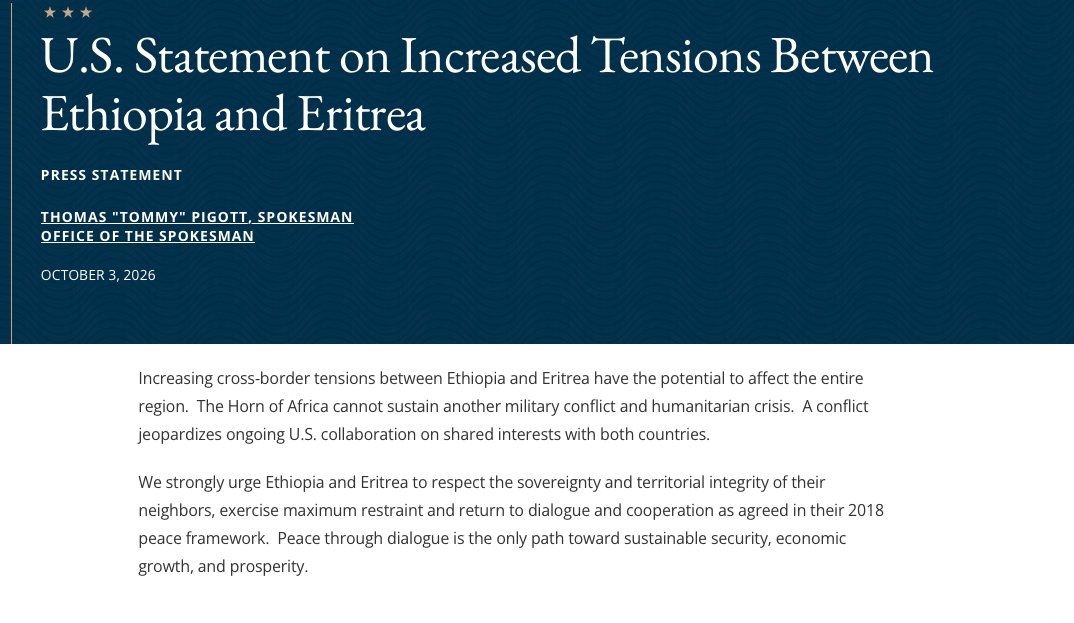
This US statement urging both Eritrea and Ethiopia to avoid further escalation is timely and appropriate.
However, that appeal may not hold if Eritrea allows fleeing TPLF rebels to cross the border and launch attacks against Ethiopian forces from its territory.
The US and other stakeholders should therefore make the message to President Isaias unmistakably clear: do not allow the TPLF to use Eritrean territory as a staging ground, and pull back Eritrean mechanized forces that reportedly crossed the border in the last few days.
🇪🇹 Ethiopia War Update 13
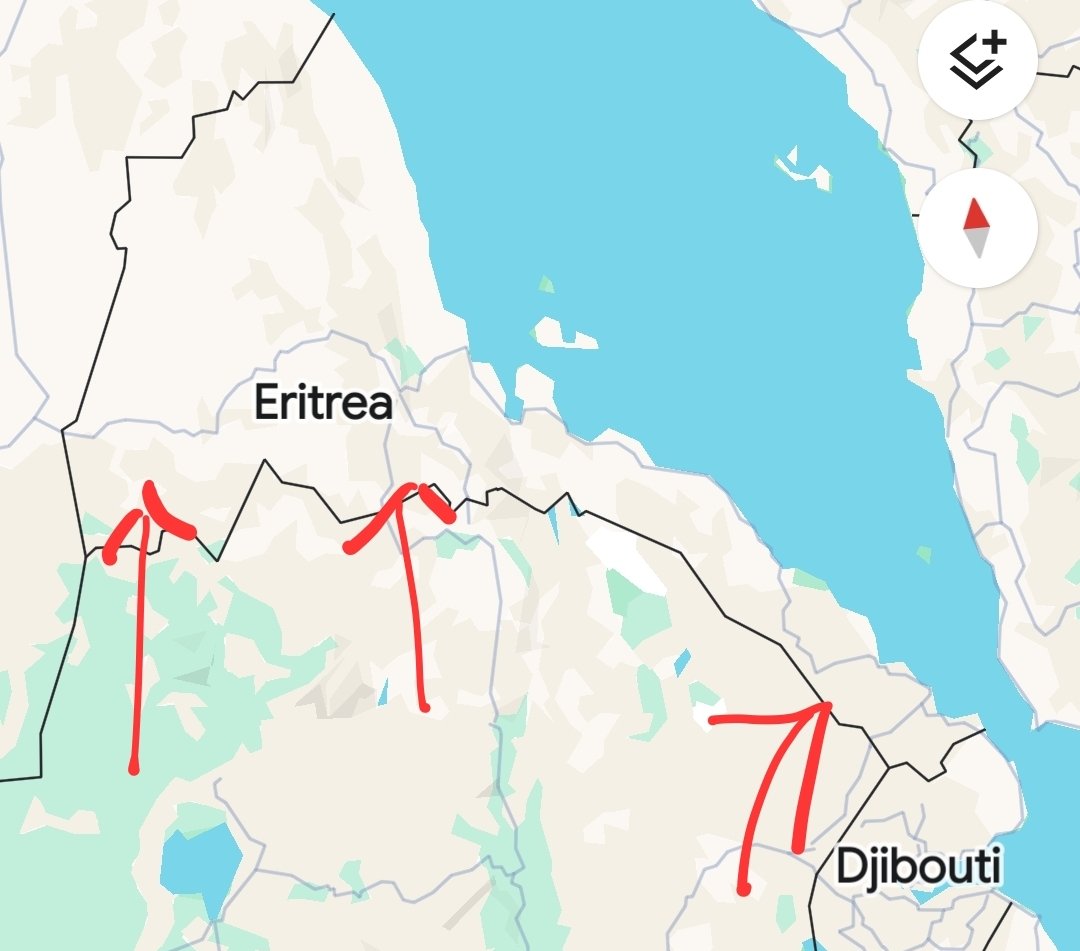
📍 Ethiopia preparing for a major offensive. Sources in Ethiopia say the Ethiopian army has finalized preparations for a large-scale offensive against Eritrea after consolidating its positions in Tigray. The reported plan is to launch attacks on three fronts simultaneously.
Government sources claim that up to 1 million troops will be deployed for the operation.
📍 Tigray-Eritrea military coordination. Credible information indicates that Tigrayan and Eritrean forces have established unified command and control structures. With Tigrayan forces withdrawing toward the Eritrean border to link up with Eritrean forces, the military situation is rapidly changing.
The coming weeks we will see fierce fighting and a major escalation along the Ethiopia-Eritrea border.
📍 Horn of Africa leaders meet in Egypt. Eritrean President Isaias Afwerki and Somali President Hassan Sheikh Mohamud have travelled to Egypt for high-level meetings as regional tensions continue to rise.
More than 20 African heads of state and government officials are gathering in New Alamein City for the inaugural Alamein Africa Forum, taking place from October 2–4. The forum focuses on African trade, investment, economic integration and continental cooperation.
President Isaias Afwerki is expected to meet Egyptian President Abdel Fattah el-Sisi as tensions between Ethiopia, Eritrea and Egypt reach a new level.
📍 Correction on reported explosions. Claims that explosions were heard in Asmara, Eritrea, are false and baseless.
Similarly, reports that Ethiopia's Prime Minister's Office itself was bombed are also inaccurate.
Drone strikes and explosions did occur in Addis Ababa, including around military and government-related areas. However, the drone strike hit in the vicinity of the Prime Minister's Office, not inside the office compound itself.
⚠️ It is important to separate confirmed events from unverified claims. Some conflict accounts are presenting unverified information as fact, creating unnecessary confusion during a rapidly developing crisis.
Grok accused me and labelled me #Islamist for i critisized Israel and USA against their genocidal action on #Palestinian starting from october 2023. How can you describe this other than ethnic cleansing.
😌😔🙂↕️
Ethiopians' were suffering from luck of democratic administration starting from the unification until now. Currently the situation become worse because of prolonged war brought insecurity and lawlessness and worsened the daily life besides inflation. Really we are suffering.
AN APPEAL FROM THE PEOPLE OF MEKELLE
Sources in the city say widespread civilian looting of public institutions and private property is taking place and must stop immediately.
Whatever the political or military situation, looting only harms the people. Elders, religious leaders, youth, neighbourhood representatives, and responsible citizens should organize peacefully to protect public institutions, businesses, homes, and essential services.
We saw the consequences of widespread looting in 2020. The city must not be allowed to suffer the same devastation again.
But we also remember with pride how the people of Mekelle organized themselves during that period to stop looting and protect their city. That spirit of civic responsibility, solidarity, and collective protection is needed again today.
Protect the city. Protect public institutions. Protect one another.
Can the TPLF Sustain Another Insurgency?
Having encountered a much more formidable ENDF force than it appears to have anticipated, the TPLF has pulled back rapidly, while federal and allied forces have advanced deep into Tigray and toward Mekelle. Battlefield sources indicate that, although the TPLF suffered significant casualties and weapons losses, its forces did not experience the nightmare of organisational collapse. They appear to have retreated largely with their command structure intact. This suggests that the TPLF may have concluded that confronting the federal army in conventional warfare was a mistake and quickly decided to change course.
But what course?
Will it retreat fully into Eritrea and attempt to wage a joint campaign? Or will it shift toward a prolonged insurgency inside Tigray, supported from bases across the Eritrean and Sudanese borders? Given that Eritrea and Sudan may be reluctant to enter an open interstate war with Ethiopia, the latter may be the more plausible option. An insurgency inside Tigray, supported by external bases and supplies. The sharp deterioration in relations between Addis Ababa and Asmara, including the severing of diplomatic relations, makes the question of external sanctuary particularly important, although Eritrea denies Ethiopian accusations that it is supporting the rebel alliance.
The more difficult question, in my view, is whether a successful insurgency is feasible in Tigray under current conditions. The TPLF has already demonstrated that losing Mekelle and conventional control of Tigray does not necessarily mean the destruction of its military organisation. After federal forces captured Mekelle in November 2020, its leadership retreated, regrouped and eventually rebuilt a resistance capable of retaking the city. But many of the political and military conditions that made that recovery possible have changed.
1. External support and sanctuary
The existence of external actors willing and able to support an insurgency is perhaps the most important enabling factor. Eritrea views the Ethiopian government as a potential threat to the survival of the Isaias regime. It also possesses significant stocks of weapons and ammunition and could potentially provide the TPLF with training, command bases, weapons, food and logistical support. But having an interest in weakening Addis Ababa does not necessarily mean being prepared to sustain an insurgency. Political support, sanctuary, logistical facilitation, weapons supply and direct participation in war are very different levels of involvement.
Eritrea’s relationship with Egypt could provide additional political and material support. Egypt, given its longstanding dispute with Addis Ababa over the Nile, has an interest in limiting Ethiopia’s regional power. Addis Ababa has accused both Eritrea and Egypt of supporting the current opposition alliance, allegations both governments deny. The diplomatic confrontation nevertheless demonstrates how the Tigray conflict is becoming connected to wider regional rivalries.
Sudan is another potential factor. The deterioration in relations between Addis Ababa and the Sudanese Armed Forces, alongside Ethiopian allegations concerning the RSF, creates a regional environment in which support for Ethiopian armed opponents cannot be excluded. TPLF-linked Army 70 has previously been reported operating from Sudan, although its current strength, command structure, and operational role remain unclear. During the previous war, the TPLF developed a powerful domestic resistance while becoming increasingly isolated from external supply. A future insurgency could face almost the reverse. Greater opportunities for external sanctuary and supply, but a much weaker domestic mobilisation environment.
Other regional actors also have interests that intersect with the conflict, particularly through the wider competition around Sudan, the Nile and the Red Sea. But strategic interest should not automatically be interpreted as willingness to support a TPLF insurgency. For these actors, weakening or distracting Ethiopia could serve different strategic objectives. Containing its regional influence, protecting their interests in Somalia and Sudan, shaping Red Sea politics, or counterbalancing the influence of their rivals. Any external support would also have to reach forces operating inside Tigray. Access through western and northern Tigray and the viability of corridors toward Sudan and Eritrea could therefore matter as much as what outside actors are willing to provide.
2. Leadership survival
The current TPLF leadership is fighting not only for political influence but potentially for its own survival. Senior leaders face accusations of serious wrongdoing and could face prosecution or political retribution from the federal government. They have also accumulated powerful enemies within Tigray.
For leaders who believe that defeat could mean imprisonment, prosecution, or revenge, insurgency could become more than a political strategy. It could become a survival strategy. That motivation could keep the leadership fighting even under very difficult conditions, but it cannot compensate indefinitely for declining recruitment, weakened political support, or the loss of capable commanders.
3. An overstretched federal state
The Ethiopian state under Abiy Ahmed is already dealing with multiple armed conflicts, economic pressures and significant security commitments. With major insurgencies continuing in Oromia and Amhara, the federal government may struggle to concentrate all its military and security resources on Tigray. That could create space for an insurgency to survive, particularly during its early stages.
The challenge for the federal government would not necessarily be capturing major towns. The present counteroffensive demonstrates that it can still concentrate considerable military power. Holding and administering territory over time while containing insurgencies elsewhere, securing supply routes and maintaining local intelligence would be a different challenge.
Tigray’s mountainous terrain would continue to favour dispersed armed groups, although geography no longer provides the same advantage it did during the TPLF’s original insurgency. The federal government now enters the conflict with substantially greater drone, surveillance and precision-strike capability, making large formations, fixed bases and exposed supply lines much more vulnerable.
4. The problem of popular support
The TPLF has dominated Tigray’s political and social life for nearly half a century. Resentment toward the party has been building for years, particularly since the death of its intellectual and strategic leader, Meles Zenawi. The party has suffered a series of political and military setbacks while failing, in the eyes of many of its critics, to acknowledge or correct its shortcomings.
Its relationship with sections of the Tigrayan intelligentsia has also deteriorated. Many have turned against the party, while others have distanced themselves from it. The TPLF also enters this conflict without the unusually broad mobilisation that developed during the 2020–22 war. The TDF that emerged during that conflict became broader than the TPLF itself, attracting volunteers who perceived the war as an existential struggle. Before the present war, reports of forced recruitment, defections and widespread war fatigue suggested a much less favourable mobilisation environment.
A significant segment of the population blames the leadership for the current war and Tigray’s continuing suffering. Without a compelling popular cause, sustaining an insurgency becomes much harder. Declining support for the TPLF, however, does not automatically translate into support for the federal government. A Tigrayan can oppose another TPLF-led war while simultaneously distrusting Addis Ababa and opposing outside interference in Tigray. What happens within this political space could become more important than simply measuring support for either side.
5. Can the leadership regenerate itself?
Age itself may not be the most important problem confronting the TPLF. The deeper question is whether an ageing and politically exhausted leadership can regenerate itself and produce a new generation of commanders and political organisers capable of mobilising Tigrayan youth. The current TPLF leadership is considerably older, with many senior figures now in their 60s and beyond. More importantly, it enters this conflict after years of internal division. Former senior political and military figures have broken with the organisation, while former TDF fighters have formed the Tigray Peace Force and other political networks opposed to the current TPLF leadership.
In 2020–22, the TPLF regenerated its military strength as much of Tigrayan society came to perceive the conflict as an existential struggle and rallied behind the resistance. That political environment no longer exists to the same extent. Sections of the Tigrayan political and intellectual elite have distanced themselves from the TPLF, while some former political and military figures have aligned themselves against its current leadership. Recreating the broad-based mobilisation of 2020–22 would therefore be considerably more difficult.
6. The internal Tigrayan factor
One important difference from 2020 is the emergence of organised Tigrayan actors actively opposed to the TPLF leadership. Former TDF commanders and fighters potentially provide the federal side with local knowledge, language, intelligence networks, familiarity with the terrain and an understanding of TPLF military structures that federal forces largely lacked during the previous war. This could make organising and sustaining an insurgency considerably more difficult.
Their conduct and the political arrangements that follow the fighting could cut in either direction. Association with revenge, abuse, exclusion or local political score-settling could deepen intra-Tigrayan divisions and generate grievances that the TPLF could exploit. If these forces instead gain local acceptance, their knowledge of Tigray and of the TPLF itself could become a serious obstacle to an insurgency.
7. War fatigue and the problem of replacing fighters
Tigrayans supported the TPLF through its 17-year armed struggle and again bore enormous costs during the 2020–22 war. In both cases, many felt that they ultimately paid a disproportionate price for political objectives pursued by the leadership.
After the 1991 victory, the leadership moved to Addis Ababa and consolidated federal power. After the 2022 Pretoria Agreement, the leadership again faced criticism for failing to adequately account for the enormous sacrifices the population made. Today, the movement is deeply divided, with no clear and coherent strategy.
There appears to be little appetite among the population for another prolonged war. Pre-war reporting already pointed to widespread war fatigue and difficulties relying on voluntary mobilisation. Resistance to mobilisation and conscription, along with reports of soldiers abandoning positions or surrendering to federal forces, could be early indications of this war fatigue.
Battlefield surrender alone, however, cannot tell us whether political exhaustion is the cause. Soldiers can abandon positions because of military pressure, ammunition shortages, tactical decisions or breakdowns in command. Over a prolonged insurgency, the more consequential question would be whether the TPLF can continue recruiting and replacing its losses. It may begin with thousands of experienced fighters and still gradually contract if another generation is unwilling to join them.
8. What did the federal government learn from 2020?
The federal government made major mistakes after capturing Mekelle in 2020. The appointment of unpopular or ineffective local administrations, premature declarations of victory, failure to anticipate a renewed insurgency, and the absence of an effective counterinsurgency strategy allowed the TPLF leadership to survive, regroup and eventually launch a successful campaign to retake Mekelle and threaten Addis Ababa. The presence and conduct of Eritrean and other allied forces, civilian suffering and widespread anger also contributed to an environment in which resistance expanded beyond the organisational core of the TPLF.
This time, however, the federal government appears to be approaching the political dimension differently, although it is still too early to know whether this represents a coherent strategy or will be sustained. The experience of fighting insurgencies in Oromia and Amhara may also have contributed to a more sophisticated approach.
The involvement of commanders and soldiers who previously fought alongside the TPLF could also give the federal side access to local knowledge and networks it largely lacked in 2020. The avoidance of overtly hostile rhetoric is another notable difference. The real test, however, will come after territorial control is established. Current TPLF unpopularity cannot simply be assumed to remain permanent. How civilians are treated, whether their property is protected, whether looting and revenge are prevented, how former fighters are handled, whether communications, banking, hospitals and other basic services are restored, and whether credible local administration emerges could determine whether the TPLF remains politically isolated or finds a new constituency for resistance.
These conditions could deprive a potential TPLF insurgency of one of its most important sources of mobilisation. The perception that Tigray is once again facing an existential threat. Their failure could produce the opposite effect and recreate some of the political conditions that helped transform the TPLF’s military defeat in November 2020 into a much broader Tigrayan resistance.
9. What would people be fighting for?
The TPLF may still have the organisational capacity to wage an insurgency, but organisational capacity is not the same as political capacity. An insurgency needs more than weapons, external sanctuaries and experienced commanders. It needs recruits, intelligence networks, logistics, local legitimacy and, above all, a population willing to absorb the enormous cost of another war.
It also needs a political objective that people understand. Would another insurgency be fought for the survival of the TPLF, control of Tigray, implementation of the Pretoria Agreement, removal of the federal government, or the broader political objectives of the new opposition alliance? Mobilising people for a prolonged war becomes much harder when the political end state itself is unclear.
I think this is where the TPLF faces its biggest challenge. In 2020, it lost Mekelle but subsequently found a political and social environment in which its military organisation could regenerate. In 2026, it may enter the next phase with better possibilities for external sanctuary but a substantially weaker domestic mobilisation environment. The decisive question may therefore not be whether the TPLF can launch an insurgency, but whether it can generate enough popular support to sustain one.
The question is not simply whether the TPLF can go underground, but whether enough of Tigray is willing to go underground with it.
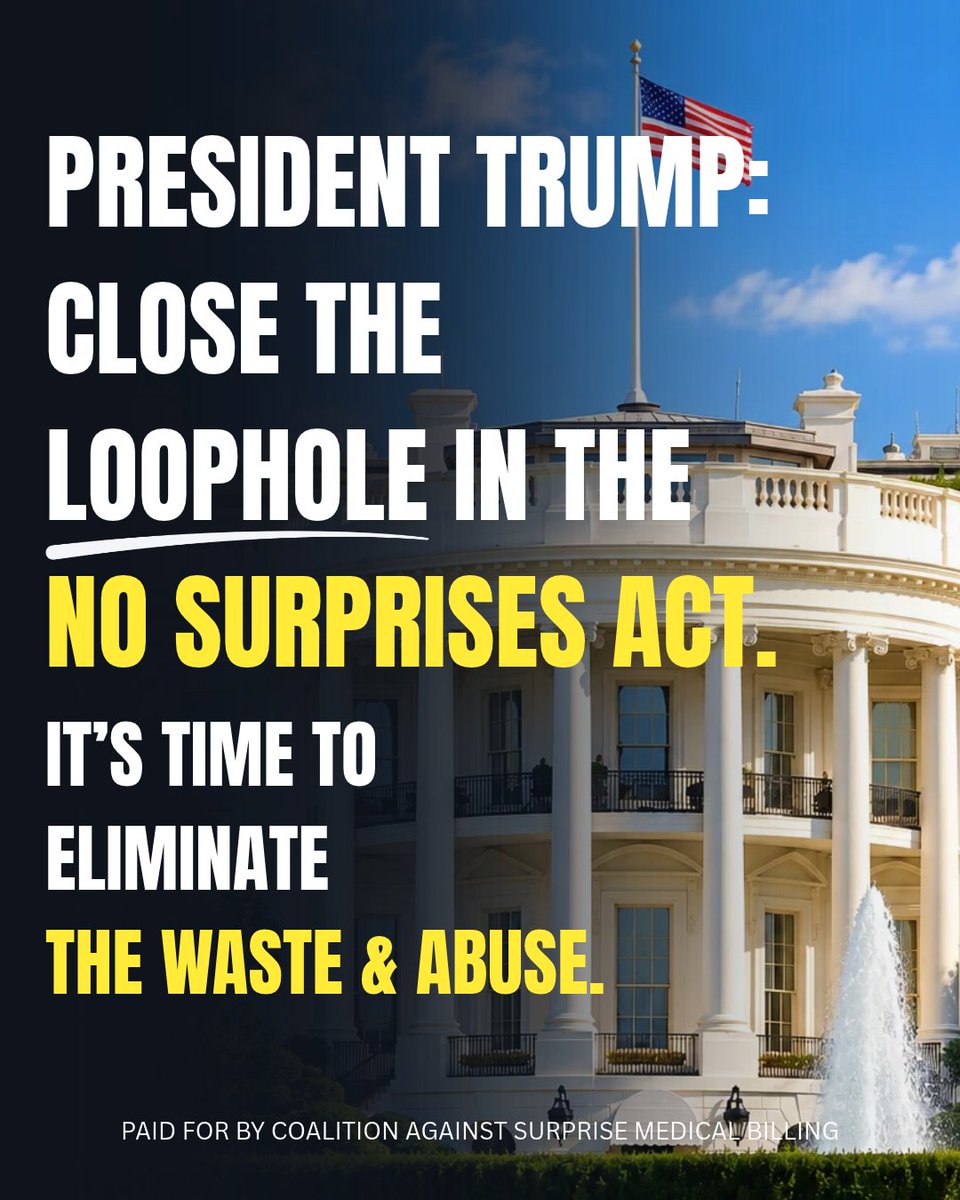
Some private equity-backed providers are exploiting a loophole in the No Surprises Act, driving up healthcare costs and leaving families with the bill. President Trump can act now to end the fraud, waste, and abuse. It's time for reform to deliver real relief for real families.
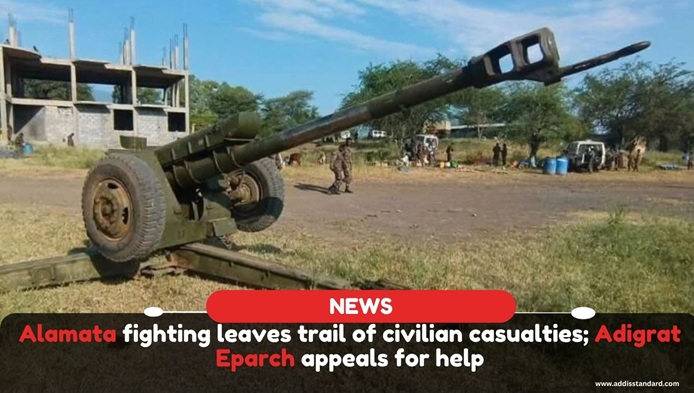
News: #Alamata fighting leaves trail of civilian casualties; #Adigrat Eparch appeals for help
Addis Abeba, – More than 50 civilians have reportedly been killed in and around Alamata, southern #Tigray, during several days of intense fighting in late September, as renewed hostilities in northern #Ethiopia leave residents displaced, medical facilities overwhelmed and humanitarian access increasingly difficult.
A resident who fled Alamata to #North_Wollo Zone in the neighboring Amhara Region told Addis Standard that the fighting erupted as residents were preparing for the Saturday market. “We were hoping for a market day on Saturday when suddenly the town was rocked by heavy artillery. Suddenly, the town looked like a full-blown war zone,” the resident said.
However, tensions also intensified in the areas between the Tigray Peace Force and members of the Raya Zeb, a newly organized paramilitary force established by the Amhara Regional State. The friction reportedly escalated after federal forces mobilized further toward #Mehoni….
https://t.co/RSBpJh9DLm
News: #Ethiopia reportedly plans troop withdrawal from #Somalia as fighting intensifies at home
Addis Abeba — Ethiopia is planning to withdraw more than 3,000 troops from neighbouring Somalia as renewed fighting at home puts pressure on the government to redirect military resources toward conflicts with armed rebel groups, Bloomberg reported.
https://t.co/MuWhH3DIEq