I’ve been studying Melchizedek (Genesis 14, Psalm 110, and Second Temple texts like 11QMelchizedek), and I’m trying to understand how different traditions interpret him.
For those from Jewish and Christian backgrounds:
Do you see Melchizedek as:
– a historical priest-king
– a symbolic/archetypal figure
– something more (e.g., messianic or prefiguring Christ)
And specifically:
Do you think there’s any basis to identify him with the Messiah, or is that reading imposed later?
Would really appreciate thoughtful, source-based perspectives from both sides.
Not a Story, but a Puzzle
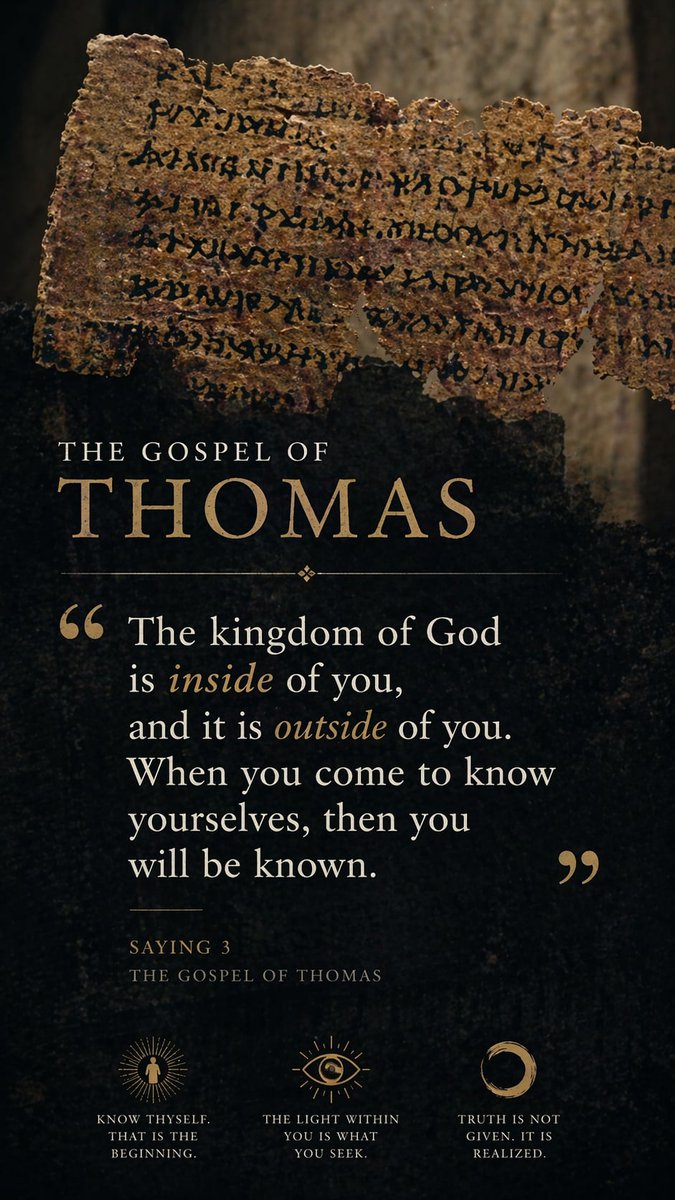
The Gospel of Thomas has no narrative. No miracles, no crucifixion, no resurrection. Just sayings.
Some sound familiar:
“Seek and you will find.”
Others are far more enigmatic:
“If you bring forth what is within you, what you have will save you.”
This shift is crucial. The text does not focus on belief in events. It focuses on self-knowledge.
In Thomas, salvation is not about faith in a savior’s sacrifice. It is about understanding your own nature.
@MonaKeijzer This is the uncomfortable part no one wants to say out loud.
If outcomes don’t actually change direction…
then what role does the vote really play?
This is the structural flaw of the Dutch system in plain sight.
The Eerste Kamer is designed to review legality and feasibility, not to relitigate political decisions already made by the Tweede Kamer.
Yet in practice, it acts as a second political arena—without electoral accountability.
A 37–38 vote, decided by a single senator from a marginal party, can override a national mandate.
That tension isn’t incidental. It’s systemic.
They called it heresy because it threatened control
The Gnostics believed something radical for their time
that the truth is not handed down by institutions but discovered within
Not faith alone but knowledge
not obedience but awakening
They saw the material world as incomplete
even deceptive
a construct that distracts you from what you really are
A fragment of the divine
trapped in matter
but capable of remembering
This is why their texts were buried
why their ideas were erased
why “gnosis” was replaced with doctrine
Because a person who looks inward becomes harder to rule
And maybe that is the real reason their story still resonates today
This is a shift in how ceasefires function.
Rather than freezing positions, they now create space for controlled military action.
Five divisions operating beyond the Forward Defense Line suggests the objective isn’t stability, but preemption.
Historically, that signals unresolved risk, not resolution.
Watch how long this “ceasefire” holds.
@Osint613 Could be more important than it looks
Since 1979, US–Iran contacts have usually gone through places like Oman or Europe
Pakistan stepping in like this is unusual
Orbán didn’t just lose power
Israel just lost one of its most important allies in Europe
And almost no one is talking about what that means next
Watch this 👇
https://t.co/PKYruXC6M2
@Osint613 Europe talking about “negotiations” while global trade chokepoints are one escalation away from collapse is not leadership—it’s risk management at best.
@PostNL Kunnen jullie ervoor zorgen dat het naar hetzelfde PostNL-punt gaat dat is uitgekozen, of in ieder geval naar een punt in dezelfde stad? :) dankjewel!
@PostNL Hoi, Ik had gisteren track & trace ontvangen en het Bezorgadres veranderd naar een andere stad. Maar nu wordt het pakket toch weer morgen naar het originele Bezorgadres verstuurd. Hoe komt dit? het pakket moet echt naar dat nieuwe Bezorgadres als het kan.
@PostNL Hallo, Mijn pakket wordt bij een postnl punt afgeleverd morgen, maar ik heb perongeluk een verkeerde naam gebruikt bij de verzending en bij de verzending staat " Voor dit pakket moet je een identiteitsbewijs laten zien." zal dit een probleem zijn?
@PostNL Hoi, ik heb perongeluk een oud adres gebruikt bij mijn bestelling en de webshop kan dit niet meer veranderen. Kan ik nu al iets doen zodat het uiteindelijk toch naar mijn adres gaat of een postnl punt in de juiste stad? bedankt.