Director of the Trade War Lab at KU | PhD @UCSanDiego, proud @DukeAlumni. Former @EurasiaGroup, @21CenturyChina, @Princeton postdoc, @FulbrightPrgrm at 北大
🚨 I’m excited to announce the launch of the Trade War Lab Substack 📈🌏
🔔 Subscribe here: https://t.co/BbqI9S1S5p
🔗 Or follow us on X @TradeWarLab
Let’s make sense of the chaos — together.
#TradeWar#tariffs#geoeconomics#substack
China is set to cut tariffs on a broad range of US agricultural goods, from corn and wheat to meat and dairy, but top import item soybeans were excluded from a tariff-reduction list jointly issued by China's commerce ministry and the White House. https://t.co/T7xIqieEcn
“Neither government has an interest in renewed escalation,” says our expert Dan Wang about US-China relations.
Washington is likely to seek further progress on expedited Chinese approval of rare-earth export licenses for US end users, as well as increased purchases of US agricultural goods, and in return Beijing would expect the US to maintain its current pause on arms sales.
@CNBC
https://t.co/z7WApewfvW
"It was easy for armchair populists to sell tariffs by blaming the modern, dynamic economy’s inevitable disruptions on a single cause — imports — and promising a magical, costless alternative implemented by enlightened technocrats. Today’s real-world tariffs are far more difficult to defend now that their drawbacks (higher prices, legal and economic uncertainty, diminished influence abroad, cronyism, and more) have once again been revealed. Even diffuse costs become visible when they’re regularly in the press and itemized on a receipt." https://t.co/RcAbjVrDk5
More than half of Americans support “friendly cooperation and engagement” with China.
For Democrats, it’s 2/3.
From a new Chicago Council survey: https://t.co/K9vYGROJuA
Every four years, a presidential election threatens to change the rules for the market: from tax codes to tariffs and regulations. A new study argues that firms manage this turbulence through lobbying rather than direct influence.
This is also politically sensible. Tariffs remain unpopular with many U.S. voters & businesses. @TradeWarLab research finds that 73% of heartland firms report being harmed by tariffs, compared with just 7% saying they benefited.
https://t.co/5tpTNkSyQm
The reported package would cover roughly $30B in trade on each side: 🇨🇳 likely cutting tariffs on U.S. agriculture and energy while 🇺🇸 will ease tariffs on lower-tech Chinese goods.
The US and China are discussing slashing tariffs on certain goods, including on American energy and agricultural shipments — a potential sign the leaders’ summit next week will lead to an extension of the one-year trade truce. https://t.co/hNf2sXn97R
Harvard College Dean David J. Deming argues that colleges need to stop treating AI use as a problem solved by unenforceable bans. His answer? Make academic work more communal, more accountable, and harder to outsource. https://t.co/ogA34xGdtF
Our lab is excited to introduce a new learning tool and coding project: the U.S.-China Trade War Simulation and the research within it, Issue Linkage and Bargaining Failure: Experimental Evidence from a Trade War Simulation.
https://t.co/nToPiYGvgB
https://t.co/0NEhegvdsi
Despite China being the largest trading partner of the United States, economic tensions have steadily increased over the past two decades. The trade war doesn't cease. Yet despite that, businesses continue to teeter on the line between compliance and profit.
Most people view corporate lobbying as a tool to sway policy outcomes.
But research by Bo Yang (University of Hong Kong) reveals another side to the story: information-seeking lobbying.
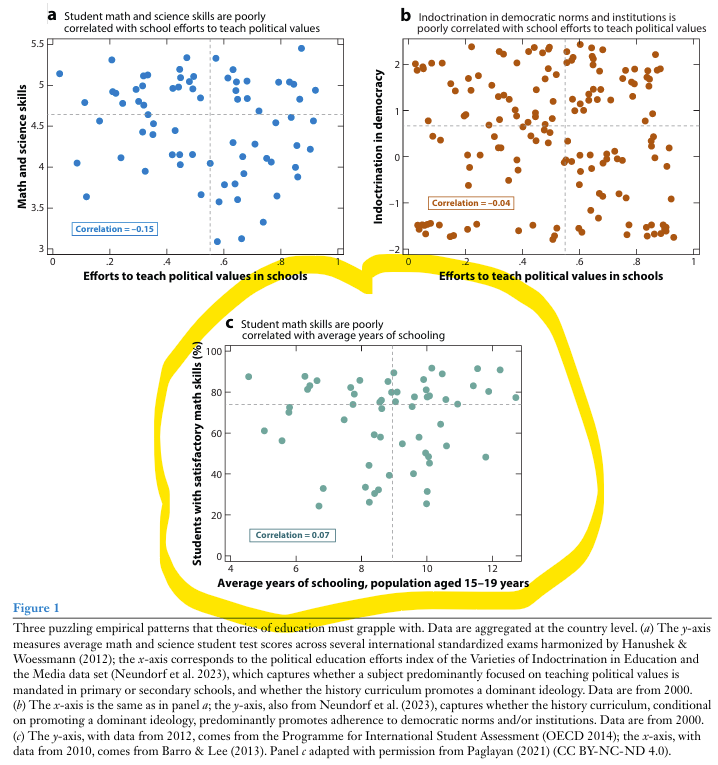
I recommend my recent article "Education as a Political Institution" (Ann. Rev. of Political Science).
Open access: https://t.co/pPrPFWSaFO
Basically, at the country level, there is a poor correlation between years of schooling and skills.
Why does this matter?
It's back-to-school time!
...and the annual costs from tariffs for school supplies are projected to average $79 higher per US household this year than in 2024.
https://t.co/zEybxjf1Ut
US-Canada talks end with no deal
- US imposes Section 338 tariffs
- Canada to retaliate “dollar for dollar”
by @AnaSwanson, @ianrausten & @MatinaStevis
https://t.co/rLmG9LMYJz
New @nberpubs: "Tariffs, Investment, and the Missing Trade Collapse" https://t.co/UO69J1k7b4
"Absent the [AI] investment boom, imports would have fallen by 10 percent and activity would have contracted by 0.7 percent." 👀









![scottlincicome's tweet photo. New @nberpubs: "Tariffs, Investment, and the Missing Trade Collapse" https://t.co/UO69J1k7b4
"Absent the [AI] investment boom, imports would have fallen by 10 percent and activity would have contracted by 0.7 percent." 👀 https://t.co/KpaITHeJqi](https://pbs.twimg.com/media/HQAKw-aXMAAHJrj.jpg)


